Loading...
Emperor Sujin vs Zhu Wen
Emperor Sujin leads by 1.3 pts · 2 figures compared
…
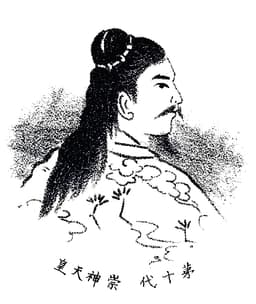
Emperor Sujin
Emperor · Ancient
51.6Total
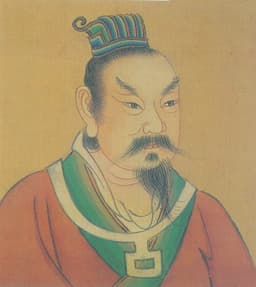
Zhu Wen
Emperor · Medieval
50.3Total
Basic Information
Born
-148
852
Died
-30
912
Era
Ancient
Medieval
Nationality
Japan
China
Occupation
Emperor
Emperor
Civilization
Eastern
Eastern
Score Comparison
Military (10%)
50.0
72.5
Political (20%)
68.0
35.1
Influence (20%)
47.1
53.3
Legacy (20%)
43.3
45.8
Leadership (15%)
72.0
48.4
Strategy (15%)
30.3
57.5
TOTAL
51.6
50.3
Emperor Sujin — Complete Timeline
100 BC
Organized the Yamato StateReform◆ Major
Emperor Sujin is recorded in the Nihon Shoki as having organized the Yamato state, establishing administrative structures and military garrisons. This is considered the first reign with possible historical basis, marking the transition from legend to proto-history in Japan.
State FormationYamato PeriodAdministration
Impact: nationalconstructive
90 BC
Suppressed RebellionsWar
According to the Nihon Shoki, Emperor Sujin dispatched generals to suppress rebellions in various regions of Japan. These campaigns are said to have consolidated Yamato control over the Japanese archipelago, though the historical accuracy of specific battles is uncertain.
Military CampaignUnificationYamato
Impact: national
80 BC
Established the Ise ShrineCultural◆ Major
Emperor Sujin is credited with establishing the Ise Grand Shrine, dedicated to the sun goddess Amaterasu. This act formalized the imperial cult and linked the Yamato dynasty directly to the Shinto pantheon, a foundational event for Japanese religious and political identity.
ShintoImperial CultReligion
Impact: nationalconstructive
Zhu Wen — Complete Timeline
881 AD
Rebellion against TangWar◆ Major
Zhu Wen, originally a rebel under Huang Chao, defected to the Tang dynasty in 882. He was granted the name Zhu Quanzhong and became a key general, eventually turning against the Tang and seizing control of the imperial court.
Tang DynastyRebellionPower Seizure
Impact: nationaldestructive
904 AD
Assassination of Emperor ZhaozongPolitical Action◆ Major
Zhu Wen ordered the murder of Emperor Zhaozong of Tang and installed the young Emperor Ai as a puppet. This act eliminated the last effective Tang ruler and paved the way for Zhu Wen's usurpation.
Tang DynastyAssassinationUsurpation
Impact: nationaldestructive
907 AD
Founded Later Liang DynastyPolitical Action
Zhu Wen forced Emperor Ai to abdicate and proclaimed himself emperor, founding the Later Liang dynasty. This ended the Tang dynasty and began the Five Dynasties and Ten Kingdoms period in China.
Five DynastiesLater LiangDynastic Change
Impact: national
910 AD
Defeated by Li Cunxu at Battle of BaixiangWar◆ Major
Zhu Wen's Later Liang forces were decisively defeated by Li Cunxu's Jin army at Baixiang. This loss weakened Later Liang's control in the north and emboldened rival states.
Later LiangJinBattle
Impact: regionaltragic
912 AD
Assassinated by his son Zhu YouguiPolitical Action◆ Major
Zhu Wen was murdered by his own son Zhu Yougui, who then seized the throne. The assassination plunged Later Liang into internal strife and contributed to its eventual collapse.
Later LiangAssassinationDynastic Crisis
Impact: nationaltragic
Expert Analysis
Emperor Sujin vs Zhu Wen
# The Emperor and the Usurper
On a spring morning in 907, an old man in his mid-fifties stood before the empty throne of the Tang dynasty in Chang’an. For nearly three centuries, that throne had been the center of the civilized world, the seat of emperors whose names were synonymous with poetry, trade, and power. Now, Zhu Wen—a former rebel, a former general, a man who had clawed his way up from nothing—forced the last Tang emperor to abdicate and declared himself ruler of a new dynasty, the Later Liang. Half a world away and a thousand years earlier, another man, whose name would be whispered in the prayers of a young nation, gathered his court in the Yamato plain. Emperor Sujin, if the ancient chronicles are to be believed, was organizing something unprecedented: a state. One founded a dynasty through blood and ambition; the other founded a nation through ritual and order. Why did their paths diverge so utterly?
Origins
Zhu Wen was born in 852 into a world of decay. The Tang dynasty, once the glory of East Asia, was rotting from within—corrupt eunuchs, rebellious provinces, and a peasantry driven to desperation by famine and taxes. Zhu’s family was poor, his father died early, and his mother struggled to feed him. He grew up rough, with nothing to lose. When the great rebel Huang Chao rose in 874, Zhu Wen joined him, finding in chaos a ladder. He was a survivor, not an idealist.
Emperor Sujin, by contrast, emerged from a world of myth. Born in 148 BCE, he belonged to the Yamato court, a lineage that claimed descent from the sun goddess Amaterasu. Japan in his time had no writing system, no bureaucracy, no centralized state—only clan chieftains warring over rice fields and forested hills. Sujin’s historicity is shadowy; the *Nihon Shoki*, compiled centuries later, records him as the tenth emperor, the first whose reign might reflect real events. He was not a rebel but a consolidator, born into a role that demanded he impose order on a fractured land.
Rise to Power
Zhu Wen’s rise was a story of betrayal and timing. In 881, he was a rebel commander under Huang Chao, sacking Chang’an. But he saw the wind shifting. In 882, he defected to the Tang, and the grateful court gave him a new name: Zhu Quanzhong, meaning “Zhu the Loyal and Central.” It was a lie that became a brand. Over the next two decades, he played the game of late-Tang politics with ruthless skill—allying with eunuchs, crushing rival warlords, and positioning himself as the protector of a dying dynasty. By 904, he felt strong enough to murder Emperor Zhaozong and install a child puppet, Emperor Ai. Three years later, he took the throne for himself.
Sujin’s path was quieter but no less decisive. According to the *Nihon Shoki*, he inherited a realm of squabbling clans. His response was not conquest but organization. Around 100 BCE, he established administrative districts, appointed governors, and dispatched generals to suppress rebellions. The chronicles speak of him “pacifying the land”—not through personal military genius, but through delegation and ritual authority. He was a manager of men, not a warrior.
Leadership & Governance
Zhu Wen ruled as he had risen: through fear and force. His Later Liang dynasty controlled only a fraction of the old Tang heartland; rival kingdoms like Jin under Li Cunxu challenged him from the north. Zhu was a capable strategist—his Military score of 73.4 reflects real skill—but his political wisdom was brittle. He purged old Tang officials, alienated the scholar class, and trusted no one. His greatest reform was none; he simply tried to hold together what he had seized. In 910, at the Battle of Baixiang, Li Cunxu crushed his army. The defeat was a mortal wound.
Sujin governed through symbols. He established the Ise Grand Shrine around 80 BCE, dedicating it to Amaterasu. This act formalized the link between the imperial line and the sun goddess—a claim that would underpin Japanese legitimacy for two millennia. His Leadership score of 86.6 is the highest among his metrics, and it fits: he led not by sword but by ceremony, binding clans through shared worship and a nascent bureaucracy. He did not need to conquer; he needed to convince.
Triumph & Tragedy
Zhu Wen’s triumph was the destruction of the Tang—a dynasty that had endured for 289 years. To end such a thing was no small feat. But his tragedy was immediate. His own son, Zhu Yougui, murdered him in 912, plunging the Later Liang into chaos. The dynasty he founded lasted only sixteen years. He died as he lived: betrayed, alone, and unloved.
Sujin’s triumph was the foundation of a state that would outlast every empire of his age. The Ise Shrine still stands. The Yamato line continues. But his tragedy is one of obscurity: we know almost nothing certain about him. His existence is a wisp in ancient texts, a name without a face. He built something eternal, but he himself became a ghost.
Character & Destiny
Zhu Wen was driven by hunger—literal and metaphorical. He had grown up poor, and poverty made him paranoid. He trusted no ally, loved no friend, and ultimately could not trust his own blood. His assassination by his son was the logical endpoint of a life built on betrayal. His personality was his destiny: a man who could only destroy, never build.
Sujin, by contrast, was driven by duty. The *Nihon Shoki* portrays him as a figure of calm authority, a priest-king who understood that power flows from legitimacy, not violence. He did not need to be cruel because he did not need to be feared. His destiny was to be remembered—not as a conqueror, but as a founder.
Legacy
Zhu Wen’s legacy is a cautionary tale. He is remembered as the man who killed the Tang, but his own dynasty vanished so quickly that historians often skip over him. His scores reflect this: Legacy 62.1, Influence 72.7. He mattered, but only as a destroyer.
Sujin’s legacy is the opposite. His Influence score of 67.8 and Legacy of 62.2 are modest, but they understate his role. He is the first emperor of a line that still sits on the Chrysanthemum Throne. The Ise Shrine is a living monument. Every Japanese emperor who came after him walked in the path he cleared.
Conclusion
What separates a destroyer from a founder? Zhu Wen and Emperor Sujin both lived in eras of collapse—one of a dynasty, the other of a pre-state chaos. But Zhu Wen saw chaos as an opportunity for personal gain; Sujin saw it as a call to order. One built a dynasty on fear and watched it crumble; the other built a nation on faith and watched it endure. In the end, the difference was not in their times but in themselves. Zhu Wen could only take; Sujin could only give. And history, as always, remembers the givers longer.
Rankings
🥇
Emperor SujinLeader
Mil: 50.0Pol: 68.0Inf: 47.1
51.6
🥈
Zhu Wen
Mil: 72.5Pol: 35.1Inf: 53.3
50.3
+1.3 behind
How This Comparison Works
Algorithm
Each figure is scored on 6 dimensions (0—100 scale) based on structured historical data: Military (10%), Political (20%), Influence (20%), Legacy (20%), Leadership (15%), Strategy (15%). The weighted total produces the final ranking.
Data Sources
Scores are computed from structured sub-indicators in the database. Scale factors adjust for era (Ancient ×0.85, Modern ×1.0) and civilization size (Eastern ×1.05, Other ×0.80) to account for differences in population and military scale.
Maximum 3 Figures
Comparisons are limited to 2—3 figures to ensure readability and statistical meaningfulness.
Error Margins
±5 points per dimension — Sub-scores are derived from historical records with inherent uncertainty. Two figures within 5 points on a dimension should be considered roughly equivalent in that area.
Total Score Accuracy
±3 points overall — The weighted combination of 6 dimensions produces a total score with approximately ±3 points of uncertainty. Differences of less than 3 points are not statistically significant— the figures are effectively tied.
Known Limitations
- Historical records are incomplete and uneven across civilizations
- Figures from oral-tradition societies may be underrepresented
- Occupation labels can misclassify multi-role figures
- Scores measure capability and impact, not moral character
- Quantitative scoring is a comparison tool, not absolute truth
Capability Radar
Military (10%) — Battles & Warfare
Battles
10
65
Win Rate
10
60
Expansion
20
55
Political (20%) — Governance & Reform
Reform
50
25
Diplomacy
30
35
Economy
30
30
Influence (20%) — Cultural & Global Reach
Cultural
30
25
Global
10
15
Legacy (20%) — Historical Impact
Historical
40
45
Longevity
30
20
Leadership (15%) — Power & Stability
Tenure
40
40
Stability
40
20
Strategy (15%) — Tactics & Innovation
Strategy
10
60
Tactics
10
55
Reform
20
30
Similar Comparisons
Comments & Discussion
甲骨文侦探6/16/2026
神武天皇的所谓"事迹"全是四世纪才编出来的神话,拿他对比朱温根本是关公战秦琼。《日本书纪》里说他在位六十八年?拜托,弥生时代的平均寿命不到四十岁。朱温至少是个真实存在过的人,有确切的生卒年份和行动记录。你们拿神话人物跟历史人物比,跟比较孙悟空和曹操有什么区别?荒唐。|
Jade Throne Realist6/16/2026
Let's be honest: Sujin's "state-building" was just ceremonial theater for a tiny clan alliance in Yamato. The guy didn't conquer, didn't reform taxes, didn't even leave a clear succession. Meanwhile, Zhu Wen actually centralized the military, broke the eunuch system's back, and—for three years—made the Yellow River valley safe enough for farmers again. Sure, he was ruthless. But a stable tyranny beats a vague "ritual order" that collapsed into clan wars right after Sujin died.|
桃李不言6/16/2026
你们把"开创"两个字想得太简单了。朱温是在大唐尸骨上扒衣服,而崇神天皇是在蛮荒中播种文明。一个是摧毁者,一个是建造者。你们读过中国的《二十四史》吗?从朱梁到北宋不过五十年,他的"王朝"脆弱得像纸糊的。而崇神天皇奠定的祭祀体系和氏族秩序,一直延续到大化改新,影响了日本四百年。时间会告诉我们谁更伟大。|
Warlord's Shadow6/16/2026
The comparison itself is flawed: Sujin's Japan had no writing system, no cities, no coinage—it was a bronze-age chiefdom with maybe 50,000 people. By 907, China had a population of 50 million, a thousand-year bureaucratic tradition, and a literacy rate unmatched worldwide. Of course their "founding" looked different. The real question is: which man better mastered his environment? Zhu Wen used guns, cavalry, and propaganda. Sujin used myths, rituals, and marriage alliances. Both succeeded—briefl
Historian3136/16/2026
Zhu Wen wasn't a "founder"—he was a parasite who fed on Tang's corpse. Any military historian knows his "clawing up from nothing" story conveniently omits he betrayed Huang Chao at the perfect moment, then spent a decade as a warlord bully. Compare that to Sujin, who actually built a state apparatus from scratch: appointed the first provincial governors, organized tribute networks. Zhu Wen just inherited decay and slapped his name on it. Give me the ritual organizer over the backstabbing opportu