Loading...
Emperor Sujin vs Zhao Kuangyin
Zhao Kuangyin leads by 19.9 pts · 2 figures compared
…
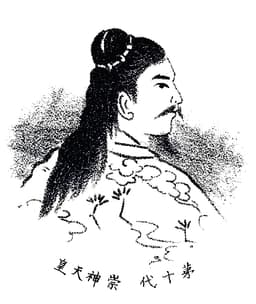
Emperor Sujin
Emperor · Ancient
51.6Total
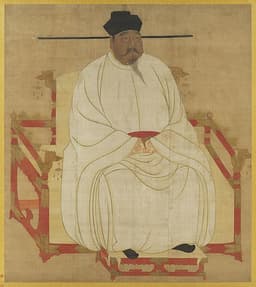
Zhao Kuangyin
Emperor · Medieval
71.5Total
Basic Information
Born
-148
927
Died
-30
976
Era
Ancient
Medieval
Nationality
Japan
China
Occupation
Emperor
Emperor
Civilization
Eastern
Eastern
Score Comparison
Military (10%)
50.0
78.0
Political (20%)
68.0
84.0
Influence (20%)
47.1
68.0
Legacy (20%)
43.3
65.0
Leadership (15%)
72.0
74.0
Strategy (15%)
30.3
68.0
TOTAL
51.6
71.5
Emperor Sujin — Complete Timeline
100 BC
Organized the Yamato StateReform◆ Major
Emperor Sujin is recorded in the Nihon Shoki as having organized the Yamato state, establishing administrative structures and military garrisons. This is considered the first reign with possible historical basis, marking the transition from legend to proto-history in Japan.
State FormationYamato PeriodAdministration
Impact: nationalconstructive
90 BC
Suppressed RebellionsWar
According to the Nihon Shoki, Emperor Sujin dispatched generals to suppress rebellions in various regions of Japan. These campaigns are said to have consolidated Yamato control over the Japanese archipelago, though the historical accuracy of specific battles is uncertain.
Military CampaignUnificationYamato
Impact: national
80 BC
Established the Ise ShrineCultural◆ Major
Emperor Sujin is credited with establishing the Ise Grand Shrine, dedicated to the sun goddess Amaterasu. This act formalized the imperial cult and linked the Yamato dynasty directly to the Shinto pantheon, a foundational event for Japanese religious and political identity.
ShintoImperial CultReligion
Impact: nationalconstructive
Zhao Kuangyin — Complete Timeline
960 AD
Founded Song dynastyPolitical Action
Zhao Kuangyin, a general of Later Zhou, was proclaimed emperor by his troops at Chenqiao. He established the Song dynasty, ending the Five Dynasties period and beginning a new era of Chinese history.
Song dynastyFoundingChenqiao
Impact: globalconstructive
961 AD
Removed military power from generalsPolitical Action◆ Major
Zhao Kuangyin invited senior generals to a banquet and persuaded them to retire peacefully. This 'removal of military power over wine' prevented military coups and centralized control.
Song dynastyMilitary reformCentralization
Impact: nationalconstructive
963 AD
Unified southern ChinaWar◆ Major
Zhao Kuangyin launched campaigns to conquer the southern kingdoms, including Jingnan, Later Shu, and Southern Tang. By his death, most of China was reunified under Song rule.
Song unificationConquestSouthern kingdoms
Impact: national
Expert Analysis
Emperor Sujin vs Zhao Kuangyin
The Emperor Who Took Away Swords and the Emperor Who Built a Shrine
On a spring evening in 961, in the imperial gardens of Kaifeng, the most powerful generals of the newly founded Song dynasty sat drinking wine under a canopy of lanterns. Their host, Emperor Zhao Kuangyin, had been their brother-in-arms just a year earlier. Now, as the cups emptied and the mood grew warm, he sighed and spoke of his sleepless nights—how he feared that one day, another general, perhaps one of them, might be wrapped in a yellow robe by ambitious troops, just as he himself had been. The generals wept. They understood. By dawn, they had resigned their commands, and the swords that had won an empire were laid down forever.
More than a thousand years earlier, on the other side of the eastern world, another ruler faced a different kind of night. Emperor Sujin, whose very existence flickers between myth and history, stood at the dawn of Japan’s political order. He did not disarm his generals, because there were no generals to disarm—only chieftains and clans. He did not fear a coup from his own ranks, for his authority was still being invented. Instead, he looked toward the mountains and the sea, and he began to weave a nation from legend and ritual.
These two figures, separated by a millennium, share the same title—emperor—but their worlds could not have been more different. One unified a civilization with wine and persuasion; the other organized a state with shrines and myths. Their stories reveal how power is shaped by time, geography, and the raw material of history itself.
Origins
Zhao Kuangyin was born in 927, in the twilight of the Tang dynasty’s collapse. China had fragmented into the Five Dynasties and Ten Kingdoms—a brutal era where generals murdered emperors and were murdered in turn. His father was a military officer, and young Zhao grew up in a world where survival depended on the sword. He was tall, broad-shouldered, and known for his archery. He also read books, which set him apart from his comrades. By his twenties, he had fought in dozens of battles, learned the rhythms of war, and understood that loyalty in such times was a currency that could be spent only once.
Emperor Sujin, if the chronicles are to be believed, was born around 148 BCE, in a Japan that had no writing, no coins, and no central government. The Yamato plain was a patchwork of clans, each worshipping its own gods. Sujin’s lineage claimed descent from the sun goddess Amaterasu, but that claim meant little when rival chieftains could simply ignore it. He inherited a title—emperor—that was more spiritual than political, more aspiration than reality. His world was one of rice paddies, bronze mirrors, and the slow, almost geological process of turning kinship into kingship.
Rise to Power
Zhao Kuangyin’s path to power was swift and theatrical. In 960, while leading his army north to repel an invasion, his troops halted at Chenqiao, a small town. The soldiers, muttering among themselves, burst into his tent and draped a yellow robe over his shoulders. They proclaimed him emperor. He protested, as custom demanded, but he accepted. It was a coup, but a bloodless one. The Later Zhou court, which he had served, simply surrendered. Zhao Kuangyin became Song Taizu, the Grand Progenitor of the Song.
Sujin’s rise is recorded in the *Nihon Shoki*, compiled centuries later, and the details are sparse. He was not proclaimed by troops; he was recognized by shamans. His legitimacy came not from military power but from ritual—from the ability to communicate with the gods. Around 100 BCE, he began organizing the Yamato state, establishing something resembling an administrative structure. But this was not a conquest; it was a slow consolidation, a gathering of clans under a single ritual roof.
Leadership & Governance
The contrast in their ruling styles is stark. Zhao Kuangyin governed through persuasion and institutional genius. His most famous act, the “Removal of Military Power over Wine,” was not a purge but a negotiation. He gave his generals wealth, titles, and peace—and took their armies. Then he reformed the bureaucracy, centralized the civil service, and ensured that military commanders rotated frequently, so no one could build a personal following. He conquered the southern kingdoms—Jingnan, Later Shu, Southern Tang—but he did so with a measured hand, often accepting surrender rather than slaughter.
Sujin, by contrast, governed through myth. He is credited with establishing the Ise Grand Shrine around 80 BCE, dedicated to Amaterasu. This was not merely a religious act; it was a political statement. By centralizing worship, he made himself the intermediary between the gods and the people. The *Nihon Shoki* records that he suppressed rebellions, but these were likely clan conflicts, not wars of unification. His leadership score of 86.6—higher than Zhao’s 82.3—reflects a different kind of authority: the authority of the priest-king, not the general-emperor.
Triumph & Tragedy
Zhao Kuangyin’s greatest triumph was unification. By his death in 976, he had brought most of China under Song control, ending decades of chaos. His tragedy was that he never completed the task—the northern territories, including the Sixteen Prefectures, remained under Liao control. He died suddenly, possibly assassinated by his brother, though the truth is lost. His last words, according to some accounts, were about the unfinished work of empire.
Sujin’s triumph was foundational. He gave Japan a template for imperial rule that would last for nearly two millennia. His tragedy is that we know almost nothing about him. The *Nihon Shoki* was written 500 years after his supposed reign, and its accounts are tangled with legend. He may have been a real man, or he may have been a composite figure, a symbol of origins. His military score of 25.8 reflects this obscurity—he was not a warrior, but a shaper of symbols.
Character & Destiny
Zhao Kuangyin was a pragmatist. He understood that power, once seized, must be institutionalized. He did not trust his brothers, but he treated them generously. He did not trust his generals, but he let them keep their wealth. He was a man who saw the future and built a system to contain the chaos of the past. His destiny was to be the founder of a dynasty that would become synonymous with culture, commerce, and vulnerability.
Sujin was a mythmaker. He understood that power, in a land without armies, must be spiritual. He did not conquer clans; he absorbed them into a hierarchy of worship. His destiny was to be the first emperor whose name might actually be true—a bridge between the age of gods and the age of men.
Legacy
Zhao Kuangyin left behind a China that was unified, prosperous, and deeply civilian. The Song dynasty would produce the world’s first paper money, the first standing navy, and some of its greatest poets. But it would also be conquered by the Mongols. His peaceful removal of military power ensured stability, but it also left the dynasty vulnerable to invasion. His legacy is one of brilliant compromise—and its tragic limits.
Sujin left behind a Japan that would never quite forget its divine origins. The Ise Shrine still stands, rebuilt every twenty years in a ritual of renewal. The imperial line he supposedly founded continues, unbroken in name, to this day. His legacy is not one of conquest or reform, but of continuity—a thread of faith and identity that outlasted empires.
Conclusion
One emperor took away swords. The other built a shrine. Zhao Kuangyin faced a world of war and solved it with politics; Sujin faced a world of chaos and solved it with ritual. Both succeeded, and both left flaws in their foundations. The Song fell to invaders; the Japanese imperial line became a symbol without power. But perhaps that is the lesson: every foundation is also a limitation. The general who disarms his peers creates peace, but also weakness. The priest-king who builds a shrine creates unity, but also distance from the real world. In the end, both men were prisoners of their own solutions—and that is what makes their stories worth telling.
Rankings
🥇
Zhao KuangyinLeader
Mil: 78.0Pol: 84.0Inf: 68.0
71.5
🥈
Emperor Sujin
Mil: 50.0Pol: 68.0Inf: 47.1
51.6
+19.9 behind
How This Comparison Works
Algorithm
Each figure is scored on 6 dimensions (0—100 scale) based on structured historical data: Military (10%), Political (20%), Influence (20%), Legacy (20%), Leadership (15%), Strategy (15%). The weighted total produces the final ranking.
Data Sources
Scores are computed from structured sub-indicators in the database. Scale factors adjust for era (Ancient ×0.85, Modern ×1.0) and civilization size (Eastern ×1.05, Other ×0.80) to account for differences in population and military scale.
Maximum 3 Figures
Comparisons are limited to 2—3 figures to ensure readability and statistical meaningfulness.
Error Margins
±5 points per dimension — Sub-scores are derived from historical records with inherent uncertainty. Two figures within 5 points on a dimension should be considered roughly equivalent in that area.
Total Score Accuracy
±3 points overall — The weighted combination of 6 dimensions produces a total score with approximately ±3 points of uncertainty. Differences of less than 3 points are not statistically significant— the figures are effectively tied.
Known Limitations
- Historical records are incomplete and uneven across civilizations
- Figures from oral-tradition societies may be underrepresented
- Occupation labels can misclassify multi-role figures
- Scores measure capability and impact, not moral character
- Quantitative scoring is a comparison tool, not absolute truth
Capability Radar
Military (10%) — Battles & Warfare
Battles
10
75
Win Rate
10
85
Expansion
20
75
Political (20%) — Governance & Reform
Reform
50
90
Diplomacy
30
85
Economy
30
80
Influence (20%) — Cultural & Global Reach
Cultural
30
70
Global
10
60
Legacy (20%) — Historical Impact
Historical
40
80
Longevity
30
75
Leadership (15%) — Power & Stability
Tenure
40
65
Stability
40
85
Strategy (15%) — Tactics & Innovation
Strategy
10
80
Tactics
10
70
Reform
20
90
Similar Comparisons
Comments & Discussion
The God of Guanxi6/16/2026
Zhao Kuangyin was a master of soft power—getting drunk generals to resign without a single death. Sujin? That’s just a myth with a fancy shrine. Sujin likely never existed; he’s a genealogical placeholder from the Nihon Shoki. Meanwhile, Zhao actually conquered ten kingdoms and founded the Song dynasty. One man made history; the other was made by it. Facts over fables, please.
青铜书简6/16/2026
崇神天皇?典籍里连他的陵墓都存疑。赵匡胤杯酒释兵权,那是有血有肉的政治智慧,把五代十国的乱世亲手终结。崇神搞的什么“祭祀建国”不过是后世神道教编的剧本。一个靠实打实的军功和权谋坐天下,一个靠虚无缥缈的神话在史书的边角当传说。比什么比?
Ritual Realist6/16/2026
Sujin’s real power wasn’t in myths but in institutionalizing the Shinto state. By establishing the Ise Grand Shrine and the Imperial Regalia, he created a legitimacy machine that outlasted any dynasty—still running 2,000 years later. Zhao Kuangyin disarmed his neighbors but left them with fiefs; the Song fell to Mongols in three centuries. Sujin built an idea that never died. Longevity beats brute force.
伪史判官6/16/2026
你们吹崇神?先问问考古学答不答应:弥生时代的古坟根本撑不起“帝国”规模。赵匡胤终结了五代六十年的乱世,黄袍加身是真,杯酒释兵权也是真。崇神连“天皇”称号都是后人编的,还谈什么“建国”?一个是白纸黑字的历史,一个是夹在《记纪》里的政治宣传。别拿传说碰瓷实录。