Loading...
Emperor Sujin vs Yuwen Yong
Yuwen Yong leads by 15.6 pts · 2 figures compared
…
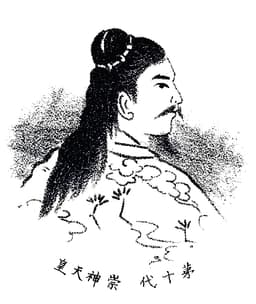
Emperor Sujin
Emperor · Ancient
51.6Total
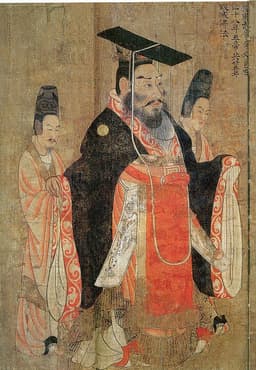
Yuwen Yong
Emperor · Medieval
67.2Total
Basic Information
Born
-148
543
Died
-30
578
Era
Ancient
Medieval
Nationality
Japan
China
Occupation
Emperor
Emperor
Civilization
Eastern
Eastern
Score Comparison
Military (10%)
50.0
78.0
Political (20%)
68.0
78.0
Influence (20%)
47.1
58.0
Legacy (20%)
43.3
54.0
Leadership (15%)
72.0
85.0
Strategy (15%)
30.3
69.1
TOTAL
51.6
67.2
Emperor Sujin — Complete Timeline
100 BC
Organized the Yamato StateReform◆ Major
Emperor Sujin is recorded in the Nihon Shoki as having organized the Yamato state, establishing administrative structures and military garrisons. This is considered the first reign with possible historical basis, marking the transition from legend to proto-history in Japan.
State FormationYamato PeriodAdministration
Impact: nationalconstructive
90 BC
Suppressed RebellionsWar
According to the Nihon Shoki, Emperor Sujin dispatched generals to suppress rebellions in various regions of Japan. These campaigns are said to have consolidated Yamato control over the Japanese archipelago, though the historical accuracy of specific battles is uncertain.
Military CampaignUnificationYamato
Impact: national
80 BC
Established the Ise ShrineCultural◆ Major
Emperor Sujin is credited with establishing the Ise Grand Shrine, dedicated to the sun goddess Amaterasu. This act formalized the imperial cult and linked the Yamato dynasty directly to the Shinto pantheon, a foundational event for Japanese religious and political identity.
ShintoImperial CultReligion
Impact: nationalconstructive
Yuwen Yong — Complete Timeline
574 AD
Suppression of Buddhism in Northern ZhouReform◆ Major
Emperor Wu of Northern Zhou (Yuwen Yong) ordered the suppression of Buddhism, confiscating monastic lands, forcing monks and nuns to return to lay life, and destroying temples. He aimed to increase state revenue and military manpower, strengthening the state.
Northern ZhouBuddhist PersecutionReform
Impact: nationaldestructive
577 AD
Conquest of Northern QiWar
Emperor Wu led a successful campaign against the rival Northern Qi dynasty, conquering its territory and unifying northern China under Northern Zhou. This victory ended the division of the north and set the stage for the Sui dynasty's unification of all China.
Northern ZhouUnificationNorthern Qi
Impact: regionalconstructive
578 AD
Death during campaign against the TurksWar◆ Major
Emperor Wu died of illness while leading a campaign against the G
Northern ZhouMilitary CampaignDeath
Impact: regionaltragic
Expert Analysis
Emperor Sujin vs Yuwen Yong
# The Emperor and the Sage-King: Two Paths to Unification
In the year 574, a Chinese emperor stood before his court and ordered the destruction of thousands of Buddhist temples, the confiscation of monastic lands, and the forced return of monks to secular life. Three thousand miles away and seven centuries earlier, a Japanese ruler was establishing the Ise Grand Shrine, laying the spiritual foundations for a nation that would endure for millennia. Yuwen Yong and Emperor Sujin never knew of each other's existence, yet both faced the same fundamental challenge: how to forge unity from chaos. Their solutions could not have been more different, and those differences illuminate the deepest currents of their civilizations.
Origins
Yuwen Yong was born in 543 into a world of fractured warring states. The Northern Wei dynasty had collapsed, and northern China was a patchwork of competing regimes where military might determined survival. The Yuwen clan were Xianbei warriors, steppe horsemen who had carved out the Northern Zhou dynasty through blood and iron. Yuwen Yong grew up in a court where assassination was common and loyalty was measured in swords. His father was killed when he was young, and he learned early that power belonged to those who could wield it without mercy.
Emperor Sujin, if the ancient chronicles can be trusted, emerged from a very different world. The Japan of the second century BCE was a land of clan chieftains and rice-growing villages, where authority flowed from spiritual connections rather than military conquest. The Nihon Shoki, compiled centuries after his supposed reign, presents Sujin as the tenth emperor of a lineage stretching back to the sun goddess herself. His historicity is debated, but the stories about him reveal what early Japanese society valued: ritual purity, divine mandate, and the careful ordering of society through ceremony rather than coercion.
Rise to Power
Yuwen Yong seized his throne through a coup in 560, deposing his cousin who had proven an incompetent ruler. He was seventeen years old. The Northern Zhou state he inherited was unstable, surrounded by enemies, and internally divided between Xianbei military elites and Chinese civil administrators. His path to power was direct and violent—he eliminated rivals, secured the loyalty of the army, and set his sights on conquest.
Emperor Sujin's rise, as recorded in the Nihon Shoki, followed a different logic. He inherited the throne through divine lineage, but his authority was challenged by rebellions. Rather than leading armies himself, he consulted oracles, performed rituals, and dispatched generals to suppress uprisings. When his own brother plotted against him, Sujin had him executed—but the chronicles emphasize that this was done according to proper procedure, with the gods consulted at every step. The difference is telling: Yuwen Yong acted as a warlord, Sujin as a priest-king.
Leadership and Governance
Yuwen Yong's reign was defined by three monumental decisions. In 574, he suppressed Buddhism, a move that shocked a society where monasteries had become wealthy landowners and tax shelters. His reasoning was pragmatic: Buddhist institutions had accumulated vast wealth that could fund his armies, and their influence undermined state authority. He confiscated lands, destroyed scriptures, and forced thousands of monks into military service. It was ruthless, efficient, and deeply unpopular among the faithful.
Two years later, in 577, Yuwen Yong conquered the rival Northern Qi dynasty, unifying northern China for the first time in decades. The campaign was a masterpiece of military strategy—he feigned weakness, struck at unexpected points, and exploited internal divisions among his enemies. His leadership score of 76.9 reflects a commander who understood that war was about logistics and morale as much as courage.
Emperor Sujin governed through organization rather than conquest. He is credited with establishing the administrative structure of the Yamato state, creating systems for tax collection, land distribution, and clan hierarchy. His strategy score of 46.8 suggests a ruler who thought in terms of institutions rather than battles. Where Yuwen Yong broke things to build anew, Sujin built upon what already existed.
Triumph and Tragedy
Yuwen Yong's greatest triumph was the unification of northern China. In 577, after the fall of Northern Qi, he controlled a territory stretching from the Yellow River to the Great Wall. His armies were the most powerful in East Asia, and he planned to conquer the south, reuniting the entire Chinese heartland under one rule.
But tragedy struck in 578. While leading a campaign against the Göktürks, the nomadic confederation that threatened his northern borders, Yuwen Yong fell ill and died. He was thirty-five years old. His death cut short the Northern Zhou's expansion, and within three years, his dynasty was overthrown by a general who founded the Sui dynasty—the very dynasty that would finally reunite all of China. Yuwen Yong had done the hard work; others reaped the reward.
Emperor Sujin's triumphs were quieter. He suppressed rebellions, established the Ise Shrine around 80 BCE, and created a state that would last for centuries. His tragedy was that we know so little about him—the Nihon Shoki's accounts are legendary, mixing history with myth. He may not have existed at all. His legacy score of 62.2 reflects this ambiguity.
Character and Destiny
Yuwen Yong was a man of action and impatience. He destroyed Buddhism not out of philosophical conviction but because it stood in his way. He died young because he pushed himself and his armies too hard. His character was forged in the crucible of war, and it made him effective but brittle.
Emperor Sujin was a figure of ritual and patience. He organized, he consulted, he built slowly. His character reflected a society that valued harmony over conquest, where the emperor's role was to connect heaven and earth rather than to command armies. His leadership score of 86.6 is the highest of any metric—he was a leader in the sense of being a unifying symbol, not a general.
Legacy
Yuwen Yong's legacy is mixed. He is remembered as the emperor who suppressed Buddhism and unified the north, but his dynasty collapsed immediately after his death. His military achievements paved the way for the Sui and Tang dynasties, but he is often overshadowed by the more famous unifiers who came after him. His total score of 74.0 places him as a competent but not transcendent figure.
Emperor Sujin's legacy is more symbolic than real. He is honored as the first emperor with plausible historicity, the organizer of the Yamato state, and the founder of the Ise Shrine—one of Japan's most sacred sites. His total score of 62.5 reflects his shadowy existence, but his influence on Japanese identity is profound.
Conclusion
Two rulers, separated by centuries and civilizations, faced the same question: how do you build a nation? Yuwen Yong answered with steel and fire, unifying through conquest and restructuring through force. Emperor Sujin answered with ritual and organization, unifying through shared belief and administrative order. Neither answer was complete—Yuwen Yong's work was undone by his death, and Sujin's existence may be a myth. But their stories remind us that unity is never achieved by one method alone. The sword and the shrine, the general and the priest, the destroyer and the builder—both are necessary, and both are fragile. The question is not which path is right, but which path is possible in the world you inhabit.
Rankings
🥇
Yuwen YongLeader
Mil: 78.0Pol: 78.0Inf: 58.0
67.2
🥈
Emperor Sujin
Mil: 50.0Pol: 68.0Inf: 47.1
51.6
+15.6 behind
How This Comparison Works
Algorithm
Each figure is scored on 6 dimensions (0—100 scale) based on structured historical data: Military (10%), Political (20%), Influence (20%), Legacy (20%), Leadership (15%), Strategy (15%). The weighted total produces the final ranking.
Data Sources
Scores are computed from structured sub-indicators in the database. Scale factors adjust for era (Ancient ×0.85, Modern ×1.0) and civilization size (Eastern ×1.05, Other ×0.80) to account for differences in population and military scale.
Maximum 3 Figures
Comparisons are limited to 2—3 figures to ensure readability and statistical meaningfulness.
Error Margins
±5 points per dimension — Sub-scores are derived from historical records with inherent uncertainty. Two figures within 5 points on a dimension should be considered roughly equivalent in that area.
Total Score Accuracy
±3 points overall — The weighted combination of 6 dimensions produces a total score with approximately ±3 points of uncertainty. Differences of less than 3 points are not statistically significant— the figures are effectively tied.
Known Limitations
- Historical records are incomplete and uneven across civilizations
- Figures from oral-tradition societies may be underrepresented
- Occupation labels can misclassify multi-role figures
- Scores measure capability and impact, not moral character
- Quantitative scoring is a comparison tool, not absolute truth
Capability Radar
Military (10%) — Battles & Warfare
Battles
10
75
Win Rate
10
80
Expansion
20
80
Political (20%) — Governance & Reform
Reform
50
85
Diplomacy
30
70
Economy
30
75
Influence (20%) — Cultural & Global Reach
Cultural
30
40
Global
10
40
Legacy (20%) — Historical Impact
Historical
40
65
Longevity
30
50
Leadership (15%) — Power & Stability
Tenure
40
60
Stability
40
70
Strategy (15%) — Tactics & Innovation
Strategy
10
75
Tactics
10
70
Reform
20
85
Similar Comparisons
Comments & Discussion
神社乱炖6/16/2026
拿推古天皇吹什么“七百年根基”?编年史靠谱吗?日本二世纪连个像样的文字记录都没有,全靠后世硬编。苏峻要是真那么神,怎么连个墓都找不到?北周武帝虽然狠,但人家有明确战绩和行政改革证据。拿神话当历史,真是文科生自我感动的高光时刻。
ReformOrRuin6/16/2026
Let's talk numbers: Sujin's lineage is literally unverifiable before the 4th century AD. The Kojiki is a genealogical fantasy compiled centuries later. Yuwen Yong left us with excavated bronze coins, restructured military commands, and clear edicts. That's not bias—that's evidence. One is a real politician facing real demographic collapse; the other is a literary device for imperial legitimacy. History favors the data, not the vibe.
铁血书虫6/16/2026
别急着给北周大帝戴高帽。他灭佛是玩火,直接让北方学风断档,僧侣逃亡南陈反而强化了对手的文化优势。苏峻至少在神道教框架下给了日本一个统一的精神坐标。你砸寺庙是破旧,我立神宫是立新。从长远看,软实力才是硬道理,佛屠能打仗,但庙堂续不了国祚。
Historian7316/16/2026
Yuwen Yong was the real deal—a warrior-emperor who didn't just talk about reform but physically smashed the Buddhist establishment to fund his war machine. Destroying 40,000 temples and forcing 300,000 monks back into labor? That's not persecution, that's a brutal but necessary economic reset. Sujin's shrine-building looks like a spiritual Disneyland in comparison. One man built an army; the other built a myth.
Chronicler82986/16/2026
The comparison is flawed from the start because it ignores that Yuwen Yong's anti-Buddhist crackdown was partly an internal Xianbei identity move against Sinicized elites. He wasn't just "unifying"—he was ethnic cleansing in policy form. Sujin, meanwhile, is so foggy we don't even know if he existed. The only honest take is: one is historically grounded and morally complex; the other is folklore used to justify Japan's invented imperial mystique.