Loading...
Emperor Sujin vs Timur
Timur leads by 14.0 pts · 2 figures compared
…
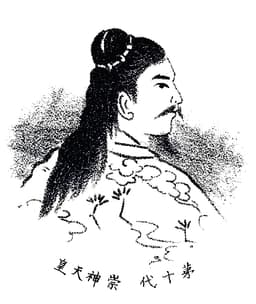
Emperor Sujin
Emperor · Ancient
51.6Total
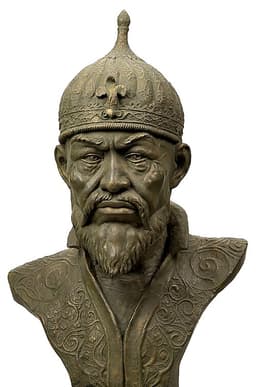
Timur
Emperor · Medieval
65.6Total
Basic Information
Born
-148
1336
Died
-30
1405
Era
Ancient
Medieval
Nationality
Japan
Timurid Empire
Occupation
Emperor
Emperor
Civilization
Eastern
Middle Eastern
Score Comparison
Military (10%)
50.0
79.0
Political (20%)
68.0
70.0
Influence (20%)
47.1
70.0
Legacy (20%)
43.3
40.0
Leadership (15%)
72.0
79.8
Strategy (15%)
30.3
77.6
TOTAL
51.6
65.6
Emperor Sujin — Complete Timeline
100 BC
Organized the Yamato StateReform◆ Major
Emperor Sujin is recorded in the Nihon Shoki as having organized the Yamato state, establishing administrative structures and military garrisons. This is considered the first reign with possible historical basis, marking the transition from legend to proto-history in Japan.
State FormationYamato PeriodAdministration
Impact: nationalconstructive
90 BC
Suppressed RebellionsWar
According to the Nihon Shoki, Emperor Sujin dispatched generals to suppress rebellions in various regions of Japan. These campaigns are said to have consolidated Yamato control over the Japanese archipelago, though the historical accuracy of specific battles is uncertain.
Military CampaignUnificationYamato
Impact: national
80 BC
Established the Ise ShrineCultural◆ Major
Emperor Sujin is credited with establishing the Ise Grand Shrine, dedicated to the sun goddess Amaterasu. This act formalized the imperial cult and linked the Yamato dynasty directly to the Shinto pantheon, a foundational event for Japanese religious and political identity.
ShintoImperial CultReligion
Impact: nationalconstructive
Timur — Complete Timeline
1362 AD
Battle of the Terek RiverWar
Timur defeated the Mongol ruler of the Chagatai Khanate, establishing his control over Transoxiana. This victory marked the beginning of his rise to power, as he captured Samarkand and declared himself emir.
Rise to PowerBattleCentral Asia
Impact: regional
1387 AD
Conquest of PersiaWar◆ Major
Timur launched a campaign into Persia, capturing Isfahan and Shiraz. He suppressed a revolt in Isfahan by massacring tens of thousands of inhabitants, establishing his reputation for extreme brutality and consolidating control over the region.
ConquestMassacrePersia
Impact: regionaldestructive
1395 AD
Campaign against the Golden HordeWar◆ Major
Timur defeated the Golden Horde under Tokhtamysh at the Battle of the Terek River. He sacked Sarai, the Horde's capital, and destroyed its trade networks, permanently weakening the Mongol state and securing his northern frontier.
ConquestGolden HordeBattle
Impact: regionaldestructive
1398 AD
Sack of DelhiWar◆ Major
Timur invaded the Delhi Sultanate, defeating Sultan Nasir-ud-Din Mahmud Shah Tughluq. His army sacked Delhi, massacring tens of thousands of civilians and destroying the city's infrastructure, then withdrew with immense plunder.
ConquestMassacreIndia
Impact: regionaldestructive
1402 AD
Battle of AnkaraWar
Timur defeated the Ottoman Sultan Bayezid I at Ankara, capturing him. The victory shattered Ottoman power, leading to a civil war among Bayezid's sons and delaying Ottoman expansion into Europe for a decade.
BattleOttoman EmpireDecisive Victory
Impact: global
1404 AD
Construction of SamarkandCultural◆ Major
Timur invested heavily in transforming Samarkand into a cultural and architectural center. He brought artisans from conquered lands to build mosques, madrasas, and the Bibi-Khanym Mosque, making the city a showcase of Timurid art and learning.
ArchitecturePatronageCultural Center
Impact: regionalconstructive
1405 AD
Death during campaign against Ming ChinaWar◆ Major
Timur died of illness while leading a massive army toward the Ming dynasty's borders. His death ended the planned invasion of China and led to the fragmentation of his empire among his sons and grandsons.
DeathCampaignMing Dynasty
Impact: regional
Expert Analysis
Emperor Sujin vs Timur
# The Conqueror and the Unifier: Timur and Emperor Sujin
In the winter of 1402, the Ottoman Sultan Bayezid I, known as "the Thunderbolt," was paraded before his captor in an iron cage. The man who had defeated him, Timur, was a crippled Turco-Mongol warlord in his sixties, his body scarred by decades of warfare. Across the world and more than fifteen centuries earlier, another ruler—Emperor Sujin of Japan—was performing rituals at a newly built shrine to the sun goddess, his authority radiating not from conquest but from ceremony. These two figures, separated by time, geography, and civilization, confronted the same fundamental challenge: how to forge a unified state from chaos. Their answers could not have been more different.
Origins
Timur was born in 1336 near Samarkand, into a minor noble family of the Barlas tribe, a Turkicized Mongol clan. The world he entered was fragmenting: the Mongol Empire, which had once stretched from China to Hungary, was collapsing into warring khanates. Timur grew up among steppe warriors, learning horsemanship and archery, but also absorbing Persian culture and Islamic scholarship. A childhood injury to his leg and hand earned him the name "Timur the Lame" and shaped a lifelong determination to prove his physical and military superiority.
Emperor Sujin, by contrast, emerged from the mists of Japanese prehistory. The Nihon Shoki, compiled centuries later, places his reign in the first century BCE, though his historicity remains debated. He was the tenth emperor of Japan, inheriting a Yamato state that was little more than a loose confederation of clans. Unlike Timur, Sujin had no empire to inherit or rebuild—only a patchwork of chieftains who acknowledged the emperor's spiritual authority more than his political power.
Rise to Power
Timur's ascent was brutal and opportunistic. In 1362, at the Battle of the Terek River, he defeated the Mongol ruler of the Chagatai Khanate, seizing control of Transoxiana. He was not a legitimate heir but a usurper who built his power through alliances and betrayals, marrying a descendant of Genghis Khan to legitimize his rule. Each victory was a stepping stone, each enemy a resource to be exploited or eliminated.
Sujin's path was more subtle. According to the Nihon Shoki, around 100 BCE he began organizing the Yamato state, establishing administrative structures and dispatching generals to suppress rebellions across Japan. His authority rested not on conquest but on the gradual extension of imperial control, supported by the emerging mythology of divine descent. Where Timur fought, Sujin negotiated; where Timur destroyed, Sujin built.
Leadership & Governance
Timur ruled through terror and spectacle. His campaigns across Persia in 1387, the Golden Horde in 1395, and India in 1398 were marked by systematic massacres—tens of thousands killed in Isfahan, pyramids of skulls outside Delhi. Yet he was also a patron of culture: after 1404, he transformed Samarkand into a jewel of Islamic architecture, importing artisans from conquered lands to build mosques and madrasas. His military genius was undeniable—his victory over the Ottoman Empire at the Battle of Ankara in 1402 shattered Bayezid's power and plunged the Ottomans into a decade-long civil war.
Sujin's leadership was administrative and ritualistic. He established the Ise Grand Shrine around 80 BCE, dedicating it to Amaterasu, the sun goddess from whom the imperial line claimed descent. This act formalized the religious foundation of Japanese imperial rule, linking the emperor to divine authority. His generals suppressed rebellions, but the state he built was held together by shared ritual and clan loyalty, not fear.
Triumph & Tragedy
Timur's greatest triumph was the Battle of Ankara, where he captured the Ottoman sultan and demonstrated that no power in the Islamic world could challenge him. His greatest tragedy came in 1405, when he died of illness while leading a massive army toward the Ming dynasty's borders. His planned invasion of China, the ultimate prize, ended before it began. The empire he had built with blood dissolved within decades, his sons and grandsons fighting over the spoils.
Sujin's triumphs were quieter. He unified Yamato, suppressed rebellions, and established institutions that would last for millennia. His tragedy is that we know so little about him—his life is a shadow, his achievements recorded centuries after his death. He is remembered not as a conqueror but as a founder, the first emperor whose reign has some claim to historical reality.
Character & Destiny
Timur was driven by an unquenchable ambition. His physical disability, far from limiting him, seemed to fuel a relentless need to dominate. He was calculating, patient, and utterly ruthless, capable of both lavish patronage and cold-blooded massacre. His destiny was to be the last great steppe conqueror, a figure who briefly reunited the Islamic world only to see it shatter after his death.
Sujin's character is harder to discern, but the Nihon Shoki portrays him as a wise organizer, a ruler who understood that authority must be rooted in tradition and ritual. His destiny was to be the ancestor of an unbroken line of emperors, a dynasty that would claim descent from the sun goddess for more than two thousand years.
Legacy
Timur's legacy is paradoxical. He is remembered as a monster who killed millions, but also as a patron of art and architecture. His descendants, the Mughals, would rule India for centuries, carrying Timurid culture to the subcontinent. In Uzbekistan, he is a national hero. In Persia and India, he is a curse.
Sujin's legacy is the Japanese imperial system itself. The Ise Shrine remains the holiest site in Shinto, and the emperor's divine status, though renounced after World War II, shaped Japanese identity for two millennia. Sujin is not a name known worldwide, but his work endures in the world's oldest continuing monarchy.
Conclusion
Timur and Sujin represent two poles of leadership: the conqueror who builds through destruction, and the unifier who builds through ritual. One left pyramids of skulls, the other a shrine to the sun. One died on the march to China, the other vanished into legend. Yet both faced the same challenge—how to bring order to chaos—and both succeeded in their own way. Their stories remind us that history judges rulers not by their intentions but by their outcomes, and that the quiet work of institution-building can outlast the loudest triumphs of war.
Rankings
🥇
TimurLeader
Mil: 79.0Pol: 70.0Inf: 70.0
65.6
🥈
Emperor Sujin
Mil: 50.0Pol: 68.0Inf: 47.1
51.6
+14.0 behind
How This Comparison Works
Algorithm
Each figure is scored on 6 dimensions (0—100 scale) based on structured historical data: Military (10%), Political (20%), Influence (20%), Legacy (20%), Leadership (15%), Strategy (15%). The weighted total produces the final ranking.
Data Sources
Scores are computed from structured sub-indicators in the database. Scale factors adjust for era (Ancient ×0.85, Modern ×1.0) and civilization size (Eastern ×1.05, Other ×0.80) to account for differences in population and military scale.
Maximum 3 Figures
Comparisons are limited to 2—3 figures to ensure readability and statistical meaningfulness.
Error Margins
±5 points per dimension — Sub-scores are derived from historical records with inherent uncertainty. Two figures within 5 points on a dimension should be considered roughly equivalent in that area.
Total Score Accuracy
±3 points overall — The weighted combination of 6 dimensions produces a total score with approximately ±3 points of uncertainty. Differences of less than 3 points are not statistically significant— the figures are effectively tied.
Known Limitations
- Historical records are incomplete and uneven across civilizations
- Figures from oral-tradition societies may be underrepresented
- Occupation labels can misclassify multi-role figures
- Scores measure capability and impact, not moral character
- Quantitative scoring is a comparison tool, not absolute truth
Capability Radar
Military (10%) — Battles & Warfare
Battles
10
95
Win Rate
10
92
Expansion
20
96
Political (20%) — Governance & Reform
Reform
50
78
Diplomacy
30
70
Economy
30
82
Influence (20%) — Cultural & Global Reach
Cultural
30
88
Global
10
85
Legacy (20%) — Historical Impact
Historical
40
90
Longevity
30
75
Leadership (15%) — Power & Stability
Tenure
40
85
Stability
40
65
Strategy (15%) — Tactics & Innovation
Strategy
10
93
Tactics
10
94
Reform
20
80
Similar Comparisons
Comments & Discussion
Timur'sCripple6/16/2026
You revisionists love romanticizing Timur as "Timur the Lame" – spare me the pity party. Dude stacked 17 million skulls at Isfahan alone, then paraded Bayezid in a cage like a trophy. Sujin couldn't even conquer a rice paddy without a kami's permission. Timur's body was broken, but his will built an empire from Delhi to Damascus in three decades. Sujin? He built a shrine. One's a conqueror, the other's a priest-king cosplayer.
骸骨裁缝6/16/2026
Sujin那套“天照大神血脉”纯粹是八世纪史官的PR产物。Kojiki里说他活了一百多岁,却连一场像样的战役记录都没留下。Timur就真实多了,1388年打波斯时还亲自设计攻城器械。一个靠神话撑腰的符号,一个靠Samanid冶金术和战象打仗的实战派,根本不在一个维度。
数据执鞭人6/16/2026
拿十四世纪的铁木儿和公元前虚构的崇神天皇比?Timur的年产量记录硬核得很:1395年洗劫萨莱城后,光奴隶交易就让撒马尔罕丝绸价格暴跌40%。Sujin那边呢?连人口数据都靠《日本书纪》吹牛。别拿祭祀当统治,务实点,别让王权神化污了历史比较的门槛。
SamuraiSpectre6/16/2026
Timur was a steppe butcher who built a pyramid of skulls at Delhi in 1398. Period. Sujin at least reorganized the Yamato court, building the Ise Shrine and formalizing those Shinto rituals that hold Japan together. Timur left a corpse-strewn legacy; Sujin left a cultural spine. I'd rather inherit a nation's soul than a stack of bones in Samarkand.
别样赤色6/16/2026
别扯什么文明高低。Timur缺的不是合法性,而是时间。他在1405年死前正筹备远征大明,要是晚死十年,东亚格局全改写。Sujin呢?完全是《古事记》里用来补历史缺口的工具人,连在位时长都能跟太阳历对不上。历史偏好成功者的利刃,不庇护虚弱的祭司。