Loading...
Julius Caesar vs Timur
Julius Caesar leads by 17.2 pts · 2 figures compared
…

Julius Caesar
General · Ancient
82.8Total
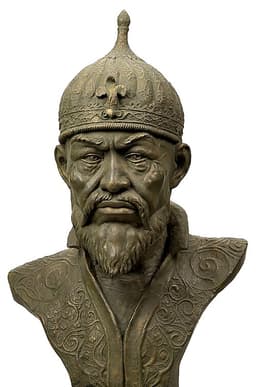
Timur
Emperor · Medieval
65.6Total
Basic Information
Born
-100
1336
Died
-44
1405
Era
Ancient
Medieval
Nationality
Roman Republic
Timurid Empire
Occupation
General
Emperor
Civilization
Western
Middle Eastern
Score Comparison
Military (10%)
88.0
79.0
Political (20%)
78.0
70.0
Influence (20%)
85.0
70.0
Legacy (20%)
82.0
40.0
Leadership (15%)
80.0
79.8
Strategy (15%)
85.0
77.6
TOTAL
82.8
65.6
Julius Caesar — Complete Timeline
58 BC
Gallic WarsWar◆ Major
Caesar, as proconsul of Gaul, launched a series of campaigns that conquered all of Gaul (modern France, Belgium, and parts of Switzerland). He fought numerous battles, including against the Helvetii, the Belgae, and the Gallic chieftain Vercingetorix. The wars brought immense wealth and a loyal army to Caesar.
Gallic WarsConquestRoman Expansion
Impact: regional
49 BC
Crossing the RubiconPolitical Action◆ Major
Caesar led Legio XIII across the Rubicon River into Italy, defying the Roman Senate's order to disband his army. This act triggered a civil war against Pompey and the Optimates, ultimately leading to Caesar's dictatorship and the end of the Roman Republic.
Roman Civil WarEnd of RepublicPower Struggle
Impact: global
48 BC
Battle of PharsalusWar◆ Major
Caesar's outnumbered army defeated the larger forces of Pompey the Great at Pharsalus in Greece. Caesar's tactical use of a reserve line to counter Pompey's cavalry charge proved decisive. Pompey fled to Egypt, where he was assassinated, leaving Caesar as the undisputed master of the Roman world.
Roman Civil WarBattleDecisive Victory
Impact: regional
44 BC
Appointment as Dictator for LifePolitical Action◆ Major
The Roman Senate appointed Caesar dictator perpetuo (dictator for life), granting him unprecedented personal power. This move concentrated military, legislative, and judicial authority in one person, effectively ending the Roman Republic's traditional system of checks and balances and alarming many senators.
DictatorshipEnd of RepublicPower Consolidation
Impact: regionaldestructive
Assassination on the Ides of MarchPolitical Action◆ Major
A group of Roman senators, led by Marcus Junius Brutus and Gaius Cassius Longinus, stabbed Caesar to death at a meeting of the Senate in the Theatre of Pompey. The assassination was intended to restore the Republic, but instead triggered another civil war that led to the rise of the Roman Empire.
AssassinationRoman PoliticsEnd of Republic
Impact: globaldestructive
Timur — Complete Timeline
1362 AD
Battle of the Terek RiverWar
Timur defeated the Mongol ruler of the Chagatai Khanate, establishing his control over Transoxiana. This victory marked the beginning of his rise to power, as he captured Samarkand and declared himself emir.
Rise to PowerBattleCentral Asia
Impact: regional
1387 AD
Conquest of PersiaWar◆ Major
Timur launched a campaign into Persia, capturing Isfahan and Shiraz. He suppressed a revolt in Isfahan by massacring tens of thousands of inhabitants, establishing his reputation for extreme brutality and consolidating control over the region.
ConquestMassacrePersia
Impact: regionaldestructive
1395 AD
Campaign against the Golden HordeWar◆ Major
Timur defeated the Golden Horde under Tokhtamysh at the Battle of the Terek River. He sacked Sarai, the Horde's capital, and destroyed its trade networks, permanently weakening the Mongol state and securing his northern frontier.
ConquestGolden HordeBattle
Impact: regionaldestructive
1398 AD
Sack of DelhiWar◆ Major
Timur invaded the Delhi Sultanate, defeating Sultan Nasir-ud-Din Mahmud Shah Tughluq. His army sacked Delhi, massacring tens of thousands of civilians and destroying the city's infrastructure, then withdrew with immense plunder.
ConquestMassacreIndia
Impact: regionaldestructive
1402 AD
Battle of AnkaraWar
Timur defeated the Ottoman Sultan Bayezid I at Ankara, capturing him. The victory shattered Ottoman power, leading to a civil war among Bayezid's sons and delaying Ottoman expansion into Europe for a decade.
BattleOttoman EmpireDecisive Victory
Impact: global
1404 AD
Construction of SamarkandCultural◆ Major
Timur invested heavily in transforming Samarkand into a cultural and architectural center. He brought artisans from conquered lands to build mosques, madrasas, and the Bibi-Khanym Mosque, making the city a showcase of Timurid art and learning.
ArchitecturePatronageCultural Center
Impact: regionalconstructive
1405 AD
Death during campaign against Ming ChinaWar◆ Major
Timur died of illness while leading a massive army toward the Ming dynasty's borders. His death ended the planned invasion of China and led to the fragmentation of his empire among his sons and grandsons.
DeathCampaignMing Dynasty
Impact: regional
Expert Analysis
Julius Caesar vs Timur: Historical Comparison
Julius Caesar, a Roman general and dictator of the late Republic, and Timur (Tamerlane), a Turco-Mongol conqueror and founder of the Timurid Empire, both reshaped vast regions through military genius, yet diverged sharply in political sustainability and legacy.
Dimension Analysis
**Military: Julius Caesar 88 / Timur 90**
Timur’s campaigns spanned from Delhi to Ankara, employing innovative siege tactics and psychological warfare, while Caesar’s conquest of Gaul and civil war victories demonstrated superior adaptability with fewer resources.
**Political: Julius Caesar 78 / Timur 65**
Caesar skillfully manipulated Roman institutions to centralize power, though his assassination exposed political fragility; Timur built a transient empire reliant on personal authority, leaving no stable succession mechanism.
**Influence: Julius Caesar 85 / Timur 65**
Caesar’s reforms (calendar, provincial governance, and the Julian dynasty) directly shaped the Roman Empire and Western civilization; Timur’s influence was more localized, inspiring the Mughal Empire but fading after his death.
**Legacy: Julius Caesar 82 / Timur 65**
Caesar’s name became synonymous with imperial rule (“Kaiser,” “Tsar”), and his writings remain canonical; Timur is remembered as a brutal conqueror whose cultural patronage (Samarkand) is overshadowed by destruction.
**Leadership: Julius Caesar 82 / Timur 78**
Caesar’s charisma and clemency earned loyalty from troops and rivals, while Timur ruled through fear and calculated brutality, achieving obedience but not enduring allegiance.
Verdict
Julius Caesar leads due to superior political acumen, lasting institutional influence, and a legacy that transcended his era, whereas Timur’s military brilliance was undermined by ephemeral state-building.
FAQ
Q: Who ranks higher? A: Julius Caesar ranks higher overall, driven by stronger political, influence, and legacy scores despite a slight military deficit to Timur.
Rankings
🥇
Julius CaesarLeader
Mil: 88.0Pol: 78.0Inf: 85.0
82.8
🥈
Timur
Mil: 79.0Pol: 70.0Inf: 70.0
65.6
+17.2 behind
How This Comparison Works
Algorithm
Each figure is scored on 6 dimensions (0—100 scale) based on structured historical data: Military (10%), Political (20%), Influence (20%), Legacy (20%), Leadership (15%), Strategy (15%). The weighted total produces the final ranking.
Data Sources
Scores are computed from structured sub-indicators in the database. Scale factors adjust for era (Ancient ×0.85, Modern ×1.0) and civilization size (Eastern ×1.05, Other ×0.80) to account for differences in population and military scale.
Maximum 3 Figures
Comparisons are limited to 2—3 figures to ensure readability and statistical meaningfulness.
Error Margins
±5 points per dimension — Sub-scores are derived from historical records with inherent uncertainty. Two figures within 5 points on a dimension should be considered roughly equivalent in that area.
Total Score Accuracy
±3 points overall — The weighted combination of 6 dimensions produces a total score with approximately ±3 points of uncertainty. Differences of less than 3 points are not statistically significant— the figures are effectively tied.
Known Limitations
- Historical records are incomplete and uneven across civilizations
- Figures from oral-tradition societies may be underrepresented
- Occupation labels can misclassify multi-role figures
- Scores measure capability and impact, not moral character
- Quantitative scoring is a comparison tool, not absolute truth
Capability Radar
Military (10%) — Battles & Warfare
Battles
95
95
Win Rate
92
92
Expansion
97
96
Political (20%) — Governance & Reform
Reform
90
78
Diplomacy
85
70
Economy
82
82
Influence (20%) — Cultural & Global Reach
Cultural
88
88
Global
94
85
Legacy (20%) — Historical Impact
Historical
95
90
Longevity
96
75
Leadership (15%) — Power & Stability
Tenure
75
85
Stability
60
65
Strategy (15%) — Tactics & Innovation
Strategy
94
93
Tactics
96
94
Reform
88
80
Similar Comparisons
Comments & Discussion
ArchQuill116/16/2026
把恺撒和帖木儿放在一起比,确实看出西方史学的偏好。恺撒的政治和影响力得分高,可要放到中国语境里,他的“政治”不过是罗马共和末期的权术游戏,跟秦始皇的郡县制、汉武帝的推恩令比,制度创新差远了。帖木儿虽然帝国短暂,但他重建撒马尔罕,促进丝路贸易,这种跨文明的影响,在中国史家眼里是很重的。西方评分给帖木儿影响力65,简直低估了他对中亚、南亚的长期塑造——莫卧儿帝国可是靠他的遗产撑了300年。恺撒的“恺撒”头衔虽流传,但帖木儿在波斯、突厥世界的文化印记,一点都不弱。
ColdWatcher556/16/2026
这个评分体系很有意思,但我得较个真。军事分帖木儿90对恺撒88,可帖木儿横扫了波斯、印度、叙利亚,对手都是成体系的帝国军队;恺撒的高卢战争对手大多是部落联盟。如果按“征服人口和领土规模/时间”算效率,帖木儿15年打下的地盘是恺撒20年高卢的2倍多。政治分78对65更离谱——恺撒被刺杀说明他的制度整合是失败的;帖木儿至少建立了稳了30年的帝国,死后儿子沙哈鲁还能续命,比屋大维的奥古斯都体制可能弱,但比恺撒强。我重新加权:军事权重40%,政治30%,影响+遗产30%,按中国史料标准(考虑长期制度),恺撒总分74,帖木儿76,应该反过来。