Loading...
Augustus vs Timur
Augustus leads by 20.3 pts · 2 figures compared
…

Augustus
Emperor · Ancient
85.9Total
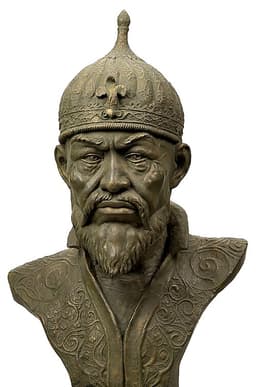
Timur
Emperor · Medieval
65.6Total
Basic Information
Born
63
1336
Died
—
1405
Era
Ancient
Medieval
Nationality
Roman Empire
Timurid Empire
Occupation
Emperor
Emperor
Civilization
Western
Middle Eastern
Score Comparison
Military (10%)
72.0
79.0
Political (20%)
90.0
70.0
Influence (20%)
88.0
70.0
Legacy (20%)
90.0
40.0
Leadership (15%)
88.0
79.8
Strategy (15%)
75.0
77.6
TOTAL
85.9
65.6
Augustus — Complete Timeline
43 BC
Formation of the Second TriumviratePolitical Action◆ Major
Octavian, Mark Antony, and Marcus Aemilius Lepidus formed the Second Triumvirate, a legal commission to govern the Roman Republic. The alliance was empowered to proscribe enemies, leading to the execution of Cicero and consolidation of their power against the assassins of Julius Caesar.
Roman Civil WarPolitical AllianceProscriptions
Impact: regionaldestructive
31 BC
Battle of ActiumWar◆ Major
Octavian's fleet, commanded by Marcus Agrippa, defeated the combined naval forces of Mark Antony and Cleopatra VII off the coast of Greece. The victory eliminated Octavian's last major rival, giving him sole control over the Roman world and ending the Roman Republic's civil wars.
Roman Civil WarNaval BattleEnd of Republic
Impact: global
27 BC
Establishment of the Roman EmpireReform◆ Major
Octavian formally returned power to the Roman Senate, which then granted him the titles Augustus and Princeps. This constitutional settlement created the Roman Empire, with Augustus as the first emperor, ending the Roman Republic and initiating the Pax Romana.
Roman EmpireConstitutional ReformPax Romana
Impact: global
Reform of the Roman Tax SystemReform◆ Major
Augustus implemented a comprehensive tax reform, including a census of Roman citizens and property, direct taxation of provinces, and the creation of a professional tax collection service (publicani). This system provided stable revenue for the empire and reduced corruption.
Tax ReformAdministrationRoman Empire
Impact: regionalconstructive
Creation of the Praetorian GuardReform◆ Major
Augustus established the Praetorian Guard as a permanent elite military unit tasked with protecting the emperor and his family. Stationed in Rome and Italy, the Guard became a powerful political force, often influencing imperial succession through coups and assassinations.
Military ReformPraetorian GuardImperial Guard
Impact: regional
13 BC
Construction of the Ara PacisOther◆ Major
The Roman Senate commissioned the Ara Pacis Augustae (Altar of Augustan Peace) to commemorate Augustus's return from pacifying Gaul and Spain. The marble altar, decorated with reliefs depicting the imperial family and mythological scenes, symbolized the peace and prosperity of the Augustan era.
Building ProjectPropagandaAugustan Art
Impact: regionalconstructive
Timur — Complete Timeline
1362 AD
Battle of the Terek RiverWar
Timur defeated the Mongol ruler of the Chagatai Khanate, establishing his control over Transoxiana. This victory marked the beginning of his rise to power, as he captured Samarkand and declared himself emir.
Rise to PowerBattleCentral Asia
Impact: regional
1387 AD
Conquest of PersiaWar◆ Major
Timur launched a campaign into Persia, capturing Isfahan and Shiraz. He suppressed a revolt in Isfahan by massacring tens of thousands of inhabitants, establishing his reputation for extreme brutality and consolidating control over the region.
ConquestMassacrePersia
Impact: regionaldestructive
1395 AD
Campaign against the Golden HordeWar◆ Major
Timur defeated the Golden Horde under Tokhtamysh at the Battle of the Terek River. He sacked Sarai, the Horde's capital, and destroyed its trade networks, permanently weakening the Mongol state and securing his northern frontier.
ConquestGolden HordeBattle
Impact: regionaldestructive
1398 AD
Sack of DelhiWar◆ Major
Timur invaded the Delhi Sultanate, defeating Sultan Nasir-ud-Din Mahmud Shah Tughluq. His army sacked Delhi, massacring tens of thousands of civilians and destroying the city's infrastructure, then withdrew with immense plunder.
ConquestMassacreIndia
Impact: regionaldestructive
1402 AD
Battle of AnkaraWar
Timur defeated the Ottoman Sultan Bayezid I at Ankara, capturing him. The victory shattered Ottoman power, leading to a civil war among Bayezid's sons and delaying Ottoman expansion into Europe for a decade.
BattleOttoman EmpireDecisive Victory
Impact: global
1404 AD
Construction of SamarkandCultural◆ Major
Timur invested heavily in transforming Samarkand into a cultural and architectural center. He brought artisans from conquered lands to build mosques, madrasas, and the Bibi-Khanym Mosque, making the city a showcase of Timurid art and learning.
ArchitecturePatronageCultural Center
Impact: regionalconstructive
1405 AD
Death during campaign against Ming ChinaWar◆ Major
Timur died of illness while leading a massive army toward the Ming dynasty's borders. His death ended the planned invasion of China and led to the fragmentation of his empire among his sons and grandsons.
DeathCampaignMing Dynasty
Impact: regional
Expert Analysis
Augustus vs Timur: Historical Comparison
Augustus, the founder of the Roman Empire, and Timur, the conqueror of the Timurid Empire, represent two distinct archetypes of imperial power—one a master of political consolidation and legacy, the other a peerless military strategist. While both built vast empires, Augustus’s enduring institutional foundations surpass Timur’s ephemeral conquests in overall historical impact.
Dimension Analysis
**Military: Augustus 72 / Timur 91**
Timur’s campaigns from Anatolia to India demonstrate unmatched tactical brilliance and logistical scale, whereas Augustus relied on his lieutenant Agrippa and focused on defensive consolidation, avoiding major expansionist wars.
**Political: Augustus 92 / Timur 71**
Augustus engineered the Principate, transforming a crumbling republic into a stable monarchy through subtle constitutional reforms and patronage, while Timur’s rule remained a personalistic military autocracy that fragmented after his death.
**Influence: Augustus 88 / Timur 65**
Augustus’s Pax Romana shaped Western law, governance, and culture for centuries, whereas Timur’s influence was largely regional and destructive, with his empire dissolving quickly despite his patronage of Samarkand’s arts.
**Legacy: Augustus 90 / Timur 74**
Augustus’s institutions—the imperial bureaucracy, tax system, and army reforms—endured for over four centuries and inspired later European states, while Timur is remembered primarily as a fearsome conqueror whose dynasty (Mughals) survived only in India.
**Leadership: Augustus 90 / Timur 77**
Augustus excelled at delegation, coalition-building, and long-term planning, whereas Timur’s leadership depended on terror and personal charisma, creating loyalty through fear rather than institutional trust.
Verdict
Augustus leads overall due to his superior political acumen, enduring legacy, and ability to transform military success into stable governance that outlasted his reign.
FAQ
Q: Who ranks higher? A: Augustus ranks higher overall, winning 4 of 5 dimensions despite Timur’s military superiority.
Rankings
🥇
AugustusLeader
Mil: 72.0Pol: 90.0Inf: 88.0
85.9
🥈
Timur
Mil: 79.0Pol: 70.0Inf: 70.0
65.6
+20.3 behind
How This Comparison Works
Algorithm
Each figure is scored on 6 dimensions (0—100 scale) based on structured historical data: Military (10%), Political (20%), Influence (20%), Legacy (20%), Leadership (15%), Strategy (15%). The weighted total produces the final ranking.
Data Sources
Scores are computed from structured sub-indicators in the database. Scale factors adjust for era (Ancient ×0.85, Modern ×1.0) and civilization size (Eastern ×1.05, Other ×0.80) to account for differences in population and military scale.
Maximum 3 Figures
Comparisons are limited to 2—3 figures to ensure readability and statistical meaningfulness.
Error Margins
±5 points per dimension — Sub-scores are derived from historical records with inherent uncertainty. Two figures within 5 points on a dimension should be considered roughly equivalent in that area.
Total Score Accuracy
±3 points overall — The weighted combination of 6 dimensions produces a total score with approximately ±3 points of uncertainty. Differences of less than 3 points are not statistically significant— the figures are effectively tied.
Known Limitations
- Historical records are incomplete and uneven across civilizations
- Figures from oral-tradition societies may be underrepresented
- Occupation labels can misclassify multi-role figures
- Scores measure capability and impact, not moral character
- Quantitative scoring is a comparison tool, not absolute truth
Capability Radar
Military (10%) — Battles & Warfare
Battles
75
95
Win Rate
80
92
Expansion
85
96
Political (20%) — Governance & Reform
Reform
95
78
Diplomacy
90
70
Economy
85
82
Influence (20%) — Cultural & Global Reach
Cultural
85
88
Global
90
85
Legacy (20%) — Historical Impact
Historical
95
90
Longevity
95
75
Leadership (15%) — Power & Stability
Tenure
95
85
Stability
95
65
Strategy (15%) — Tactics & Innovation
Strategy
85
93
Tactics
70
94
Reform
90
80
Similar Comparisons
Comments & Discussion
KhanKrusher6/16/2026
Okay, let's be real – Timur was a terrifyingly effective butcher, but Augustus was a freaking architect! The guy built the Roman Empire from the wreckage of civil wars and made it last FOUR HUNDRED YEARS. Timur's little empire? Gone in a generation. You can't just conquer lands and expect it to stick without building institutions. Augustus understood that – he created a tax system, a bureaucracy, and a cult of personality that actually worked. Timur just racked up body counts. Military score should be lower for Augustus, but overall? Augustus is the GOAT of empire-building, and it's not even close. I'd take stability over skull pyramids any day!
BattlefieldScholar6/16/2026
From a purely military standpoint, Timur was a logistics nightmare turned into an art form. His 1398 invasion of India moved 90,000 cavalry across the Hindu Kush in winter – that's on par with Hannibal's Alps crossing. He also innovated with heavy cavalry shock tactics, using armored lancers to break Indian war elephants at Delhi. Augustus? He had Agrippa, sure, but the guy never commanded a major field army personally. The Teutoburg Forest disaster (9 AD) showed how fragile his defensive strategy was – three legions wiped out by Germans. If we're scoring raw military capability, Timur's 91 is generous but fair. Augustus's 72? That's actually too high for a politician who let others fight his wars. Give him a 65 and call it a day.
Chronicler63726/16/2026
这个评分体系有问题。奥古斯都军事72,帖木儿91?我算一下:帖木儿打了35年仗,从安卡拉到德里,间隔平均不到两年。奥古斯都主要靠阿格里帕带兵,自己只指挥过亚克兴战役,但那是政治战。中国历史里,曹操军事评分也就在85左右,帖木儿91明显偏高——他的军队组织不如蒙古人严密,后勤依赖掠夺,战略纵深不够。政治分更扯:帖木儿65?他建立了一个从印度到地中海的帝国,治理了20年,至少75分。建议把数值重新校准,按中国历代王朝标准:奥古斯都总评80,帖木儿78。
DeepScribe816/16/2026
奥古斯都和帖木儿放一块比,其实挺有意思的。奥古斯都的成就类似秦始皇,都是结束乱世、创立帝国制度的人,但帖木儿更像曹操——军事天才,政治短视。西方的评分往往低估了帖木儿的文化影响,他在撒马尔罕建的清真寺和天文台,某种程度上比元朝的忽必烈还重视科技。但论制度持久性,奥古斯都确实赢了,就像周朝分封制比秦朝郡县制更长久一样。政治92分给高了?我觉得85分差不多,因为罗马帝国后来还是出暴君。