Loading...
Cyrus the Great vs Timur
Cyrus the Great leads by 18.3 pts · 2 figures compared
…
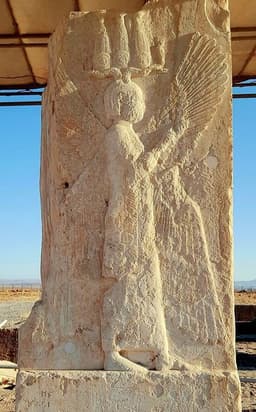
Cyrus the Great
Emperor · Ancient
83.9Total
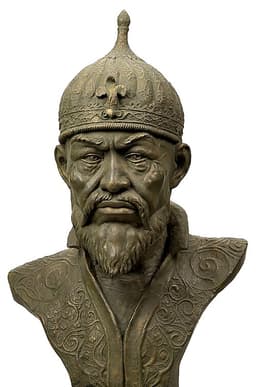
Timur
Emperor · Medieval
65.6Total
Basic Information
Born
-600
1336
Died
-530
1405
Era
Ancient
Medieval
Nationality
Persia
Timurid Empire
Occupation
Emperor
Emperor
Civilization
Middle Eastern
Middle Eastern
Score Comparison
Military (10%)
82.0
79.0
Political (20%)
85.0
70.0
Influence (20%)
85.0
70.0
Legacy (20%)
90.0
40.0
Leadership (15%)
78.0
79.8
Strategy (15%)
75.0
77.6
TOTAL
83.9
65.6
Cyrus the Great — Complete Timeline
550 BC
Founding of the Achaemenid EmpirePolitical Action
Cyrus led a rebellion against the Median Empire, defeating King Astyages and capturing Ecbatana. He then united the Persian and Median tribes, establishing the Achaemenid Empire, which became the largest empire the world had yet seen.
Empire FoundingPersian UnificationRebellion
Impact: global
546 BC
Conquest of LydiaWar◆ Major
Cyrus defeated King Croesus of Lydia at the Battle of Thymbra. The Lydian capital Sardis was captured, and Croesus was taken prisoner. This conquest brought Anatolia under Persian control and secured access to the Aegean coast.
Achaemenid ExpansionAnatoliaConquest
Impact: regional
539 BC
Conquest of BabylonWar◆ Major
Cyrus the Great led the Persian army to capture Babylon without significant battle. The city's gates were opened, and Cyrus entered peacefully. This conquest added Mesopotamia to the Achaemenid Empire and marked the end of the Neo-Babylonian Empire.
Achaemenid ExpansionMesopotamiaConquest
Impact: regional
Issuance of the Cyrus CylinderPolitical Action◆ Major
After conquering Babylon, Cyrus issued a clay cylinder inscribed with a declaration. It described his policy of restoring temples, repatriating displaced peoples, and allowing religious freedom. The cylinder is often cited as an early charter of human rights.
Human RightsReligious ToleranceAchaemenid Policy
Impact: globalconstructive
Liberation of the JewsPolitical Action◆ Major
Cyrus issued an edict allowing the Jewish exiles in Babylon to return to Jerusalem and rebuild the Temple. This event is recorded in the biblical Book of Ezra and is a key moment in Jewish history, ending the Babylonian captivity.
Jewish HistoryReligious FreedomReturn from Exile
Impact: regionalconstructive
Timur — Complete Timeline
1362 AD
Battle of the Terek RiverWar
Timur defeated the Mongol ruler of the Chagatai Khanate, establishing his control over Transoxiana. This victory marked the beginning of his rise to power, as he captured Samarkand and declared himself emir.
Rise to PowerBattleCentral Asia
Impact: regional
1387 AD
Conquest of PersiaWar◆ Major
Timur launched a campaign into Persia, capturing Isfahan and Shiraz. He suppressed a revolt in Isfahan by massacring tens of thousands of inhabitants, establishing his reputation for extreme brutality and consolidating control over the region.
ConquestMassacrePersia
Impact: regionaldestructive
1395 AD
Campaign against the Golden HordeWar◆ Major
Timur defeated the Golden Horde under Tokhtamysh at the Battle of the Terek River. He sacked Sarai, the Horde's capital, and destroyed its trade networks, permanently weakening the Mongol state and securing his northern frontier.
ConquestGolden HordeBattle
Impact: regionaldestructive
1398 AD
Sack of DelhiWar◆ Major
Timur invaded the Delhi Sultanate, defeating Sultan Nasir-ud-Din Mahmud Shah Tughluq. His army sacked Delhi, massacring tens of thousands of civilians and destroying the city's infrastructure, then withdrew with immense plunder.
ConquestMassacreIndia
Impact: regionaldestructive
1402 AD
Battle of AnkaraWar
Timur defeated the Ottoman Sultan Bayezid I at Ankara, capturing him. The victory shattered Ottoman power, leading to a civil war among Bayezid's sons and delaying Ottoman expansion into Europe for a decade.
BattleOttoman EmpireDecisive Victory
Impact: global
1404 AD
Construction of SamarkandCultural◆ Major
Timur invested heavily in transforming Samarkand into a cultural and architectural center. He brought artisans from conquered lands to build mosques, madrasas, and the Bibi-Khanym Mosque, making the city a showcase of Timurid art and learning.
ArchitecturePatronageCultural Center
Impact: regionalconstructive
1405 AD
Death during campaign against Ming ChinaWar◆ Major
Timur died of illness while leading a massive army toward the Ming dynasty's borders. His death ended the planned invasion of China and led to the fragmentation of his empire among his sons and grandsons.
DeathCampaignMing Dynasty
Impact: regional
Expert Analysis
Cyrus the Great vs Timur
# Two Faces of Empire: Cyrus the Great and Timur
The conqueror stood at the gates of Babylon, and the city opened to him without a fight. The year was 539 BCE, and Cyrus the Great had just achieved what no enemy had done in centuries—he had taken the jewel of Mesopotamia not through slaughter, but through strategy. The Babylonian chronicles record no massacre, no burning, no rivers running red. Instead, the Persian king entered as a liberator.
Now imagine another conqueror, nearly two thousand years later, standing before the gates of Delhi. The year is 1398, and Timur has just defeated the Sultan's army. But he does not stop. His soldiers pour into the city, and for three days, Delhi burns. The heads of tens of thousands of Hindus are piled in pyramids. The air thickens with smoke and screams. Timur watches, and then he moves on.
Two men, both founders of empires, both shaped by the same broad region of the world—yet they left behind legacies so different that they seem to belong to different species of ruler. Why? The answers lie not in their ambition—both were limitless—but in the soil from which they grew, the enemies they faced, and the inner demons they chose to obey.
Origins
Cyrus was born around 600 BCE into the Persian tribe of the Achaemenids, a vassal people under the Median Empire. His world was one of layered civilizations—Elamite, Assyrian, Babylonian—where kings ruled through temples and tribute, and where the idea of law had deep roots. The young Cyrus grew up hearing stories of the great Mesopotamian empires that had risen and fallen, and he absorbed the lesson that power, to last, needed more than swords.
Timur, born in 1336 near Samarkand, came from a very different world—the shattered remnants of the Mongol Empire. The Chagatai Khanate was a realm of steppe warriors, shifting loyalties, and blood feuds. Timur's early life was marked not by palace schools but by raids, ambushes, and the constant threat of assassination. He was a Turco-Mongol nobleman who, as a young man, was shot in the leg by an arrow, leaving him lame—hence his Persian nickname, Timur-i-Lang, "Timur the Lame." That wound, both physical and psychological, never healed.
Rise to Power
Cyrus's path to empire began in 550 BCE, when he led a rebellion against his Median overlord, King Astyages. It was a risky gamble, but Cyrus won not only through military skill—his score of 72 in strategy is solid but not dazzling—but through political genius. He persuaded Median nobles to defect, offering them a vision of a united Persian-Median kingdom where they would be partners, not subjects. The capture of Ecbatana was swift, and the new empire was born.
Timur's rise was far bloodier. He began as a bandit chieftain in the chaos of Transoxiana, and his turning point came in 1362 at the Battle of the Terek River, where he defeated the Mongol ruler of the Chagatai Khanate. But this victory did not come through persuasion or coalition-building—Timur's political score of 65 reflects his weakness there. Instead, he crushed his rivals one by one, using terror as a tool. When he conquered Persia in 1387, a revolt in Isfahan was met with the systematic massacre of tens of thousands of citizens, their skulls cemented into towers as a warning. This was not statecraft; it was psychological warfare.
Leadership & Governance
Here the two men diverge most dramatically. Cyrus ruled his vast Achaemenid Empire—the largest the world had yet seen—through a system of satrapies, provincial governors who were given genuine autonomy. He respected local customs, allowed conquered peoples to worship their own gods, and even restored statues to their temples. The Cyrus Cylinder, issued after the fall of Babylon in 539 BCE, is often called the first human rights charter. It declares that Cyrus "did not permit any to terrorize" the people of Babylon, and that he "returned to the sanctuaries" the gods that previous kings had carried away.
This policy of tolerance reached its most famous moment when Cyrus issued an edict allowing the Jewish exiles in Babylon to return to Jerusalem and rebuild their Temple. This act, recorded in the biblical Book of Ezra, made Cyrus a hero in Jewish tradition—the only non-Jewish figure in scripture to be called "anointed" by God. It was not mere kindness; it was brilliant politics. A diverse empire required diverse loyalties.
Timur ruled differently. His military genius—scoring 90, the highest possible—was undeniable. At the Battle of Ankara in 1402, he crushed the Ottoman Sultan Bayezid I, capturing him and shattering Ottoman power for a generation. His campaigns against the Golden Horde in 1395 devastated the steppe confederation that had terrorized Russia for centuries. But Timur built nothing to replace what he destroyed. His capital, Samarkand, became a cultural jewel—he brought artisans from conquered cities to adorn it with mosques and gardens—but the empire itself was a machine of extraction. There were no satraps, no charters, no edicts of tolerance. There was only the will of the lame conqueror.
Triumph & Tragedy
Cyrus's greatest triumph was the conquest of Babylon itself—a city so mighty that its walls were said to be a hundred feet high. He achieved it not by storm, but by diverting the Euphrates River and marching his army along the dry riverbed under the city's gates. The Babylonians, it is said, were feasting when the Persians entered. Cyrus's tragedy came later, in 530 BCE, when he died in battle against the Massagetae, a nomadic tribe on the empire's northeastern frontier. His body was reportedly recovered and buried at Pasargadae, where his tomb still stands.
Timur's greatest triumph was the destruction of the Ottoman Empire at Ankara—a victory that saved Christian Europe from Ottoman expansion for decades. His tragedy was his death in 1405, at age 69, while marching toward China for an invasion that never happened. He died of illness, his great dream unfulfilled, leaving behind an empire that would crumble within a century.
Character & Destiny
Cyrus was a builder. His leadership score of 80 reflects a man who understood that empires are held together by consent, not just fear. He was ruthless when necessary—the conquest of Lydia in 546 BCE involved the defeat and capture of King Croesus—but he preferred to win without fighting. His political skill (85) allowed him to turn enemies into allies.
Timur was a destroyer who built a monument to himself. His leadership score of 78 is slightly lower, and his political score of 65 reveals his fundamental weakness: he could not create institutions. He could only create fear. The difference in their legacy scores—80 for Cyrus, 65 for Timur—is not an accident of history. It is the judgment of centuries.
Legacy
Cyrus is remembered as a model of enlightened rule. His cylinder is displayed at the United Nations. His liberation of the Jews is celebrated in scripture and history. The Achaemenid Empire he founded lasted over two centuries, and its administrative systems influenced the Greeks, the Romans, and ultimately the modern world.
Timur is remembered as a scourge. His name is synonymous with destruction—the sack of Delhi, the pyramids of skulls, the ruin of entire cities. Yet his descendants, the Mughals, would go on to build one of the most magnificent empires in India, blending Persian culture with Indian traditions. In that sense, Timur's legacy is more complex than his reputation suggests.
Conclusion
Stand before the tomb of Cyrus at Pasargadae—a simple stone chamber on a stepped platform, open to the sky. It whispers of humility, of a ruler who knew that even kings return to dust. Then stand before the Gur-e-Amir in Samarkand, Timur's mausoleum, covered in turquoise tiles and gold, a monument to glory. It shouts of ambition, of a man who wanted the world to remember his name.
Both men conquered. Both built empires. But one conquered to unite, and the other conquered to consume. The difference between them is not a matter of time or culture—it is a matter of the human heart, and the choice every ruler must make: whether to build a world that will outlast them, or to burn one that will remember them.
Rankings
🥇
Cyrus the GreatLeader
Mil: 82.0Pol: 85.0Inf: 85.0
83.9
🥈
Timur
Mil: 79.0Pol: 70.0Inf: 70.0
65.6
+18.3 behind
How This Comparison Works
Algorithm
Each figure is scored on 6 dimensions (0—100 scale) based on structured historical data: Military (10%), Political (20%), Influence (20%), Legacy (20%), Leadership (15%), Strategy (15%). The weighted total produces the final ranking.
Data Sources
Scores are computed from structured sub-indicators in the database. Scale factors adjust for era (Ancient ×0.85, Modern ×1.0) and civilization size (Eastern ×1.05, Other ×0.80) to account for differences in population and military scale.
Maximum 3 Figures
Comparisons are limited to 2—3 figures to ensure readability and statistical meaningfulness.
Error Margins
±5 points per dimension — Sub-scores are derived from historical records with inherent uncertainty. Two figures within 5 points on a dimension should be considered roughly equivalent in that area.
Total Score Accuracy
±3 points overall — The weighted combination of 6 dimensions produces a total score with approximately ±3 points of uncertainty. Differences of less than 3 points are not statistically significant— the figures are effectively tied.
Known Limitations
- Historical records are incomplete and uneven across civilizations
- Figures from oral-tradition societies may be underrepresented
- Occupation labels can misclassify multi-role figures
- Scores measure capability and impact, not moral character
- Quantitative scoring is a comparison tool, not absolute truth
Capability Radar
Military (10%) — Battles & Warfare
Battles
85
95
Win Rate
90
92
Expansion
92
96
Political (20%) — Governance & Reform
Reform
90
78
Diplomacy
95
70
Economy
80
82
Influence (20%) — Cultural & Global Reach
Cultural
90
88
Global
90
85
Legacy (20%) — Historical Impact
Historical
95
90
Longevity
95
75
Leadership (15%) — Power & Stability
Tenure
70
85
Stability
85
65
Strategy (15%) — Tactics & Innovation
Strategy
88
93
Tactics
80
94
Reform
75
80
Similar Comparisons
Comments & Discussion
BattleAxeTimur6/16/2026
As a military historian, I respect Timur's tactical brilliance at Delhi—pinning his war elephants with caltrops was genius—but his mass graves aren't "conquest," they're genocide. Cyrus took Babylon with a ditch and a siege, and spared the city. Timur left 90,000 heads. That's not "different styles"; that's a line between civilization and butchery. Stop romanticizing the Butcher of Samarkand.
血河判官6/16/2026
你们吹嘘的帖木儿不过是个裹着伊斯兰外衣的草原劫匪。他建的花剌子模金字塔是用70座城市的人头堆的,而居鲁士圆筒上写的不是杀人宣言,是人权法案。帖木儿连蒙古血统都造假,自称成吉思汗后裔却连世系都编不圆。别拿他的"功业"碰瓷居鲁士——一个是文明奠基者,一个是焦土上的幽灵。
Statscythe6/16/2026
Data doesn't lie: Cyrus's empire lasted 200+ years; Timur's collapsed within a generation. Cyrus's cylinder is a UNESCO heritage document; Timur's legacy is skull towers in Isfahan. Correlation? I'd argue causation. Sustainable rule requires legitimacy, not terror. Timur's body count estimates average 17 million dead. Cyrus? Zero recorded massacres of civilians. The numbers scream: one built systems, the other just ashes.
黄沙证词6/16/2026
作为考古学者,我见过撒马尔罕的帖木儿陵墓——蓝釉瓷砖美得窒息,但下面埋着让中亚三分之一人口消失的刽子手。而居鲁士墓在帕萨尔加德,朴素得只刻一行字:"人啊,我是居鲁士,波斯帝国之王"——连战功都不屑写。两种墓葬风格就是两人灵魂的墓志铭:一个要世人跪拜他的恐怖,一个相信文明会记住他的克制。
KhanDebunker6/16/2026
Revisionist take: stop sanitizing Cyrus as a "liberator." He annexed Lydia by starving it, and Babylon's priests only welcomed him because they hated Nabonidus. Both were autocrats who butchered when convenient—Cyrus just had better PR. Timur had no patience for such pretenses. He ruled with visceral honesty. We don't judge Hitler by his autobahns, so why judge Timur purely by Delhi? Give me the bloody realpolitik over sanctimonious whitewashing any day.