Loading...
Emperor Sujin vs Tamar of Georgia
Tamar of Georgia leads by 19.9 pts · 2 figures compared
…
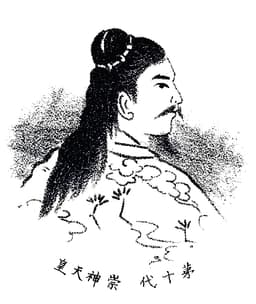
Emperor Sujin
Emperor · Ancient
51.6Total
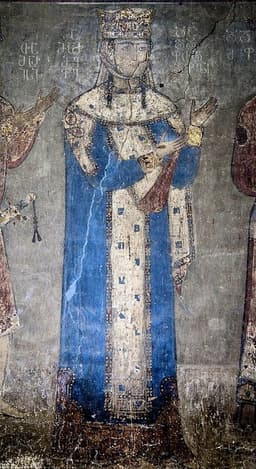
Tamar of Georgia
Emperor · Medieval
71.5Total
Basic Information
Born
-148
1160
Died
-30
1213
Era
Ancient
Medieval
Nationality
Japan
Georgia
Occupation
Emperor
Emperor
Civilization
Eastern
Western
Score Comparison
Military (10%)
50.0
78.0
Political (20%)
68.0
72.0
Influence (20%)
47.1
82.0
Legacy (20%)
43.3
55.0
Leadership (15%)
72.0
80.0
Strategy (15%)
30.3
66.3
TOTAL
51.6
71.5
Emperor Sujin — Complete Timeline
100 BC
Organized the Yamato StateReform◆ Major
Emperor Sujin is recorded in the Nihon Shoki as having organized the Yamato state, establishing administrative structures and military garrisons. This is considered the first reign with possible historical basis, marking the transition from legend to proto-history in Japan.
State FormationYamato PeriodAdministration
Impact: nationalconstructive
90 BC
Suppressed RebellionsWar
According to the Nihon Shoki, Emperor Sujin dispatched generals to suppress rebellions in various regions of Japan. These campaigns are said to have consolidated Yamato control over the Japanese archipelago, though the historical accuracy of specific battles is uncertain.
Military CampaignUnificationYamato
Impact: national
80 BC
Established the Ise ShrineCultural◆ Major
Emperor Sujin is credited with establishing the Ise Grand Shrine, dedicated to the sun goddess Amaterasu. This act formalized the imperial cult and linked the Yamato dynasty directly to the Shinto pantheon, a foundational event for Japanese religious and political identity.
ShintoImperial CultReligion
Impact: nationalconstructive
Tamar of Georgia — Complete Timeline
1184 AD
Coronation as Queen RegnantPolitical Action
Tamar was crowned as the first female ruler of Georgia after her father George III's death. Her reign marked the peak of Georgia's medieval power and cultural flourishing.
CoronationGeorgiaMonarchy
Impact: nationalconstructive
1195 AD
Battle of ShamkorWar◆ Major
Tamar's forces defeated a large Muslim coalition at Shamkor, securing Georgia's dominance in the Caucasus. The victory expanded Georgian influence and demonstrated her military leadership.
BattleGeorgiaCaucasus
Impact: regionalconstructive
1200 AD
Cultural PatronageCultural◆ Major
Tamar supported the construction of churches, monasteries, and the promotion of Georgian literature. Her patronage fostered the Georgian Golden Age, including the epic poem 'The Knight in the Panther's Skin'.
CulturePatronageGeorgia
Impact: nationalconstructive
Expert Analysis
Emperor Sujin vs Tamar of Georgia
### The Queen Who Built an Empire and the Emperor Who Built a Nation
History seldom makes room for both a triumphant queen and a myth-shrouded emperor in the same breath. Yet consider this: on a windswept plateau in the Caucasus, a woman in golden armor leads her cavalry against a Muslim coalition at Shamkor, her name chanted by soldiers and poets alike. Half a world away, in the misty valleys of ancient Yamato, a figure emerges from legend to impose order on warring clans, his deeds recorded in chronicles that mix memory and myth. Tamar of Georgia and Emperor Sujin of Japan never met, never knew of each other’s existence. But their stories, separated by over a thousand years and vast cultural chasms, ask a single question: what does it take to forge a golden age?
### Origins
Tamar was born into the twilight of the 12th century, a time when the Kingdom of Georgia was already a rising power. Her father, George III, had no male heir, so he raised her as a successor in a world that distrusted female rule. She was educated in theology, statecraft, and military theory, groomed for a throne that would test every nerve of her being. The Georgian court was a cauldron of intrigue, and Tamar learned early that survival meant mastering the art of appearing invincible while navigating the treacherous currents of noble ambition.
Emperor Sujin, by contrast, emerges from the fog of prehistory. The *Nihon Shoki*, compiled centuries after his supposed reign, places him in the 1st century BCE, a time when the Yamato state was little more than a loose confederation of clans. His historicity is debated—archaeology suggests a gradual consolidation of power rather than a single founder—but the legend is clear: Sujin was the first ruler to impose order on a fractured land. He was not born into a golden age; he was born into chaos, and his task was to create the very framework of civilization from scratch.
### Rise to Power
Tamar’s coronation in 1184 was a political masterstroke and a gamble. She was crowned as queen regnant, the first woman to rule Georgia in her own right, after her father’s death. The nobility, skeptical of a female monarch, demanded she marry a prince of the Byzantine Empire to secure an alliance. Tamar agreed—but chose her own husband, Yuri Bogolyubsky, a Russian prince who proved disastrous. When he revolted, she divorced him, crushed the rebellion, and never again let a man dictate her rule. Her rise was not a smooth ascent; it was a series of calculated moves, each one a lesson in power.
Sujin’s rise is simpler in the telling but harder to verify. According to the *Nihon Shoki*, he inherited a throne that was more symbolic than real. Rebellions flickered across the islands like wildfire. His response was not to lead armies himself—his military scores are notably low—but to delegate. He dispatched generals to suppress uprisings, creating a template for centralized command. His power came not from the sword but from the scroll: he organized the Yamato state, establishing administrative districts and tax systems that would endure for centuries. Where Tamar had to prove herself against doubt, Sujin had to invent the machinery of rule from nothing.
### Leadership & Governance
Tamar’s leadership was a study in contrast. She was a warrior queen who led her armies into battle, yet she was also a patron of the arts who funded monasteries and commissioned the epic poem *The Knight in the Panther’s Skin*. Her military victory at the Battle of Shamkor in 1195 was not just a triumph—it was a statement. A coalition of Muslim rulers had massed to crush Georgia; Tamar’s forces shattered them, securing Georgian dominance in the Caucasus for a generation. Her political wisdom lay in balancing the nobility, granting them autonomy while binding them to her crown. She was ruthless when crossed, generous when loyal.
Sujin’s governance was quieter but no less profound. He established the Ise Grand Shrine, dedicating it to the sun goddess Amaterasu, thus linking the imperial line directly to divinity. This was not merely religious piety; it was statecraft. By creating a national cult, he gave the Yamato state a spiritual unity that transcended clan loyalties. His strategy was slow, patient, and institutional—building a bureaucracy, codifying rituals, and suppressing rebellions through proxies. Where Tamar’s reign was a blaze of glory, Sujin’s was a slow burn that laid the foundations for Japan’s imperial system.
### Triumph & Tragedy
Tamar’s greatest moment was the aftermath of Shamkor, when Georgia became the preeminent Christian power in the Near East. But her tragedy was the fragility of her achievement. After her death in 1213, the Mongol invasions shattered her kingdom, and the Golden Age collapsed. Her legacy was a memory of what could have been—a brief, brilliant flowering crushed by forces beyond her control.
Sujin’s triumph was the very survival of his state. By organizing Yamato, he ensured that Japan would not fragment into perpetual warring states—at least not for centuries. His tragedy is that we know so little of him. He is a name in a chronicle, a shadow behind a shrine. His personal story is lost, swallowed by the myth he helped create.
### Character & Destiny
Tamar was bold, charismatic, and unyielding. Her character drove her to seize power in a man’s world, to lead armies, to patronize poets. She shaped her destiny through will and intelligence, but her era—the high medieval—demanded a ruler who could fight and inspire. She was a product of her time, but she also transcended it.
Sujin was methodical, perhaps even cautious. His low military scores suggest a ruler who avoided personal combat, preferring to work through subordinates and institutions. His destiny was to be a founder, not a conqueror. He shaped his era by imposing order, but his personality remains opaque, a blank slate onto which later generations projected their ideals.
### Legacy
Tamar is remembered as the greatest queen of Georgia, a symbol of national pride and female empowerment. Her face adorns coins, her story is taught in schools, and her reign is studied as a model of medieval statecraft. She is a hero, but a tragic one—a reminder of a lost golden age.
Sujin’s legacy is more diffuse but no less powerful. He is considered the first historical emperor of Japan, the architect of the Yamato state. The Ise Shrine still stands, a testament to his vision. He is not a hero in the dramatic sense; he is a foundation stone, invisible but essential.
### Conclusion
Tamar and Sujin represent two poles of leadership: the blazing comet and the steady hand. One conquered enemies and built an empire; the other conquered chaos and built a nation. Their differences are not just about gender, geography, or time—they are about what a ruler must be when the world is falling apart versus when it is ready to rise. Tamar shows us the glory of the moment; Sujin, the patience of the ages. Both remind us that history is not written by the loudest voices, but by those who, in their own way, make the future possible.
Rankings
🥇
Tamar of GeorgiaLeader
Mil: 78.0Pol: 72.0Inf: 82.0
71.5
🥈
Emperor Sujin
Mil: 50.0Pol: 68.0Inf: 47.1
51.6
+19.9 behind
How This Comparison Works
Algorithm
Each figure is scored on 6 dimensions (0—100 scale) based on structured historical data: Military (10%), Political (20%), Influence (20%), Legacy (20%), Leadership (15%), Strategy (15%). The weighted total produces the final ranking.
Data Sources
Scores are computed from structured sub-indicators in the database. Scale factors adjust for era (Ancient ×0.85, Modern ×1.0) and civilization size (Eastern ×1.05, Other ×0.80) to account for differences in population and military scale.
Maximum 3 Figures
Comparisons are limited to 2—3 figures to ensure readability and statistical meaningfulness.
Error Margins
±5 points per dimension — Sub-scores are derived from historical records with inherent uncertainty. Two figures within 5 points on a dimension should be considered roughly equivalent in that area.
Total Score Accuracy
±3 points overall — The weighted combination of 6 dimensions produces a total score with approximately ±3 points of uncertainty. Differences of less than 3 points are not statistically significant— the figures are effectively tied.
Known Limitations
- Historical records are incomplete and uneven across civilizations
- Figures from oral-tradition societies may be underrepresented
- Occupation labels can misclassify multi-role figures
- Scores measure capability and impact, not moral character
- Quantitative scoring is a comparison tool, not absolute truth
Capability Radar
Military (10%) — Battles & Warfare
Battles
10
75
Win Rate
10
85
Expansion
20
75
Political (20%) — Governance & Reform
Reform
50
80
Diplomacy
30
75
Economy
30
85
Influence (20%) — Cultural & Global Reach
Cultural
30
80
Global
10
60
Legacy (20%) — Historical Impact
Historical
40
75
Longevity
30
70
Leadership (15%) — Power & Stability
Tenure
40
85
Stability
40
70
Strategy (15%) — Tactics & Innovation
Strategy
10
80
Tactics
10
70
Reform
20
65
Similar Comparisons
Comments & Discussion
灵台疑云6/16/2026
说崇神天皇“建立国家”?神功皇后编年史里那套“倭国大乱”的说法纯属后世政治工具。你看《日本书纪》记载他派四道将军平定地方,结果考古学上同时期的前方后圆坟根本没出现在畿内,明显是7世纪遣唐使抄中国谶纬学硬凑的谱系。反观塔玛尔,12世纪格鲁吉亚文书中明确记录她推翻贵族“议政会”的诏令,这才叫真实权力操作。
Red Cavalry6/16/2026
Tamar didn't just rule; she engineered Georgia's medieval golden age by crushing the Eldiguzids at Shamkor and capturing Ani from the Shaddadids. Her use of a dual-monarchy system with her husband David Soslan as co-commander was politically brilliant and militarily effective. Sujin's reign, if it even happened, coincided with Japan's Yayoi period— basically rice paddies and bronze bells, not a unified state. Tamar's legacy is measurable in conquered cities and codified laws; Sujin's is a geneal
古道清谈6/16/2026
一个活在《蒙古入侵前夜》的史诗里,一个藏在《古事记》的迷雾中,比较本身就是不公平的。塔玛尔有同时代的鲁斯塔维里为她写《虎皮武士》,马可·波罗路过格鲁吉亚时也提过她的威名。崇神天皇呢?直到8世纪编史时才被塑造成“治天下”的始祖,连宫都根据《日本书纪》推算设在橿原附近,却找不到任何宫殿遗址。一个靠自己,一个靠后代。
Stats Over Stories6/16/2026
The comparison is essentially empty: Tamar's Georgia had documented diplomacy with the Ayyubids and a sophisticated feudal state with tax records in multiple languages. For Sujin, we have no contemporary inscriptions, no diplomatic correspondence, not even a single coin. The Nihon Shoki claims his reign saw "plentiful harvests," but that's a trope repeated for every mythical emperor. Tamar's economic reforms, like minting silver coins and regulating Black Sea trade routes, leave material evidenc
Chronicler20786/16/2026
Tamar actually fought and won battles; Sujin is basically a ghost story in armor. The *Nihon Shoki* says he suppressed rebellions and expanded grain storage, but there's zero archaeological evidence for a centralized Yamato state before the 3rd century. Contrast that with Tamar's victory at Shamkor in 1195, where she personally rallied Georgian cavalry after her husband David Soslan led the charge. One is history; the other is a founding myth wrapped in court propaganda.