Loading...
Emperor Sujin vs Taejo of Joseon
Taejo of Joseon leads by 18.8 pts · 2 figures compared
…
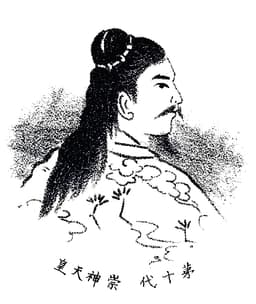
Emperor Sujin
Emperor · Ancient
51.6Total
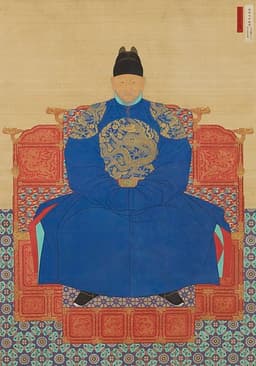
Taejo of Joseon
Emperor · Medieval
70.4Total
Basic Information
Born
-148
1335
Died
-30
1408
Era
Ancient
Medieval
Nationality
Japan
Korea
Occupation
Emperor
Emperor
Civilization
Eastern
Eastern
Score Comparison
Military (10%)
50.0
74.7
Political (20%)
68.0
65.0
Influence (20%)
47.1
65.0
Legacy (20%)
43.3
80.0
Leadership (15%)
72.0
72.0
Strategy (15%)
30.3
61.2
TOTAL
51.6
70.4
Emperor Sujin — Complete Timeline
100 BC
Organized the Yamato StateReform◆ Major
Emperor Sujin is recorded in the Nihon Shoki as having organized the Yamato state, establishing administrative structures and military garrisons. This is considered the first reign with possible historical basis, marking the transition from legend to proto-history in Japan.
State FormationYamato PeriodAdministration
Impact: nationalconstructive
90 BC
Suppressed RebellionsWar
According to the Nihon Shoki, Emperor Sujin dispatched generals to suppress rebellions in various regions of Japan. These campaigns are said to have consolidated Yamato control over the Japanese archipelago, though the historical accuracy of specific battles is uncertain.
Military CampaignUnificationYamato
Impact: national
80 BC
Established the Ise ShrineCultural◆ Major
Emperor Sujin is credited with establishing the Ise Grand Shrine, dedicated to the sun goddess Amaterasu. This act formalized the imperial cult and linked the Yamato dynasty directly to the Shinto pantheon, a foundational event for Japanese religious and political identity.
ShintoImperial CultReligion
Impact: nationalconstructive
Taejo of Joseon — Complete Timeline
1380 AD
Battle of HwangsanWar
General Yi Seong-gye defeated a Japanese pirate (wokou) force at Hwangsan. This victory enhanced his military reputation and demonstrated his capability as a commander.
WokouGoryeo Military
1388 AD
Wihwado RetreatPolitical Action
General Yi Seong-gye, ordered to invade the Ming dynasty's Liaodong region, turned his army back at Wihwado Island. This act of defiance against the Goryeo court led to a coup that eventually brought him to power.
CoupGoryeo-Ming RelationsPower Shift
Impact: national
1391 AD
Land Reform and the Gwajeon LawReform◆ Major
Taejo implemented the Gwajeon Law, a land reform that redistributed land from the old Goryeo aristocracy to his supporters and the state. This weakened the old elite and strengthened the new Joseon ruling class.
Land ReformSocial ChangeJoseon
Impact: nationalconstructive
1392 AD
Founding of the Joseon DynastyPolitical Action
Yi Seong-gye deposed the last Goryeo king and founded the Joseon dynasty, with its capital at Hanyang (modern Seoul). He established a new ruling class based on Confucian ideology, replacing the Buddhist-influenced Goryeo system.
Joseon DynastyConfucianismKorean History
Impact: regionalconstructive
1394 AD
Promulgation of the Gyeongguk DaejeonReform◆ Major
Taejo of Joseon ordered the compilation of the Gyeongguk Daejeon, a comprehensive legal code that established the administrative and social structure of the Joseon dynasty. This code remained in effect for centuries.
Legal CodeGovernanceConfucianism
Impact: nationalconstructive
Expert Analysis
Emperor Sujin vs Taejo of Joseon
### The Founder and the First: Taejo of Joseon and Emperor Sujin
In the crisp autumn of 1388, a Korean general named Yi Seong-gye stood on Wihwado Island, his army at his back and the Yalu River before him. The order from his king was clear: invade the Ming dynasty’s Liaodong region, a campaign that meant certain catastrophe. He turned his army around, a decision that would shatter a dynasty and birth a new one. Half a world away and fifteen centuries earlier, another ruler, known to legend as Emperor Sujin, faced his own moment of decision in the misty dawn of Yamato Japan. He dispatched generals to crush rebellions that threatened to tear his nascent state apart. One man chose to defy his king; the other chose to enforce his will. Both were founders in their own right, but their paths could not have been more different.
### Origins
Yi Seong-gye was born in 1335 into a world of violent transition. The Goryeo dynasty, which had ruled Korea for nearly five centuries, was rotting from within. Mongol influence lingered, Japanese pirates ravaged the coasts, and a corrupt aristocracy bled the land dry. Yi’s family were military men, part of a rising class of regional commanders who valued competence over bloodline. He grew up on the frontier, learning to fight and to lead in a crucible of constant warfare. His world was concrete, brutal, and demanding of practical solutions.
Emperor Sujin, by contrast, is a figure half-shrouded in myth. Born around 148 BCE, he is the first Japanese emperor for whom historians can find any credible trace. The *Nihon Shoki*, compiled centuries later, presents him as the tenth emperor, a descendant of the sun goddess Amaterasu. But behind the divine genealogy lies a more mundane reality: Sujin likely emerged from a chieftain clan in the Yamato region, a man who inherited a loose confederation of warring tribes. His world was not one of bureaucratic decay but of primal organization—of turning scattered villages into a kingdom.
### Rise to Power
Yi Seong-gye’s rise was forged in blood and rice. In 1380, at the Battle of Hwangsan, he annihilated a force of Japanese pirates, earning a reputation as the kingdom’s most capable general. But his true genius was political. The Wihwado Retreat of 1388 was not just a military decision; it was a masterstroke of propaganda. By refusing to waste Korean lives on a fool’s errand for a corrupt king, Yi cast himself as the people’s protector. Over the next four years, he consolidated support among reform-minded Confucian scholars, landless peasants, and disaffected officials. In 1392, he deposed the last Goryeo king and declared himself Taejo, the “Great Progenitor” of a new dynasty.
Sujin’s path was quieter, more institutional. The *Nihon Shoki* records no dramatic coup, no single turning point. Instead, he organized the Yamato state around 100 BCE, establishing administrative structures—taxation, ritual, and military command—that turned a collection of clans into a coherent polity. He suppressed rebellions around 90 BCE by dispatching generals to distant provinces, a sign that his authority was spreading. His power was not seized but built, stone by stone, through the slow work of statecraft.
### Leadership & Governance
Taejo governed as a revolutionary. His Gwajeon Law of 1391 redistributed land from the old Goryeo aristocracy to his supporters, creating a new class of scholar-officials loyal to the throne. He moved the capital to Hanyang (modern Seoul), building a city that embodied Confucian order. He ordered the compilation of the *Gyeongguk Daejeon*, a legal code that would govern Korea for centuries. His rule was a deliberate break with the past, a remaking of society from the ground up.
Sujin governed as a consolidator. His reforms were less about redistribution than about codification. He established the Ise Grand Shrine around 80 BCE, dedicating it to the sun goddess Amaterasu. This was not mere piety; it was a political act that linked the emperor’s authority to divine sanction. His administrative reforms were about standardizing what already existed—making the Yamato state run more smoothly, not overturning it. Where Taejo wielded a hammer, Sujin used a level.
### Triumph & Tragedy
Taejo’s greatest triumph was the founding of Joseon itself, a dynasty that would endure for over five centuries. His tragedy was personal: the transition of power was bloody. He saw his sons turn against each other in a brutal succession struggle, a conflict that haunted his final years. The same ruthlessness that built his kingdom poisoned his family.
Sujin’s triumph was subtler: he created a template for imperial rule that would outlast him. His tragedy is that we know so little of it. The *Nihon Shoki* is a mix of fact and fable, and Sujin remains a figure of shadow. He may have been a great ruler, but the record is too thin to say for certain. His greatest failure may be that history forgot him.
### Character & Destiny
Taejo was a pragmatist who used Confucian ideals as a tool. He was decisive, ruthless, and visionary—a man who understood that to change a nation, you must first break it. His destiny was to be a founder, and he embraced that role with relentless energy.
Sujin was a builder, not a breaker. His character was likely that of an administrator, a priest-king who saw his role as maintaining harmony between heaven and earth. His destiny was to be a first, and he fulfilled it with quiet persistence.
### Legacy
Taejo’s legacy is monumental. The Joseon dynasty he founded shaped Korean identity, language, and culture for 500 years. The *Gyeongguk Daejeon* influenced law until the 20th century. He is remembered as a national hero, a founder whose name is taught to every Korean schoolchild.
Sujin’s legacy is foundational but fragile. He established the pattern of imperial rule that would last until 1945, but his personal story is largely lost. He is remembered as a legendary figure, a name in an ancient chronicle. His influence is real but invisible, like the roots of a great tree.
### Conclusion
Standing on Wihwado Island, Yi Seong-gye chose to turn back. In the Yamato palace, Sujin chose to send his armies forward. One broke a dynasty; the other built a state. Both were founders, but they worked with different materials—one with the wreckage of a fallen kingdom, the other with the clay of an unformed nation. Their stories remind us that history is not made by grand gestures alone, but by the quiet accumulation of choices, each one a stone in the foundation of what comes after.
Rankings
🥇
Taejo of JoseonLeader
Mil: 74.7Pol: 65.0Inf: 65.0
70.4
🥈
Emperor Sujin
Mil: 50.0Pol: 68.0Inf: 47.1
51.6
+18.8 behind
How This Comparison Works
Algorithm
Each figure is scored on 6 dimensions (0—100 scale) based on structured historical data: Military (10%), Political (20%), Influence (20%), Legacy (20%), Leadership (15%), Strategy (15%). The weighted total produces the final ranking.
Data Sources
Scores are computed from structured sub-indicators in the database. Scale factors adjust for era (Ancient ×0.85, Modern ×1.0) and civilization size (Eastern ×1.05, Other ×0.80) to account for differences in population and military scale.
Maximum 3 Figures
Comparisons are limited to 2—3 figures to ensure readability and statistical meaningfulness.
Error Margins
±5 points per dimension — Sub-scores are derived from historical records with inherent uncertainty. Two figures within 5 points on a dimension should be considered roughly equivalent in that area.
Total Score Accuracy
±3 points overall — The weighted combination of 6 dimensions produces a total score with approximately ±3 points of uncertainty. Differences of less than 3 points are not statistically significant— the figures are effectively tied.
Known Limitations
- Historical records are incomplete and uneven across civilizations
- Figures from oral-tradition societies may be underrepresented
- Occupation labels can misclassify multi-role figures
- Scores measure capability and impact, not moral character
- Quantitative scoring is a comparison tool, not absolute truth
Capability Radar
Military (10%) — Battles & Warfare
Battles
10
75
Win Rate
10
80
Expansion
20
65
Political (20%) — Governance & Reform
Reform
50
85
Diplomacy
30
70
Economy
30
65
Influence (20%) — Cultural & Global Reach
Cultural
30
80
Global
10
60
Legacy (20%) — Historical Impact
Historical
40
85
Longevity
30
80
Leadership (15%) — Power & Stability
Tenure
40
70
Stability
40
75
Strategy (15%) — Tactics & Innovation
Strategy
10
75
Tactics
10
70
Reform
20
60
Similar Comparisons
Comments & Discussion
DynastyFlip6/16/2026
Taejo had the guts to pull a 180 at Wihwado, saving his army from a suicidal invasion that would've bled Korea dry. That's founder material—practical, ruthless, self-aware. Sujin? He's basically a myth stitched together from Chinese chronicles and Japanese court propaganda. One guy actually broke a dynasty; the other got his story polished centuries later by scribes who needed a founding father. Stop comparing a real political earthquake to a ghost in a crown.
古书捕快6/16/2026
神功天皇不过是个史料缝合物。汉籍里提到"倭国乱"几笔带过,日本书纪却给他编出四道将军东征的戏码——这操作跟李成桂那种真刀真枪改朝换代完全两个维度。一个是打仗立国,一个是修史造祖。硬把他俩放一起比,就像拿《三国演义》跟《三国志》当史料用,学历史的看了直摇头。别神话了,兄弟。
CounterfactualCrank6/16/2026
Let's game this out: if Sujin was a real warlord unifying warring tribes, he'd have left some archaeological fingerprints—consistent burial styles, shifted settlement patterns, weapon types. Japan's 1st century BC? We've got squat. Taejo's rise is soaked in verifiable documents, census records, even personal letters from his generals. Sujin is a narrative placeholder, not a peer. So no, this isn't "founder vs founder." It's history vs historical fiction with a fancier title.
铁血考据派6/16/2026
Taejo的军事履历比Suijin整本传记都扎实。他在荒山岭大破倭寇、云峰击退元军,靠的是真本事攒起的军功。Suijin? 那所谓平定"土蜘蛛"和"国巢"的战役,连敌军番号都像神话里蹦出来的,更别提啥战略战术记载了。你拿韩国开国君主跟一个被神官吹出来的影子比,这格局就别怪人吐槽你是历史半吊子了。
TimelineTinker6/16/2026
Taejo's decisive break at Wihwado hinges on a real political calculus: avoid Ming retaliation, preserve Goryeo's northern buffer, and build his own base in the chaos. That's a man reading the room in 1388. Sujin, if he existed at all, supposedly launched campaigns against "rebellious tribes" with zero evidence of state infrastructure to support them—no tax rolls, no roads, no standing army. One founder balanced empires; the other's story needs a suspension of disbelief I'm not granting.