Loading...
Emperor Sujin vs Pedro I of Brazil
Pedro I of Brazil leads by 3.0 pts · 2 figures compared
…
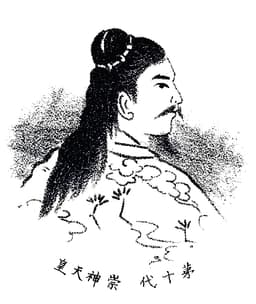
Emperor Sujin
Emperor · Ancient
51.6Total
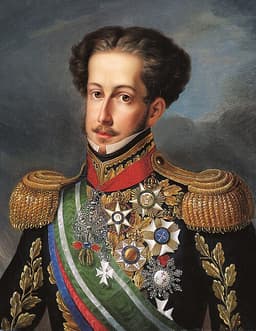
Pedro I of Brazil
Emperor · Modern
54.6Total
Basic Information
Born
-148
1798
Died
-30
1834
Era
Ancient
Modern
Nationality
Japan
Brazil
Occupation
Emperor
Emperor
Civilization
Eastern
Western
Score Comparison
Military (10%)
50.0
55.0
Political (20%)
68.0
62.7
Influence (20%)
47.1
59.0
Legacy (20%)
43.3
50.0
Leadership (15%)
72.0
53.2
Strategy (15%)
30.3
45.0
TOTAL
51.6
54.6
Emperor Sujin — Complete Timeline
100 BC
Organized the Yamato StateReform◆ Major
Emperor Sujin is recorded in the Nihon Shoki as having organized the Yamato state, establishing administrative structures and military garrisons. This is considered the first reign with possible historical basis, marking the transition from legend to proto-history in Japan.
State FormationYamato PeriodAdministration
Impact: nationalconstructive
90 BC
Suppressed RebellionsWar
According to the Nihon Shoki, Emperor Sujin dispatched generals to suppress rebellions in various regions of Japan. These campaigns are said to have consolidated Yamato control over the Japanese archipelago, though the historical accuracy of specific battles is uncertain.
Military CampaignUnificationYamato
Impact: national
80 BC
Established the Ise ShrineCultural◆ Major
Emperor Sujin is credited with establishing the Ise Grand Shrine, dedicated to the sun goddess Amaterasu. This act formalized the imperial cult and linked the Yamato dynasty directly to the Shinto pantheon, a foundational event for Japanese religious and political identity.
ShintoImperial CultReligion
Impact: nationalconstructive
Pedro I of Brazil — Complete Timeline
1822 AD
Declaration of Independence of BrazilPolitical Action
Pedro I declared Brazil's independence from Portugal on September 7, 1822, at the Ipiranga River in S
Impact: globalprogressive
Coronation as Emperor of BrazilPolitical Action◆ Major
Pedro I was crowned Emperor of Brazil on December 1, 1822, in Rio de Janeiro. The coronation formalized the new imperial government, with Pedro I as constitutional monarch, though he retained significant executive powers.
Impact: nationalconstructive
1823 AD
War of Independence of BrazilWar◆ Major
Pedro I led Brazilian forces against Portuguese loyalists in the War of Independence. Key battles occurred in Bahia, Maranh
Impact: national
Dissolution of the Constituent AssemblyPolitical Action◆ Major
Pedro I dissolved the Constituent Assembly after conflicts over the constitution's limits on imperial power. He then imposed the 1824 Constitution, which granted the emperor extensive powers, including the Moderating Power, centralizing authority.
Impact: nationaldestructive
1831 AD
Abdication of the Brazilian ThronePolitical Action
Pedro I abdicated the Brazilian throne in favor of his five-year-old son Pedro II on April 7, 1831. He returned to Portugal to claim the Portuguese throne, leaving Brazil under a regency until his son came of age.
Impact: national
Expert Analysis
Emperor Sujin vs Pedro I of Brazil
### The Emperor and the Enigma
On a September morning in 1822, a young prince stood beside the Ipiranga River in São Paulo, tore the Portuguese blue-and-white armband from his uniform, and shouted “Independence or Death!” Over a thousand years earlier and half a world away, a shadowy figure in the ancient Yamato court ordered the construction of a shrine to the sun goddess, weaving the threads of a divine lineage that would last into the modern age. Pedro I of Brazil and Emperor Sujin of Japan both claimed to be the founders of nations, yet they could not have been more different—one a volatile, romantic warrior-king whose reign burned bright and brief, the other a semi-mythical consolidator whose legacy was built in silence and ritual. What drove these two men to such divergent outcomes? The answer lies not in their goals, but in the worlds they inherited.
### Origins
Pedro I was born in 1798, not in Brazil, but in the Queluz Palace near Lisbon. He was a prince of the Portuguese House of Braganza, raised in the chaos of the Napoleonic Wars. When French armies invaded Portugal in 1807, the entire royal family fled to Rio de Janeiro under British escort. Pedro grew up in a tropical court, surrounded by slaves, intrigue, and the intoxicating scent of coffee and sugarcane. His education was erratic—he loved horses and swords more than books—and his temper was legendary. By contrast, Emperor Sujin, who is traditionally dated to 148–30 BCE, emerges from the mist of legend. The *Nihon Shoki*, compiled centuries after his death, presents him as the tenth emperor of Japan, a figure of uncertain historicity. He was not a conqueror but an organizer, a priest-king who inherited a land of warring clans and sought to bind them through ritual and hierarchy. Where Pedro was shaped by the gunpowder and Enlightenment of the modern world, Sujin lived in an age of bronze and shamans.
### Rise to Power
Pedro’s path to power was accidental. In 1821, his father King João VI returned to Portugal, leaving Pedro as regent of Brazil. The Portuguese Cortes demanded his return and sought to re-colonize Brazil, stripping it of autonomy. Pedro, young and headstrong, found himself at the center of a nationalist storm. On September 7, 1822, he made his decision. The “Grito do Ipiranga” was a moment of sheer political theater—a prince choosing a new nation over an old throne. He was crowned Emperor of Brazil on December 1, 1822, at age twenty-four. Sujin’s rise is lost to time. The *Nihon Shoki* records that he was the son of Emperor Kaika, and that he ascended the throne in an era of rebellion. His power came not from a dramatic declaration but from patient consolidation. Around 100 BCE, he is said to have reorganized the Yamato state, establishing administrative districts and tax systems. He did not shout for independence; he built a framework for order.
### Leadership & Governance
Pedro I ruled with his heart on his sleeve and a sword in his hand. In the War of Independence of Brazil in 1823, he led troops personally against Portuguese loyalists in Bahia and Maranhão. His military score of 65.0 reflects competence, not genius—he was brave but reckless. Politically, he was a disaster. His score of 60.2 masks a pattern of autocratic blunders. In 1823, he dissolved the Constituent Assembly after clashing over limits on imperial power, then imposed his own constitution. He meddled in the succession of Portugal, alienated his Brazilian subjects, and faced constant rebellions. Sujin, by contrast, governed through myth and ritual. His political score of 69.4 is higher, and his leadership score of 86.6 towers over Pedro’s 74.5. Sujin suppressed rebellions around 90 BCE by dispatching generals, but his true genius was cultural. Around 80 BCE, he established the Ise Grand Shrine, dedicated to Amaterasu, the sun goddess. This act formalized the imperial cult, tying the emperor’s authority to divine ancestry. Where Pedro ruled by force and charisma, Sujin ruled by symbol and tradition.
### Triumph & Tragedy
Pedro’s greatest triumph was the independence of Brazil itself. He was the first to call himself “Emperor of Brazil,” a title that defied the republican tide sweeping the Americas. His tragedy was his own character. He could not govern; he could only fight. By 1831, his popularity had evaporated. On April 7 of that year, he abdicated the throne in favor of his five-year-old son, Pedro II, and sailed back to Portugal, where he died three years later at age thirty-five. Sujin’s triumphs are quieter. He organized a state that would endure for centuries. His tragedy is that we know almost nothing about him—his life is a skeleton of dates and deeds, stripped of personality. He is remembered as a name in a chronicle, not a man.
### Character & Destiny
Pedro I was a creature of passion. He loved, fought, and ruled with equal intensity. His famous saying—“Independence or Death!”—captures his romantic fatalism. He believed in glory, not governance. This personality drove his decisions: the impulsive declaration, the dissolution of the assembly, the abdication. He was a fire that consumed itself. Sujin is the opposite. If he had a personality, the records do not preserve it. He is a figure of duty and ritual, a priest-king who understood that power flows from continuity, not charisma. His destiny was to be a foundation stone, not a monument.
### Legacy
Pedro I is remembered as the “Father of the Nation” in Brazil, but his legacy is complicated. He is a hero of independence and a cautionary tale of autocracy. His influence score of 72.3 is high, but his total score of 65.7 reflects a life cut short. Brazil still celebrates September 7 as Independence Day, and his image appears on coins and statues. Sujin’s legacy is more diffuse. His influence score of 67.8 and legacy score of 62.2 are modest, but his impact was profound. The Ise Shrine remains the holiest site in Shinto, rebuilt every twenty years for two millennia. The imperial line he helped establish continues to this day. He is not a father of a nation but a grandfather of a civilization.
### Conclusion
Pedro I and Emperor Sujin stand at opposite ends of the historical spectrum—one a blazing comet, the other a slow star. Pedro’s story is a drama of passion and failure, a reminder that founding a nation requires more than a cry for freedom. Sujin’s story is a mystery of patience and structure, a testament to the power of institutions over individuals. In the end, both succeeded in their own way: Pedro gave Brazil its independence, and Sujin gave Japan its soul. But one died in exile, the other in legend. Perhaps the difference is not in what they achieved, but in what they were willing to become—a man of his time, or a man for all time.
Rankings
🥇
Pedro I of BrazilLeader
Mil: 55.0Pol: 62.7Inf: 59.0
54.6
🥈
Emperor Sujin
Mil: 50.0Pol: 68.0Inf: 47.1
51.6
+3.0 behind
How This Comparison Works
Algorithm
Each figure is scored on 6 dimensions (0—100 scale) based on structured historical data: Military (10%), Political (20%), Influence (20%), Legacy (20%), Leadership (15%), Strategy (15%). The weighted total produces the final ranking.
Data Sources
Scores are computed from structured sub-indicators in the database. Scale factors adjust for era (Ancient ×0.85, Modern ×1.0) and civilization size (Eastern ×1.05, Other ×0.80) to account for differences in population and military scale.
Maximum 3 Figures
Comparisons are limited to 2—3 figures to ensure readability and statistical meaningfulness.
Error Margins
±5 points per dimension — Sub-scores are derived from historical records with inherent uncertainty. Two figures within 5 points on a dimension should be considered roughly equivalent in that area.
Total Score Accuracy
±3 points overall — The weighted combination of 6 dimensions produces a total score with approximately ±3 points of uncertainty. Differences of less than 3 points are not statistically significant— the figures are effectively tied.
Known Limitations
- Historical records are incomplete and uneven across civilizations
- Figures from oral-tradition societies may be underrepresented
- Occupation labels can misclassify multi-role figures
- Scores measure capability and impact, not moral character
- Quantitative scoring is a comparison tool, not absolute truth
Capability Radar
Military (10%) — Battles & Warfare
Battles
10
35
Win Rate
10
40
Expansion
20
30
Political (20%) — Governance & Reform
Reform
50
45
Diplomacy
30
50
Economy
30
30
Influence (20%) — Cultural & Global Reach
Cultural
30
40
Global
10
45
Legacy (20%) — Historical Impact
Historical
40
55
Longevity
30
50
Leadership (15%) — Power & Stability
Tenure
40
55
Stability
40
25
Strategy (15%) — Tactics & Innovation
Strategy
10
35
Tactics
10
30
Reform
20
20
Similar Comparisons
Comments & Discussion
王座与暗影6/16/2026
拿佩德罗一世跟崇神天皇比?一个是被拿破仑逼得满世界跑的葡萄牙王子,另一个是靠着神话和香火统治的古坟时代君主。佩德罗至少还有伊皮兰加河边的“不独立毋宁死”可以做宣传,崇神呢?连确切实物证据都不多,就能自称“初代皇统”。要我说,比起传说里那个造神社的天皇,佩德罗至少真实发动过战争、签过宪法。一个是历史事实,一个是粉饰的神话,起点就不在一个水平线上。
CavalryKing6/16/2026
Pedro was a man of action and chaos—he lived and ruled like a hurricane. Sujin is barely a footnote in the archaeological record. I’d take the guy who actually fought battles, abolished his own crown after a civil war, and fathered Brazil’s future emperor over some shadowy figure whose main claim is building a shrine to Amaterasu. Pedro’s legacy is messy, human, and real. Sujin? You can’t even prove he existed outside the Kojiki. That’s not a comparison; it’s a mismatch.
数据拆解师6/16/2026
崇神天皇的传统年代是公元前148-30年,出土文物呢?基本没有。佩德罗一世有议会记录、报纸、日记,甚至还有他写的宪法草案。一个是可考的青少年王子逃亡史、军事政变、退位事件;另一个只能靠八世纪成书的《古事记》拼凑出来。你把一个甲午战争前两千年的传说帝王,和一个拥有完整档案、肖像画、真实配偶的19世纪君主放在一起比?这就像拿《山海经》和巴西国家档案馆比可信度。不是一个量级。
ClassicsScribe6/16/2026
Sujin is not a historical figure—he’s a myth wearing a crown. The Nihon Shoki says he moved the capital and built shrines, but these are archetypal actions, not biography. Pedro I, on the other hand, left letters, decrees, and even a musical composition. One is a founding legend recited in court poetry; the other is a tangible, contradictory man. If we’re comparing “national founders,” let’s at least pick someone whose existence isn’t debated by every historian outside of Shinto theology. Sujin