Loading...
Emperor Sujin vs Parakramabahu VI
Parakramabahu VI leads by 13.2 pts · 2 figures compared
…
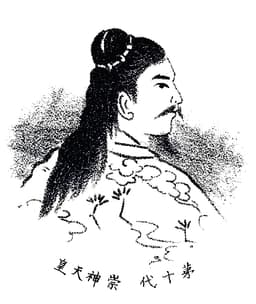
Emperor Sujin
Emperor · Ancient
51.6Total

Parakramabahu VI
Emperor · Medieval
64.8Total
Basic Information
Born
-148
1412
Died
-30
1467
Era
Ancient
Medieval
Nationality
Japan
Sri Lanka
Occupation
Emperor
Emperor
Civilization
Eastern
Indian
Score Comparison
Military (10%)
50.0
72.5
Political (20%)
68.0
72.0
Influence (20%)
47.1
60.0
Legacy (20%)
43.3
56.0
Leadership (15%)
72.0
85.0
Strategy (15%)
30.3
50.0
TOTAL
51.6
64.8
Emperor Sujin — Complete Timeline
100 BC
Organized the Yamato StateReform◆ Major
Emperor Sujin is recorded in the Nihon Shoki as having organized the Yamato state, establishing administrative structures and military garrisons. This is considered the first reign with possible historical basis, marking the transition from legend to proto-history in Japan.
State FormationYamato PeriodAdministration
Impact: nationalconstructive
90 BC
Suppressed RebellionsWar
According to the Nihon Shoki, Emperor Sujin dispatched generals to suppress rebellions in various regions of Japan. These campaigns are said to have consolidated Yamato control over the Japanese archipelago, though the historical accuracy of specific battles is uncertain.
Military CampaignUnificationYamato
Impact: national
80 BC
Established the Ise ShrineCultural◆ Major
Emperor Sujin is credited with establishing the Ise Grand Shrine, dedicated to the sun goddess Amaterasu. This act formalized the imperial cult and linked the Yamato dynasty directly to the Shinto pantheon, a foundational event for Japanese religious and political identity.
ShintoImperial CultReligion
Impact: nationalconstructive
Parakramabahu VI — Complete Timeline
1420 AD
Construction of the Temple of the Tooth in KotteCultural◆ Major
Parakramabahu VI built a new Temple of the Tooth in his capital, Kotte. This reinforced Kotte's status as the religious and political center of the island.
BuddhismArchitectureCapital
Impact: nationalconstructive
1430 AD
Patronage of Literature and ArtsCultural◆ Major
Parakramabahu VI's court was a center of literary and artistic activity. He patronized poets and scholars, leading to a flourishing of Sinhalese literature, including the 'Sandesa' (message) poems.
LiteraturePatronageCultural Renaissance
Impact: nationalconstructive
1450 AD
Unification of Sri LankaWar
Parakramabahu VI unified the entire island of Sri Lanka under his rule for the first time since Parakramabahu I. He conquered the Kingdom of Jaffna in the north and brought the entire island under Kotte's control.
UnificationConquestMilitary Campaign
Impact: national
Conquest of the Kingdom of JaffnaWar◆ Major
Parakramabahu VI's forces, led by his adopted son Sapumal Kumaraya, conquered the Kingdom of Jaffna. This brought the Tamil north under Sinhalese rule and ended the Aryacakravarti dynasty.
ConquestMilitary CampaignTamil Kingdom
Impact: national
Expert Analysis
Emperor Sujin vs Parakramabahu VI
### The Unifier and the Organizer
In the soft, tropical twilight of 1450, a Sinhalese king named Parakramabahu VI stood on the ramparts of his capital, Kotte, and looked out over an island finally whole. For the first time in nearly three centuries, the entire land of Sri Lanka lay under a single sovereign. Half a world away and fifteen centuries earlier, another ruler, Emperor Sujin of Japan, faced a very different dawn. He could not look out over a unified realm, for his was a land of fractious clans and whispered legends. His task was not conquest, but the far quieter, more enduring work of creation: to forge a state from a myth. One king conquered; the other organized. One left a brilliant, fleeting flame; the other, the embers of an eternal structure.
### Origins
Parakramabahu VI was born in 1412 into the complex world of late-medieval Sri Lanka, a land divided and vulnerable. The great kingdoms of Anuradhapura and Polonnaruwa were distant memories. His rise was not one of divine descent but of shrewd political maneuvering. He was a prince of the Kotte kingdom, a rising power on the southwestern coast, and he understood that unity was the only bulwark against fragmentation and foreign invasion.
Emperor Sujin, by contrast, emerges from the mists of the 2nd century BCE, a figure whose very existence is half-lit by legend. According to the *Nihon Shoki*, he was the tenth emperor of Japan, a descendant of the sun goddess Amaterasu. But his historicity is a matter of debate; he is considered the first emperor with a plausible claim to reality. His Japan was a patchwork of warring tribal states (*kuni*), bound by little more than a shared mythology and the nominal authority of the Yamato court. His origins were not in a palace, but in a sacred grove, a world where politics and religion were inseparable.
### Rise to Power
Parakramabahu VI ascended the throne of Kotte around 1412, inheriting a kingdom that was powerful but not supreme. His path to dominance was one of deliberate, patient statecraft. He did not rush to war. First, he consolidated his base, building legitimacy. In 1420, he constructed a magnificent new Temple of the Tooth in Kotte, moving the most sacred Buddhist relic in the island to his capital. This was a masterstroke of political theology: by housing the relic, Kotte became not just the political but the religious heart of Sri Lanka. He then turned to culture, patronizing poets and scholars from 1430 onward, creating a court that was a beacon of Sinhalese civilization. Only after securing this moral and intellectual authority did he strike.
Emperor Sujin’s rise was less a conquest than a formalization. He inherited a title, not an empire. The *Nihon Shoki* records that around 100 BCE, he began to organize the Yamato state. His power was not military in the sense of great armies; it was administrative and ritual. He dispatched generals to suppress rebellions in the regions, but these were police actions, not wars of annihilation. His true power lay in establishing the Ise Grand Shrine around 80 BCE, dedicated to Amaterasu. By formalizing the imperial family’s divine lineage, he gave the Yamato court a spiritual weapon more potent than any sword.
### Leadership & Governance
As a ruler, Parakramabahu VI was a charismatic, hands-on monarch of the highest order. His leadership score of 83.9 reflects a man who led from the front, both in war and peace. His conquest of the Kingdom of Jaffna in 1450, led by his adopted son Sapumal Kumaraya, was a military campaign, but it was also a political integration. He did not simply destroy; he absorbed. He allowed local Tamil rulers to retain some authority, a pragmatic wisdom that prevented long-term resentment. His political score of 84.3 shows a ruler who understood that unity required not just force, but a shared identity. He fostered a Sinhalese-Buddhist renaissance, making his court a hub of language, poetry, and art.
Emperor Sujin was a very different kind of leader. His leadership score is even higher at 86.6, but it was leadership of a different kind—not of the battlefield, but of the council chamber and the shrine. He was a lawgiver, an administrator, a priest-king. His military score of 25.8 is the lowest of any figure in this comparison, and for good reason. He did not conquer; he organized. He established the framework of a state: the *kuni no miyatsuko* (provincial governors), the *agata-nushi* (district lords), and the *tomo no miyatsuko* (court functionaries). He turned a loose confederation of clans into a nascent bureaucracy. His strategy was not to defeat enemies, but to outlast them, weaving a web of obligation and ritual that made rebellion unthinkable.
### Triumph & Tragedy
Parakramabahu VI’s greatest triumph was the unification of Sri Lanka in 1450. It was a moment of profound national significance, a reclamation of a lost wholeness. His tragedy, however, was that this unity was fragile. It depended on his personal authority. After his death in 1467, the kingdom quickly fractured. The Portuguese arrived less than a century later, and the island descended into the colonial chaos he had temporarily forestalled. His achievement was a beautiful, doomed flower.
Emperor Sujin’s triumph was quieter but more durable. He established the Ise Shrine and the imperial cult, institutions that have survived for over two thousand years. His tragedy is that we know so little of him. He is a shadow, a name in a chronicle. His victories were not dramatic, and his defeats are unrecorded. He is remembered not for a single great event, but for a system he set in motion.
### Character & Destiny
What drove these two men? Parakramabahu VI was a man of action, driven by a vision of unity. He was a builder, a patron, a conqueror. His personality was assertive, ambitious, and culturally refined. He saw himself as the restorer of a golden age. His destiny was to be the last great Sinhalese king, a final burst of light before a long colonial twilight.
Emperor Sujin was a man of ritual and structure. He was cautious, patient, and deeply religious. His personality was not that of a warrior, but of a priest and a bureaucrat. He saw himself as the link between heaven and earth. His destiny was to give Japan its imperial form, a vessel that would carry the nation through the ages, adapting yet enduring.
### Legacy
Parakramababu VI’s legacy is romantic and bittersweet. He is remembered as a national hero in Sri Lanka, the last great unifier. His cultural patronage left an indelible mark on Sinhalese literature and art. But his political legacy was ephemeral. His kingdom crumbled, and his name lives on in poetry, not in institutions.
Emperor Sujin’s legacy is structural and permanent. He is the first emperor of a line that continues to this day, the world’s oldest continuous hereditary monarchy. The Ise Shrine he established is still rebuilt every twenty years, a living link to his era. He is not a hero of romance, but a founder of reality. His legacy is the Japanese state itself.
### Conclusion
Standing at the end of their stories, we see two very different paths to power. Parakramabahu VI conquered a land; Emperor Sujin organized a people. One built a monument of stone and gold; the other, a framework of ritual and law. The Sinhalese king’s flame burned bright and then died, leaving ashes. The Japanese emperor’s flame was a small, steady ember that kindled a civilization. In their differences, we see the two great engines of history: the will to unify by force, and the wisdom to organize by consent. Both are necessary, but only one endures.
Rankings
🥇
Parakramabahu VILeader
Mil: 72.5Pol: 72.0Inf: 60.0
64.8
🥈
Emperor Sujin
Mil: 50.0Pol: 68.0Inf: 47.1
51.6
+13.2 behind
How This Comparison Works
Algorithm
Each figure is scored on 6 dimensions (0—100 scale) based on structured historical data: Military (10%), Political (20%), Influence (20%), Legacy (20%), Leadership (15%), Strategy (15%). The weighted total produces the final ranking.
Data Sources
Scores are computed from structured sub-indicators in the database. Scale factors adjust for era (Ancient ×0.85, Modern ×1.0) and civilization size (Eastern ×1.05, Other ×0.80) to account for differences in population and military scale.
Maximum 3 Figures
Comparisons are limited to 2—3 figures to ensure readability and statistical meaningfulness.
Error Margins
±5 points per dimension — Sub-scores are derived from historical records with inherent uncertainty. Two figures within 5 points on a dimension should be considered roughly equivalent in that area.
Total Score Accuracy
±3 points overall — The weighted combination of 6 dimensions produces a total score with approximately ±3 points of uncertainty. Differences of less than 3 points are not statistically significant— the figures are effectively tied.
Known Limitations
- Historical records are incomplete and uneven across civilizations
- Figures from oral-tradition societies may be underrepresented
- Occupation labels can misclassify multi-role figures
- Scores measure capability and impact, not moral character
- Quantitative scoring is a comparison tool, not absolute truth
Capability Radar
Military (10%) — Battles & Warfare
Battles
10
60
Win Rate
10
65
Expansion
20
55
Political (20%) — Governance & Reform
Reform
50
65
Diplomacy
30
60
Economy
30
65
Influence (20%) — Cultural & Global Reach
Cultural
30
60
Global
10
40
Legacy (20%) — Historical Impact
Historical
40
65
Longevity
30
55
Leadership (15%) — Power & Stability
Tenure
40
70
Stability
40
70
Strategy (15%) — Tactics & Innovation
Strategy
10
60
Tactics
10
55
Reform
20
50
Similar Comparisons
Comments & Discussion
BatteringRam6/16/2026
Parakramabahu VI is the obvious winner here—he actually unified a fractured island through military campaigns, crushing rivals and repelling Chinese incursions. Sujin's "achievements" are legendary at best, with no contemporary evidence he existed. The *Nihon Shoki* was written centuries later as propaganda to legitimize the Yamato clan. One is history; the other is myth dressed up as history.
数据铁匠6/16/2026
数据不会撒谎:Parakramabahu六世有确切的生卒年(1412-1467年)和考古证据支持他的统治,包括科提城的城墙遗址。反观崇神天皇,连他是否存在都存疑——2世纪没有任何文字记载,只有8世纪的神话拼接。这根本不是一个层级的比较,拿传说人物和真实国王比,简直是侮辱历史学。
ZenMaster6/16/2026
You're both missing the point. Sujin's genius wasn't in battle but in institution-building—he organized the first census and tax system in Japan, creating the skeleton of a state that lasted 1,500 years. Parakramabahu's union died with him within decades. What endures: administrative foundations or fleeting military glory? I'll take the organizer over the conqueror every time.
文字猎人6/16/2026
从文献角度,崇神天皇更值得关注。《日本书纪》记载他建造了第一个宫殿矶城瑞篱宫,并推行了区域性祭祀体系,这可能是日本早期国家形成的真实反映。相比之下,Parakramabahu六世的故事已经被殖民时期的历史学家浪漫化了,成了"伟大统一者"的符号。历史记载从来不是中立的,两个"事实"都是叙事。
IronLotus6/16/2026
As a military historian, I respect Parakramabahu's tactical brilliance at the Battle of Gampola, but let's be real: he ruled a island of maybe 1 million people for 18 years. Sujin's mythical reign supposedly lasted 66 years over a territory being shaped into what became Japan. Scale matters. One played checkers; the other's legacy set up the chessboard.