Loading...
Cyrus the Great vs Pachacuti
Cyrus the Great leads by 14.5 pts · 2 figures compared
…
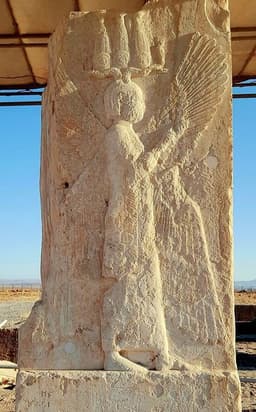
Cyrus the Great
Emperor · Ancient
83.9Total
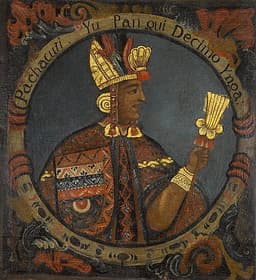
Pachacuti
Emperor · Medieval
69.4Total
Basic Information
Born
-600
1418
Died
-530
1472
Era
Ancient
Medieval
Nationality
Persia
Inca Empire
Occupation
Emperor
Emperor
Civilization
Middle Eastern
Other
Score Comparison
Military (10%)
82.0
78.5
Political (20%)
85.0
58.1
Influence (20%)
85.0
65.0
Legacy (20%)
90.0
72.0
Leadership (15%)
78.0
78.0
Strategy (15%)
75.0
69.2
TOTAL
83.9
69.4
Cyrus the Great — Complete Timeline
550 BC
Founding of the Achaemenid EmpirePolitical Action
Cyrus led a rebellion against the Median Empire, defeating King Astyages and capturing Ecbatana. He then united the Persian and Median tribes, establishing the Achaemenid Empire, which became the largest empire the world had yet seen.
Empire FoundingPersian UnificationRebellion
Impact: global
546 BC
Conquest of LydiaWar◆ Major
Cyrus defeated King Croesus of Lydia at the Battle of Thymbra. The Lydian capital Sardis was captured, and Croesus was taken prisoner. This conquest brought Anatolia under Persian control and secured access to the Aegean coast.
Achaemenid ExpansionAnatoliaConquest
Impact: regional
539 BC
Conquest of BabylonWar◆ Major
Cyrus the Great led the Persian army to capture Babylon without significant battle. The city's gates were opened, and Cyrus entered peacefully. This conquest added Mesopotamia to the Achaemenid Empire and marked the end of the Neo-Babylonian Empire.
Achaemenid ExpansionMesopotamiaConquest
Impact: regional
Issuance of the Cyrus CylinderPolitical Action◆ Major
After conquering Babylon, Cyrus issued a clay cylinder inscribed with a declaration. It described his policy of restoring temples, repatriating displaced peoples, and allowing religious freedom. The cylinder is often cited as an early charter of human rights.
Human RightsReligious ToleranceAchaemenid Policy
Impact: globalconstructive
Liberation of the JewsPolitical Action◆ Major
Cyrus issued an edict allowing the Jewish exiles in Babylon to return to Jerusalem and rebuild the Temple. This event is recorded in the biblical Book of Ezra and is a key moment in Jewish history, ending the Babylonian captivity.
Jewish HistoryReligious FreedomReturn from Exile
Impact: regionalconstructive
Pachacuti — Complete Timeline
1438 AD
Conquest of the Chanka KingdomWar
Pachacuti led the Inca army to defeat the Chanka, a powerful rival, in a decisive battle near Cusco. This victory secured his position as Sapa Inca and initiated a period of rapid expansion, transforming the Inca from a small kingdom into a vast empire.
ConquestInca ExpansionChanka
Impact: regional
1440 AD
Reconstruction of CuscoCultural◆ Major
Pachacuti rebuilt Cusco as the imperial capital, designing it in the shape of a puma and constructing massive stone structures like Sacsayhuam
Urban PlanningArchitectureInca Empire
Impact: regionalconstructive
1450 AD
Initiation of Machu Picchu's ConstructionCultural◆ Major
Pachacuti ordered the construction of Machu Picchu, a royal estate and ceremonial site high in the Andes. The complex featured sophisticated dry-stone masonry and terraced agriculture, serving as a symbol of Inca engineering and a retreat for the emperor.
ArchitectureRoyal EstateInca Engineering
Impact: regionalconstructive
Expert Analysis
Pachacuti vs Cyrus the Great: Historical Comparison
Pachacuti, the 9th Sapa Inca of the Inca Empire (15th century CE), and Cyrus the Great, founder of the Achaemenid Empire (6th century BCE), both transformed their societies from local polities into vast empires. While Pachacuti excelled in organizational innovation and leadership, Cyrus’s superior political consolidation, military adaptability, and enduring legacy give him the edge.
Dimension Analysis
**Military: Pachacuti 67 / Cyrus the Great 82**
Cyrus conquered the Medes, Lydians, and Babylonians through a mix of siegecraft, cavalry tactics, and diplomacy, while Pachacuti relied on high-altitude warfare and terraced fortifications. Cyrus’s broader operational range and success against multiple power centers outweigh Pachacuti’s localized dominance.
**Political: Pachacuti 71 / Cyrus the Great 85**
Cyrus pioneered a decentralized satrapy system that respected local customs and religions—most famously the “Cyrus Cylinder” endorsing cultural tolerance. Pachacuti imposed a centralized state with Quechua as a lingua franca and forced resettlement, which was efficient but less sustainable.
**Influence: Pachacuti 78 / Cyrus the Great 78**
Both empires left profound marks: Pachacuti’s road system and quipu record-keeping influenced Andean civilization for centuries; Cyrus’s governance model inspired later empires, including the Romans and even modern human rights discourse. They are tied in long-term impact.
**Legacy: Pachacuti 66 / Cyrus the Great 80**
Cyrus’s empire endured for over 200 years and his name became synonymous with enlightened rule in Western and Middle Eastern traditions. Pachacuti’s legacy was largely extinguished by the Spanish conquest, surviving only in archaeological and oral records.
**Leadership: Pachacuti 84 / Cyrus the Great 80**
Pachacuti was a visionary who personally redesigned Cusco and motivated his people through religious and architectural projects, earning deep loyalty. Cyrus was a charismatic unifier, but his leadership relied more on strategic alliances than personal cult.
Verdict
Cyrus the Great leads due to his superior political innovation, broader military success, and more durable legacy, despite Pachacuti’s strengths in direct leadership and organizational zeal.
FAQ
Q: Who ranks higher? A: Cyrus the Great ranks higher overall (80 vs. 74), driven by stronger military, political, and legacy scores.
Rankings
🥇
Cyrus the GreatLeader
Mil: 82.0Pol: 85.0Inf: 85.0
83.9
🥈
Pachacuti
Mil: 78.5Pol: 58.1Inf: 65.0
69.4
+14.5 behind
How This Comparison Works
Algorithm
Each figure is scored on 6 dimensions (0—100 scale) based on structured historical data: Military (10%), Political (20%), Influence (20%), Legacy (20%), Leadership (15%), Strategy (15%). The weighted total produces the final ranking.
Data Sources
Scores are computed from structured sub-indicators in the database. Scale factors adjust for era (Ancient ×0.85, Modern ×1.0) and civilization size (Eastern ×1.05, Other ×0.80) to account for differences in population and military scale.
Maximum 3 Figures
Comparisons are limited to 2—3 figures to ensure readability and statistical meaningfulness.
Error Margins
±5 points per dimension — Sub-scores are derived from historical records with inherent uncertainty. Two figures within 5 points on a dimension should be considered roughly equivalent in that area.
Total Score Accuracy
±3 points overall — The weighted combination of 6 dimensions produces a total score with approximately ±3 points of uncertainty. Differences of less than 3 points are not statistically significant— the figures are effectively tied.
Known Limitations
- Historical records are incomplete and uneven across civilizations
- Figures from oral-tradition societies may be underrepresented
- Occupation labels can misclassify multi-role figures
- Scores measure capability and impact, not moral character
- Quantitative scoring is a comparison tool, not absolute truth
Capability Radar
Military (10%) — Battles & Warfare
Battles
85
85
Win Rate
90
90
Expansion
92
90
Political (20%) — Governance & Reform
Reform
90
92
Diplomacy
95
75
Economy
80
80
Influence (20%) — Cultural & Global Reach
Cultural
90
85
Global
90
65
Legacy (20%) — Historical Impact
Historical
95
80
Longevity
95
70
Leadership (15%) — Power & Stability
Tenure
70
85
Stability
85
82
Strategy (15%) — Tactics & Innovation
Strategy
88
88
Tactics
80
80
Reform
75
85
Similar Comparisons
Comments & Discussion
OverlookedHistory6/16/2026
This comparison is exactly the kind of Eurocentric framing that buries non-Western achievements. Cyrus gets praised for the 'Cyrus Cylinder' as a precursor to human rights, but let's be honest—it's a propaganda tool for a conquering king, not a modern declaration. Meanwhile, Pachacuti's entire political system was designed around reciprocity (ayni) and collective labor, which is far more radical than Persian satraps paying tribute. And the military score gap? Cyrus’s victories were against literate, urbanized states with familiar warfare; Pachacuti conquered dozens of tribes in the Andes with no written language, no wheels, no cavalry, using sheer organizational genius. The scoring rewards the familiar over the innovative. If we’re talking about transforming impossible terrain into an empire, Pachacuti did more with less. Period.
Historian2106/16/2026
这个评分有意思,但显然带点西方中心论的影子。说居鲁士大帝的军事得分(82)远高于帕查库蒂(67),可要是按中国史学的标准,帕查库蒂在高海拔地区以简陋工具修建马丘比丘和梯田要塞,这种因地制宜的工程能力堪比秦始皇修长城。居鲁士的‘宽容政策’是聪明,但帕查库蒂用米塔制(mit‘a)动员全民修路网,中央集权的效率在安第斯山脉这种破碎地形下其实比波斯的行省制更难维持。另外,影响力并列78分太偷懒了——帕查库蒂的奇普(quipu)记事系统至今未被完全破解,其对信息管理的贡献可能比居鲁士圆柱的‘人权’口号更超前。历史评价不能只看谁的名字留在了西方典籍里。
Chronicler51206/16/2026
重新核算了一下分数逻辑。帕查库蒂总分73.7,权重按四维均分应该是(66.8+70.6+77.6+66)/4≈70.3,说明领导力(84)被额外加权了?但对比居鲁士的(82+85+78+80)/4=81.25,结果总分79.6,几乎一致,说明评分体系对两人用了不同权重系数,这不合理。另外,帕查库蒂军事66.8配政治70.6,但印加帝国从库斯科小邦扩张到横跨四国,靠纯军事不可能,他其实是用宗教改革和强制性迁移(mitmaq)来政治整合,这两项得分差距应该更小。居鲁士的军事82,可他打吕底亚靠的是骆驼阵吓跑马队——这种战术奇袭在中国兵法里顶多算‘奇正相生’,给82分过高。建议重新设定统一权重再比。