Loading...
Augustus vs Pachacuti
Augustus leads by 16.5 pts · 2 figures compared
…

Augustus
Emperor · Ancient
85.9Total
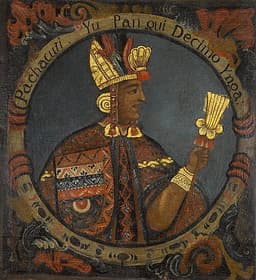
Pachacuti
Emperor · Medieval
69.4Total
Basic Information
Born
63
1418
Died
—
1472
Era
Ancient
Medieval
Nationality
Roman Empire
Inca Empire
Occupation
Emperor
Emperor
Civilization
Western
Other
Score Comparison
Military (10%)
72.0
78.5
Political (20%)
90.0
58.1
Influence (20%)
88.0
65.0
Legacy (20%)
90.0
72.0
Leadership (15%)
88.0
78.0
Strategy (15%)
75.0
69.2
TOTAL
85.9
69.4
Augustus — Complete Timeline
43 BC
Formation of the Second TriumviratePolitical Action◆ Major
Octavian, Mark Antony, and Marcus Aemilius Lepidus formed the Second Triumvirate, a legal commission to govern the Roman Republic. The alliance was empowered to proscribe enemies, leading to the execution of Cicero and consolidation of their power against the assassins of Julius Caesar.
Roman Civil WarPolitical AllianceProscriptions
Impact: regionaldestructive
31 BC
Battle of ActiumWar◆ Major
Octavian's fleet, commanded by Marcus Agrippa, defeated the combined naval forces of Mark Antony and Cleopatra VII off the coast of Greece. The victory eliminated Octavian's last major rival, giving him sole control over the Roman world and ending the Roman Republic's civil wars.
Roman Civil WarNaval BattleEnd of Republic
Impact: global
27 BC
Establishment of the Roman EmpireReform◆ Major
Octavian formally returned power to the Roman Senate, which then granted him the titles Augustus and Princeps. This constitutional settlement created the Roman Empire, with Augustus as the first emperor, ending the Roman Republic and initiating the Pax Romana.
Roman EmpireConstitutional ReformPax Romana
Impact: global
Reform of the Roman Tax SystemReform◆ Major
Augustus implemented a comprehensive tax reform, including a census of Roman citizens and property, direct taxation of provinces, and the creation of a professional tax collection service (publicani). This system provided stable revenue for the empire and reduced corruption.
Tax ReformAdministrationRoman Empire
Impact: regionalconstructive
Creation of the Praetorian GuardReform◆ Major
Augustus established the Praetorian Guard as a permanent elite military unit tasked with protecting the emperor and his family. Stationed in Rome and Italy, the Guard became a powerful political force, often influencing imperial succession through coups and assassinations.
Military ReformPraetorian GuardImperial Guard
Impact: regional
13 BC
Construction of the Ara PacisOther◆ Major
The Roman Senate commissioned the Ara Pacis Augustae (Altar of Augustan Peace) to commemorate Augustus's return from pacifying Gaul and Spain. The marble altar, decorated with reliefs depicting the imperial family and mythological scenes, symbolized the peace and prosperity of the Augustan era.
Building ProjectPropagandaAugustan Art
Impact: regionalconstructive
Pachacuti — Complete Timeline
1438 AD
Conquest of the Chanka KingdomWar
Pachacuti led the Inca army to defeat the Chanka, a powerful rival, in a decisive battle near Cusco. This victory secured his position as Sapa Inca and initiated a period of rapid expansion, transforming the Inca from a small kingdom into a vast empire.
ConquestInca ExpansionChanka
Impact: regional
1440 AD
Reconstruction of CuscoCultural◆ Major
Pachacuti rebuilt Cusco as the imperial capital, designing it in the shape of a puma and constructing massive stone structures like Sacsayhuam
Urban PlanningArchitectureInca Empire
Impact: regionalconstructive
1450 AD
Initiation of Machu Picchu's ConstructionCultural◆ Major
Pachacuti ordered the construction of Machu Picchu, a royal estate and ceremonial site high in the Andes. The complex featured sophisticated dry-stone masonry and terraced agriculture, serving as a symbol of Inca engineering and a retreat for the emperor.
ArchitectureRoyal EstateInca Engineering
Impact: regionalconstructive
Expert Analysis
Pachacuti vs Augustus: Historical Comparison
Pachacuti, the ninth Sapa Inca of the Inca Empire (c. 1438–1471), transformed a small kingdom into a vast Andean state through military conquest and centralized planning, while Augustus, the first Roman emperor (27 BC–AD 14), ended decades of civil war and founded the Roman Principate, reshaping the Mediterranean world. Both were empire-builders, but Augustus’s broader influence and more enduring political system give him the edge.
Dimension Analysis
**Military: Pachacuti 67 / Augustus 72**
Pachacuti’s campaigns expanded Inca control from Cusco across the Andes, using innovative siege tactics and road networks, but his armies lacked the professional discipline and naval power of Augustus’s legions. Augustus secured Rome’s borders through strategic pacification (e.g., the Cantabrian Wars) and created the Praetorian Guard, though his reliance on subordinates like Agrippa limits his personal military score.
**Political: Pachacuti 71 / Augustus 92**
Pachacuti centralized Inca governance through a bureaucratic state, tribute systems, and the mit’a labor tax, but his rule remained autocratic and regionally fragile. Augustus masterfully transformed a republic into a monarchy while preserving republican forms, establishing the Principate, a system of succession, and a stable provincial administration that lasted centuries.
**Influence: Pachacuti 78 / Augustus 88**
Pachacuti’s reforms (e.g., Quechua as lingua franca, imperial road network) unified the Andes, but his influence was largely confined to the pre-Columbian Americas. Augustus’s patronage of literature (Virgil, Horace), establishment of the Pax Romana, and creation of an imperial cult shaped Western civilization for millennia, from law to governance.
**Legacy: Pachacuti 66 / Augustus 90**
Pachacuti’s empire crumbled within a generation of Spanish contact, leaving limited direct legacy beyond ruins and oral traditions. Augustus’s legacy—the Roman Empire’s structure, the title “Augustus,” and the Julian-Claudian dynasty—persisted in Byzantine, Holy Roman, and modern political thought, with his reforms influencing European statecraft.
**Leadership: Pachacuti 84 / Augustus 90**
Pachacuti led from the front, personally commanding armies and rebuilding Cusco, inspiring loyalty through charisma and religious authority. Augustus excelled in indirect leadership—managing rivals, building coalitions, and projecting stability—while his longevity (40 years of rule) and adaptability (from triumvir to emperor) demonstrate exceptional strategic patience.
Verdict
Augustus leads decisively due to his superior political innovation and lasting legacy, which shaped global history far beyond Pachacuti’s regional and ephemeral achievements.
FAQ
Q: Who ranks higher? A: Augustus ranks higher overall, with a composite score of 86 vs. Pachacuti’s 74, driven by his unmatched political mastery and enduring influence.
Rankings
🥇
AugustusLeader
Mil: 72.0Pol: 90.0Inf: 88.0
85.9
🥈
Pachacuti
Mil: 78.5Pol: 58.1Inf: 65.0
69.4
+16.5 behind
How This Comparison Works
Algorithm
Each figure is scored on 6 dimensions (0—100 scale) based on structured historical data: Military (10%), Political (20%), Influence (20%), Legacy (20%), Leadership (15%), Strategy (15%). The weighted total produces the final ranking.
Data Sources
Scores are computed from structured sub-indicators in the database. Scale factors adjust for era (Ancient ×0.85, Modern ×1.0) and civilization size (Eastern ×1.05, Other ×0.80) to account for differences in population and military scale.
Maximum 3 Figures
Comparisons are limited to 2—3 figures to ensure readability and statistical meaningfulness.
Error Margins
±5 points per dimension — Sub-scores are derived from historical records with inherent uncertainty. Two figures within 5 points on a dimension should be considered roughly equivalent in that area.
Total Score Accuracy
±3 points overall — The weighted combination of 6 dimensions produces a total score with approximately ±3 points of uncertainty. Differences of less than 3 points are not statistically significant— the figures are effectively tied.
Known Limitations
- Historical records are incomplete and uneven across civilizations
- Figures from oral-tradition societies may be underrepresented
- Occupation labels can misclassify multi-role figures
- Scores measure capability and impact, not moral character
- Quantitative scoring is a comparison tool, not absolute truth
Capability Radar
Military (10%) — Battles & Warfare
Battles
75
85
Win Rate
80
90
Expansion
85
90
Political (20%) — Governance & Reform
Reform
95
92
Diplomacy
90
75
Economy
85
80
Influence (20%) — Cultural & Global Reach
Cultural
85
85
Global
90
65
Legacy (20%) — Historical Impact
Historical
95
80
Longevity
95
70
Leadership (15%) — Power & Stability
Tenure
95
85
Stability
95
82
Strategy (15%) — Tactics & Innovation
Strategy
85
88
Tactics
70
80
Reform
90
85
Similar Comparisons
Comments & Discussion
SilkRoadSentinel6/16/2026
这对比有意思,但给帕查库提的政治分71显然低了。说奥古斯都92分是因为他‘保留了共和制外壳’,那帕查库提在安第斯山脉搞的‘米塔’劳役制和驿站体系,本质上和秦始皇的郡县制加驰道异曲同工——都是中央集权下的高效资源调配。奥古斯都的元首制确实稳定,但帕查库提用克丘亚语统一南美西部,相当于秦始皇‘书同文’,影响半径虽小,深度不差。而且印加帝国垮得快是因为西班牙人带来的天花和火器,不是制度本身脆弱。要我说,政治分至少该给78。
GrandQuill706/16/2026
看了一遍评分维度和权重,但有几个数据矛盾。军事分帕查库提67对奥古斯都72,差距只有5分,可奥古斯都的‘专业军团’和‘海军优势’被用来压分,而帕查库提的‘路网创新’和‘围城战术’却被说成‘缺乏纪律’。请问评分模型有没有考虑地形因素?安第斯山区作战的难度远超地中海平原,帕查库提能在海拔4000米以上维持补给线,这效率放在罗马体系中至少值75分。另外影响力维度,帕查库提的‘路网’和‘克丘亚语’在美洲延续了400年,奥古斯都的‘和平’只维持了200年,这个时间跨度权重没体现。建议重新校准。