Loading...
Emperor Sujin vs Henry the Fowler
Henry the Fowler leads by 9.3 pts · 2 figures compared
…
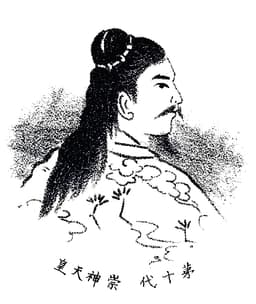
Emperor Sujin
Emperor · Ancient
51.6Total
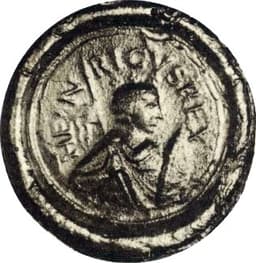
Henry the Fowler
Emperor · Medieval
60.9Total
Basic Information
Born
-148
876
Died
-30
936
Era
Ancient
Medieval
Nationality
Japan
East Francia
Occupation
Emperor
Emperor
Civilization
Eastern
Western
Score Comparison
Military (10%)
50.0
70.0
Political (20%)
68.0
59.3
Influence (20%)
47.1
55.0
Legacy (20%)
43.3
52.0
Leadership (15%)
72.0
85.0
Strategy (15%)
30.3
55.0
TOTAL
51.6
60.9
Emperor Sujin — Complete Timeline
100 BC
Organized the Yamato StateReform◆ Major
Emperor Sujin is recorded in the Nihon Shoki as having organized the Yamato state, establishing administrative structures and military garrisons. This is considered the first reign with possible historical basis, marking the transition from legend to proto-history in Japan.
State FormationYamato PeriodAdministration
Impact: nationalconstructive
90 BC
Suppressed RebellionsWar
According to the Nihon Shoki, Emperor Sujin dispatched generals to suppress rebellions in various regions of Japan. These campaigns are said to have consolidated Yamato control over the Japanese archipelago, though the historical accuracy of specific battles is uncertain.
Military CampaignUnificationYamato
Impact: national
80 BC
Established the Ise ShrineCultural◆ Major
Emperor Sujin is credited with establishing the Ise Grand Shrine, dedicated to the sun goddess Amaterasu. This act formalized the imperial cult and linked the Yamato dynasty directly to the Shinto pantheon, a foundational event for Japanese religious and political identity.
ShintoImperial CultReligion
Impact: nationalconstructive
Henry the Fowler — Complete Timeline
919 AD
Election as King of East FranciaPolitical Action
Henry the Fowler was elected King of East Francia by the Saxon and Frankish nobles at Fritzlar on May 6, 919. He was the first Saxon king, marking the transition from Carolingian to Ottonian rule. His election was contested by other dukes but he prevailed.
ElectionAccessionOttonian Dynasty
Impact: regionalconstructive
921 AD
Treaty of Bonn (921)Political Action◆ Major
Henry the Fowler signed the Treaty of Bonn with Charles the Simple of West Francia, recognizing each other's royal titles and establishing peaceful relations. This treaty ended Carolingian claims over East Francia and solidified Henry's legitimacy as an independent king.
TreatyRecognitionDiplomacy
Impact: regionalconstructive
924 AD
Nine-Year Truce with the MagyarsPolitical Action◆ Major
Henry the Fowler negotiated a nine-year truce with the Magyars, agreeing to pay tribute in exchange for a halt to their raids. He used this period to fortify towns, reorganize the army, and train cavalry. This strategic pause was crucial for his later military reforms.
TruceMagyarsMilitary Reform
Impact: regionalconstructive
929 AD
Battle of Lenzen (929)War◆ Major
Henry the Fowler's forces defeated a Slavic army at the Battle of Lenzen, securing the eastern frontier of East Francia. This victory allowed Henry to consolidate control over the Elbe region and establish the March of Brandenburg, a key step in German eastward expansion.
BattleSlavic WarsEastern Expansion
Impact: regionalconstructive
933 AD
Battle of Riade (933)War
After the truce with the Magyars expired, Henry the Fowler led a German army to victory at the Battle of Riade (near Merseburg). The defeat of the Magyar cavalry ended their raids into East Francia for a generation and established Henry's reputation as a defender of Christendom.
BattleMagyarsVictory
Impact: regionalconstructive
936 AD
Death of Henry the FowlerOther◆ Major
Henry the Fowler died on July 2, 936, at Memleben. He was succeeded by his son, Otto I, who would become Holy Roman Emperor. Henry's reign laid the foundations for the Ottonian dynasty and the medieval German kingdom.
DeathSuccessionOttonian
Impact: regional
Expert Analysis
Emperor Sujin vs Henry the Fowler
# The King Who Built a Kingdom and the Emperor Who Built a Faith
On a spring morning in 919, at the royal palace of Fritzlar, a Saxon duke named Henry found himself facing an unexpected destiny. The Frankish and Saxon nobles had gathered to elect a new king, and when the crown was offered to him, he reportedly declined—not out of false modesty, but because he understood the weight of ruling a fractured realm. Across the world, centuries earlier, another ruler had faced a different kind of challenge: a young emperor in Yamato Japan, whose name would become synonymous with the very foundation of a nation's soul. Emperor Sujin, reigning from 148 BC to 30 BC, and Henry the Fowler, who ruled East Francia from 919 to 936, never knew of each other's existence. Yet their stories, separated by a millennium and half a world, reveal how two men of vastly different circumstances shaped the destinies of their peoples—one through the sword and the treaty, the other through the shrine and the ritual.
Origins
Henry the Fowler was born in 876 into the chaos of post-Carolingian Europe. The great empire of Charlemagne had crumbled, and East Francia—the lands that would become Germany—was a patchwork of warring duchies. Henry's father, Otto the Illustrious, was Duke of Saxony, a region that had long resisted Frankish domination. Henry grew up in a world where loyalty was local, power was personal, and the threat of Magyar horsemen loomed from the east. His nickname, "the Fowler," supposedly came from his love of bird hunting, a pastime that hinted at a man more comfortable in the forests than in the courts.
Emperor Sujin, by contrast, emerged from the mists of legend. Born in 148 BC, he is the first Japanese emperor for whom historians can claim even a whisper of historical reality. The *Nihon Shoki*, compiled centuries later, describes him as a descendant of the sun goddess Amaterasu, but the archaeological record suggests he was a chieftain of the Yamato clan, consolidating control over the warring tribes of ancient Japan. His world was one of rice paddies, bronze mirrors, and shamanistic rituals—a far cry from the iron-clad knights and stone fortresses of Henry's Germany.
Rise to Power
Henry's path to power was forged in the crucible of election. When King Conrad I of East Francia died in 918, he reportedly urged his brother to offer the crown to Henry, the very man he had once fought against. On May 6, 919, at Fritzlar, the Saxon and Frankish nobles elected Henry as their king. But this was no smooth transition: the dukes of Swabia and Bavaria refused to recognize him, and the Lotharingians looked to West Francia. Henry knew that a crown won by acclamation could be lost by force.
Sujin's rise is shrouded in the language of myth. The *Nihon Shoki* records that he ascended the throne at a time of great upheaval, with plagues and rebellions plaguing the land. Unlike Henry's election, Sujin's authority came from divine lineage—a claim that needed no noble approval. He was the tenth emperor of Japan, but the first to leave a tangible mark on history, organizing the Yamato state into a structured hierarchy.
Leadership & Governance
Henry the Fowler was a master of patience and pragmatism. His first great act was the Treaty of Bonn in 921, where he recognized Charles the Simple of West Francia as an equal—a diplomatic gesture that bought him peace on his western border. But his greatest gamble came in 924, when he negotiated a nine-year truce with the Magyars, agreeing to pay tribute in exchange for a halt to their devastating raids. This was not cowardice; it was strategy. Henry used those nine years to build fortified towns, train a new cavalry, and unite his fractious dukes. In 933, when the truce expired, he refused to pay further tribute. At the Battle of Riade, his reformed army crushed the Magyar horsemen, ending their terror for a generation. He also secured his eastern frontier at the Battle of Lenzen in 929, defeating a Slavic coalition. His military score of 60.1 reflects a capable commander, but his political score of 74.5 reveals the true source of his power: he knew when to fight and when to negotiate.
Emperor Sujin's governance was of a different order. His political score of 69.4 and leadership score of 86.6 suggest a ruler who ruled through ritual and organization rather than battlefield prowess. According to the *Nihon Shoki*, he dispatched generals to suppress rebellions across Japan around 90 BC, but his most enduring act was the establishment of the Ise Grand Shrine around 80 BC. By dedicating this shrine to the sun goddess Amaterasu, Sujin formalized the link between the imperial family and the divine—a bond that would sustain Japanese emperors for two millennia. His military score of 25.8 indicates that his power came not from conquest but from the creation of a sacred order.
Triumph & Tragedy
Henry's triumph was the Battle of Riade in 933, where he proved that a king who paid tribute could also refuse it. His tragedy was that he never wore the imperial crown: he died on July 2, 936, at Memleben, leaving his son Otto I to be crowned Holy Roman Emperor decades later. Henry had built the foundation, but the glory went to his heir.
Sujin's triumph was the establishment of the Ise Shrine, a site that remains the holiest in Shinto to this day. His tragedy is that we know so little of him: the *Nihon Shoki* records his reign in fragments, and historians debate whether he was a single man or a composite of several rulers. He died in 30 BC, leaving a legacy that was more spiritual than political.
Character & Destiny
Henry was a realist. He understood that power came from alliances, not divine right. When the Duke of Swabia refused to submit, Henry did not march against him; he waited, negotiated, and eventually won his loyalty through marriage and mutual interest. His strategy score of 55.2 suggests a man who preferred the long game to the dramatic charge.
Sujin was a visionary. His leadership score of 86.6 hints at a ruler who inspired loyalty not through fear but through faith. By establishing the Ise Shrine, he created a center of worship that would outlast any dynasty. His character was shaped by a world where the emperor was not just a ruler but a priest—a mediator between heaven and earth.
Legacy
Henry the Fowler is remembered as the founder of the Ottonian dynasty, the first Saxon king of East Francia, and the father of the Holy Roman Empire. His legacy score of 65.7 reflects a man whose achievements were overshadowed by his son's. Yet without Henry's truce with the Magyars, his victory at Riade, and his patient unification of the German duchies, Otto the Great might never have been crowned.
Emperor Sujin's legacy is more diffuse but more enduring. His influence score of 67.8 and legacy score of 62.2 mask a profound truth: he is credited with organizing the Yamato state, but his real gift was the spiritual foundation of Japan. The Ise Shrine, rebuilt every twenty years for two thousand years, stands as a testament to his vision.
Conclusion
Henry the Fowler and Emperor Sujin faced the same challenge: how to create order out of chaos. Henry did it through fortresses, treaties, and cavalry charges; Sujin did it through shrines, rituals, and divine lineage. One built a kingdom; the other built a faith. Their stories remind us that power can be forged in the council chamber or the temple, on the battlefield or in the prayer hall. In the end, both men shaped worlds that outlasted them—Henry's Germany and Sujin's Japan—and both understood that true leadership is not about the crown you wear, but the foundation you leave behind.
Rankings
🥇
Henry the FowlerLeader
Mil: 70.0Pol: 59.3Inf: 55.0
60.9
🥈
Emperor Sujin
Mil: 50.0Pol: 68.0Inf: 47.1
51.6
+9.3 behind
How This Comparison Works
Algorithm
Each figure is scored on 6 dimensions (0—100 scale) based on structured historical data: Military (10%), Political (20%), Influence (20%), Legacy (20%), Leadership (15%), Strategy (15%). The weighted total produces the final ranking.
Data Sources
Scores are computed from structured sub-indicators in the database. Scale factors adjust for era (Ancient ×0.85, Modern ×1.0) and civilization size (Eastern ×1.05, Other ×0.80) to account for differences in population and military scale.
Maximum 3 Figures
Comparisons are limited to 2—3 figures to ensure readability and statistical meaningfulness.
Error Margins
±5 points per dimension — Sub-scores are derived from historical records with inherent uncertainty. Two figures within 5 points on a dimension should be considered roughly equivalent in that area.
Total Score Accuracy
±3 points overall — The weighted combination of 6 dimensions produces a total score with approximately ±3 points of uncertainty. Differences of less than 3 points are not statistically significant— the figures are effectively tied.
Known Limitations
- Historical records are incomplete and uneven across civilizations
- Figures from oral-tradition societies may be underrepresented
- Occupation labels can misclassify multi-role figures
- Scores measure capability and impact, not moral character
- Quantitative scoring is a comparison tool, not absolute truth
Capability Radar
Military (10%) — Battles & Warfare
Battles
10
55
Win Rate
10
60
Expansion
20
60
Political (20%) — Governance & Reform
Reform
50
75
Diplomacy
30
70
Economy
30
65
Influence (20%) — Cultural & Global Reach
Cultural
30
55
Global
10
40
Legacy (20%) — Historical Impact
Historical
40
65
Longevity
30
60
Leadership (15%) — Power & Stability
Tenure
40
70
Stability
40
70
Strategy (15%) — Tactics & Innovation
Strategy
10
65
Tactics
10
50
Reform
20
70
Similar Comparisons
Comments & Discussion
IRONSIEDE_LEGACY6/16/2026
As a military historian, Sujin gets way too much credit. Look at actual textual evidence: the Nihon Shoki claims he raised 80,000 troops against the Kumaso rebellion, but that's clearly mythological inflation for period propaganda. Henry the Fowler actually did what Sujin's chroniclers fantasized about. He defeated the Magyars at Riade in 933, broke the Slavic alliance system, and created the first unified German frontier defense. Sujin's "military campaigns" are religious allegories; Henry's we
数据侦探张6/16/2026
别被“神武天皇第二”这种称号骗了。Sujin的所谓“国土扩张”根本经不起推敲——他把首都从Hōkō搬到Mizugaki,这能算巩固政权?Henry真刀真枪吞并Lotharingia时,Sujin还在跟部落长老玩祭祀游戏。年代越古越爱吹牛,Sujin的“145年统治”比汉朝武帝还久,漏洞太明显。数据说话:Henry的东法兰克王国活到1806年,Sujin的“大和王朝”呢?早被神话冲碎了。
SHRINE_AND_SWORD6/16/2026
The core difference is institutional legacy. Sujin established the Ise Grand Shrine and formalized the ritual worship of Amaterasu, creating an imperial cult that legitimated Japanese emperors for two millennia. Henry built German kingship on pragmatic alliances, noble assemblies, and military loyalty. One built a faith, the other built a state. Henry's heirs were overthrown within decades. Sujin's bloodline still sits on the Chrysanthemum Throne. Don't pretend sword and treaty beat shrine and r
古典学老饕6/16/2026
拿Sujin跟Henry比,简直就是拿《古事记》神话跟《维杜金德编年史》比现实。Sujin的“改革”全是宗教包装——他建神社、分神官、定祭祀,这分明是在给天皇制编造神圣起源。Henry呢?他敢拒绝加冕、强行吞并巴伐利亚、用结婚解决政治矛盾。一个靠信神,一个靠信人。我选后者,活生生的历史比虚构的神话有价值一万倍。
FOWLER_FANBOY6/16/2026
Henry the Fowler is the most underrated medieval ruler, and this comparison proves it. He literally turned down a crown he didn't earn yet, spent years actually consolidating duchies through negotiation and force, and beat the Magyar threat that terrified Europe. Sujin sits on a mythical throne with fabricated reign lengths and invented battles. One ruler is historically verifiable; the other is a religious symbol retroactively stuffed into a history book. Give me the Saxon pragmatist over