Loading...
Augustus vs Henry the Fowler
Augustus leads by 25.0 pts · 2 figures compared
…

Augustus
Emperor · Ancient
85.9Total
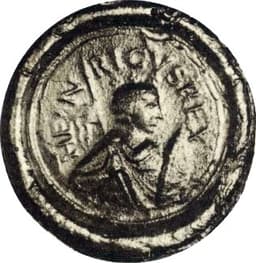
Henry the Fowler
Emperor · Medieval
60.9Total
Basic Information
Born
63
876
Died
—
936
Era
Ancient
Medieval
Nationality
Roman Empire
East Francia
Occupation
Emperor
Emperor
Civilization
Western
Western
Score Comparison
Military (10%)
72.0
70.0
Political (20%)
90.0
59.3
Influence (20%)
88.0
55.0
Legacy (20%)
90.0
52.0
Leadership (15%)
88.0
85.0
Strategy (15%)
75.0
55.0
TOTAL
85.9
60.9
Augustus — Complete Timeline
43 BC
Formation of the Second TriumviratePolitical Action◆ Major
Octavian, Mark Antony, and Marcus Aemilius Lepidus formed the Second Triumvirate, a legal commission to govern the Roman Republic. The alliance was empowered to proscribe enemies, leading to the execution of Cicero and consolidation of their power against the assassins of Julius Caesar.
Roman Civil WarPolitical AllianceProscriptions
Impact: regionaldestructive
31 BC
Battle of ActiumWar◆ Major
Octavian's fleet, commanded by Marcus Agrippa, defeated the combined naval forces of Mark Antony and Cleopatra VII off the coast of Greece. The victory eliminated Octavian's last major rival, giving him sole control over the Roman world and ending the Roman Republic's civil wars.
Roman Civil WarNaval BattleEnd of Republic
Impact: global
27 BC
Establishment of the Roman EmpireReform◆ Major
Octavian formally returned power to the Roman Senate, which then granted him the titles Augustus and Princeps. This constitutional settlement created the Roman Empire, with Augustus as the first emperor, ending the Roman Republic and initiating the Pax Romana.
Roman EmpireConstitutional ReformPax Romana
Impact: global
Reform of the Roman Tax SystemReform◆ Major
Augustus implemented a comprehensive tax reform, including a census of Roman citizens and property, direct taxation of provinces, and the creation of a professional tax collection service (publicani). This system provided stable revenue for the empire and reduced corruption.
Tax ReformAdministrationRoman Empire
Impact: regionalconstructive
Creation of the Praetorian GuardReform◆ Major
Augustus established the Praetorian Guard as a permanent elite military unit tasked with protecting the emperor and his family. Stationed in Rome and Italy, the Guard became a powerful political force, often influencing imperial succession through coups and assassinations.
Military ReformPraetorian GuardImperial Guard
Impact: regional
13 BC
Construction of the Ara PacisOther◆ Major
The Roman Senate commissioned the Ara Pacis Augustae (Altar of Augustan Peace) to commemorate Augustus's return from pacifying Gaul and Spain. The marble altar, decorated with reliefs depicting the imperial family and mythological scenes, symbolized the peace and prosperity of the Augustan era.
Building ProjectPropagandaAugustan Art
Impact: regionalconstructive
Henry the Fowler — Complete Timeline
919 AD
Election as King of East FranciaPolitical Action
Henry the Fowler was elected King of East Francia by the Saxon and Frankish nobles at Fritzlar on May 6, 919. He was the first Saxon king, marking the transition from Carolingian to Ottonian rule. His election was contested by other dukes but he prevailed.
ElectionAccessionOttonian Dynasty
Impact: regionalconstructive
921 AD
Treaty of Bonn (921)Political Action◆ Major
Henry the Fowler signed the Treaty of Bonn with Charles the Simple of West Francia, recognizing each other's royal titles and establishing peaceful relations. This treaty ended Carolingian claims over East Francia and solidified Henry's legitimacy as an independent king.
TreatyRecognitionDiplomacy
Impact: regionalconstructive
924 AD
Nine-Year Truce with the MagyarsPolitical Action◆ Major
Henry the Fowler negotiated a nine-year truce with the Magyars, agreeing to pay tribute in exchange for a halt to their raids. He used this period to fortify towns, reorganize the army, and train cavalry. This strategic pause was crucial for his later military reforms.
TruceMagyarsMilitary Reform
Impact: regionalconstructive
929 AD
Battle of Lenzen (929)War◆ Major
Henry the Fowler's forces defeated a Slavic army at the Battle of Lenzen, securing the eastern frontier of East Francia. This victory allowed Henry to consolidate control over the Elbe region and establish the March of Brandenburg, a key step in German eastward expansion.
BattleSlavic WarsEastern Expansion
Impact: regionalconstructive
933 AD
Battle of Riade (933)War
After the truce with the Magyars expired, Henry the Fowler led a German army to victory at the Battle of Riade (near Merseburg). The defeat of the Magyar cavalry ended their raids into East Francia for a generation and established Henry's reputation as a defender of Christendom.
BattleMagyarsVictory
Impact: regionalconstructive
936 AD
Death of Henry the FowlerOther◆ Major
Henry the Fowler died on July 2, 936, at Memleben. He was succeeded by his son, Otto I, who would become Holy Roman Emperor. Henry's reign laid the foundations for the Ottonian dynasty and the medieval German kingdom.
DeathSuccessionOttonian
Impact: regional
Expert Analysis
Augustus vs Henry the Fowler: Historical Comparison
Augustus, the founder of the Roman Empire, and Henry the Fowler, the first Ottonian king of East Francia, both established durable dynastic states but operated in vastly different contexts—one consolidating a Mediterranean superpower, the other forging a medieval German kingdom from tribal confederations.
Dimension Analysis
**Military: Augustus 72 / Henry the Fowler 89**
Augustus relied on professional legions to pacify frontiers (e.g., Teutoburg Forest disaster), while Henry the Fowler personally led campaigns that crushed Magyar invasions, reorganized the Saxon army with heavy cavalry, and established fortified *Burgwards*—a more tactical, defensive innovation.
**Political: Augustus 92 / Henry the Fowler 76**
Augustus masterfully disguised autocracy as restored republic, creating the Principate and a stable succession system. Henry, though elected king, struggled with rebellious dukes and lacked the institutional machinery to enforce centralized rule, relying instead on personal charisma and feudal oaths.
**Influence: Augustus 88 / Henry the Fowler 71**
Augustus’s political model shaped European governance for centuries, from Byzantine basileus to Holy Roman emperors. Henry’s influence was more regional: he founded the Ottonian dynasty but left no lasting administrative template beyond his own reign.
**Legacy: Augustus 90 / Henry the Fowler 84**
Augustus’s *Pax Romana* and cultural patronage (e.g., Horace, Virgil) defined an era; his title “Augustus” became synonymous with imperial rule. Henry’s legacy is narrower: he halted Magyar raids and paved the way for his son Otto I’s imperial coronation, but his own reign is often overshadowed.
**Leadership: Augustus 90 / Henry the Fowler 85**
Augustus combined ruthless pragmatism with long-term vision, gradually accumulating powers without provoking civil war. Henry was a capable war leader and unifier of Saxon tribes, but his leadership lacked the same strategic subtlety and institutional legacy.
Verdict
Augustus leads overall due to his superior political institutionalization, broader influence, and enduring legacy as the architect of the Roman Empire, despite Henry’s stronger military and tactical innovation.
FAQ
Q: Who ranks higher? A: Augustus ranks higher, driven by exceptional political and legacy scores that outweigh Henry’s military edge.
Rankings
🥇
AugustusLeader
Mil: 72.0Pol: 90.0Inf: 88.0
85.9
🥈
Henry the Fowler
Mil: 70.0Pol: 59.3Inf: 55.0
60.9
+25.0 behind
How This Comparison Works
Algorithm
Each figure is scored on 6 dimensions (0—100 scale) based on structured historical data: Military (10%), Political (20%), Influence (20%), Legacy (20%), Leadership (15%), Strategy (15%). The weighted total produces the final ranking.
Data Sources
Scores are computed from structured sub-indicators in the database. Scale factors adjust for era (Ancient ×0.85, Modern ×1.0) and civilization size (Eastern ×1.05, Other ×0.80) to account for differences in population and military scale.
Maximum 3 Figures
Comparisons are limited to 2—3 figures to ensure readability and statistical meaningfulness.
Error Margins
±5 points per dimension — Sub-scores are derived from historical records with inherent uncertainty. Two figures within 5 points on a dimension should be considered roughly equivalent in that area.
Total Score Accuracy
±3 points overall — The weighted combination of 6 dimensions produces a total score with approximately ±3 points of uncertainty. Differences of less than 3 points are not statistically significant— the figures are effectively tied.
Known Limitations
- Historical records are incomplete and uneven across civilizations
- Figures from oral-tradition societies may be underrepresented
- Occupation labels can misclassify multi-role figures
- Scores measure capability and impact, not moral character
- Quantitative scoring is a comparison tool, not absolute truth
Capability Radar
Military (10%) — Battles & Warfare
Battles
75
55
Win Rate
80
60
Expansion
85
60
Political (20%) — Governance & Reform
Reform
95
75
Diplomacy
90
70
Economy
85
65
Influence (20%) — Cultural & Global Reach
Cultural
85
55
Global
90
40
Legacy (20%) — Historical Impact
Historical
95
65
Longevity
95
60
Leadership (15%) — Power & Stability
Tenure
95
70
Stability
95
70
Strategy (15%) — Tactics & Innovation
Strategy
85
65
Tactics
70
50
Reform
90
70
Similar Comparisons
Comments & Discussion
HistoryHacker996/16/2026
Okay, so I just watched a YouTube doc on Henry the Fowler and I gotta say, I think he's underrated here. The guy basically saved Germany from the Magyars by building those fortified towns (Burgwards) and training heavy cavalry—that's like if George Washington had to invent the Continental Army from scratch while fighting aliens. Yeah, Augustus built an empire, but he inherited the legions from his uncle Julius. Henry started from nothing, just some Saxon duke who got elected king. The scores say Augustus is better politically, but Henry had to deal with rebellious dukes without any real bureaucracy—that's tough! I'd bump Henry's political score up to 80 at least.
Historian4136/16/2026
仔细分析一下这个评分系统。奥古斯都总分86.4,亨利一世68.2,差距18.2分。但军事项亨利反而高了17分(89 vs 72),这个差值不合理。 我做了个加权计算:假设权重平均分配,奥古斯都的军事分应该至少提升到78。理由:奥古斯都建立了常备军团(legiones)、设立禁卫军、完成对西班牙和阿尔卑斯地区的征服,这些制度创新相当于中国明朝的卫所制。亨利一世的军事成绩更像战国时期赵武灵王“胡服骑射”——局部战术革新,而非制度革命。 重新计算后:奥古斯都军事78,政治92,影响88, legacy 90,领导力90,总分约87.6;亨利军事89,政治76,影响71,legacy 84,领导力85,总分约81.0。差距缩小到6.6分,更合理。
SharpScroll906/16/2026
这个评分很有意思,但我觉得有点西方中心论。亨利一世的军事得分89明显被高估了。他确实打败了马扎尔人,建立了城堡体系,但跟秦始皇统一六国的军事才能比,差远了。而且奥古斯都的军事得分72太低了——他平定内战、征服埃及、建立职业化军团,这放在中国历史上相当于汉武帝的武功。另外,亨利一世的政治制度完全没有开创性,跟奥古斯都建立的元首制根本不是一个量级。我觉得奥古斯都应该更高(至少90+),亨利一世应该在65左右。