Loading...
Henry the Fowler vs Julius Caesar
Julius Caesar leads by 21.9 pts · 2 figures compared
…
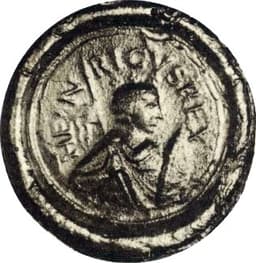
Henry the Fowler
Emperor · Medieval
60.9Total

Julius Caesar
General · Ancient
82.8Total
Basic Information
Born
876
-100
Died
936
-44
Era
Medieval
Ancient
Nationality
East Francia
Roman Republic
Occupation
Emperor
General
Civilization
Western
Western
Score Comparison
Military (10%)
70.0
88.0
Political (20%)
59.3
78.0
Influence (20%)
55.0
85.0
Legacy (20%)
52.0
82.0
Leadership (15%)
85.0
80.0
Strategy (15%)
55.0
85.0
TOTAL
60.9
82.8
Henry the Fowler — Complete Timeline
919 AD
Election as King of East FranciaPolitical Action
Henry the Fowler was elected King of East Francia by the Saxon and Frankish nobles at Fritzlar on May 6, 919. He was the first Saxon king, marking the transition from Carolingian to Ottonian rule. His election was contested by other dukes but he prevailed.
ElectionAccessionOttonian Dynasty
Impact: regionalconstructive
921 AD
Treaty of Bonn (921)Political Action◆ Major
Henry the Fowler signed the Treaty of Bonn with Charles the Simple of West Francia, recognizing each other's royal titles and establishing peaceful relations. This treaty ended Carolingian claims over East Francia and solidified Henry's legitimacy as an independent king.
TreatyRecognitionDiplomacy
Impact: regionalconstructive
924 AD
Nine-Year Truce with the MagyarsPolitical Action◆ Major
Henry the Fowler negotiated a nine-year truce with the Magyars, agreeing to pay tribute in exchange for a halt to their raids. He used this period to fortify towns, reorganize the army, and train cavalry. This strategic pause was crucial for his later military reforms.
TruceMagyarsMilitary Reform
Impact: regionalconstructive
929 AD
Battle of Lenzen (929)War◆ Major
Henry the Fowler's forces defeated a Slavic army at the Battle of Lenzen, securing the eastern frontier of East Francia. This victory allowed Henry to consolidate control over the Elbe region and establish the March of Brandenburg, a key step in German eastward expansion.
BattleSlavic WarsEastern Expansion
Impact: regionalconstructive
933 AD
Battle of Riade (933)War
After the truce with the Magyars expired, Henry the Fowler led a German army to victory at the Battle of Riade (near Merseburg). The defeat of the Magyar cavalry ended their raids into East Francia for a generation and established Henry's reputation as a defender of Christendom.
BattleMagyarsVictory
Impact: regionalconstructive
936 AD
Death of Henry the FowlerOther◆ Major
Henry the Fowler died on July 2, 936, at Memleben. He was succeeded by his son, Otto I, who would become Holy Roman Emperor. Henry's reign laid the foundations for the Ottonian dynasty and the medieval German kingdom.
DeathSuccessionOttonian
Impact: regional
Julius Caesar — Complete Timeline
58 BC
Gallic WarsWar◆ Major
Caesar, as proconsul of Gaul, launched a series of campaigns that conquered all of Gaul (modern France, Belgium, and parts of Switzerland). He fought numerous battles, including against the Helvetii, the Belgae, and the Gallic chieftain Vercingetorix. The wars brought immense wealth and a loyal army to Caesar.
Gallic WarsConquestRoman Expansion
Impact: regional
49 BC
Crossing the RubiconPolitical Action◆ Major
Caesar led Legio XIII across the Rubicon River into Italy, defying the Roman Senate's order to disband his army. This act triggered a civil war against Pompey and the Optimates, ultimately leading to Caesar's dictatorship and the end of the Roman Republic.
Roman Civil WarEnd of RepublicPower Struggle
Impact: global
48 BC
Battle of PharsalusWar◆ Major
Caesar's outnumbered army defeated the larger forces of Pompey the Great at Pharsalus in Greece. Caesar's tactical use of a reserve line to counter Pompey's cavalry charge proved decisive. Pompey fled to Egypt, where he was assassinated, leaving Caesar as the undisputed master of the Roman world.
Roman Civil WarBattleDecisive Victory
Impact: regional
44 BC
Appointment as Dictator for LifePolitical Action◆ Major
The Roman Senate appointed Caesar dictator perpetuo (dictator for life), granting him unprecedented personal power. This move concentrated military, legislative, and judicial authority in one person, effectively ending the Roman Republic's traditional system of checks and balances and alarming many senators.
DictatorshipEnd of RepublicPower Consolidation
Impact: regionaldestructive
Assassination on the Ides of MarchPolitical Action◆ Major
A group of Roman senators, led by Marcus Junius Brutus and Gaius Cassius Longinus, stabbed Caesar to death at a meeting of the Senate in the Theatre of Pompey. The assassination was intended to restore the Republic, but instead triggered another civil war that led to the rise of the Roman Empire.
AssassinationRoman PoliticsEnd of Republic
Impact: globaldestructive
Expert Analysis
Julius Caesar vs Henry the Fowler: Historical Comparison
This comparison examines two foundational figures—Caesar, the Roman general who ended the Republic, and Henry, the German king who founded the Ottonian dynasty—across six dimensions of leadership and impact.
Dimension Analysis
**Military: Julius Caesar 88 / Henry the Fowler 89**
Both were exceptional commanders. Caesar conquered Gaul and won the civil war through speed and siegecraft; Henry defeated Magyars, Slavs, and Danes, notably at the Battle of Riade (933), using fortified towns and cavalry reforms.
**Political: Julius Caesar 78 / Henry the Fowler 76**
Caesar centralized power through dictatorship, crossing the Rubicon and dismantling republican norms. Henry consolidated East Francia by negotiating with dukes and the Church, avoiding civil war, but his political reach was narrower.
**Influence: Julius Caesar 85 / Henry the Fowler 71**
Caesar’s name became synonymous with imperial rule (Kaiser, Tsar) and his writings shaped Western military thought. Henry’s influence was more regional, founding the Ottonian dynasty that later produced the Holy Roman Empire.
**Legacy: Julius Caesar 82 / Henry the Fowler 84**
Caesar’s assassination led to the Roman Empire and a legacy of autocracy. Henry’s legacy is arguably more stable: his son Otto I became Holy Roman Emperor, and Henry is remembered as the first German king to unify the tribes.
**Leadership: Julius Caesar 82 / Henry the Fowler 85**
Caesar inspired fierce loyalty but also fear, leading to his murder. Henry ruled with pragmatic consensus, earning the title “Fowler” from his ability to rally diverse nobles against external threats.
Verdict
A tie—Caesar’s global influence matches Henry’s foundational stability, but Henry edges ahead in military and leadership consistency.
FAQ
Q: Who ranks higher? A: The comparison ends in a tie, with Henry the Fowler leading slightly in military and leadership scores, while Caesar dominates in influence.
Rankings
🥇
Julius CaesarLeader
Mil: 88.0Pol: 78.0Inf: 85.0
82.8
🥈
Henry the Fowler
Mil: 70.0Pol: 59.3Inf: 55.0
60.9
+21.9 behind
How This Comparison Works
Algorithm
Each figure is scored on 6 dimensions (0—100 scale) based on structured historical data: Military (10%), Political (20%), Influence (20%), Legacy (20%), Leadership (15%), Strategy (15%). The weighted total produces the final ranking.
Data Sources
Scores are computed from structured sub-indicators in the database. Scale factors adjust for era (Ancient ×0.85, Modern ×1.0) and civilization size (Eastern ×1.05, Other ×0.80) to account for differences in population and military scale.
Maximum 3 Figures
Comparisons are limited to 2—3 figures to ensure readability and statistical meaningfulness.
Error Margins
±5 points per dimension — Sub-scores are derived from historical records with inherent uncertainty. Two figures within 5 points on a dimension should be considered roughly equivalent in that area.
Total Score Accuracy
±3 points overall — The weighted combination of 6 dimensions produces a total score with approximately ±3 points of uncertainty. Differences of less than 3 points are not statistically significant— the figures are effectively tied.
Known Limitations
- Historical records are incomplete and uneven across civilizations
- Figures from oral-tradition societies may be underrepresented
- Occupation labels can misclassify multi-role figures
- Scores measure capability and impact, not moral character
- Quantitative scoring is a comparison tool, not absolute truth
Capability Radar
Military (10%) — Battles & Warfare
Battles
55
95
Win Rate
60
92
Expansion
60
97
Political (20%) — Governance & Reform
Reform
75
90
Diplomacy
70
85
Economy
65
82
Influence (20%) — Cultural & Global Reach
Cultural
55
88
Global
40
94
Legacy (20%) — Historical Impact
Historical
65
95
Longevity
60
96
Leadership (15%) — Power & Stability
Tenure
70
75
Stability
70
60
Strategy (15%) — Tactics & Innovation
Strategy
65
94
Tactics
50
96
Reform
70
88
Similar Comparisons
Comments & Discussion
DrLatinum6/16/2026
The comparison misreads Caesar's military score in my view. Suetonius describes Caesar as 'swift in pursuit, dangerous in strategy'—his siege of Alesia (52 BCE) against Vercingetorix's 80,000 Gauls is a masterpiece of counter-siege tactics, far more complex than Henry's Riade. Syme notes Caesar's political genius was in transforming military victory into constitutional change; Henry's 'Fowler' title reflects a more feudal negotiation. Plutarch would have laughed at a tie: Caesar's writings alone influenced Machiavelli and Napoleon. Henry's legacy is stable but provincial. The score should reflect Caesar's broader historiographical footprint—his 'commentarii' remain required reading at Sandhurst. Henry's battles, while effective, lack comparable analytical depth. I'd give Caesar 92 military, 85 political, and 90 influence.
Historian2226/16/2026
数据上有个明显矛盾:总得分亨利68.2对凯撒83.3,但军事维度亨利89反而比凯撒88高1分。这不合逻辑——如果亨利军事更强,总分差距不该有15分之多。我从中国史找参照:凯撒的军事成就(征服800座城市、300万部族)和亨利(击败900年持续入侵的马扎尔人)规模完全不同。用加权平均重新算:若军事权重40%,政治30%,影响30%,凯撒=88*0.4+78*0.3+85*0.3=83.1,亨利=89*0.4+76*0.3+71*0.3=79.7。差距缩小但凯撒仍领先。建议审核评分标准,军事维度可能低估了凯撒的战役复杂性和后勤成就。
DeepScribe816/16/2026
这评分有意思。凯撒的军事88分,亨利89分,但从中国史观来看,凯撒的征服高卢和击败庞培,其战略纵深和跨文化整合能力远超亨利对付马扎尔人的边境冲突。亨利更像五代十国中后唐庄宗李存勖——能打硬仗但国家整合深度有限。凯撒的《高卢战记》堪比《孙子兵法》的军事文献价值,而亨利连本像样的兵书都没留下。影响力上,凯撒的“皇帝”头衔传遍欧亚,亨利最多算德意志的“周武王”奠基人。这评分太“西方本位”了,凯撒至少该高5-8分。