Loading...
Cyrus the Great vs Henry the Fowler
Cyrus the Great leads by 23.0 pts · 2 figures compared
…
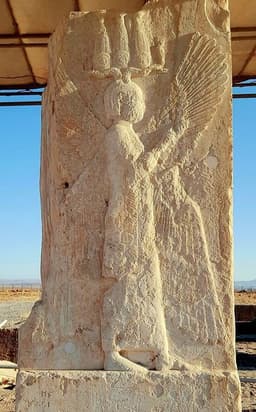
Cyrus the Great
Emperor · Ancient
83.9Total
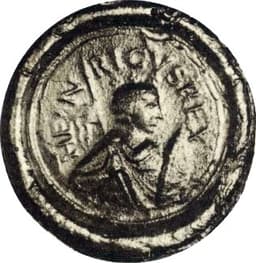
Henry the Fowler
Emperor · Medieval
60.9Total
Basic Information
Born
-600
876
Died
-530
936
Era
Ancient
Medieval
Nationality
Persia
East Francia
Occupation
Emperor
Emperor
Civilization
Middle Eastern
Western
Score Comparison
Military (10%)
82.0
70.0
Political (20%)
85.0
59.3
Influence (20%)
85.0
55.0
Legacy (20%)
90.0
52.0
Leadership (15%)
78.0
85.0
Strategy (15%)
75.0
55.0
TOTAL
83.9
60.9
Cyrus the Great — Complete Timeline
550 BC
Founding of the Achaemenid EmpirePolitical Action
Cyrus led a rebellion against the Median Empire, defeating King Astyages and capturing Ecbatana. He then united the Persian and Median tribes, establishing the Achaemenid Empire, which became the largest empire the world had yet seen.
Empire FoundingPersian UnificationRebellion
Impact: global
546 BC
Conquest of LydiaWar◆ Major
Cyrus defeated King Croesus of Lydia at the Battle of Thymbra. The Lydian capital Sardis was captured, and Croesus was taken prisoner. This conquest brought Anatolia under Persian control and secured access to the Aegean coast.
Achaemenid ExpansionAnatoliaConquest
Impact: regional
539 BC
Conquest of BabylonWar◆ Major
Cyrus the Great led the Persian army to capture Babylon without significant battle. The city's gates were opened, and Cyrus entered peacefully. This conquest added Mesopotamia to the Achaemenid Empire and marked the end of the Neo-Babylonian Empire.
Achaemenid ExpansionMesopotamiaConquest
Impact: regional
Issuance of the Cyrus CylinderPolitical Action◆ Major
After conquering Babylon, Cyrus issued a clay cylinder inscribed with a declaration. It described his policy of restoring temples, repatriating displaced peoples, and allowing religious freedom. The cylinder is often cited as an early charter of human rights.
Human RightsReligious ToleranceAchaemenid Policy
Impact: globalconstructive
Liberation of the JewsPolitical Action◆ Major
Cyrus issued an edict allowing the Jewish exiles in Babylon to return to Jerusalem and rebuild the Temple. This event is recorded in the biblical Book of Ezra and is a key moment in Jewish history, ending the Babylonian captivity.
Jewish HistoryReligious FreedomReturn from Exile
Impact: regionalconstructive
Henry the Fowler — Complete Timeline
919 AD
Election as King of East FranciaPolitical Action
Henry the Fowler was elected King of East Francia by the Saxon and Frankish nobles at Fritzlar on May 6, 919. He was the first Saxon king, marking the transition from Carolingian to Ottonian rule. His election was contested by other dukes but he prevailed.
ElectionAccessionOttonian Dynasty
Impact: regionalconstructive
921 AD
Treaty of Bonn (921)Political Action◆ Major
Henry the Fowler signed the Treaty of Bonn with Charles the Simple of West Francia, recognizing each other's royal titles and establishing peaceful relations. This treaty ended Carolingian claims over East Francia and solidified Henry's legitimacy as an independent king.
TreatyRecognitionDiplomacy
Impact: regionalconstructive
924 AD
Nine-Year Truce with the MagyarsPolitical Action◆ Major
Henry the Fowler negotiated a nine-year truce with the Magyars, agreeing to pay tribute in exchange for a halt to their raids. He used this period to fortify towns, reorganize the army, and train cavalry. This strategic pause was crucial for his later military reforms.
TruceMagyarsMilitary Reform
Impact: regionalconstructive
929 AD
Battle of Lenzen (929)War◆ Major
Henry the Fowler's forces defeated a Slavic army at the Battle of Lenzen, securing the eastern frontier of East Francia. This victory allowed Henry to consolidate control over the Elbe region and establish the March of Brandenburg, a key step in German eastward expansion.
BattleSlavic WarsEastern Expansion
Impact: regionalconstructive
933 AD
Battle of Riade (933)War
After the truce with the Magyars expired, Henry the Fowler led a German army to victory at the Battle of Riade (near Merseburg). The defeat of the Magyar cavalry ended their raids into East Francia for a generation and established Henry's reputation as a defender of Christendom.
BattleMagyarsVictory
Impact: regionalconstructive
936 AD
Death of Henry the FowlerOther◆ Major
Henry the Fowler died on July 2, 936, at Memleben. He was succeeded by his son, Otto I, who would become Holy Roman Emperor. Henry's reign laid the foundations for the Ottonian dynasty and the medieval German kingdom.
DeathSuccessionOttonian
Impact: regional
Expert Analysis
Cyrus the Great vs Henry the Fowler
### The Conqueror and the Consolidator
History often pairs great builders with great founders, but rarely do we see two men who, from such different worlds, solved the same fundamental problem in opposite ways. Cyrus the Great, a rebel prince who forged the largest empire the world had ever seen, and Henry the Fowler, a reluctant king who pieced together a kingdom from the wreckage of a broken realm, both faced the chaos of their age. One chose liberation; the other chose patience. Their stories, separated by fourteen centuries, reveal how character and circumstance can shape not just a reign, but the destiny of civilizations.
### Origins
Cyrus was born around 600 BCE into a world of competing empires. He was the son of a Persian vassal king, Cambyses I, and a Median princess, Mandane. Legend has it that his grandfather, the Median king Astyages, dreamed that Cyrus would overthrow him. The boy was raised in the rugged highlands of Persis, a land of hardy warriors and tribal loyalties. The Persian people were then subjects of the Medes, a proud but restless dominion. Cyrus grew up knowing both the privileges of royalty and the sting of subordination. This bred in him a fierce ambition, tempered by the diplomatic instincts of a man who had to navigate two courts.
Henry the Fowler was born in 876 CE, the son of Otto the Illustrious, Duke of Saxony. His world was the fractured landscape of East Francia, a kingdom carved from Charlemagne’s empire after it had splintered into warring duchies. The Magyar horsemen raided from the east, the Vikings from the north, and the great dukes of Bavaria, Swabia, and Franconia barely acknowledged a central king. Henry grew up in a castle at Memleben, learning the harsh realities of frontier warfare and the delicate art of negotiating with proud nobles. Where Cyrus inherited a dream of empire, Henry inherited a burden of survival.
### Rise to Power
Cyrus’s rise began with a rebellion. In 550 BCE, he led the Persians against the Medes. The decisive battle was not a slaughter but a political masterpiece. According to the Greek historian Herodotus, many Median nobles, disgusted with Astyages’ tyranny, defected to Cyrus. Ecbatana fell, and Cyrus did not destroy his grandfather’s kingdom—he absorbed it. He then turned west. In 546 BCE, he faced Croesus of Lydia, a king famed for his wealth. At the Battle of Thymbra, Cyrus used a novel tactic: he deployed camels in his front lines, whose smell terrified the Lydian horses. Sardis was captured, and Croesus, according to some accounts, became Cyrus’s advisor. Cyrus did not just conquer; he converted enemies into allies.
Henry’s ascent was more reluctant. In 919 CE, the Saxon and Frankish nobles elected him king at Fritzlar. The Archbishop of Mainz offered to anoint him with holy oil, but Henry refused. He was a secular king, he said, not a priest. This was not humility but a shrewd calculation: by rejecting church coronation, he avoided alienating the powerful dukes who saw the crown as an elective office, not a divine right. His first years were spent not in conquest but in negotiation. He made peace with the Duke of Bavaria, recognized the Duke of Swabia’s autonomy, and in 921 CE signed the Treaty of Bonn with Charles the Simple of West Francia, acknowledging each other’s titles. Henry’s power grew not through one dramatic victory, but through a web of treaties and truces.
### Leadership & Governance
Cyrus’s governance was revolutionary. When he conquered Babylon in 539 BCE, he did not sack the city. Instead, he entered as a liberator. He ordered his troops to respect the temples of Marduk, and he famously issued the Cyrus Cylinder, a clay declaration that restored displaced peoples to their homelands. For the Jews, this was a moment of salvation: Cyrus issued an edict allowing them to return to Jerusalem and rebuild the Temple. The Hebrew Bible calls him God’s anointed. His empire was a patchwork of satrapies, each allowed to keep its own laws, customs, and religions, as long as tribute and loyalty flowed to Persepolis. Cyrus ruled not by fear, but by a calculated generosity that bound diverse peoples to his throne.
Henry’s leadership was more austere. He built his kingdom from the ground up. In 924 CE, facing the terrifying Magyar raids, he did what many kings considered shameful: he negotiated a nine-year truce, agreeing to pay tribute. His nobles grumbled, but Henry used the peace to fortify his realm. He ordered the construction of fortified towns (burhs) across Saxony, trained a new cavalry force, and reorganized his army. When the truce expired in 933 CE, he was ready. At the Battle of Riade, he crushed the Magyar army, ending their raids for a generation. Henry also secured his eastern frontier at the Battle of Lenzen in 929 CE, defeating a Slavic confederation. He was not a conqueror like Cyrus; he was a consolidator, turning a vulnerable kingdom into a fortress.
### Triumph & Tragedy
Cyrus’s greatest triumph was the fall of Babylon itself. The city, with its massive walls and the Euphrates flowing through it, seemed impregnable. But Cyrus’s engineers diverted the river, and his troops marched into the city along the dry riverbed. The gates, the Bible records, were left open. It was a bloodless conquest, a masterpiece of psychological warfare. Yet Cyrus’s tragedy lies in his death. In 530 BCE, he marched against the nomadic Massagetae of Central Asia. According to Herodotus, Queen Tomyris lured his army into a trap. Cyrus was killed, and his head was dipped in a wineskin filled with blood—a grim mockery of his thirst for conquest. The empire he built would endure, but its founder died in a distant land, far from the splendor of Persepolis.
Henry’s triumph was the Battle of Riade. After years of patient preparation, he faced the Magyars on a field near Merseburg. His new cavalry, armed with heavy lances, shattered the swift horsemen who had terrorized Europe for decades. Henry died three years later, in 936 CE, at Memleben. His tragedy was not a dramatic fall but a quiet one: he never wore the imperial crown. He was a king, not an emperor. Yet his son, Otto I, would be crowned Holy Roman Emperor in 962 CE, fulfilling the dream Henry had nurtured. Henry’s tragedy was that he did not live to see the empire his foundation made possible.
### Character & Destiny
Cyrus was a visionary, a man who saw the world as a canvas for his ambition. He was generous to enemies, tolerant of diversity, and ruthless only when necessary. His personality—confident, charismatic, and calculating—drove him to build an empire that spanned from India to the Mediterranean. Yet his ambition also led to his death. He could not stop conquering, and that restlessness cost him his life.
Henry was a pragmatist, a man who understood that survival came before glory. He was patient, diplomatic, and willing to endure humiliation for a greater purpose. His personality—cautious, shrewd, and resilient—allowed him to build a kingdom that could withstand the storms of the age. He did not dream of empire; he dreamed of order. And that order became the foundation of the Holy Roman Empire.
### Legacy
Cyrus the Great is remembered as a model ruler. The Cyrus Cylinder is often called the first charter of human rights. His policy of religious and cultural tolerance influenced the Greeks, the Romans, and even the founders of the United States. He is a hero to Persians, a liberator to Jews, and a symbol of enlightened rule to the world.
Henry the Fowler is less famous, but his legacy is no less profound. He founded the Ottonian dynasty, which ruled the Holy Roman Empire for nearly a century. His fortifications and military reforms created the framework for medieval Germany. He is remembered as the father of the German nation, a king who turned weakness into strength.
### Conclusion
Two men, two worlds, one truth: that the greatest leaders are shaped not by their victories alone, but by the challenges they choose to face. Cyrus conquered everything he saw; Henry built something that would outlast him. One sought to unite the world under his rule; the other sought to protect his people from the world. In the end, both succeeded—and both failed. Cyrus died in the dust of a distant battlefield; Henry died in his bed, knowing his son would carry his work forward. Perhaps the difference between them is not one of greatness, but of purpose. Cyrus wanted to be remembered; Henry wanted to be succeeded. History has granted both their wishes.
Rankings
🥇
Cyrus the GreatLeader
Mil: 82.0Pol: 85.0Inf: 85.0
83.9
🥈
Henry the Fowler
Mil: 70.0Pol: 59.3Inf: 55.0
60.9
+23.0 behind
How This Comparison Works
Algorithm
Each figure is scored on 6 dimensions (0—100 scale) based on structured historical data: Military (10%), Political (20%), Influence (20%), Legacy (20%), Leadership (15%), Strategy (15%). The weighted total produces the final ranking.
Data Sources
Scores are computed from structured sub-indicators in the database. Scale factors adjust for era (Ancient ×0.85, Modern ×1.0) and civilization size (Eastern ×1.05, Other ×0.80) to account for differences in population and military scale.
Maximum 3 Figures
Comparisons are limited to 2—3 figures to ensure readability and statistical meaningfulness.
Error Margins
±5 points per dimension — Sub-scores are derived from historical records with inherent uncertainty. Two figures within 5 points on a dimension should be considered roughly equivalent in that area.
Total Score Accuracy
±3 points overall — The weighted combination of 6 dimensions produces a total score with approximately ±3 points of uncertainty. Differences of less than 3 points are not statistically significant— the figures are effectively tied.
Known Limitations
- Historical records are incomplete and uneven across civilizations
- Figures from oral-tradition societies may be underrepresented
- Occupation labels can misclassify multi-role figures
- Scores measure capability and impact, not moral character
- Quantitative scoring is a comparison tool, not absolute truth
Capability Radar
Military (10%) — Battles & Warfare
Battles
85
55
Win Rate
90
60
Expansion
92
60
Political (20%) — Governance & Reform
Reform
90
75
Diplomacy
95
70
Economy
80
65
Influence (20%) — Cultural & Global Reach
Cultural
90
55
Global
90
40
Legacy (20%) — Historical Impact
Historical
95
65
Longevity
95
60
Leadership (15%) — Power & Stability
Tenure
70
70
Stability
85
70
Strategy (15%) — Tactics & Innovation
Strategy
88
65
Tactics
80
50
Reform
75
70
Similar Comparisons
Comments & Discussion
CyrusSpear6/16/2026
As a military historian, I’ll call this: Cyrus outclasses Henry by a mile. Cyrus conquered Babylon in 539 BCE by diverting the Euphrates River—a tactical masterstroke that avoided a bloody siege. Henry’s biggest win was at the Battle of Lenzen in 929, a slog against Slavs. Cyrus unified Persia, Media, and Babylon under one command structure; Henry just held the line against Magyars. Cyrus was a strategic genius forging an empire; Henry was a defensive manager. No contest.
北境筑墙者6/16/2026
作为数据怀疑论者,我发现历史迷们吹嘘的“规模优势”很可笑。亨利在925年推行了“城墙修复”政策,用石头堡垒控制东法兰克的每一条河道,这在防御上是革命性的。居鲁士的军队号称有100万人,但古代记录夸大到荒谬——居鲁士圆筒只是波斯宣传工具。亨利的“非进攻”策略,比如933年里阿德战役前的长期备战,才是真实的数据点:稳定大于扩张。别被帝国叙事洗脑了。
CuneiformCritic6/16/2026
As a classics scholar, I see a deeper irony. Cyrus issued the famous Cyrus Cylinder in 539 BCE, often hailed as a charter of human rights, but it was really a propaganda piece to legitimize his rule over Babylon—he co-opted local gods like Marduk. Henry, by contrast, was famously illiterate and never issued a grand decree; his power came from personal oaths and tribal bonds, like the Saxon "Heerbann" militia. Cyrus’s legacy is written in stone; Henry’s in mud and blood. Which is more honest?
史海钩沉者6/16/2026
从历史爱好者的角度看,这场比较漏掉了关键点:亨利继承的是一堆碎渣,居鲁士继承的却是一个有潜力的大块。查理曼帝国在843年凡尔登条约后分裂,东法兰克只有巴伐利亚、萨克森等松散公国;而居鲁士在550年攻占埃克巴坦那后,直接吞并米底帝国的官僚体系。亨利从零开始编织王权;居鲁士是捡了个半成品再加工。两人都很牛,但亨利的手牌差太多了。别拿帝国大小忽悠人,看起点才公平。
RevisionistRebel6/16/2026
我是修正主义批评者,提醒各位:居鲁士的“解放”是种幻术。他允许犹太俘虏回耶路撒冷,但波斯帝国照样搞专制,总督权重如国王;他的宗教宽容只是政治手腕,巴比伦的祭司阶层照样被他控制。亨利的“不称王”策略——他拒绝加冕直到919年,用五年时间赢得公爵们信任——反而更真诚:权力来自共识,不是来自征服。别再美化居