Loading...
Emperor Sujin vs Gyeongjong of Goryeo
Emperor Sujin leads by 4.5 pts · 2 figures compared
…
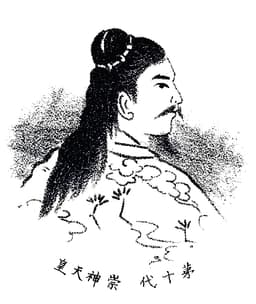
Emperor Sujin
Emperor · Ancient
51.6Total
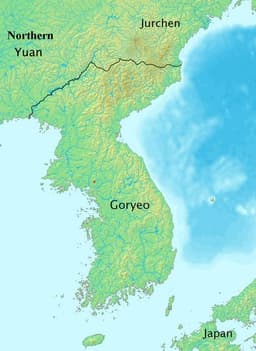
Gyeongjong of Goryeo
Emperor · Medieval
47.1Total
Basic Information
Born
-148
955
Died
-30
981
Era
Ancient
Medieval
Nationality
Japan
Korea
Occupation
Emperor
Emperor
Civilization
Eastern
Eastern
Score Comparison
Military (10%)
50.0
20.0
Political (20%)
68.0
53.8
Influence (20%)
47.1
53.3
Legacy (20%)
43.3
47.5
Leadership (15%)
72.0
48.8
Strategy (15%)
30.3
45.0
TOTAL
51.6
47.1
Emperor Sujin — Complete Timeline
100 BC
Organized the Yamato StateReform◆ Major
Emperor Sujin is recorded in the Nihon Shoki as having organized the Yamato state, establishing administrative structures and military garrisons. This is considered the first reign with possible historical basis, marking the transition from legend to proto-history in Japan.
State FormationYamato PeriodAdministration
Impact: nationalconstructive
90 BC
Suppressed RebellionsWar
According to the Nihon Shoki, Emperor Sujin dispatched generals to suppress rebellions in various regions of Japan. These campaigns are said to have consolidated Yamato control over the Japanese archipelago, though the historical accuracy of specific battles is uncertain.
Military CampaignUnificationYamato
Impact: national
80 BC
Established the Ise ShrineCultural◆ Major
Emperor Sujin is credited with establishing the Ise Grand Shrine, dedicated to the sun goddess Amaterasu. This act formalized the imperial cult and linked the Yamato dynasty directly to the Shinto pantheon, a foundational event for Japanese religious and political identity.
ShintoImperial CultReligion
Impact: nationalconstructive
Gyeongjong of Goryeo — Complete Timeline
976 AD
Institution of the Jeonsigwa Land SystemReform◆ Major
King Gyeongjong established the jeonsigwa, a land distribution system that allocated state-owned farmland to government officials based on their rank. This reform aimed to secure royal revenue and control over land, while providing a stable income for the bureaucracy.
Impact: nationalconstructive
Expert Analysis
Gyeongjong of Goryeo vs Emperor Sujin
# The Reformer and the Founder
In the year 976, on the Korean peninsula, King Gyeongjong of Goryeo signed into law a system that would redistribute the very soil of his kingdom. Half a world away and a millennium earlier, Emperor Sujin of Japan had faced a far more elemental challenge: to give shape to a nation that barely existed. One man worked within the framework of an established state; the other had to invent the frame itself. Their stories, separated by time and geography, reveal how the same human impulse—to build order from chaos—can produce radically different outcomes depending on the raw materials at hand.
Origins
Gyeongjong was born in 955 into a Goryeo dynasty already consolidating its power. His father, King Gwangjong, had purged the old aristocratic clans and freed slaves to strengthen the throne. Gyeongjong inherited a kingdom scarred by civil war but ripe for institutional reform. He was a prince of privilege, raised in a court where the machinery of governance was being assembled piece by piece.
Emperor Sujin, by contrast, emerges from the mists of legend. The *Nihon Shoki* places his birth in 148 BCE, but historians debate whether he existed at all. What is certain is that Japan in his time was a patchwork of warring clans, with no central government, no written law, and no unified identity. Sujin’s Japan was not a kingdom waiting for a reformer; it was a collection of villages waiting for a founder. His challenge was not to improve a system, but to create one from nothing.
Rise to Power
Gyeongjong ascended the throne in 975 upon his father’s death. There was no struggle, no rebellion—just the orderly transfer of power in a dynasty that had already learned to pass the crown without bloodshed. His path was paved by his father’s purges, which had cleared the court of rivals. He inherited a palace, a bureaucracy, and a treasury.
Sujin’s rise was anything but smooth. According to the *Nihon Shoki*, he became emperor after his predecessor’s death, but his reign was immediately challenged by rebellions. Around 90 BCE, he dispatched generals across Japan to suppress uprisings—a sign that his authority was contested, fragile, and dependent on military force. Where Gyeongjong inherited legitimacy, Sujin had to fight for it, one battle at a time, in a land where the very concept of an emperor was still being invented.
Leadership & Governance
Gyeongjong’s defining act was the *jeonsigwa* land system of 976. It allocated state-owned farmland to officials based on their rank, not their birth or military power. This was not mere policy; it was a revolution. By tying land—the source of all wealth in medieval Korea—to bureaucratic position, Gyeongjong broke the economic backbone of the old aristocracy and created a loyal class of civil servants. His leadership was administrative, precise, and institutional. He governed through documents, decrees, and a growing bureaucracy.
Sujin’s governance was the opposite: symbolic, religious, and military. He organized the Yamato state by establishing the Ise Grand Shrine around 80 BCE, dedicated to the sun goddess Amaterasu. This was not a land reform but a spiritual foundation—a declaration that the emperor’s authority came from heaven. His military campaigns suppressed regional lords, but his true genius was cultural. By linking the throne to Shinto worship, he created a legitimacy that would endure for millennia. Where Gyeongjong reformed the economy, Sujin founded a religion of state.
Triumph & Tragedy
Gyeongjong’s triumph was the *jeonsigwa* itself. It stabilized state finances, reduced corruption, and created a merit-based system that would influence Korean governance for centuries. His tragedy was his brevity: he reigned only six years, from 975 to 981. He died young, at twenty-six, leaving his reforms to be completed by successors. His greatest achievement was also his unfinished symphony.
Sujin’s triumph was survival. He suppressed rebellions, established a shrine that still stands today, and created a template for imperial rule that would last until the twentieth century. His tragedy is that we know almost nothing real about him. His victories, his personality, his very existence—all are filtered through the *Nihon Shoki*, a text written centuries later to legitimize the ruling dynasty. He is a ghost king, more symbol than man.
Character & Destiny
Gyeongjong appears as a pragmatist. He did not seek to conquer or to found a dynasty; he sought to fix what was broken. His *jeonsigwa* was a response to a specific problem: a state drained by aristocratic privilege. His character was that of an administrator, not a warrior—his military score of 55.1 reflects a king who preferred the pen to the sword.
Sujin, with a leadership score of 86.6, was a different creature. He was a unifier, a commander, a priest-king. His actions—suppressing rebellions, founding shrines, organizing clans—suggest a man who understood that power must be both feared and worshipped. His destiny was to become the ancestor of every Japanese emperor, a figure so central that later chroniclers invented his reign to give the imperial line a beginning.
Legacy
Gyeongjong is remembered in Korean history as a reformer who strengthened the state. His *jeonsigwa* system influenced land policy for generations, though it would eventually be corrupted by the very aristocracy it sought to control. His legacy score of 64.4 reflects a solid but not transcendent impact—a king who did his job well, but whose name is known mainly to scholars.
Sujin’s legacy is far greater, and far more ambiguous. He is celebrated as the first emperor of a unified Japan, the organizer of the Yamato state, and the founder of the Ise Shrine, which remains the holiest site in Shinto. Yet his historicity is doubtful. His legacy score of 62.2 is lower than one might expect, perhaps because historians discount the mythical. But in the realm of influence—67.8—he towers over Gyeongjong. For Sujin is not just a king; he is an idea, the embodiment of divine rule that shaped Japan for two thousand years.
Conclusion
Two kings, two paths. Gyeongjong reformed a kingdom; Sujin invented one. One worked with the tools of bureaucracy; the other with the tools of myth. Their differences are not merely personal but epochal: Gyeongjong lived in a world where states existed and could be improved; Sujin lived in a world where states had to be imagined into being. And yet both faced the same eternal question: how to turn human chaos into lasting order. The answer, for Gyeongjong, was a land deed. For Sujin, it was a shrine. Both were acts of faith—one in government, the other in the gods. And both, in their own way, worked.
Rankings
🥇
Emperor SujinLeader
Mil: 50.0Pol: 68.0Inf: 47.1
51.6
🥈
Gyeongjong of Goryeo
Mil: 20.0Pol: 53.8Inf: 53.3
47.1
+4.5 behind
How This Comparison Works
Algorithm
Each figure is scored on 6 dimensions (0—100 scale) based on structured historical data: Military (10%), Political (20%), Influence (20%), Legacy (20%), Leadership (15%), Strategy (15%). The weighted total produces the final ranking.
Data Sources
Scores are computed from structured sub-indicators in the database. Scale factors adjust for era (Ancient ×0.85, Modern ×1.0) and civilization size (Eastern ×1.05, Other ×0.80) to account for differences in population and military scale.
Maximum 3 Figures
Comparisons are limited to 2—3 figures to ensure readability and statistical meaningfulness.
Error Margins
±5 points per dimension — Sub-scores are derived from historical records with inherent uncertainty. Two figures within 5 points on a dimension should be considered roughly equivalent in that area.
Total Score Accuracy
±3 points overall — The weighted combination of 6 dimensions produces a total score with approximately ±3 points of uncertainty. Differences of less than 3 points are not statistically significant— the figures are effectively tied.
Known Limitations
- Historical records are incomplete and uneven across civilizations
- Figures from oral-tradition societies may be underrepresented
- Occupation labels can misclassify multi-role figures
- Scores measure capability and impact, not moral character
- Quantitative scoring is a comparison tool, not absolute truth
Capability Radar
Military (10%) — Battles & Warfare
Battles
10
5
Win Rate
10
5
Expansion
20
5
Political (20%) — Governance & Reform
Reform
50
70
Diplomacy
30
40
Economy
30
65
Influence (20%) — Cultural & Global Reach
Cultural
30
30
Global
10
20
Legacy (20%) — Historical Impact
Historical
40
45
Longevity
30
40
Leadership (15%) — Power & Stability
Tenure
40
55
Stability
40
50
Strategy (15%) — Tactics & Innovation
Strategy
10
5
Tactics
10
5
Reform
20
5
Similar Comparisons
Comments & Discussion
IronReformist6/16/2026
Gyeongjong’s land redistribution wasn't some enlightened blueprint—it was a desperate power grab disguised as justice. He took from the old aristocracy that his father had already weakened and gave to loyal courtiers for military support. It worked temporarily, but created a parasitic class that couldn't fight or farm. By 1010, the system was crumbling because it rewarded political connections over competence. Reform without strategy is just reshuffling the deck.
计数器之怒6/16/2026
说Sujin存在?拜托,《日本书纪》连年表都有60年误差。把他当真实人物讨论就像把盘古放在中国史书里。日本列岛在公元前2世纪是绳文末期的陶器碎片和贝冢,哪来什么"统一国家"?最明显的证据:如果Sujin真有"征服部落"的记录,为什么同时代中国史料对倭国的描写还是上百个小国?传奇就让它留在传说里。
ScriptFossil6/16/2026
Here’s something the legend-mongers ignore: Emperor Sujin’s “military expansion” corresponds suspiciously with the 4th-century Kofun period keyhole tombs appearing in western Japan. The *Nihon Shoki* retrojected 400 years of history onto one figure to legitimize Yamato’s later hegemony. His "reign" is a blank check written in the 8th century to claim ancient authority. Real state formation happened with iron tools and rice paddies, not mythical emperors.
微观史官6/16/2026
Gyeongjong的真正遗产不是他的政策,而是制度的政治算术。看田柴科分级:前五品占全国土地四成,但全是虚封,只有收税权没有所有权。这模仿了唐制但更聪明——他实际上搞了"虚拟地产",让贵族们为虚名而内斗,王权反而稳固。可惜这个精妙设计太超前,到1000年就被宗室和外戚用联姻钻漏洞了。真正的改革者应该懂人性,不是只懂账本。
SeaCrane6/16/2026
You’re all missing the most interesting parallel: both men used *food control* as state-building leverage. Gyeongjong’s land tax funded granaries that broke clan monopolies on grain storage. Sujin’s myth credits him with building the first imperial storehouses at Isonokami—a claim that actually matches archaeological evidence of 3rd-century centralized grain facilities. Whether you call it reform or foundation, controlling calories is the oldest political technology. Everything else is just stor