Loading...
Emperor Sujin vs Emperor Taizu of Song
Emperor Taizu of Song leads by 20.3 pts · 2 figures compared
…
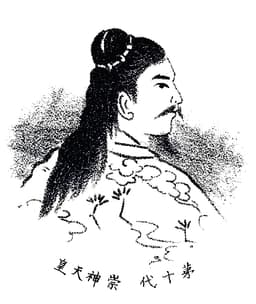
Emperor Sujin
Emperor · Ancient
51.6Total
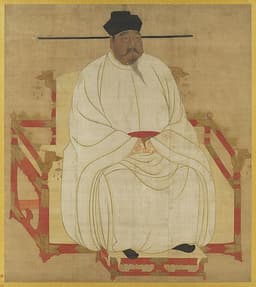
Emperor Taizu of Song
Emperor · Medieval
71.9Total
Basic Information
Born
-148
927
Died
-30
976
Era
Ancient
Medieval
Nationality
Japan
China
Occupation
Emperor
Emperor
Civilization
Eastern
Eastern
Score Comparison
Military (10%)
50.0
80.0
Political (20%)
68.0
78.0
Influence (20%)
47.1
68.0
Legacy (20%)
43.3
65.0
Leadership (15%)
72.0
78.0
Strategy (15%)
30.3
72.0
TOTAL
51.6
71.9
Emperor Sujin — Complete Timeline
100 BC
Organized the Yamato StateReform◆ Major
Emperor Sujin is recorded in the Nihon Shoki as having organized the Yamato state, establishing administrative structures and military garrisons. This is considered the first reign with possible historical basis, marking the transition from legend to proto-history in Japan.
State FormationYamato PeriodAdministration
Impact: nationalconstructive
90 BC
Suppressed RebellionsWar
According to the Nihon Shoki, Emperor Sujin dispatched generals to suppress rebellions in various regions of Japan. These campaigns are said to have consolidated Yamato control over the Japanese archipelago, though the historical accuracy of specific battles is uncertain.
Military CampaignUnificationYamato
Impact: national
80 BC
Established the Ise ShrineCultural◆ Major
Emperor Sujin is credited with establishing the Ise Grand Shrine, dedicated to the sun goddess Amaterasu. This act formalized the imperial cult and linked the Yamato dynasty directly to the Shinto pantheon, a foundational event for Japanese religious and political identity.
ShintoImperial CultReligion
Impact: nationalconstructive
Emperor Taizu of Song — Complete Timeline
960 AD
Chenqiao MutinyPolitical Action
Zhao Kuangyin, a general of the Later Zhou dynasty, was proclaimed emperor by his troops at Chenqiao. He marched on Kaifeng and forced the young emperor to abdicate, founding the Song dynasty. This coup established a new ruling house without major bloodshed.
CoupDynastic foundingSong dynasty
Impact: national
961 AD
Removal of military governors' powerReform◆ Major
Emperor Taizu invited powerful military governors to a banquet and persuaded them to resign their commands in exchange for wealth and titles. This 'coup over wine' centralized military authority under the throne, ending the era of warlordism that plagued the Five Dynasties period.
Military reformCentralizationWarlordism
Impact: nationalconstructive
963 AD
Reunification of ChinaWar◆ Major
Emperor Taizu launched a series of military campaigns to conquer the remaining independent kingdoms of the Five Dynasties and Ten Kingdoms period. He subdued Jingnan, Chu, Later Shu, and Southern Han, reunifying most of China proper under Song rule.
ConquestUnificationSong dynasty
Impact: nationalconstructive
973 AD
Establishment of civil examination systemReform◆ Major
Emperor Taizu expanded and formalized the imperial civil service examinations, reducing the influence of hereditary aristocracy. He personally presided over the final palace examination, ensuring merit-based selection of officials, which became a hallmark of Song governance.
Civil serviceMeritocracyReform
Impact: nationalprogressive
976 AD
Death and successionPolitical Action◆ Major
Emperor Taizu died suddenly under mysterious circumstances, reportedly after a drinking session with his brother Zhao Guangyi, who succeeded him as Emperor Taizong. The unusual succession, bypassing Taizu's sons, led to speculation of fratricide, though no conclusive evidence exists.
SuccessionMysterySong dynasty
Impact: nationaltragic
Expert Analysis
Emperor Sujin vs Emperor Taizu of Song
# The Emperor Who Took His Wine with Strategy: Zhao Kuangyin and Sujin Compared
One evening in 961, in the candlelit halls of Kaifeng, Emperor Taizu of Song raised his cup to a group of powerful generals. They had helped him seize the throne just a year earlier, and now he spoke to them with warmth and apparent ease. “Life is short,” he said, according to the records. “Why not enjoy wealth and leisure?” By morning, those same generals had surrendered their commands, retired to comfortable estates, and the Song Dynasty had begun its long experiment in civil rule. Half a world away and a millennium earlier, another ruler—Emperor Sujin of Japan—faced a different kind of challenge. He had no army of generals to disarm, because he had barely an army at all. Instead, he had to build a state from scattered clans, using myths and shrines as his tools. These two men, so distant in time and circumstance, both shaped the foundations of their nations—yet their paths could not have been more different.
Origins
Zhao Kuangyin was born in 927, in the chaotic twilight of the Five Dynasties period, when China was a patchwork of warring kingdoms and generals rose and fell with brutal speed. His father was a military officer, and Zhao grew up surrounded by the clang of swords and the smell of campfires. He learned early that power belonged to those who could hold a spear—and hold it longer than the next man. By contrast, Emperor Sujin, who likely reigned around 100 BCE, emerged from a world where history was still being written in myth. The Nihon Shoki, compiled centuries later, describes him as the tenth emperor of Japan, but his existence is the first that historians can tentatively confirm. He inherited a Yamato state that was little more than a loose confederation of clans, each worshipping its own gods and obeying its own chieftains. Sujin’s task was not to conquer an empire, but to invent one.
Rise to Power
Zhao Kuangyin’s ascent was swift and theatrical. In 960, he was a general of the Later Zhou dynasty, camped at Chenqiao with his troops. According to the story, his soldiers burst into his tent at dawn, draped a yellow imperial robe over his shoulders, and declared him emperor. Zhao accepted—after a show of reluctance that became a classic Chinese political gesture. He then marched on Kaifeng and took the throne with minimal bloodshed. It was a coup, but a polished one. Emperor Sujin’s rise, in contrast, is shrouded in legend. The Nihon Shoki claims he was chosen by the gods and that his reign began with omens and rituals. There is no record of a mutiny or a dramatic seizure of power. Instead, Sujin seems to have been a consolidator, not a usurper. His authority came from lineage and divine favor, not from the swords of ambitious soldiers.
Leadership & Governance
Here the two emperors diverged most sharply. Zhao Kuangyin, with a military score of 66.5 and a political score of 73.3, was a master of strategic disarmament. After the famous banquet of 961, he replaced military governors with civilian officials, centralized the army under imperial control, and expanded the civil examination system in 973 to break the power of hereditary aristocrats. He reunified most of China through a series of campaigns beginning in 963, but he did so with a light touch—preferring diplomacy and bribery to outright war. His leadership score of 86.9 reflects his ability to command loyalty without brute force. Sujin, by contrast, had a military score of just 25.8. He did not lead armies; he sent them. The Nihon Shoki records that he dispatched generals to suppress rebellions around 90 BCE, but the details are vague. His true genius was political and cultural. He organized the Yamato state, establishing administrative structures that would endure for centuries, and he founded the Ise Grand Shrine around 80 BCE, dedicating it to the sun goddess Amaterasu. This act formalized the imperial family’s divine lineage, giving Sujin a legitimacy that no general could challenge. His political score of 69.4 and influence score of 67.8 reflect this quiet, foundational work.
Triumph & Tragedy
Zhao Kuangyin’s greatest triumph was the reunification of China, a feat that ended decades of fragmentation and laid the groundwork for one of the most culturally brilliant dynasties in history. But his tragedy was personal and mysterious. In 976, after a drinking session with his brother Zhao Guangyi, he died suddenly. The official story was illness, but rumors of murder have never faded. Did his brother poison him? The question remains unanswered, and it casts a shadow over an otherwise masterful reign. Sujin’s triumphs were less dramatic but more enduring. He gave Japan a state religion and a political structure that would last for over a thousand years. His tragedy, if it can be called that, is that we know so little about him. He exists in the mist of legend, a figure more symbolic than real.
Character & Destiny
Zhao Kuangyin was a pragmatist who understood that power is fragile. He disarmed his generals with wine, not war, because he knew that loyalty purchased with blood is rarely repaid. His sudden death suggests that even a pragmatist cannot control fate. Sujin, by contrast, was a builder of institutions. He did not need to disarm rivals because he had none strong enough to challenge him. His destiny was to create a template for Japanese emperors: divine, ceremonial, and above the fray. Where Zhao Kuangyin’s character was shaped by the chaos of his era, Sujin’s was shaped by its emptiness—the need to fill a void with order and meaning.
Legacy
Emperor Taizu of Song left a legacy of civil governance that defined China for centuries. His emphasis on scholarship and bureaucracy over military might gave the Song Dynasty a golden age of art and technology, but also left it vulnerable to northern invaders. His total score of 74.8 reflects a balanced but not flawless record. Emperor Sujin, with a total score of 62.5, left a legacy that is harder to measure but no less profound. The Ise Shrine still stands, rebuilt every twenty years, and the imperial line he helped establish continues to this day. He is remembered not as a conqueror, but as a founder.
Conclusion
One emperor took power with a robe thrown over his shoulders and spent his reign making sure no one else could do the same. The other took power with a prayer and spent his reign making sure everyone believed it was divine. Zhao Kuangyin’s story is one of strategy and suspicion, of wine cups and whispered conspiracies. Sujin’s story is one of silence and stone, of shrines built in forests and names written in chronicles that may be half fiction. Both men understood that the hardest thing to rule is not an army or a kingdom, but time itself. And both, in their own ways, succeeded.
Rankings
🥇
Emperor Taizu of SongLeader
Mil: 80.0Pol: 78.0Inf: 68.0
71.9
🥈
Emperor Sujin
Mil: 50.0Pol: 68.0Inf: 47.1
51.6
+20.3 behind
How This Comparison Works
Algorithm
Each figure is scored on 6 dimensions (0—100 scale) based on structured historical data: Military (10%), Political (20%), Influence (20%), Legacy (20%), Leadership (15%), Strategy (15%). The weighted total produces the final ranking.
Data Sources
Scores are computed from structured sub-indicators in the database. Scale factors adjust for era (Ancient ×0.85, Modern ×1.0) and civilization size (Eastern ×1.05, Other ×0.80) to account for differences in population and military scale.
Maximum 3 Figures
Comparisons are limited to 2—3 figures to ensure readability and statistical meaningfulness.
Error Margins
±5 points per dimension — Sub-scores are derived from historical records with inherent uncertainty. Two figures within 5 points on a dimension should be considered roughly equivalent in that area.
Total Score Accuracy
±3 points overall — The weighted combination of 6 dimensions produces a total score with approximately ±3 points of uncertainty. Differences of less than 3 points are not statistically significant— the figures are effectively tied.
Known Limitations
- Historical records are incomplete and uneven across civilizations
- Figures from oral-tradition societies may be underrepresented
- Occupation labels can misclassify multi-role figures
- Scores measure capability and impact, not moral character
- Quantitative scoring is a comparison tool, not absolute truth
Capability Radar
Military (10%) — Battles & Warfare
Battles
10
75
Win Rate
10
80
Expansion
20
75
Political (20%) — Governance & Reform
Reform
50
95
Diplomacy
30
80
Economy
30
85
Influence (20%) — Cultural & Global Reach
Cultural
30
75
Global
10
70
Legacy (20%) — Historical Impact
Historical
40
85
Longevity
30
80
Leadership (15%) — Power & Stability
Tenure
40
70
Stability
40
90
Strategy (15%) — Tactics & Innovation
Strategy
10
85
Tactics
10
70
Reform
20
95
Similar Comparisons
Comments & Discussion
靖难铁粉6/16/2026
拿大宋开国和上古天皇比?你咋不拿计算机和甲骨文比呢!赵匡胤杯酒释兵权那叫高明,人家把柴家孤儿寡母逼退位,转身就把老部下都送退休,这权术玩得比苏神天皇那套神话糊弄族民的高明多了。苏神连个正经中央军都没,靠着神道教和家族联姻装神弄鬼,也叫治国?修个神社就建立国家了?别逗了!
SuiJinSkeptic6/16/2026
The analysis acts like Emperor Sujin "built a state from scattered clans" but ignores there's zero hard evidence he even existed as a single ruler. Most historians place him as a mythologized figure rather than a historical emperor. Meanwhile, Zhao Kuangyin's unification of China is documented with actual administrative reforms, census data, and military campaigns. Comparing a semi-mythical clan leader to a dynasty founder who conquered ten kingdoms is like comparing a folk tale to a history tex
东北大学历史教授6/16/2026
赵匡胤杯酒释兵权只是表象,他真正厉害的是“不杀士大夫”的祖宗家法和大规模科举改革!他终结了五代武将乱政的时代,文人治国自此延续三百年,这制度创新甩苏神天皇几条街。而苏神天皇?除了传说里修了几座神社,连具体行政制度都没留下,充其量就是个部落盟主。这对比本身就是关公战秦琼,而且秦琼还是个化名。