Loading...
Emperor Saga vs Wanli Emperor
Emperor Saga leads by 12.9 pts · 2 figures compared
…
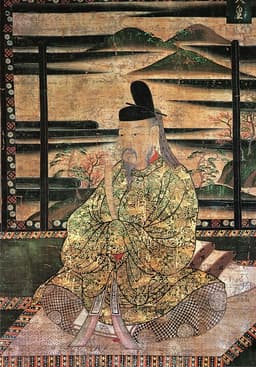
Emperor Saga
Emperor · Medieval
58.2Total
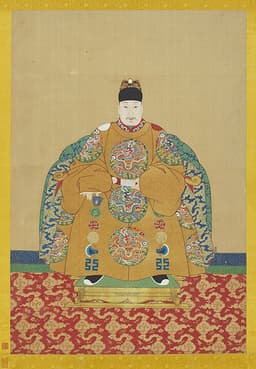
Wanli Emperor
Emperor · Medieval
45.3Total
Basic Information
Born
786
1563
Died
842
1620
Era
Medieval
Medieval
Nationality
Japan
China
Occupation
Emperor
Emperor
Civilization
Eastern
Eastern
Score Comparison
Military (10%)
52.4
21.2
Political (20%)
68.0
30.8
Influence (20%)
58.3
53.3
Legacy (20%)
54.0
45.0
Leadership (15%)
53.2
67.0
Strategy (15%)
67.5
39.6
TOTAL
58.2
45.3
Emperor Saga — Complete Timeline
810 AD
Establishment of the Kurodo-dokoroReform◆ Major
Emperor Saga established the Kurodo-dokoro (Chamberlains' Office), a new administrative body that handled imperial documents and communications. This office bypassed the traditional bureaucracy and increased the emperor's direct control over government affairs.
Kurodo-dokoroAdministrationImperial Power
Impact: nationalconstructive
Promotion of Chinese Culture and CalligraphyCultural◆ Major
Emperor Saga was a noted patron of Chinese Tang dynasty culture, particularly calligraphy. He studied under the master Kukai and developed the Japanese style of calligraphy. His patronage helped establish calligraphy as a respected art form in the Japanese court.
CalligraphyChinese CultureArt
Impact: nationalconstructive
815 AD
Compilation of the Kojiki and Nihon Shoki CommentariesCultural
Emperor Saga ordered the compilation of the 'Shoku Nihongi', a continuation of the official history. He also sponsored commentaries on the Kojiki and Nihon Shoki, promoting the study of Japanese mythology and history in a Chinese scholarly framework.
HistoriographyShoku NihongiScholarship
Impact: nationalconstructive
Wanli Emperor — Complete Timeline
1572 AD
Longest reign of the Ming dynastyPolitical Action◆ Major
Wanli ascended the throne at age nine, beginning a 48-year reign. His early years were guided by Grand Secretary Zhang Juzheng, who implemented reforms that temporarily strengthened the Ming state.
ReignImperial successionMing dynasty
Impact: national
1573 AD
Zhang Juzheng's reformsReform◆ Major
Grand Secretary Zhang Juzheng implemented the Single Whip tax reform, consolidating various taxes into a single silver payment. He also reformed the civil service examination system and reduced government waste.
Tax reformAdministrative reformZhang Juzheng
Impact: nationalconstructive
1584 AD
Impeachment of Zhang JuzhengPolitical Action◆ Major
After Zhang Juzheng's death, Wanli approved the posthumous impeachment of his former mentor. Zhang's family was persecuted, his property confiscated, and his reforms were partially reversed.
Political purgeZhang JuzhengReversal of reforms
Impact: nationaldestructive
1586 AD
Succession dispute over the heir apparentPolitical Action◆ Major
Wanli favored his younger son Zhu Changxun over the eldest Zhu Changluo as heir. This triggered a prolonged succession dispute with Confucian officials, leading to factional strife and further imperial withdrawal.
Succession crisisFactionalismImperial family
Impact: nationaldestructive
1592 AD
Imjin WarWar◆ Major
Japan invaded Korea, prompting Wanli to dispatch Ming forces to aid the Joseon dynasty. The war lasted until 1598, with Ming and Korean forces eventually repelling the Japanese invasion at great cost.
Imjin WarKoreaJapan invasion
Impact: regional
1600 AD
Grand Secretariat vacancy crisisPolitical Action◆ Major
Wanli withdrew from active governance, refusing to appoint officials to fill vacancies in the Grand Secretariat and other key posts. This paralyzed the Ming bureaucracy and weakened central administration.
Government paralysisBureaucratic crisisImperial withdrawal
Impact: nationaldestructive
Expert Analysis
Origins
Emperor Saga (786–842) was the 52nd emperor of Japan, born as the second son of Emperor Kanmu. His early education was steeped in Chinese classics and calligraphy, studying under the monk Kukai, who introduced Tang dynasty culture to Japan. Saga's upbringing in the Heian court emphasized poetry, music, and brushwork, shaping him into a noted patron of the arts rather than a military leader.
Wanli Emperor (1563–1620), born Zhu Yijun, ascended the Ming throne at age nine. His early years were dominated by the Grand Secretary Zhang Juzheng, who implemented sweeping fiscal and administrative reforms. Wanli received a rigorous Confucian education but was overshadowed by Zhang's authority, leading to a complex relationship that later soured.
Rise to Power
Saga became emperor in 809 after his brother, Emperor Heizei, abdicated due to illness. Heizei later attempted a rebellion in 810 (the Kusuko Incident), but Saga swiftly suppressed it, consolidating his rule. Saga's rise was peaceful, relying on political maneuvering and cultural legitimacy rather than military force.
Wanli's rise was automatic as the eldest surviving son of the Longqing Emperor. His minority gave Zhang Juzheng immense power. After Zhang's death in 1582, Wanli began personal rule but soon became embroiled in conflicts over succession and appointments, leading to his gradual withdrawal from governance.
Leadership & Governance
Saga's leadership focused on administrative innovation and cultural patronage. He established the Kurodo-dokoro (Chamberlains' Office) in 810, a secretariat that handled imperial documents and communications, streamlining governance and reducing the power of the Fujiwara clan. He also promoted the adoption of Tang legal codes and sponsored the compilation of the *Shoku Nihongi*, a continuation of official history. His governance score of 68.0 reflects effective but limited scope.
Wanli's early rule, guided by Zhang Juzheng, saw the Single Whip tax reform (1581), which simplified taxation and boosted revenue. However, after Zhang's posthumous disgrace, Wanli became increasingly disengaged. From 1589 onward, he refused to appoint officials, leaving the Grand Secretariat and other key posts vacant for decades. This paralyzed the bureaucracy, earning him a political score of 30.8. His leadership score of 67.0 is inflated by his early potential, but his actual governance was dysfunctional.
Triumph & Tragedy
Saga's greatest success was fostering a golden age of Japanese calligraphy and literature, exemplified by his collaboration with Kukai and the development of the Japanese syllabary (kana). His establishment of the Kurodo-dokoro proved enduring, outlasting his reign. However, his military score of 52.4 indicates no significant martial achievements; his reign was peaceful but lacked expansion or defense.
Wanli's triumph was the Imjin War (1592–1598), where Ming forces successfully defended Korea from Japanese invasion, demonstrating China's military reach. Yet the war drained the treasury and weakened the Ming dynasty. His greatest failure was the governance crisis: his refusal to fill vacancies led to administrative collapse, contributing to the Ming's decline. His military score of 21.2 reflects disastrous long-term consequences despite the war's tactical success.
Character & Destiny
Saga was a cultured, decisive ruler who used patronage to legitimize his reign. His interest in Chinese culture was genuine, but also strategic—aligning with Tang prestige bolstered his authority. His character was suited to an era of stability, and his destiny was to be remembered as a cultural icon.
Wanli's character was marked by resentment and passivity. After Zhang's domination, he became suspicious of officials and withdrew from responsibility. His procrastination and stubbornness over succession issues (favoring his younger son) led to a paralyzed court. His destiny was to preside over the Ming's slow unraveling, earning a total score of 45.3.
Legacy
Saga's legacy endures in Japanese calligraphy and the Kurodo-dokoro, which influenced later imperial administration. He is revered as a patron of the arts and a figure who synthesized Chinese and Japanese culture. His influence score of 58.3 reflects cultural rather than political impact.
Wanli's legacy is mixed: his reign saw the Imjin War victory and Zhang's reforms, but also the beginning of Ming decline. The governance vacuum he created set precedents for bureaucratic dysfunction. His legacy score of 45.0 is hampered by negative historical assessments.
Conclusion
Emperor Saga had greater impact relative to his context. His total score of 58.2 versus Wanli's 45.3 reflects more effective governance (68.0 vs 30.8) and strategic cultural patronage that shaped Japan's identity. Wanli, despite a longer reign and early promise, failed to govern and accelerated his dynasty's fall. Saga's positive cultural contributions outweigh Wanli's negative political legacy. Thus, Saga is the more successful ruler.
Rankings
🥇
Emperor SagaLeader
Mil: 52.4Pol: 68.0Inf: 58.3
58.2
🥈
Wanli Emperor
Mil: 21.2Pol: 30.8Inf: 53.3
45.3
+12.9 behind
How This Comparison Works
Algorithm
Each figure is scored on 6 dimensions (0—100 scale) based on structured historical data: Military (10%), Political (20%), Influence (20%), Legacy (20%), Leadership (15%), Strategy (15%). The weighted total produces the final ranking.
Data Sources
Scores are computed from structured sub-indicators in the database. Scale factors adjust for era (Ancient ×0.85, Modern ×1.0) and civilization size (Eastern ×1.05, Other ×0.80) to account for differences in population and military scale.
Maximum 3 Figures
Comparisons are limited to 2—3 figures to ensure readability and statistical meaningfulness.
Error Margins
±5 points per dimension — Sub-scores are derived from historical records with inherent uncertainty. Two figures within 5 points on a dimension should be considered roughly equivalent in that area.
Total Score Accuracy
±3 points overall — The weighted combination of 6 dimensions produces a total score with approximately ±3 points of uncertainty. Differences of less than 3 points are not statistically significant— the figures are effectively tied.
Known Limitations
- Historical records are incomplete and uneven across civilizations
- Figures from oral-tradition societies may be underrepresented
- Occupation labels can misclassify multi-role figures
- Scores measure capability and impact, not moral character
- Quantitative scoring is a comparison tool, not absolute truth
Capability Radar
Military (10%) — Battles & Warfare
Battles
47
15
Win Rate
46
10
Expansion
53
5
Political (20%) — Governance & Reform
Reform
55
20
Diplomacy
50
30
Economy
50
25
Influence (20%) — Cultural & Global Reach
Cultural
60
30
Global
30
20
Legacy (20%) — Historical Impact
Historical
55
40
Longevity
50
30
Leadership (15%) — Power & Stability
Tenure
60
70
Stability
60
20
Strategy (15%) — Tactics & Innovation
Strategy
57
10
Tactics
60
10
Reform
57
5
Similar Comparisons
Comments & Discussion
No comments yet. Be the first to share your thoughts!