Loading...
Emperor Saga vs Napoleon Bonaparte
Napoleon Bonaparte leads by 12.7 pts · 2 figures compared
…
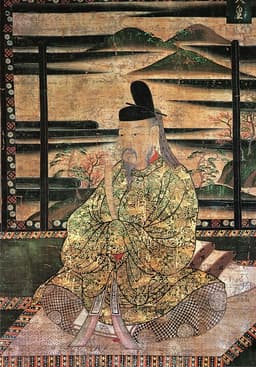
Emperor Saga
Emperor · Medieval
58.2Total

Napoleon Bonaparte
General · Modern
70.9Total
Basic Information
Born
786
1769
Died
842
1821
Era
Medieval
Modern
Nationality
Japan
France
Occupation
Emperor
General
Civilization
Eastern
Western
Score Comparison
Military (10%)
52.4
94.0
Political (20%)
68.0
72.0
Influence (20%)
58.3
40.0
Legacy (20%)
54.0
80.0
Leadership (15%)
53.2
78.0
Strategy (15%)
67.5
90.0
TOTAL
58.2
70.9
Emperor Saga — Complete Timeline
810 AD
Establishment of the Kurodo-dokoroReform◆ Major
Emperor Saga established the Kurodo-dokoro (Chamberlains' Office), a new administrative body that handled imperial documents and communications. This office bypassed the traditional bureaucracy and increased the emperor's direct control over government affairs.
Kurodo-dokoroAdministrationImperial Power
Impact: nationalconstructive
Promotion of Chinese Culture and CalligraphyCultural◆ Major
Emperor Saga was a noted patron of Chinese Tang dynasty culture, particularly calligraphy. He studied under the master Kukai and developed the Japanese style of calligraphy. His patronage helped establish calligraphy as a respected art form in the Japanese court.
CalligraphyChinese CultureArt
Impact: nationalconstructive
815 AD
Compilation of the Kojiki and Nihon Shoki CommentariesCultural
Emperor Saga ordered the compilation of the 'Shoku Nihongi', a continuation of the official history. He also sponsored commentaries on the Kojiki and Nihon Shoki, promoting the study of Japanese mythology and history in a Chinese scholarly framework.
HistoriographyShoku NihongiScholarship
Impact: nationalconstructive
Napoleon Bonaparte — Complete Timeline
1799 AD
Coup of 18 BrumaireOther◆ Major
Napoleon Bonaparte, with support from his brother Lucien and key political figures, overthrew the Directory in a bloodless coup. He established the Consulate with himself as First Consul, effectively becoming the ruler of France. This event ended the French Revolution's most unstable period.
French RevolutionCoupRise to Power
Impact: regional
1804 AD
Promulgation of the Napoleonic CodeOther◆ Major
Napoleon enacted the Civil Code of the French, known as the Napoleonic Code, a comprehensive set of laws that replaced the fragmented feudal legal systems. The code established legal equality, protected property rights, and secularized law. It became the basis for legal systems in many European and world countries.
Legal ReformNapoleonic CodeCivil Law
Impact: globalconstructive
1805 AD
Battle of AusterlitzWar◆ Major
Napoleon's Grande Arm
Napoleonic WarsBattleDecisive Victory
Impact: global
1812 AD
Invasion of RussiaWar◆ Major
Napoleon led the Grande Arm
Napoleonic WarsInvasionDisaster
Impact: globaldestructive
1815 AD
Battle of WaterlooWar◆ Major
Napoleon's French army was defeated by the combined forces of the Duke of Wellington's Anglo-Allied army and Gebhard Leberecht von Bl
Napoleonic WarsBattleFinal Defeat
Impact: globaldestructive
Expert Analysis
Origins
Emperor Saga (786-842 AD) was born as Kamino, the second son of Emperor Kanmu. He received a classical Chinese education and ascended the throne in 809 after his brother abdicated. His early life was steeped in the court culture of Heian-kyo, where Chinese poetry and calligraphy were highly prized. He studied under the monk Kukai, a master of calligraphy, and developed his own distinctive style, known as Saga's style.
Napoleon Bonaparte (1769-1821) was born on the island of Corsica shortly after its annexation by France. His father, Carlo Bonaparte, was a lawyer and diplomat who secured a scholarship for Napoleon to study at the Brienne Military Academy. He later attended the École Militaire in Paris, graduating as a second lieutenant in artillery. His early career was marked by his involvement in the French Revolution and his rapid rise through the ranks.
Rise to Power
Emperor Saga ascended the throne in 809 after his brother, Emperor Heizei, abdicated due to illness. Saga's reign was initially challenged by Heizei's attempted coup in 810, the Kusuko Incident, which Saga swiftly suppressed. He then consolidated power by establishing the Kurodo-dokoro (Chamberlains' Office) in 810, a new administrative body that handled imperial documents and communications, effectively bypassing the traditional Fujiwara-dominated bureaucracy. This move centralized authority under the emperor.
Napoleon rose to prominence during the French Revolution. He gained fame for his victory at the Siege of Toulon in 1793, where he was promoted to brigadier general. After a series of successful campaigns in Italy (1796-1797), he returned to France and led the Coup of 18 Brumaire in 1799, overthrowing the Directory and establishing the Consulate. He became First Consul, then Emperor in 1804.
Leadership & Governance
Emperor Saga's leadership focused on cultural patronage and administrative reform. He promoted Chinese Tang dynasty culture, particularly calligraphy, and sponsored the compilation of the Shoku Nihongi, a continuation of Japan's official history. He also ordered commentaries on the Kojiki and Nihon Shoki, fostering a revival of classical learning. Politically, he scored 72.0, reflecting his ability to centralize power without military force.
Napoleon's governance was characterized by sweeping legal and administrative reforms. He enacted the Napoleonic Code in 1804, which standardized French law and influenced legal systems worldwide. He also reformed education, established the Bank of France, and modernized the military. His political score of 75.0 reflects his effectiveness, though his authoritarian tendencies led to his downfall.
Triumph & Tragedy
Emperor Saga's triumphs include the establishment of the Kurodo-dokoro, which strengthened imperial authority, and his patronage of calligraphy, which left a lasting cultural legacy. He also oversaw a period of relative peace and stability. However, his reign saw limited military expansion (military score 53.9) and he failed to curb the growing power of the Fujiwara clan in the long term.
Napoleon's triumphs are numerous: his military campaigns, especially the Battle of Austerlitz (1805), where he scored 94.0 in military and 93.0 in strategy, and the Napoleonic Code. His tragedies include the disastrous Invasion of Russia in 1812, where his Grande Armée was decimated, and his final defeat at Waterloo in 1815. He died in exile on Saint Helena.
Character & Destiny
Emperor Saga was a cultured and methodical ruler, with a leadership score of 85.4. His character was shaped by his reverence for Chinese culture and his desire to strengthen the throne through administrative rather than military means. This approach ensured his reign was stable but limited in territorial impact.
Napoleon was ambitious, charismatic, and driven by a desire for glory. His leadership score of 80.0 reflects his ability to inspire troops and manage a vast empire. However, his hubris led to overreach, culminating in his downfall. His character was a double-edged sword: it enabled his rise but also his fall.
Legacy
Emperor Saga's legacy is primarily cultural. He is remembered as a patron of calligraphy and Chinese learning, and his administrative reforms influenced the Japanese imperial system. His total score of 70.5 reflects a moderate but enduring impact.
Napoleon's legacy is immense. He reshaped Europe through conquest and legal reform. The Napoleonic Code remains a foundation of civil law in many countries. His military tactics are studied in academies worldwide. His total score of 82.4 places him among the most impactful figures in history.
Conclusion
While Emperor Saga was a significant cultural and administrative figure in Japanese history, Napoleon Bonaparte had a far greater impact on a global scale. Napoleon scored 82.4 overall, 11.9 points higher than Saga's 70.5. His military conquests, legal reforms, and influence on modern statecraft outweigh Saga's cultural contributions. Therefore, Napoleon is the more impactful figure.
Rankings
🥇
Napoleon BonaparteLeader
Mil: 94.0Pol: 72.0Inf: 40.0
70.9
🥈
Emperor Saga
Mil: 52.4Pol: 68.0Inf: 58.3
58.2
+12.7 behind
How This Comparison Works
Algorithm
Each figure is scored on 6 dimensions (0—100 scale) based on structured historical data: Military (10%), Political (20%), Influence (20%), Legacy (20%), Leadership (15%), Strategy (15%). The weighted total produces the final ranking.
Data Sources
Scores are computed from structured sub-indicators in the database. Scale factors adjust for era (Ancient ×0.85, Modern ×1.0) and civilization size (Eastern ×1.05, Other ×0.80) to account for differences in population and military scale.
Maximum 3 Figures
Comparisons are limited to 2—3 figures to ensure readability and statistical meaningfulness.
Error Margins
±5 points per dimension — Sub-scores are derived from historical records with inherent uncertainty. Two figures within 5 points on a dimension should be considered roughly equivalent in that area.
Total Score Accuracy
±3 points overall — The weighted combination of 6 dimensions produces a total score with approximately ±3 points of uncertainty. Differences of less than 3 points are not statistically significant— the figures are effectively tied.
Known Limitations
- Historical records are incomplete and uneven across civilizations
- Figures from oral-tradition societies may be underrepresented
- Occupation labels can misclassify multi-role figures
- Scores measure capability and impact, not moral character
- Quantitative scoring is a comparison tool, not absolute truth
Capability Radar
Military (10%) — Battles & Warfare
Battles
47
95
Win Rate
46
90
Expansion
53
95
Political (20%) — Governance & Reform
Reform
55
95
Diplomacy
50
80
Economy
50
85
Influence (20%) — Cultural & Global Reach
Cultural
60
85
Global
30
90
Legacy (20%) — Historical Impact
Historical
55
95
Longevity
50
90
Leadership (15%) — Power & Stability
Tenure
60
85
Stability
60
70
Strategy (15%) — Tactics & Innovation
Strategy
57
95
Tactics
60
98
Reform
57
92
Similar Comparisons
Comments & Discussion
No comments yet. Be the first to share your thoughts!