Loading...
Baldwin I of Jerusalem vs Emperor Saga
Emperor Saga leads by 2.1 pts · 2 figures compared
…
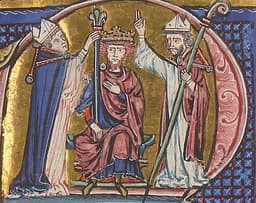
Baldwin I of Jerusalem
Emperor · Medieval
56.1Total
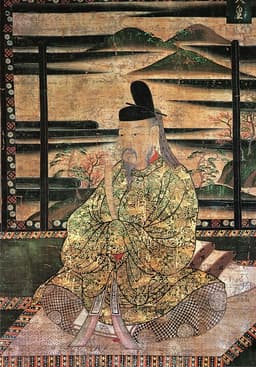
Emperor Saga
Emperor · Medieval
58.2Total
Basic Information
Born
1058
786
Died
1118
842
Era
Medieval
Medieval
Nationality
Jerusalem
Japan
Occupation
Emperor
Emperor
Civilization
Western
Eastern
Score Comparison
Military (10%)
72.5
52.4
Political (20%)
46.6
68.0
Influence (20%)
57.2
58.3
Legacy (20%)
50.0
54.0
Leadership (15%)
62.2
53.2
Strategy (15%)
57.5
67.5
TOTAL
56.1
58.2
Baldwin I of Jerusalem — Complete Timeline
1100 AD
Coronation as First King of JerusalemPolitical Action
Baldwin I was crowned as the first king of Jerusalem on Christmas Day 1100, after the death of his brother Godfrey. He transformed the Crusader state from a lordship into a monarchy, centralizing power and expanding its territory.
CoronationCrusader KingdomJerusalem
Impact: regionalconstructive
1101 AD
Capture of Arsuf and CaesareaWar◆ Major
Baldwin I captured the coastal cities of Arsuf and Caesarea with the help of Genoese and Pisan fleets. These victories secured Crusader control over the Palestinian coast and provided access to Mediterranean trade routes.
ConquestCrusader KingdomCoastal Cities
Impact: regional
1104 AD
Siege of AcreWar◆ Major
Baldwin I besieged and captured the port city of Acre after a four-year blockade, with support from a Genoese fleet. Acre became the most important Crusader port and a major commercial center in the Levant.
SiegeCrusader KingdomAcre
Impact: regional
1105 AD
Defense of the Kingdom against Seljuk AttacksWar◆ Major
Baldwin I defeated a Seljuk Turkish army at the Battle of Ramla in 1105, securing the kingdom's eastern frontier. This victory prevented the Seljuks from recapturing Jerusalem and stabilized Crusader rule.
BattleSeljuksCrusader Kingdom
Impact: regional
1118 AD
Invasion of EgyptWar
Baldwin I led a campaign into Fatimid Egypt, reaching the Nile Delta. He died during the campaign near Al-Arish, possibly from illness. The invasion failed to conquer territory but demonstrated Crusader ambitions beyond the Levant.
InvasionEgyptCrusader Kingdom
Impact: regional
Emperor Saga — Complete Timeline
810 AD
Establishment of the Kurodo-dokoroReform◆ Major
Emperor Saga established the Kurodo-dokoro (Chamberlains' Office), a new administrative body that handled imperial documents and communications. This office bypassed the traditional bureaucracy and increased the emperor's direct control over government affairs.
Kurodo-dokoroAdministrationImperial Power
Impact: nationalconstructive
Promotion of Chinese Culture and CalligraphyCultural◆ Major
Emperor Saga was a noted patron of Chinese Tang dynasty culture, particularly calligraphy. He studied under the master Kukai and developed the Japanese style of calligraphy. His patronage helped establish calligraphy as a respected art form in the Japanese court.
CalligraphyChinese CultureArt
Impact: nationalconstructive
815 AD
Compilation of the Kojiki and Nihon Shoki CommentariesCultural
Emperor Saga ordered the compilation of the 'Shoku Nihongi', a continuation of the official history. He also sponsored commentaries on the Kojiki and Nihon Shoki, promoting the study of Japanese mythology and history in a Chinese scholarly framework.
HistoriographyShoku NihongiScholarship
Impact: nationalconstructive
Expert Analysis
Origins
Baldwin I of Jerusalem was born around 1058 in Boulogne, France, as the third son of Eustace II, Count of Boulogne, and Ida of Lorraine. His family was deeply involved in the Norman-French aristocracy, and his older brother Godfrey of Bouillon would become the first ruler of Jerusalem. Baldwin initially pursued a clerical career, studying at the cathedral school of Rheims, but he abandoned the church after 1096 to join the First Crusade. His early experiences in the crusade shaped his pragmatic and ambitious character.
Emperor Saga was born in 786 as the second son of Emperor Kanmu, the 50th emperor of Japan. He was originally named Kamino, but later changed to Saga. His upbringing was immersed in the imperial court of Heian-kyo (modern Kyoto), where Chinese culture, particularly Tang dynasty literature and calligraphy, was highly esteemed. Saga studied under the Buddhist monk Kukai, who introduced him to Chinese calligraphy styles. This education laid the foundation for his later patronage of the arts.
Rise to Power
Baldwin rose to prominence during the First Crusade (1096-1099). After the capture of Jerusalem in 1099, his brother Godfrey became the first ruler, but he died a year later. Baldwin, who had established himself as Count of Edessa, quickly moved to claim the throne. He was crowned as the first king of Jerusalem on Christmas Day 1100. His rise was marked by decisive action and military skill, securing his position despite opposition from some crusader nobles.
Emperor Saga became emperor in 809 after his older brother Emperor Heizei abdicated. Heizei had attempted to retain power through a rebellion, but Saga and his allies suppressed it in 810 (the Kusuko Incident). This event solidified Saga's authority. He then focused on consolidating imperial power by reforming the court administration and reducing the influence of the Fujiwara clan.
Leadership & Governance
Baldwin I's leadership was characterized by military expansion and strategic consolidation. He captured key coastal cities like Arsuf (1101), Caesarea (1101), and Acre (1104), often with the help of Italian naval fleets. He also defended the kingdom against Seljuk attacks, notably at the Battle of Ramla in 1105. His governance was pragmatic: he awarded fiefs to crusader lords and established a feudal system. However, his political score of 46.6 reflects his less effective administrative reforms; he often struggled with internal dissent and lacked a stable succession plan.
Emperor Saga's governance focused on centralization and cultural promotion. He established the Kurodo-dokoro (Chamberlains' Office) in 810, a new administrative body that handled imperial documents and communications, bypassing the traditional council of state. This innovation increased the emperor's direct control over policy. He also promoted Chinese-style bureaucracy and legal codes. His political score of 68.0 and strategy score of 67.5 reflect his effective administrative reforms.
Triumph & Tragedy
Baldwin's greatest triumph was the capture of Acre in 1104 after a four-year blockade, which became the kingdom's most important port. His defense of the kingdom at Ramla in 1105 prevented Seljuk incursions. However, his greatest failure was his invasion of Egypt in 1118. He reached the Nile Delta but died near Al-Arish, likely from illness, without achieving lasting gains. The invasion overstretched his resources and exposed the kingdom's vulnerability.
Emperor Saga's triumphs include the compilation of the 'Shoku Nihongi', a continuation of Japan's official history, and his patronage of calligraphy, which led to the development of the Japanese 'kana' syllabary. His establishment of the Kurodo-dokoro strengthened imperial power. However, his reign also saw the continued rise of the Fujiwara clan, which would later dominate the imperial court. His failure to permanently curb Fujiwara influence meant the imperial family's power declined after his abdication.
Character & Destiny
Baldwin I was ambitious, pragmatic, and militarily skilled. He scored 72.5 in military and 62.2 in leadership. His willingness to use Italian naval support and his aggressive expansionism defined his reign. However, his political score of 46.6 indicates a lack of diplomatic finesse and long-term state-building. His death during the Egyptian campaign was a direct result of his overreach, a pattern seen in many crusader leaders.
Emperor Saga was cultured, politically astute, and reform-minded. His strategy score of 67.5 and political score of 68.0 highlight his effective use of institutional changes. He abdicated in 823 to become a Buddhist monk, a common practice among Heian emperors, but his influence continued through his sons and cultural patronage. His character favored stability and cultural refinement over military expansion.
Legacy
Baldwin I's legacy is the establishment of the Kingdom of Jerusalem as a major Crusader state. His conquests secured coastal territories that lasted for nearly a century. However, his failure to create a stable succession led to later conflicts. His military campaigns scored 72.5, but his overall legacy score of 50.0 reflects the kingdom's eventual fall in 1187.
Emperor Saga's legacy is more enduring in Japanese culture. His promotion of Chinese calligraphy and the development of 'kana' influenced Japanese writing forever. The Kurodo-dokoro became a key institution in the Heian court, and the 'Shoku Nihongi' remains an important historical source. He scored 54.0 in legacy, but his cultural impact is still evident today.
Conclusion
Emperor Saga had a greater overall impact than Baldwin I. With a total score of 58.2 against Baldwin's 56.1, Saga's administrative and cultural reforms shaped Japanese governance and writing for centuries. Baldwin's military achievements were significant but ultimately transient; his kingdom fell within a century. Saga's influence on Japanese culture and statecraft outlasted his reign and continues to be felt. Therefore, Emperor Saga is the more impactful figure.
Rankings
🥇
Emperor SagaLeader
Mil: 52.4Pol: 68.0Inf: 58.3
58.2
🥈
Baldwin I of Jerusalem
Mil: 72.5Pol: 46.6Inf: 57.2
56.1
+2.1 behind
How This Comparison Works
Algorithm
Each figure is scored on 6 dimensions (0—100 scale) based on structured historical data: Military (10%), Political (20%), Influence (20%), Legacy (20%), Leadership (15%), Strategy (15%). The weighted total produces the final ranking.
Data Sources
Scores are computed from structured sub-indicators in the database. Scale factors adjust for era (Ancient ×0.85, Modern ×1.0) and civilization size (Eastern ×1.05, Other ×0.80) to account for differences in population and military scale.
Maximum 3 Figures
Comparisons are limited to 2—3 figures to ensure readability and statistical meaningfulness.
Error Margins
±5 points per dimension — Sub-scores are derived from historical records with inherent uncertainty. Two figures within 5 points on a dimension should be considered roughly equivalent in that area.
Total Score Accuracy
±3 points overall — The weighted combination of 6 dimensions produces a total score with approximately ±3 points of uncertainty. Differences of less than 3 points are not statistically significant— the figures are effectively tied.
Known Limitations
- Historical records are incomplete and uneven across civilizations
- Figures from oral-tradition societies may be underrepresented
- Occupation labels can misclassify multi-role figures
- Scores measure capability and impact, not moral character
- Quantitative scoring is a comparison tool, not absolute truth
Capability Radar
Military (10%) — Battles & Warfare
Battles
55
47
Win Rate
60
46
Expansion
65
53
Political (20%) — Governance & Reform
Reform
40
55
Diplomacy
55
50
Economy
35
50
Influence (20%) — Cultural & Global Reach
Cultural
45
60
Global
40
30
Legacy (20%) — Historical Impact
Historical
55
55
Longevity
45
50
Leadership (15%) — Power & Stability
Tenure
50
60
Stability
30
60
Strategy (15%) — Tactics & Innovation
Strategy
60
57
Tactics
55
60
Reform
30
57
Similar Comparisons
Comments & Discussion
No comments yet. Be the first to share your thoughts!