Loading...
Emperor Murakami vs Vlad II Dracul
Emperor Murakami leads by 7.5 pts · 2 figures compared
…
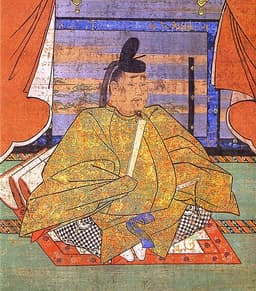
Emperor Murakami
Emperor · Medieval
50.2Total
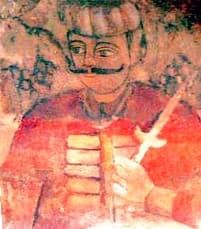
Vlad II Dracul
Emperor · Medieval
42.7Total
Basic Information
Born
926
1395
Died
967
1447
Era
Medieval
Medieval
Nationality
Japan
Wallachia
Occupation
Emperor
Emperor
Civilization
Eastern
Western
Score Comparison
Military (10%)
49.0
50.0
Political (20%)
32.2
29.3
Influence (20%)
50.2
51.0
Legacy (20%)
45.0
44.2
Leadership (15%)
67.0
38.1
Strategy (15%)
66.3
38.3
TOTAL
50.2
42.7
Emperor Murakami — Complete Timeline
946 AD
Peak of Fujiwara RegencyPolitical Action◆ Major
Emperor Murakami's reign saw the Fujiwara clan, led by Fujiwara no Saneyori, reach the height of their power as regents. The emperor's authority was largely ceremonial, with real power held by the Fujiwara. This period marked the consolidation of Fujiwara dominance.
FujiwaraRegencySaneyori
Impact: national
Maintenance of Peace and StabilityPolitical Action
Emperor Murakami's reign was relatively peaceful, with no major wars or rebellions. The central government maintained order, and the country enjoyed stability. This peace allowed the Fujiwara to consolidate their power and the court to focus on cultural pursuits.
PeaceStabilityHeian
Impact: nationalconstructive
950 AD
Promotion of Court Culture and CeremonyCultural
Emperor Murakami was a patron of courtly arts and ceremonies. He maintained elaborate rituals and festivals, including the Kamo Festival. His reign is noted for the refinement of Heian court culture, with an emphasis on elegance and protocol.
Court CultureCeremonyHeian
Impact: nationalconstructive
Vlad II Dracul — Complete Timeline
1436 AD
Accession as Voivode of WallachiaPolitical Action◆ Major
Vlad II Dracul became Voivode of Wallachia after the death of his half-brother Alexander I Aldea. His reign was marked by a precarious balance between the Ottoman Empire and the Kingdom of Hungary.
SuccessionRule
Impact: regional
Alliance with the Ottoman EmpirePolitical Action◆ Major
Vlad II Dracul allied with the Ottoman Sultan Murad II, agreeing to pay tribute and provide military support. This alliance secured his position but made Wallachia a vassal state.
Ottoman AllianceVassalage
Impact: regional
1444 AD
Participation in the Crusade of VarnaWar◆ Major
Vlad II Dracul joined the Christian coalition led by John Hunyadi and King W
CrusadeDefeatVarna
Impact: regionaltragic
1447 AD
AssassinationPolitical Action◆ Major
Vlad II Dracul was assassinated on the orders of John Hunyadi, who suspected him of treachery. His death led to a power struggle in Wallachia and the eventual rise of his son Vlad the Impaler.
AssassinationPower Struggle
Impact: regionaltragic
Expert Analysis
Origins
Emperor Murakami (reigned 946-967) was the 62nd emperor of Japan, born in 926 to Emperor Suzaku and Fujiwara no Onshi. His maternal grandfather was Fujiwara no Tadahira, the powerful regent. Murakami's upbringing was steeped in courtly traditions, with education focused on poetry, ritual, and governance. Unlike warrior emperors, he was groomed for ceremonial leadership, reflecting the Heian period's emphasis on refined culture over martial prowess.
Vlad II Dracul (c. 1390-1447) was born into the House of Basarab, rulers of Wallachia. His father, Mircea I, was a strong voivode who fought the Ottomans. Vlad II's early life was marked by political instability; he spent time as a hostage of the Ottoman sultan, a common practice to secure loyalty. This experience shaped his pragmatic approach to power, balancing between Christian and Muslim forces.
Rise to Power
Murakami ascended the throne in 946 at age 20, following the death of his elder brother, Emperor Suzaku. His reign coincided with the apex of Fujiwara regency, where the clan controlled imperial appointments and policy. Fujiwara no Saneyori served as regent, effectively governing while Murakami performed ceremonial duties. The emperor's role was to legitimize Fujiwara rule through ritual and patronage, not through direct political action.
Vlad II Dracul became voivode in 1436 after the death of his half-brother Alexander I Aldea. His claim was contested, but he secured power by aligning with the Ottoman Sultan Murad II. In 1436, he paid homage to the sultan and agreed to pay tribute, gaining Ottoman support against internal rivals. This alliance allowed him to rule, but at the cost of vassalage. In 1443, he joined the Christian coalition in the Crusade of Varna, a risky move that ultimately failed, leading to his assassination in 1447 by John Hunyadi.
Leadership & Governance
Murakami's leadership was passive, as power rested with the Fujiwara regents. He focused on maintaining courtly traditions, sponsoring festivals like the Kamo Festival, and promoting literature. His reign saw no major wars or rebellions; the Heian period was characterized by peace and cultural flowering. However, this stability came at the cost of imperial authority, which steadily declined. Murakami scored 67.0 in leadership, reflecting his role as a symbolic figure, not a ruler.
Vlad II Dracul governed as a voivode in a volatile region. He navigated between the Ottoman Empire and Hungary, shifting alliances as needed. His military score of 50.0 reflects his participation in campaigns, but his strategy score of 38.3 indicates limited success. He maintained power through tribute and diplomacy, but his indecisiveness—supporting both the Crusade and the Ottomans—led to distrust. His assassination was a direct result of this perceived treachery.
Triumph & Tragedy
Murakami's greatest success was presiding over a period of cultural efflorescence. The Fujiwara regency reached its peak, and the imperial court became a center of art and ceremony. However, his tragedy was the erosion of imperial power; after his reign, emperors became figureheads. His legacy score of 45.0 reflects this mixed outcome: cultural patronage but political decline.
Vlad II Dracul's triumph was securing the Wallachian throne through Ottoman support, a feat in a chaotic era. He also participated in the Crusade of Varna, aligning with Christian forces. Yet his tragedy was his death at the hands of fellow Christians. He failed to build a stable dynasty; his son Vlad III (the Impaler) would later gain infamy. His political score of 29.3 underscores his inability to maintain alliances.
Character & Destiny
Murakami was a cultured, passive emperor who accepted his limited role. His personality suited the Heian court's aesthetic ideals, but his lack of ambition contributed to the Fujiwara's dominance. Historical assessments view him as a competent ceremonial emperor, but not a reformer. His destiny was to be a symbol, not a power broker.
Vlad II Dracul was pragmatic and adaptable, but also duplicitous, earning the moniker "Dracul" (dragon) from the Order of the Dragon. His willingness to switch sides made him effective in the short term but ultimately led to his downfall. His character—cautious yet opportunistic—shaped a fate of betrayal.
Legacy
Murakami's legacy is tied to Heian culture. His reign is remembered for the peak of Fujiwara regency and the flourishing of courtly arts. The imperial system he represented endured for centuries, but with diminished power. In influence, he scored 50.2, reflecting moderate cultural impact.
Vlad II Dracul's legacy is overshadowed by his son, Vlad the Impaler. However, his role in the Crusade of Varna and his alliance with the Ottomans set precedents for Wallachian politics. His death triggered a power struggle that led to his son's rise. His total score of 42.7 is lower than Murakami's 50.2, indicating less overall impact.
Conclusion
Emperor Murakami had a greater historical impact than Vlad II Dracul, as reflected in his higher total score of 50.2 versus 42.7. While Murakami's reign saw the peak of Fujiwara regency and cultural patronage, Vlad II's rule was marked by short-term survival and eventual assassination. Murakami's influence on Japanese court culture and the imperial system lasted centuries, whereas Vlad II's legacy is mostly as a precursor to his infamous son. Therefore, Murakami's contributions to stability and culture outweigh Vlad II's turbulent but less enduring impact.
Rankings
🥇
Emperor MurakamiLeader
Mil: 49.0Pol: 32.2Inf: 50.2
50.2
🥈
Vlad II Dracul
Mil: 50.0Pol: 29.3Inf: 51.0
42.7
+7.5 behind
How This Comparison Works
Algorithm
Each figure is scored on 6 dimensions (0—100 scale) based on structured historical data: Military (10%), Political (20%), Influence (20%), Legacy (20%), Leadership (15%), Strategy (15%). The weighted total produces the final ranking.
Data Sources
Scores are computed from structured sub-indicators in the database. Scale factors adjust for era (Ancient ×0.85, Modern ×1.0) and civilization size (Eastern ×1.05, Other ×0.80) to account for differences in population and military scale.
Maximum 3 Figures
Comparisons are limited to 2—3 figures to ensure readability and statistical meaningfulness.
Error Margins
±5 points per dimension — Sub-scores are derived from historical records with inherent uncertainty. Two figures within 5 points on a dimension should be considered roughly equivalent in that area.
Total Score Accuracy
±3 points overall — The weighted combination of 6 dimensions produces a total score with approximately ±3 points of uncertainty. Differences of less than 3 points are not statistically significant— the figures are effectively tied.
Known Limitations
- Historical records are incomplete and uneven across civilizations
- Figures from oral-tradition societies may be underrepresented
- Occupation labels can misclassify multi-role figures
- Scores measure capability and impact, not moral character
- Quantitative scoring is a comparison tool, not absolute truth
Capability Radar
Military (10%) — Battles & Warfare
Battles
42
20
Win Rate
48
25
Expansion
50
15
Political (20%) — Governance & Reform
Reform
20
15
Diplomacy
30
35
Economy
30
20
Influence (20%) — Cultural & Global Reach
Cultural
30
20
Global
10
15
Legacy (20%) — Historical Impact
Historical
40
35
Longevity
30
30
Leadership (15%) — Power & Stability
Tenure
40
30
Stability
50
15
Strategy (15%) — Tactics & Innovation
Strategy
53
25
Tactics
59
30
Reform
63
10
Similar Comparisons
Comments & Discussion
No comments yet. Be the first to share your thoughts!