Loading...
Emperor Murakami vs Henry VII of England
Henry VII of England leads by 12.5 pts · 2 figures compared
…
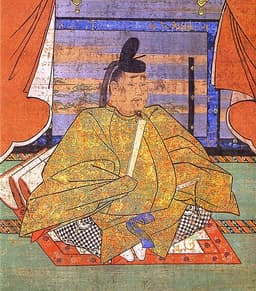
Emperor Murakami
Emperor · Medieval
50.2Total
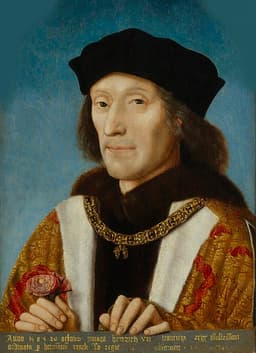
Henry VII of England
Emperor · Medieval
62.7Total
Basic Information
Born
926
1457
Died
967
1509
Era
Medieval
Medieval
Nationality
Japan
England
Occupation
Emperor
Emperor
Civilization
Eastern
Western
Score Comparison
Military (10%)
49.0
55.0
Political (20%)
32.2
78.0
Influence (20%)
50.2
59.0
Legacy (20%)
45.0
52.0
Leadership (15%)
67.0
78.0
Strategy (15%)
66.3
60.0
TOTAL
50.2
62.7
Emperor Murakami — Complete Timeline
946 AD
Peak of Fujiwara RegencyPolitical Action◆ Major
Emperor Murakami's reign saw the Fujiwara clan, led by Fujiwara no Saneyori, reach the height of their power as regents. The emperor's authority was largely ceremonial, with real power held by the Fujiwara. This period marked the consolidation of Fujiwara dominance.
FujiwaraRegencySaneyori
Impact: national
Maintenance of Peace and StabilityPolitical Action
Emperor Murakami's reign was relatively peaceful, with no major wars or rebellions. The central government maintained order, and the country enjoyed stability. This peace allowed the Fujiwara to consolidate their power and the court to focus on cultural pursuits.
PeaceStabilityHeian
Impact: nationalconstructive
950 AD
Promotion of Court Culture and CeremonyCultural
Emperor Murakami was a patron of courtly arts and ceremonies. He maintained elaborate rituals and festivals, including the Kamo Festival. His reign is noted for the refinement of Heian court culture, with an emphasis on elegance and protocol.
Court CultureCeremonyHeian
Impact: nationalconstructive
Henry VII of England — Complete Timeline
1485 AD
Battle of Bosworth FieldWar
Henry Tudor defeated and killed Richard III at Bosworth Field, ending the Wars of the Roses. This victory allowed Henry to claim the throne as Henry VII, founding the Tudor dynasty.
BattleVictoryTudor Dynasty
Impact: nationalconstructive
1486 AD
Marriage to Elizabeth of YorkPolitical Action◆ Major
Henry VII married Elizabeth of York, uniting the Houses of Lancaster and York. This marriage symbolically ended the Wars of the Roses and strengthened the legitimacy of the Tudor claim to the throne.
MarriageUnificationTudor
Impact: nationalconstructive
1487 AD
Defeat of Lambert SimnelWar◆ Major
Henry VII defeated the Yorkist pretender Lambert Simnel at the Battle of Stoke Field. This victory crushed a major rebellion and secured Henry's throne against early challenges to his rule.
RebellionBattleYorkist
Impact: nationalconstructive
1489 AD
Treaty of Medina del CampoPolitical Action◆ Major
Henry VII signed a treaty with Spain, arranging the marriage of his son Arthur to Catherine of Aragon. This alliance strengthened England's position in Europe and laid the groundwork for future diplomatic ties.
DiplomacySpainAlliance
Impact: regionalconstructive
1499 AD
Execution of Perkin WarbeckPolitical Action
Henry VII executed Perkin Warbeck, a pretender who claimed to be Richard of Shrewsbury. Warbeck's capture and execution ended a major threat to Henry's reign and demonstrated his firm control over the kingdom.
PretenderExecutionSecurity
Impact: national
Expert Analysis
Origins
Emperor Murakami was born in 926 as the 62nd emperor of Japan, the son of Emperor Daigo. He ascended the throne in 946 at age 20. His early life was steeped in the courtly traditions of Heian-kyo, where the imperial family held symbolic authority while real power was wielded by the Fujiwara clan. Murakami's education focused on Confucian classics, poetry, and ritual, preparing him for a ceremonial role.
Henry VII of England was born in 1457 at Pembroke Castle, Wales, as Henry Tudor, son of Edmund Tudor and Margaret Beaufort. His lineage was tenuous: his father was half-brother to Henry VI, and his mother descended from John of Gaunt. Henry spent his early years in exile in Brittany after the Yorkist victory in the Wars of the Roses. His upbringing was marked by instability, fostering a cautious and calculating nature.
Rise to Power
Murakami became emperor upon the abdication of his father in 946. His rise was orderly, following the established succession. The key turning point was his reliance on Fujiwara no Saneyori, who became regent in 957. Murakami's reign marked the peak of Fujiwara regency, as the clan controlled appointments and policy. The emperor's role was to legitimize their rule through ceremonies and edicts.
Henry VII's rise was violent and uncertain. He claimed the throne through his mother's Lancastrian line and led a rebellion against Richard III. On August 22, 1485, at the Battle of Bosworth Field, Henry's forces defeated Richard's, and Richard was killed. Henry was crowned on the battlefield, ending the Plantagenet dynasty. He then married Elizabeth of York in 1486, uniting the warring houses. His consolidation involved defeating pretenders like Lambert Simnel (1487) and Perkin Warbeck (1497).
Leadership & Governance
Murakami's governance was passive; he presided over court ceremonies and poetry contests while the Fujiwara regents administered the state. He promoted court culture, including the Kamo Festival and elaborate rituals. His leadership score of 67.0 reflects his role as a figurehead, maintaining stability through delegation. He issued edicts but rarely intervened in politics.
Henry VII was an active, hands-on ruler. He centralized power by curbing the nobility's influence through the Court of Star Chamber and financial reforms. He avoided war, preferring diplomacy and trade. His political score of 78.0 indicates his skill in statecraft. He signed the Treaty of Medina del Campo (1489) with Spain, securing a marriage alliance. He enforced laws against retaining private armies, reducing feudal power.
Triumph & Tragedy
Murakami's triumph was the peace and cultural flourishing of his reign. No major wars or rebellions occurred, and the court reached a zenith of artistic refinement. His tragedy was the loss of imperial authority; the Fujiwara regency became hereditary, permanently reducing the emperor's power. His reign set a precedent for ceremonial monarchy.
Henry's triumph was ending the Wars of the Roses and founding the Tudor dynasty. He stabilized England's finances, leaving a surplus of £300,000 (worth about £100 million today). His tragedy was the death of his heir Arthur in 1502, which led to a succession crisis later resolved by his son Henry VIII. He also executed potential rivals, including Perkin Warbeck, which tarnished his reputation.
Character & Destiny
Murakami was cultured and passive, content with symbolic power. His destiny was to be a placeholder for Fujiwara ambition. Historians see him as a model of the ideal Heian emperor—poetic, ritualistic, and detached. His character ensured the survival of the imperial line but at the cost of real power.
Henry VII was shrewd, frugal, and paranoid. He trusted few and used spies to monitor nobles. His destiny was to secure a new dynasty after decades of civil war. His character—calculating and cautious—allowed him to survive threats but also made him unpopular. He died in 1509, leaving a stable but authoritarian state.
Legacy
Murakami's legacy is the codification of courtly rituals that defined Japanese imperial culture for centuries. He is remembered as a patron of poetry and ceremony, but his political legacy is negligible. The Fujiwara regency system he enabled lasted until the 12th century. His influence score of 50.2 reflects his limited impact outside Japan.
Henry VII's legacy is the Tudor dynasty, which ruled England for 118 years. He established a strong monarchy, reformed taxation, and expanded English trade. His marriage alliance with Spain led to the later union with Catherine of Aragon, which had profound religious consequences. His legacy score of 52.0 is modest but his political score of 78.0 shows his effectiveness.
Conclusion
Henry VII had greater impact. While Murakami's reign was peaceful and culturally rich, his power was illusory. Henry VII, with a total score of 62.7 compared to Murakami's 50.2, actively shaped England's future through political acumen and military victory (military 55.0 vs 49.0). His founding of the Tudor dynasty altered European history, while Murakami's reign merely perpetuated a declining imperial institution. The score gap of 12.5 points underscores Henry's superior influence and leadership.
Rankings
🥇
Henry VII of EnglandLeader
Mil: 55.0Pol: 78.0Inf: 59.0
62.7
🥈
Emperor Murakami
Mil: 49.0Pol: 32.2Inf: 50.2
50.2
+12.5 behind
How This Comparison Works
Algorithm
Each figure is scored on 6 dimensions (0—100 scale) based on structured historical data: Military (10%), Political (20%), Influence (20%), Legacy (20%), Leadership (15%), Strategy (15%). The weighted total produces the final ranking.
Data Sources
Scores are computed from structured sub-indicators in the database. Scale factors adjust for era (Ancient ×0.85, Modern ×1.0) and civilization size (Eastern ×1.05, Other ×0.80) to account for differences in population and military scale.
Maximum 3 Figures
Comparisons are limited to 2—3 figures to ensure readability and statistical meaningfulness.
Error Margins
±5 points per dimension — Sub-scores are derived from historical records with inherent uncertainty. Two figures within 5 points on a dimension should be considered roughly equivalent in that area.
Total Score Accuracy
±3 points overall — The weighted combination of 6 dimensions produces a total score with approximately ±3 points of uncertainty. Differences of less than 3 points are not statistically significant— the figures are effectively tied.
Known Limitations
- Historical records are incomplete and uneven across civilizations
- Figures from oral-tradition societies may be underrepresented
- Occupation labels can misclassify multi-role figures
- Scores measure capability and impact, not moral character
- Quantitative scoring is a comparison tool, not absolute truth
Capability Radar
Military (10%) — Battles & Warfare
Battles
42
30
Win Rate
48
35
Expansion
50
25
Political (20%) — Governance & Reform
Reform
20
80
Diplomacy
30
85
Economy
30
80
Influence (20%) — Cultural & Global Reach
Cultural
30
50
Global
10
45
Legacy (20%) — Historical Impact
Historical
40
70
Longevity
30
65
Leadership (15%) — Power & Stability
Tenure
40
75
Stability
50
85
Strategy (15%) — Tactics & Innovation
Strategy
53
45
Tactics
59
40
Reform
63
50
Similar Comparisons
Comments & Discussion
No comments yet. Be the first to share your thoughts!