Loading...
Emperor Murakami vs Napoleon Bonaparte
Napoleon Bonaparte leads by 20.7 pts · 2 figures compared
…
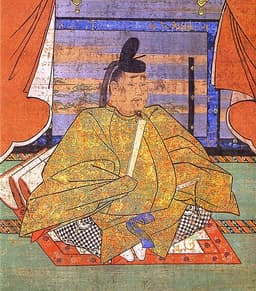
Emperor Murakami
Emperor · Medieval
50.2Total

Napoleon Bonaparte
General · Modern
70.9Total
Basic Information
Born
926
1769
Died
967
1821
Era
Medieval
Modern
Nationality
Japan
France
Occupation
Emperor
General
Civilization
Eastern
Western
Score Comparison
Military (10%)
49.0
94.0
Political (20%)
32.2
72.0
Influence (20%)
50.2
40.0
Legacy (20%)
45.0
80.0
Leadership (15%)
67.0
78.0
Strategy (15%)
66.3
90.0
TOTAL
50.2
70.9
Emperor Murakami — Complete Timeline
946 AD
Peak of Fujiwara RegencyPolitical Action◆ Major
Emperor Murakami's reign saw the Fujiwara clan, led by Fujiwara no Saneyori, reach the height of their power as regents. The emperor's authority was largely ceremonial, with real power held by the Fujiwara. This period marked the consolidation of Fujiwara dominance.
FujiwaraRegencySaneyori
Impact: national
Maintenance of Peace and StabilityPolitical Action
Emperor Murakami's reign was relatively peaceful, with no major wars or rebellions. The central government maintained order, and the country enjoyed stability. This peace allowed the Fujiwara to consolidate their power and the court to focus on cultural pursuits.
PeaceStabilityHeian
Impact: nationalconstructive
950 AD
Promotion of Court Culture and CeremonyCultural
Emperor Murakami was a patron of courtly arts and ceremonies. He maintained elaborate rituals and festivals, including the Kamo Festival. His reign is noted for the refinement of Heian court culture, with an emphasis on elegance and protocol.
Court CultureCeremonyHeian
Impact: nationalconstructive
Napoleon Bonaparte — Complete Timeline
1799 AD
Coup of 18 BrumaireOther◆ Major
Napoleon Bonaparte, with support from his brother Lucien and key political figures, overthrew the Directory in a bloodless coup. He established the Consulate with himself as First Consul, effectively becoming the ruler of France. This event ended the French Revolution's most unstable period.
French RevolutionCoupRise to Power
Impact: regional
1804 AD
Promulgation of the Napoleonic CodeOther◆ Major
Napoleon enacted the Civil Code of the French, known as the Napoleonic Code, a comprehensive set of laws that replaced the fragmented feudal legal systems. The code established legal equality, protected property rights, and secularized law. It became the basis for legal systems in many European and world countries.
Legal ReformNapoleonic CodeCivil Law
Impact: globalconstructive
1805 AD
Battle of AusterlitzWar◆ Major
Napoleon's Grande Arm
Napoleonic WarsBattleDecisive Victory
Impact: global
1812 AD
Invasion of RussiaWar◆ Major
Napoleon led the Grande Arm
Napoleonic WarsInvasionDisaster
Impact: globaldestructive
1815 AD
Battle of WaterlooWar◆ Major
Napoleon's French army was defeated by the combined forces of the Duke of Wellington's Anglo-Allied army and Gebhard Leberecht von Bl
Napoleonic WarsBattleFinal Defeat
Impact: globaldestructive
Expert Analysis
emperor-murakami-vs-napoleon-bonaparte
# The Emperor and the Conqueror: Two Paths to Power in East and West
In the late autumn of 946, as a gentle wind carried the scent of chrysanthemums through the imperial palace in Heian-kyō, Emperor Murakami ascended the Chrysanthemum Throne at the age of twenty. Half a world away and eight centuries later, on a cold December morning in 1804, Napoleon Bonaparte placed a crown upon his own head in Notre-Dame Cathedral, signaling to the world that he would answer to no man. These two scenes—one of quiet ceremony, the other of breathtaking audacity—capture the fundamental divide between two rulers who governed vastly different civilizations. How did a Japanese emperor whose reign was remembered for peace and poetry come to share a category with a man who redrew the map of Europe? The answer lies not in what they achieved, but in what their worlds demanded of them.
Origins
Napoleon Bonaparte was born in 1769 on the Mediterranean island of Corsica, a place that had just passed from Genoese to French control. His family was minor nobility, but his education at French military academies opened doors that his birth alone could not. The French Revolution had shattered the old order, creating a world where talent and ambition could vault a man from obscurity to power. Young Napoleon devoured military history and Enlightenment philosophy, learning not only how to command armies but how to read the human heart.
Emperor Murakami, born in 926, entered a world that had been stable for centuries. He was the eighth son of Emperor Daigo, raised in the cloistered world of the Heian court, where the highest virtues were not martial prowess but poetic refinement and ritual precision. His Japan was a place where power flowed through family connections and the careful manipulation of protocol, not through battlefield victories. Where Napoleon learned to seize opportunity, Murakami learned to embody tradition.
Rise to Power
Napoleon’s ascent was a masterpiece of timing and ruthlessness. In 1795, at just twenty-six, he saved the revolutionary government from a royalist uprising—the famous “whiff of grapeshot” that cleared the streets of Paris. His Italian campaign of 1796-1797 transformed him from a promising artillery officer into a national hero. By 1799, he had staged a coup d’état and made himself First Consul. Five years later, he was emperor. Every step was calculated, every risk weighed against the possibility of greater glory.
Emperor Murakami’s path was entirely different. He did not rise; he was placed. When his elder brother, Emperor Suzaku, abdicated in 946, Murakami inherited the throne as a matter of dynastic succession. His power was not seized but granted—and carefully circumscribed. The Fujiwara clan, led by the regent Fujiwara no Saneyori, had already consolidated control over the imperial government. Murakami’s role was not to command but to preside, to lend divine legitimacy to decisions made by others.
Leadership & Governance
Here the contrast becomes stark. Napoleon governed with a military precision that bordered on obsession. His Napoleonic Code, enacted in 1804, standardized French law across a fragmented nation and became the foundation for legal systems throughout Europe and beyond. He reformed education, centralized administration, and built roads and canals that bound his empire together. Yet his governance was inseparable from his ambition: every reform served the purpose of strengthening France—and Napoleon himself.
Murakami’s leadership took a form that Napoleon would have found incomprehensible. He did not issue commands; he performed ceremonies. He maintained elaborate court rituals that reinforced the cosmic order of the realm. He patronized poetry contests and Buddhist prayers for peace. His reign, from 946 to 967, was remembered as a time of stability—no major wars, no rebellions, no upheavals. Where Napoleon measured success in territory conquered and laws enacted, Murakami measured it in the harmony he preserved.
Triumph & Tragedy
Napoleon’s greatest moment came at Austerlitz in 1805, where his 68,000 men crushed a larger Russo-Austrian army in what many consider his masterwork of strategy. His worst came at Waterloo in 1815, where the Iron Duke and Prussian forces ended his hundred-day return from exile. Between these extremes lay the disastrous Russian campaign of 1812, where 600,000 men marched east and fewer than 100,000 returned. Napoleon’s triumphs were spectacular, but his tragedies were commensurate—the man who conquered Europe died in lonely exile on Saint Helena at age fifty-one.
Murakami’s story holds no such drama. His triumph was the stability he bequeathed; his tragedy was the irrelevance he could not escape. The Fujiwara regency peaked during his reign, meaning that the emperor became increasingly a figurehead. When Murakami died in 967 at age forty-one, he left behind a court culture that would flourish for centuries—but also a political system in which the emperor’s power was largely symbolic.
Character & Destiny
Napoleon was driven by what he called “the destiny of great men.” His personality—ambitious, calculating, charismatic—shaped every decision. He believed that history was made by individuals who dared to act, and he acted on a scale that still awes us. Yet his character also contained the seeds of his downfall: he could not stop, could not consolidate, could not accept limits.
Murakami’s character was shaped by his world’s expectations. He was patient, ceremonial, and devoted to the arts. The Japanese chronicles record his skill at poetry and his devotion to Buddhist rites. He accepted his role as a sacred figure rather than a political actor, and this acceptance preserved the imperial institution for a thousand years. Where Napoleon’s ambition destroyed him, Murakami’s restraint saved his dynasty.
Legacy
Napoleon’s legacy is written across the map of Europe. His legal codes, his administrative systems, his military tactics—all continue to influence the modern world. He is remembered as both liberator and tyrant, reformer and conqueror. His scores reflect this complexity: military genius at 94, but political wisdom at only 75.
Emperor Murakami left a quieter legacy. He helped perfect the court culture that produced *The Tale of Genji* and the aesthetic ideals that define traditional Japan. His reign is studied not for battles won but for poetry preserved, rituals maintained, and a civilization refined. His scores—military 53.9, political 44.7—reflect a different kind of leadership, one measured not in conquest but in continuity.
Conclusion
Standing at the edge of these two lives, one cannot help but wonder what Napoleon would have made of Murakami’s world. He would have found it maddeningly passive, suffocatingly ceremonial. And what would Murakami have made of Napoleon? He would have seen chaos, ambition unchecked, the violation of every principle of harmony. Yet both men succeeded on their own terms. Napoleon conquered Europe; Murakami preserved a civilization. Their differences are not failures of one against the other, but reflections of the worlds that shaped them. In the end, both understood something essential about power: that it must be exercised in the language its age can understand. Napoleon spoke in cannon fire; Murakami in chrysanthemums. Both were heard.
Rankings
🥇
Napoleon BonaparteLeader
Mil: 94.0Pol: 72.0Inf: 40.0
70.9
🥈
Emperor Murakami
Mil: 49.0Pol: 32.2Inf: 50.2
50.2
+20.7 behind
How This Comparison Works
Algorithm
Each figure is scored on 6 dimensions (0—100 scale) based on structured historical data: Military (10%), Political (20%), Influence (20%), Legacy (20%), Leadership (15%), Strategy (15%). The weighted total produces the final ranking.
Data Sources
Scores are computed from structured sub-indicators in the database. Scale factors adjust for era (Ancient ×0.85, Modern ×1.0) and civilization size (Eastern ×1.05, Other ×0.80) to account for differences in population and military scale.
Maximum 3 Figures
Comparisons are limited to 2—3 figures to ensure readability and statistical meaningfulness.
Error Margins
±5 points per dimension — Sub-scores are derived from historical records with inherent uncertainty. Two figures within 5 points on a dimension should be considered roughly equivalent in that area.
Total Score Accuracy
±3 points overall — The weighted combination of 6 dimensions produces a total score with approximately ±3 points of uncertainty. Differences of less than 3 points are not statistically significant— the figures are effectively tied.
Known Limitations
- Historical records are incomplete and uneven across civilizations
- Figures from oral-tradition societies may be underrepresented
- Occupation labels can misclassify multi-role figures
- Scores measure capability and impact, not moral character
- Quantitative scoring is a comparison tool, not absolute truth
Capability Radar
Military (10%) — Battles & Warfare
Battles
42
95
Win Rate
48
90
Expansion
50
95
Political (20%) — Governance & Reform
Reform
20
95
Diplomacy
30
80
Economy
30
85
Influence (20%) — Cultural & Global Reach
Cultural
30
85
Global
10
90
Legacy (20%) — Historical Impact
Historical
40
95
Longevity
30
90
Leadership (15%) — Power & Stability
Tenure
40
85
Stability
50
70
Strategy (15%) — Tactics & Innovation
Strategy
53
95
Tactics
59
98
Reform
63
92
Similar Comparisons
Comments & Discussion
EmperorOfPoems6/17/2026
Comparing a Heian poet-king to a cannonball conqueror is like comparing a brush to a bayonet. Murakami stabilized court culture and compiled anthologies; Napoleon blew up the Holy Roman Empire with the Grande Armée. Murakami’s legacy is aesthetic harmony, Napoleon’s is pragmatic chaos. One ruled by chrysanthemum, the other by cannon—different games, different goals. Don’t confuse ceremony with strategy.
篡位者与诗人6/17/2026
拿皇自己戴皇冠,那叫革命豪情;村上天皇若敢自己戴,宫廷里的藤原氏第二天就让他“禅让”了。拿破仑至少是个活生生的野心家,村上不过是平安时代的提线木偶。拿皇干翻了五个反法同盟,村上连一首政变诗都没写过。你跟我说他们是同一类人?别逗了,一个改变世界,一个被世界改变。
DataDismantler6/17/2026
Raw power metrics don't lie: Napoleon commanded over 600,000 men for the 1812 invasion alone; Murakami’s "army" was a few hundred courtiers with calligraphy brushes. Napoleon died in exile on a remote island; Murakami died in his palace, having never left Japan. If we judge by territorial control, military campaigns, or global impact, Murakami wasn't even in the same league. This comparison is like comparing a goldfish to a great white shark.
法式效率与和风仪式6/17/2026
拿破仑十年改变了欧洲版图,村上二十年只改了改年号。拿皇搞《拿破仑法典》的时候,村上还在让侍从修改和歌集里的错别字。一个用大炮说话,一个用屏风上的墨迹治国。你不用穿越八百年来比,光是效率就差了一整个工业革命。你告诉我这俩能放在一个天平上?天平都嫌丢人。
CrownAndScepter6/17/2026
Both understood legitimacy—but differently. Napoleon seized it with audacity; Murakami inherited it through blood and ritual. Napoleon’s power was martial and mercurial; Murakami’s was symbolic and serene. Yet both faced the same challenge: how to rule without losing your soul. Napoleon chose glory; Murakami chose grace. Not equal, but equally fascinating windows into power’s two faces.
墨守成规与火与剑6/17/2026
拿皇死了还有滑铁卢、远征莫斯科的故事传世,村上天皇死了,连他最喜欢的屏风画都没人记得是哪幅。你要比影响力,拿破仑是震撼了两百年历史的人,村上只是平安时代的一个注脚。后人记得拿皇是因为他改变了世界,记得村上是因为他刚好在和歌集里留下了几个字。这叫公平?这叫降维打击。