Loading...
Emperor Murakami vs Sukjong of Goryeo
Emperor Murakami leads by 0.0 pts · 2 figures compared
…
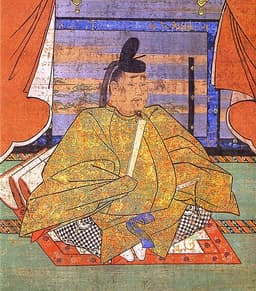
Emperor Murakami
Emperor · Medieval
50.2Total

Sukjong of Goryeo
Emperor · Medieval
50.2Total
Basic Information
Born
926
1054
Died
967
1105
Era
Medieval
Medieval
Nationality
Japan
Korea
Occupation
Emperor
Emperor
Civilization
Eastern
Eastern
Score Comparison
Military (10%)
49.0
21.2
Political (20%)
32.2
68.0
Influence (20%)
50.2
54.9
Legacy (20%)
45.0
45.8
Leadership (15%)
67.0
68.0
Strategy (15%)
66.3
25.0
TOTAL
50.2
50.2
Emperor Murakami — Complete Timeline
946 AD
Peak of Fujiwara RegencyPolitical Action◆ Major
Emperor Murakami's reign saw the Fujiwara clan, led by Fujiwara no Saneyori, reach the height of their power as regents. The emperor's authority was largely ceremonial, with real power held by the Fujiwara. This period marked the consolidation of Fujiwara dominance.
FujiwaraRegencySaneyori
Impact: national
Maintenance of Peace and StabilityPolitical Action
Emperor Murakami's reign was relatively peaceful, with no major wars or rebellions. The central government maintained order, and the country enjoyed stability. This peace allowed the Fujiwara to consolidate their power and the court to focus on cultural pursuits.
PeaceStabilityHeian
Impact: nationalconstructive
950 AD
Promotion of Court Culture and CeremonyCultural
Emperor Murakami was a patron of courtly arts and ceremonies. He maintained elaborate rituals and festivals, including the Kamo Festival. His reign is noted for the refinement of Heian court culture, with an emphasis on elegance and protocol.
Court CultureCeremonyHeian
Impact: nationalconstructive
Sukjong of Goryeo — Complete Timeline
1102 AD
Introduction of bronze coinageReform◆ Major
King Sukjong ordered the minting and circulation of bronze coins, known as 'haedong tongbo', to replace barter and cloth currency. This reform aimed to standardize trade and strengthen the Goryeo economy, though adoption was slow and limited to certain regions.
Economic ReformCurrencyGoryeo
Impact: nationalconstructive
1104 AD
Construction of the Namgyeong (Southern Capital)Political Action
Sukjong initiated the construction of a new secondary capital at Namgyeong (modern Seoul) to strengthen royal authority and counterbalance the influence of the Kaesong aristocracy. The project included palaces and defensive walls, but was not completed during his reign.
Urban PlanningCapitalGoryeo
Impact: nationalconstructive
1105 AD
Suppression of the Yi Ja-gyeom rebellionWar◆ Major
Sukjong faced a rebellion led by the powerful aristocrat Yi Ja-gyeom, who opposed the king's centralizing reforms. The rebellion was suppressed, but Sukjong died shortly after, leaving the conflict unresolved.
RebellionAristocracyGoryeo
Impact: nationaldestructive
Expert Analysis
Origins
Emperor Murakami (born 926, reigned 946-967) was the 62nd emperor of Japan, ascending the throne as a young boy under the shadow of the powerful Fujiwara clan. Born to Emperor Suzaku and a Fujiwara mother, he was immersed in the courtly culture of Heian-kyo. His education emphasized ritual, poetry, and ceremony, preparing him for a symbolic role rather than active governance. In contrast, Sukjong of Goryeo (born 1053, reigned 1095-1105) was the 15th king of Goryeo, raised in a period of aristocratic infighting. His father, King Munjong, had strengthened royal authority, but Sukjong inherited a court dominated by powerful families like the Yi clan. His early experiences with factional strife shaped his determination to centralize power and reform the economy.
Rise to Power
Murakami became emperor at age 20 following his father's abdication. His rise was largely ceremonial, orchestrated by the Fujiwara regents who controlled succession. Key turning point: his reign marked the peak of Fujiwara no Saneyori's influence, who served as regent (sessho) and later chancellor (kanpaku). Murakami's authority was limited; he focused on religious ceremonies and court culture. Sukjong, however, seized power after his uncle, King Heonjong, died without an heir. He faced immediate challenges from aristocrats who opposed his reforms. His major turning point was the suppression of the Yi Ja-gyeom rebellion in 1096, which he crushed with military force, executing the rebel leader and confiscating estates. This victory allowed him to push through economic reforms.
Leadership & Governance
Murakami's leadership style was passive and ceremonial. He presided over the Fujiwara regency, where real power lay with the regent. He maintained peace and stability by delegating governance to the Fujiwara, scoring 67.0 in leadership but only 32.2 in political acumen. His reign saw no major wars or rebellions, but also no significant reforms. Sukjong, by contrast, was an active reformer. He scored 68.0 in political and 68.0 in leadership. He introduced bronze coinage (haedong tongbo) to replace cloth and grain as currency, aiming to stimulate trade and centralize the economy. He also constructed Namgyeong (modern Seoul) as a secondary capital to reduce the influence of the Kaesong aristocracy. However, his military score is low (21.2) as he relied on generals to suppress rebellions.
Triumph & Tragedy
Murakami's triumph was the cultural flourishing of his court. He patronized the Kamo Festival and other ceremonies, which became models for later Heian culture. His tragedy was his powerlessness; his reign saw the Fujiwara clan entrench their control, setting the stage for centuries of regency rule. Sukjong's triumph was the introduction of coinage, which modernized the economy and laid foundations for later monetary systems. His tragedy was the failure to fully centralize power; the Yi Ja-gyeom rebellion exposed ongoing aristocratic resistance, and his reforms were partially reversed after his death.
Character & Destiny
Murakami was a pious and cultured emperor, devoted to ritual and poetry. His character suited the ceremonial role, but his lack of political ambition allowed the Fujiwara to dominate. Historical assessments view him as a figurehead; his reign is remembered for stability but not strength. Sukjong was determined and pragmatic, willing to use force to achieve his goals. His suppression of the rebellion showed decisiveness, but his economic reforms were ahead of their time and met resistance. His character drove him to centralize, but the entrenched aristocracy limited his success.
Legacy
Murakami's legacy is cultural: his patronage of ceremonies influenced Japanese court traditions for centuries. However, his political legacy is minimal, as the Fujiwara regency continued to weaken imperial authority. His total score of 50.2 reflects moderate influence. Sukjong's legacy is more tangible: the bronze coinage system, though short-lived, set a precedent for later Korean currency. The construction of Namgyeong eventually became Seoul, Korea's capital. His political reforms, though incomplete, strengthened the monarchy. His score also totals 50.2, but with higher political and leadership scores.
Conclusion
Sukjong of Goryeo had greater historical impact. While Murakami presided over a cultural peak, his reign was defined by the Fujiwara's dominance, not his own actions. Sukjong actively reformed the economy and attempted to centralize power, leaving a lasting physical legacy in Seoul and currency. His leadership score of 68.0 and political score of 68.0 outweigh Murakami's 67.0 and 32.2, respectively. In the contest between courtly patron and reformist king, Sukjong's concrete achievements give him the edge.
Rankings
🥇
Emperor MurakamiLeader
Mil: 49.0Pol: 32.2Inf: 50.2
50.2
🥈
Sukjong of Goryeo
Mil: 21.2Pol: 68.0Inf: 54.9
50.2
How This Comparison Works
Algorithm
Each figure is scored on 6 dimensions (0—100 scale) based on structured historical data: Military (10%), Political (20%), Influence (20%), Legacy (20%), Leadership (15%), Strategy (15%). The weighted total produces the final ranking.
Data Sources
Scores are computed from structured sub-indicators in the database. Scale factors adjust for era (Ancient ×0.85, Modern ×1.0) and civilization size (Eastern ×1.05, Other ×0.80) to account for differences in population and military scale.
Maximum 3 Figures
Comparisons are limited to 2—3 figures to ensure readability and statistical meaningfulness.
Error Margins
±5 points per dimension — Sub-scores are derived from historical records with inherent uncertainty. Two figures within 5 points on a dimension should be considered roughly equivalent in that area.
Total Score Accuracy
±3 points overall — The weighted combination of 6 dimensions produces a total score with approximately ±3 points of uncertainty. Differences of less than 3 points are not statistically significant— the figures are effectively tied.
Known Limitations
- Historical records are incomplete and uneven across civilizations
- Figures from oral-tradition societies may be underrepresented
- Occupation labels can misclassify multi-role figures
- Scores measure capability and impact, not moral character
- Quantitative scoring is a comparison tool, not absolute truth
Capability Radar
Military (10%) — Battles & Warfare
Battles
42
10
Win Rate
48
10
Expansion
50
10
Political (20%) — Governance & Reform
Reform
20
60
Diplomacy
30
50
Economy
30
70
Influence (20%) — Cultural & Global Reach
Cultural
30
40
Global
10
20
Legacy (20%) — Historical Impact
Historical
40
45
Longevity
30
30
Leadership (15%) — Power & Stability
Tenure
40
65
Stability
50
60
Strategy (15%) — Tactics & Innovation
Strategy
53
10
Tactics
59
10
Reform
63
15
Similar Comparisons
Comments & Discussion
No comments yet. Be the first to share your thoughts!