Loading...
Emperor Kanmu vs Sher Shah Suri
Sher Shah Suri leads by 7.0 pts · 2 figures compared
…
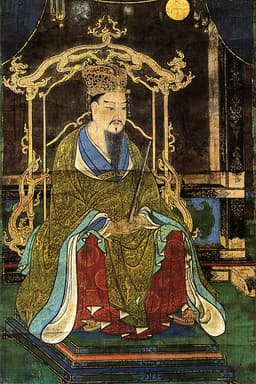
Emperor Kanmu
Emperor · Medieval
61.7Total
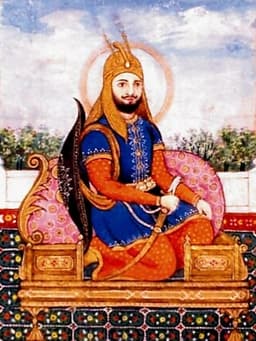
Sher Shah Suri
Emperor · Medieval
68.7Total
Basic Information
Born
737
1486
Died
806
1545
Era
Medieval
Medieval
Nationality
Japan
India
Occupation
Emperor
Emperor
Civilization
Eastern
Indian
Score Comparison
Military (10%)
22.6
80.0
Political (20%)
72.0
82.0
Influence (20%)
72.0
56.7
Legacy (20%)
65.0
65.0
Leadership (15%)
72.0
72.0
Strategy (15%)
35.7
72.0
TOTAL
61.7
68.7
Emperor Kanmu — Complete Timeline
784 AD
Abandonment of Nagaoka-kyoPolitical Action
Emperor Kanmu abandoned the new capital at Nagaoka-kyo after only ten years, following a series of disasters and political intrigues, including the assassination of the chief architect. The move to Heian-kyo was motivated by a desire for a fresh start.
Nagaoka-kyoAbandonmentCapital
Impact: national
789 AD
Campaigns Against the EmishiWar◆ Major
Emperor Kanmu launched military campaigns to subdue the Emishi tribes in northern Honshu. Led by generals like Sakanoue no Tamuramaro, the campaigns expanded Japanese control into the Tohoku region. The Emishi were eventually defeated or assimilated.
EmishiNorthern ExpansionTohoku
Impact: national
794 AD
Transfer of the Capital to Heian-kyoPolitical Action◆ Major
Emperor Kanmu moved the imperial capital from Nagaoka-kyo to Heian-kyo (modern Kyoto). The new city was laid out on a grid pattern modeled after Chang'an. This move established Kyoto as the imperial capital for over a thousand years.
CapitalHeian-kyoKyoto
Impact: nationalconstructive
Sher Shah Suri — Complete Timeline
1539 AD
Defeat of Humayun at ChausaWar◆ Major
Sher Shah Suri defeated the Mughal emperor Humayun at the Battle of Chausa in Bihar. This victory forced Humayun to flee to Persia and allowed Sher Shah to establish the Sur Empire in northern India.
BattleMughal-Sur Conflict
Impact: regional
1540 AD
Defeat of Humayun at KannaujWar◆ Major
Sher Shah Suri decisively defeated Humayun at the Battle of Kannauj (also known as Bilgram). This victory consolidated Sher Shah's control over the Delhi Sultanate and ended Mughal rule in India for 15 years.
BattleMughal-Sur Conflict
Impact: regional
Introduction of the RupeeReform◆ Major
Sher Shah Suri introduced a standardized silver coin called the 'rupiya', which became the basis for the modern Indian rupee. This reform stabilized the economy and facilitated trade across his empire.
Currency ReformEconomic Policy
Impact: regionalconstructive
1541 AD
Land Revenue ReformsReform◆ Major
Sher Shah Suri implemented a systematic land revenue system based on measurement of land and classification of soil types. This reform increased state revenue and reduced corruption, later adopted by the Mughals under Akbar.
Administrative ReformTaxation
Impact: regionalconstructive
1542 AD
Construction of the Grand Trunk RoadOther◆ Major
Sher Shah Suri built the Grand Trunk Road from Sonargaon (Bangladesh) to Peshawar (Pakistan), improving trade and communication. The road included rest houses and wells at regular intervals, facilitating travel and commerce.
InfrastructureTrade Route
Impact: regionalconstructive
Expert Analysis
Origins
Emperor Kanmu (737-806 CE) was born as Yamabe, the son of Prince Shirakabe and a concubine. He became emperor in 781 after a series of political maneuvers. His early life was shaped by the Nara period's Buddhist influence and court intrigues. Sher Shah Suri (1486-1545 CE), born Farid Khan in Sasaram, Bihar, was the son of a minor Afghan jagirdar. He left home at a young age to study in Jaunpur, gaining administrative experience under local rulers. His early career involved managing his father's estate, where he implemented reforms in land revenue and justice.
Rise to Power
Kanmu ascended the throne in 781 after his father's abdication. His reign marked a shift away from Nara's Buddhist monasteries. He moved the capital to Nagaoka-kyo in 784, but after disasters and political intrigue, he relocated to Heian-kyo (modern Kyoto) in 794. This move solidified his power. Sher Shah rose by serving under the Afghan ruler Bahar Khan Lohani, then rebelling to gain control of Bihar. He defeated the Mughal emperor Humayun at Chausa in 1539 and again at Kannauj in 1540, forcing Humayun into exile. He then established the Sur Empire, ruling from 1540 until his death in 1545.
Leadership & Governance
Kanmu's governance focused on centralizing power and reducing Buddhist influence. He reformed the bureaucracy, promoted Confucian ideals, and supported the development of Heian-kyo as a cultural center. However, his military campaigns against the Emishi were costly and only partially successful. Sher Shah's governance was highly systematic. He introduced a uniform silver coin (rupiya), a land revenue system based on land measurement and soil classification, and built the Grand Trunk Road to facilitate trade. His administrative reforms were later adopted by the Mughals, scoring 72.0 in leadership compared to Kanmu's 72.0, but Sher Shah's political score of 82.0 exceeds Kanmu's 72.0.
Triumph & Tragedy
Kanmu's greatest triumph was establishing Heian-kyo, which became the heart of Japanese culture for over a millennium. His greatest failure was the costly and inconclusive campaigns against the Emishi, which drained resources. Sher Shah's triumphs include defeating the Mughals and implementing lasting reforms. His tragic death occurred in 1545 from a gunpowder explosion during the siege of Kalinjar. His empire quickly fragmented after his death, as his son Islam Shah lacked his capability. Sher Shah's military score of 80.0 far surpasses Kanmu's 22.6.
Character & Destiny
Kanmu was cautious and pragmatic, prioritizing stability over expansion. His decision to move the capital twice shows adaptability but also indecision. He died at 69, having laid the foundation for the Heian period. Sher Shah was bold and strategic, with a clear vision for governance. His rise from a minor noble to emperor demonstrates ambition. His untimely death cut short his dynasty, but his reforms endured. Historians note Sher Shah's administrative genius, while Kanmu is remembered as a cultural founder.
Legacy
Kanmu's legacy is the city of Kyoto, which remained the imperial capital until 1868. He also promoted the development of Japanese culture and literature. Sher Shah's legacy includes the rupee, which is still used in India, and the Grand Trunk Road, now part of South Asia's highway network. His land revenue system influenced the Mughals under Akbar. In terms of influence, Kanmu scores 72.0 and Sher Shah 56.7, but Sher Shah's total score of 68.7 exceeds Kanmu's 61.7.
Conclusion
While Emperor Kanmu shaped Japan's cultural identity through the establishment of Kyoto, Sher Shah Suri's administrative reforms had a more direct and enduring impact on governance and economy in South Asia. Sher Shah's innovations in currency, taxation, and infrastructure were adopted by subsequent empires, making his contributions more systemic. Kanmu's influence is localized to Japan, whereas Sher Shah's reforms spread across a vast region. Therefore, Sher Shah Suri had a greater historical impact, as evidenced by his higher total score of 68.7 compared to Kanmu's 61.7.
Rankings
🥇
Sher Shah SuriLeader
Mil: 80.0Pol: 82.0Inf: 56.7
68.7
🥈
Emperor Kanmu
Mil: 22.6Pol: 72.0Inf: 72.0
61.7
+7.0 behind
How This Comparison Works
Algorithm
Each figure is scored on 6 dimensions (0—100 scale) based on structured historical data: Military (10%), Political (20%), Influence (20%), Legacy (20%), Leadership (15%), Strategy (15%). The weighted total produces the final ranking.
Data Sources
Scores are computed from structured sub-indicators in the database. Scale factors adjust for era (Ancient ×0.85, Modern ×1.0) and civilization size (Eastern ×1.05, Other ×0.80) to account for differences in population and military scale.
Maximum 3 Figures
Comparisons are limited to 2—3 figures to ensure readability and statistical meaningfulness.
Error Margins
±5 points per dimension — Sub-scores are derived from historical records with inherent uncertainty. Two figures within 5 points on a dimension should be considered roughly equivalent in that area.
Total Score Accuracy
±3 points overall — The weighted combination of 6 dimensions produces a total score with approximately ±3 points of uncertainty. Differences of less than 3 points are not statistically significant— the figures are effectively tied.
Known Limitations
- Historical records are incomplete and uneven across civilizations
- Figures from oral-tradition societies may be underrepresented
- Occupation labels can misclassify multi-role figures
- Scores measure capability and impact, not moral character
- Quantitative scoring is a comparison tool, not absolute truth
Capability Radar
Military (10%) — Battles & Warfare
Battles
10
75
Win Rate
10
80
Expansion
15
75
Political (20%) — Governance & Reform
Reform
75
95
Diplomacy
60
70
Economy
65
90
Influence (20%) — Cultural & Global Reach
Cultural
75
60
Global
60
55
Legacy (20%) — Historical Impact
Historical
80
85
Longevity
85
80
Leadership (15%) — Power & Stability
Tenure
70
60
Stability
70
65
Strategy (15%) — Tactics & Innovation
Strategy
15
80
Tactics
10
85
Reform
20
90
Similar Comparisons
Comments & Discussion
No comments yet. Be the first to share your thoughts!