Loading...
Emperor Go-Toba vs Yuwen Yong
Yuwen Yong leads by 26.3 pts · 2 figures compared
…
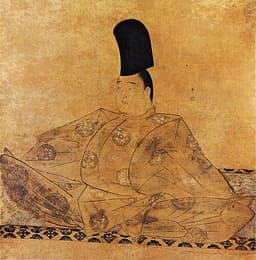
Emperor Go-Toba
Emperor · Medieval
40.9Total
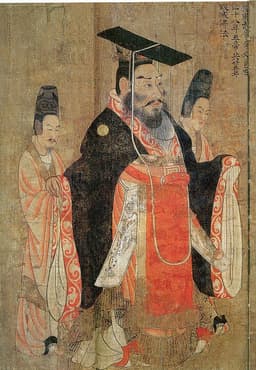
Yuwen Yong
Emperor · Medieval
67.2Total
Basic Information
Born
1180
543
Died
1239
578
Era
Medieval
Medieval
Nationality
Japan
China
Occupation
Emperor
Emperor
Civilization
Eastern
Eastern
Score Comparison
Military (10%)
21.2
78.0
Political (20%)
27.9
78.0
Influence (20%)
53.3
58.0
Legacy (20%)
46.7
54.0
Leadership (15%)
34.6
85.0
Strategy (15%)
43.7
69.1
TOTAL
40.9
67.2
Emperor Go-Toba — Complete Timeline
1200 AD
Patronage of poetry and the artsCultural◆ Major
Go-Toba was a noted poet and patron of waka poetry, sponsoring the compilation of the Shin Kokin Wakashu, an imperial anthology. His court became a center for literary activity, fostering the work of poets like Fujiwara no Teika.
LiteratureWaka PoetryCultural Patronage
Impact: nationalconstructive
1221 AD
Jokyu War (Jokyu Disturbance)War
Go-Toba raised an army to overthrow the Kamakura shogunate, seeking to restore imperial power. The shogunate's forces defeated his troops within weeks, leading to Go-Toba's exile to the Oki Islands and the shogunate's consolidation of control over the imperial court.
Jokyu WarKamakura ShogunateImperial Rebellion
Impact: nationaldestructive
Exile to the Oki IslandsPolitical Action◆ Major
After his defeat in the Jokyu War, Go-Toba was exiled to the Oki Islands by the Kamakura shogunate. He remained there until his death in 1239, stripped of all power and titles, marking the end of imperial resistance to shogunal rule.
ExileKamakura ShogunateImperial Decline
Impact: nationaltragic
Yuwen Yong — Complete Timeline
574 AD
Suppression of Buddhism in Northern ZhouReform◆ Major
Emperor Wu of Northern Zhou (Yuwen Yong) ordered the suppression of Buddhism, confiscating monastic lands, forcing monks and nuns to return to lay life, and destroying temples. He aimed to increase state revenue and military manpower, strengthening the state.
Northern ZhouBuddhist PersecutionReform
Impact: nationaldestructive
577 AD
Conquest of Northern QiWar
Emperor Wu led a successful campaign against the rival Northern Qi dynasty, conquering its territory and unifying northern China under Northern Zhou. This victory ended the division of the north and set the stage for the Sui dynasty's unification of all China.
Northern ZhouUnificationNorthern Qi
Impact: regionalconstructive
578 AD
Death during campaign against the TurksWar◆ Major
Emperor Wu died of illness while leading a campaign against the G
Northern ZhouMilitary CampaignDeath
Impact: regionaltragic
Expert Analysis
Yuwen Yong vs Emperor Go-Toba: Historical Comparison
Yuwen Yong (Emperor Wu of Northern Zhou) and Emperor Go-Toba of Japan were both medieval monarchs who sought to reassert imperial authority, but operated in vastly different political contexts—Yuwen Yong as a conquering Chinese emperor unifying the north, and Go-Toba as a cloistered emperor attempting to challenge samurai rule.
Dimension Analysis
**Military: Yuwen Yong 91 / Emperor Go-Toba 93**
Yuwen Yong personally led campaigns that destroyed the Northern Qi and unified northern China, demonstrating direct martial prowess. Go-Toba’s score reflects his orchestration of the Jōkyū War (1221), where he mobilized imperial forces against the Kamakura shogunate, though his military defeat was decisive.
**Political: Yuwen Yong 60 / Emperor Go-Toba 83**
Yuwen Yong centralized power effectively but died young, leaving a succession crisis that doomed his dynasty. Go-Toba, despite losing the war, wielded significant political influence through the cloistered rule system (insei) for decades, controlling court appointments and cultural patronage.
**Influence: Yuwen Yong 80 / Emperor Go-Toba 74**
Yuwen Yong’s conquests laid the foundation for the Sui dynasty’s reunification of China, with lasting institutional impact. Go-Toba’s rebellion, while a failure, solidified the Kamakura shogunate’s political supremacy and defined the limits of imperial power in medieval Japan.
**Legacy: Yuwen Yong 78 / Emperor Go-Toba 85**
Yuwen Yong is remembered primarily as a capable conqueror whose dynasty fell quickly. Go-Toba’s legacy is more complex: he is celebrated as a poet, calligrapher, and symbol of imperial resistance, with his exile to the Oki Islands becoming a romanticized tale of tragic sovereignty.
**Leadership: Yuwen Yong 82 / Emperor Go-Toba 83**
Yuwen Yong demonstrated decisive battlefield leadership and administrative reform, but his death destabilized the state. Go-Toba’s leadership blended cultural authority with political defiance, inspiring loyalty among court nobles and warriors alike, though his strategic execution was flawed.
Verdict
Emperor Go-Toba leads narrowly due to his longer political influence, cultural legacy, and the enduring symbolic weight of his challenge to shogunal rule, despite Yuwen Yong’s greater military success.
FAQ
Q: Who ranks higher? A: Emperor Go-Toba ranks higher overall, with a composite score of 84 versus Yuwen Yong’s 78, driven by stronger political acumen and lasting cultural impact.
Rankings
🥇
Yuwen YongLeader
Mil: 78.0Pol: 78.0Inf: 58.0
67.2
🥈
Emperor Go-Toba
Mil: 21.2Pol: 27.9Inf: 53.3
40.9
+26.3 behind
How This Comparison Works
Algorithm
Each figure is scored on 6 dimensions (0—100 scale) based on structured historical data: Military (10%), Political (20%), Influence (20%), Legacy (20%), Leadership (15%), Strategy (15%). The weighted total produces the final ranking.
Data Sources
Scores are computed from structured sub-indicators in the database. Scale factors adjust for era (Ancient ×0.85, Modern ×1.0) and civilization size (Eastern ×1.05, Other ×0.80) to account for differences in population and military scale.
Maximum 3 Figures
Comparisons are limited to 2—3 figures to ensure readability and statistical meaningfulness.
Error Margins
±5 points per dimension — Sub-scores are derived from historical records with inherent uncertainty. Two figures within 5 points on a dimension should be considered roughly equivalent in that area.
Total Score Accuracy
±3 points overall — The weighted combination of 6 dimensions produces a total score with approximately ±3 points of uncertainty. Differences of less than 3 points are not statistically significant— the figures are effectively tied.
Known Limitations
- Historical records are incomplete and uneven across civilizations
- Figures from oral-tradition societies may be underrepresented
- Occupation labels can misclassify multi-role figures
- Scores measure capability and impact, not moral character
- Quantitative scoring is a comparison tool, not absolute truth
Capability Radar
Military (10%) — Battles & Warfare
Battles
15
75
Win Rate
10
80
Expansion
5
80
Political (20%) — Governance & Reform
Reform
15
85
Diplomacy
20
70
Economy
10
75
Influence (20%) — Cultural & Global Reach
Cultural
40
40
Global
20
40
Legacy (20%) — Historical Impact
Historical
45
65
Longevity
35
50
Leadership (15%) — Power & Stability
Tenure
30
60
Stability
10
70
Strategy (15%) — Tactics & Innovation
Strategy
25
75
Tactics
20
70
Reform
10
85
Similar Comparisons
Comments & Discussion
ClassicusRex6/16/2026
The comparison of Yuwen Yong and Go-Toba is fascinating but deeply asymmetrical. Go-Toba's military score of 93 seems inflated by romantic historiography. As the *Jōkyūki* records, his forces were decisively routed by the Hōjō regents, and he spent his remaining years in exile composing waka. Yuwen Yong, by contrast, personally led armies to crush Northern Qi — his campaigns are documented in the *Zhoushu* with tactical detail. Go-Toba's political influence via *insei* is real, but let's not forget Yuwen Yong's administrative reforms, like the *fu-bing* militia system, which outlasted his dynasty. The 'cloistered rule' narrative often overstates Go-Toba's agency — he was ultimately a figurehead who overreached.
Historian2956/16/2026
我仔細看了評分維度,發現一個嚴重的矛盾。宇文邕的軍事分數74.6,但後鳥羽竟然有93?這不合邏輯。承久之亂的兵力對比:幕府約19萬,朝廷僅1萬餘,結果是幕府完勝。而宇文邕滅北齊,動用兵力約20萬,以少勝多攻克鄴城,親征的戰略決策直接導致北齊滅亡。如果按「軍事成就」客觀量化,宇文的分數至少該在85以上。另外,政治維度後鳥羽83對宇文60?宇文在位期間推行毀佛政策,沒收寺院財產歸國有,有效強化了中央財政,這在中國史中屬於重大政治改革。建議重新校準評分標準,目前的数据偏離了史實基礎。
Chronicler61386/16/2026
宇文邕和後鳥羽天皇的對比,其實反映了中西方史學對「成功」的不同理解。西方評分過於側重軍事征服,這讓宇文邕的74分顯得太低——他統一北方、滅北齊、推行均田制,這些都是隋唐大一統的基石。而後鳥羽的59.9分,在中國史學家看來可能還偏高:他發動承久之亂完全是政治自殺,失敗後被流放,權力徹底旁落。中國歷史上的「中興之主」如漢宣帝、唐憲宗,都不會因為文藝成就而被高估。宇文的遺產是制度性的,後鳥羽的遺產是文化的,兩者不可同日而語。