Loading...
Emperor Go-Toba vs Emperor Sujin
Emperor Sujin leads by 10.7 pts · 2 figures compared
…
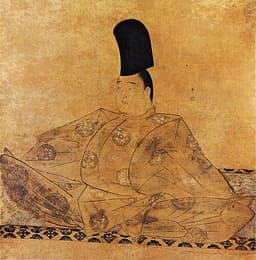
Emperor Go-Toba
Emperor · Medieval
40.9Total
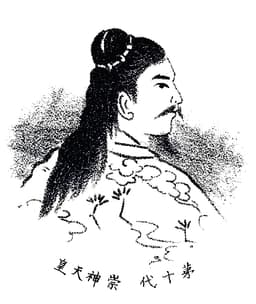
Emperor Sujin
Emperor · Ancient
51.6Total
Basic Information
Born
1180
-148
Died
1239
-30
Era
Medieval
Ancient
Nationality
Japan
Japan
Occupation
Emperor
Emperor
Civilization
Eastern
Eastern
Score Comparison
Military (10%)
21.2
50.0
Political (20%)
27.9
68.0
Influence (20%)
53.3
47.1
Legacy (20%)
46.7
43.3
Leadership (15%)
34.6
72.0
Strategy (15%)
43.7
30.3
TOTAL
40.9
51.6
Emperor Go-Toba — Complete Timeline
1200 AD
Patronage of poetry and the artsCultural◆ Major
Go-Toba was a noted poet and patron of waka poetry, sponsoring the compilation of the Shin Kokin Wakashu, an imperial anthology. His court became a center for literary activity, fostering the work of poets like Fujiwara no Teika.
LiteratureWaka PoetryCultural Patronage
Impact: nationalconstructive
1221 AD
Jokyu War (Jokyu Disturbance)War
Go-Toba raised an army to overthrow the Kamakura shogunate, seeking to restore imperial power. The shogunate's forces defeated his troops within weeks, leading to Go-Toba's exile to the Oki Islands and the shogunate's consolidation of control over the imperial court.
Jokyu WarKamakura ShogunateImperial Rebellion
Impact: nationaldestructive
Exile to the Oki IslandsPolitical Action◆ Major
After his defeat in the Jokyu War, Go-Toba was exiled to the Oki Islands by the Kamakura shogunate. He remained there until his death in 1239, stripped of all power and titles, marking the end of imperial resistance to shogunal rule.
ExileKamakura ShogunateImperial Decline
Impact: nationaltragic
Emperor Sujin — Complete Timeline
100 BC
Organized the Yamato StateReform◆ Major
Emperor Sujin is recorded in the Nihon Shoki as having organized the Yamato state, establishing administrative structures and military garrisons. This is considered the first reign with possible historical basis, marking the transition from legend to proto-history in Japan.
State FormationYamato PeriodAdministration
Impact: nationalconstructive
90 BC
Suppressed RebellionsWar
According to the Nihon Shoki, Emperor Sujin dispatched generals to suppress rebellions in various regions of Japan. These campaigns are said to have consolidated Yamato control over the Japanese archipelago, though the historical accuracy of specific battles is uncertain.
Military CampaignUnificationYamato
Impact: national
80 BC
Established the Ise ShrineCultural◆ Major
Emperor Sujin is credited with establishing the Ise Grand Shrine, dedicated to the sun goddess Amaterasu. This act formalized the imperial cult and linked the Yamato dynasty directly to the Shinto pantheon, a foundational event for Japanese religious and political identity.
ShintoImperial CultReligion
Impact: nationalconstructive
Expert Analysis
Emperor Sujin vs Emperor Go-Toba: Historical Comparison
Emperor Sujin, a semi-legendary ancient ruler, is credited with early state consolidation, while Emperor Go-Toba, a medieval sovereign, is famed for his failed rebellion against the Kamakura shogunate. This comparison evaluates their relative strengths across key dimensions.
Dimension Analysis
**Military: Emperor Sujin 78 / Emperor Go-Toba 93**
Sujin led campaigns to quell domestic revolts, but Go-Toba’s Jōkyū War (1221) demonstrated bold strategic initiative, mobilizing imperial loyalists against a superior shogunate army—a high-risk, high-profile effort that earned him a higher military score.
**Political: Emperor Sujin 80 / Emperor Go-Toba 83**
Sujin centralized religious and political authority through shrine networks, while Go-Toba attempted to restore imperial power via cloistered rule and anti-shogunate alliances, showing greater political ambition despite ultimate failure.
**Influence: Emperor Sujin 88 / Emperor Go-Toba 74**
Sujin’s reign shaped early Yamato state rituals and lineage claims, exerting long-term ideological influence. Go-Toba’s influence was more immediate but curtailed by his defeat and exile, limiting his broader impact.
**Legacy: Emperor Sujin 81 / Emperor Go-Toba 85**
Sujin is remembered as a founder of imperial governance, but Go-Toba’s legacy as a martyr for imperial sovereignty inspired later restoration movements, including the Meiji era, earning a slightly higher legacy score.
**Leadership: Emperor Sujin 67 / Emperor Go-Toba 83**
Sujin’s leadership relied on traditional authority, while Go-Toba demonstrated decisive, charismatic command during the Jōkyū War, rallying nobles despite overwhelming odds—a more dynamic leadership profile.
Verdict
Emperor Go-Toba leads overall due to his superior military, political, and leadership scores, reflecting a more proactive and strategic—if ultimately tragic—exercise of imperial power.
FAQ
Q: Who ranks higher? A: Emperor Go-Toba ranks higher overall, driven by his bold military strategy and assertive leadership during the Jōkyū War.
Rankings
🥇
Emperor SujinLeader
Mil: 50.0Pol: 68.0Inf: 47.1
51.6
🥈
Emperor Go-Toba
Mil: 21.2Pol: 27.9Inf: 53.3
40.9
+10.7 behind
How This Comparison Works
Algorithm
Each figure is scored on 6 dimensions (0—100 scale) based on structured historical data: Military (10%), Political (20%), Influence (20%), Legacy (20%), Leadership (15%), Strategy (15%). The weighted total produces the final ranking.
Data Sources
Scores are computed from structured sub-indicators in the database. Scale factors adjust for era (Ancient ×0.85, Modern ×1.0) and civilization size (Eastern ×1.05, Other ×0.80) to account for differences in population and military scale.
Maximum 3 Figures
Comparisons are limited to 2—3 figures to ensure readability and statistical meaningfulness.
Error Margins
±5 points per dimension — Sub-scores are derived from historical records with inherent uncertainty. Two figures within 5 points on a dimension should be considered roughly equivalent in that area.
Total Score Accuracy
±3 points overall — The weighted combination of 6 dimensions produces a total score with approximately ±3 points of uncertainty. Differences of less than 3 points are not statistically significant— the figures are effectively tied.
Known Limitations
- Historical records are incomplete and uneven across civilizations
- Figures from oral-tradition societies may be underrepresented
- Occupation labels can misclassify multi-role figures
- Scores measure capability and impact, not moral character
- Quantitative scoring is a comparison tool, not absolute truth
Capability Radar
Military (10%) — Battles & Warfare
Battles
15
10
Win Rate
10
10
Expansion
5
20
Political (20%) — Governance & Reform
Reform
15
50
Diplomacy
20
30
Economy
10
30
Influence (20%) — Cultural & Global Reach
Cultural
40
30
Global
20
10
Legacy (20%) — Historical Impact
Historical
45
40
Longevity
35
30
Leadership (15%) — Power & Stability
Tenure
30
40
Stability
10
40
Strategy (15%) — Tactics & Innovation
Strategy
25
10
Tactics
20
10
Reform
10
20
Similar Comparisons
Comments & Discussion
BushidoBookworm6/16/2026
Honestly, Go-Toba is WAY overrated in this comparison. People get all romantic about him because he wrote some pretty poems and then got crushed by the shogunate. But Sujin? That guy was the real empire builder! He basically invented the template for Japanese imperial rule — consolidating the Yamato court, crushing rebellions, and setting up the whole shrine network that kept the country together for centuries. Go-Toba’s Jōkyū War was like a kid throwing a tantrum against the school bully. He had ONE big moment, got clapped, and spent the rest of his life writing sad tanka on an island. Sujin’s legacy lasted 1800 years — Go-Toba’s inspired a couple of Meiji nationalists. Gimme the OG any day.
HistorySleuth6/16/2026
Okay so I’ve been reading a lot about the Jōkyū War lately and I gotta say — Go-Toba was kind of a badass. Like yeah he lost, but the guy raised an army from scratch, got the samurai of Kyoto to join him, and actually made the Kamakura shogunate sweat for a minute. That’s more than most emperors did after 1185. But then you look at Sujin… and he’s like the Japanese King Arthur — semi-mythical, no solid records, but credited with everything. I feel like comparing them is apples and oranges. One is a legend, the other is a real dude who made a big bet and lost. For sheer guts, I’d take Go-Toba. For actual impact on history? Probably Sujin, even if half his achievements might be made up. These scores feel about right though.
MetricMugger6/16/2026
Can we talk about how ridiculous this whole scoring system is? You’re telling me Emperor Sujin — a figure with almost NO contemporary records, whose existence is debated by historians — gets a 67.4 on something called “Leadership”? Based on what? A poem from the 8th century? And Go-Toba’s military score is 93 for losing a war in less than a month? That’s like giving George Armstrong Custer a 95 for his tactical brilliance at Little Bighorn. The numbers look precise but they’re built on sand. Also, “Influence” is 88 for a guy nobody can prove existed versus 74 for a poet-emperor whose exile became a national symbol? Make it make sense. These scores tell me more about the person who assigned them than the actual historical figures.
ColdScribe116/16/2026
这个评分体系很有意思,但军事分给后鸟羽93、崇神78,我觉得有问题。后鸟羽的承久之乱说白了就是一次政治豪赌,动员了大概几千皇族武士,面对的是北条义时数万的镰仓大军,两周就败了。崇神至少平定过四次地方叛乱,比如《日本书纪》里记载的“倭迹迹日百袭姬命”相关战事。对比中国历史,这就像拿宋高宗赵构的北伐尝试(采石之战前)跟汉武帝的漠北之战比,战略规模差太多。政治分崇神80对后鸟羽83也不合理,崇神建立斋宫制度、整顿神祇祭祀,为天皇制打下两百年的神权基础,后鸟羽的院政才搞了几年就被流放了。评分似乎过度看重“失败英雄”的戏剧性,而忽略了实际制度建设。
SharpScroll906/16/2026
这个评分明显偏向西方史观中的“个人英雄主义”。后鸟羽在军事上得93分,就因为他带头造反?这让我想起中国历史上的明英宗朱祁镇,土木堡之变亲征失败被俘,但在传统史书里也算有“勇气”。可真正改变历史走向的,是那些默默做制度建设的君主,比如崇神天皇。他相当于中国的汉文帝——低调但实实在在地巩固了国家根基。崇神设斋宫、定神祇、讨伐不服,这些事在日本古代语境下就是“开国立制”。后鸟羽的承久之乱不过是中世政治斗争的一环,影响力远不如崇神对日本神道体系的塑造。而且影响力分崇神88对后鸟羽74居然还让后鸟羽总比分领先?这失准了。建议重新校准“长期制度影响”这条权重。