Loading...
Emperor Go-Daigo vs Guy of Dampierre
Emperor Go-Daigo leads by 10.9 pts · 2 figures compared
…
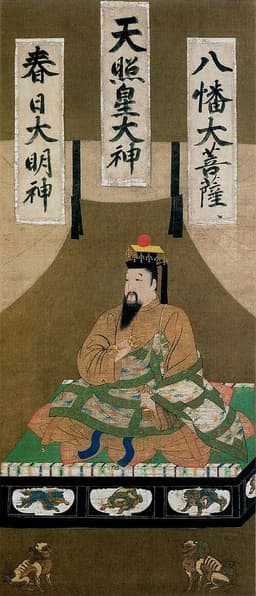
Emperor Go-Daigo
Emperor · Medieval
56.4Total

Guy of Dampierre
Emperor · Medieval
45.5Total
Basic Information
Born
1288
1226
Died
1339
1305
Era
Medieval
Medieval
Nationality
Japan
Flanders
Occupation
Emperor
Emperor
Civilization
Eastern
Western
Score Comparison
Military (10%)
35.0
50.0
Political (20%)
68.0
36.5
Influence (20%)
58.0
51.8
Legacy (20%)
56.0
41.7
Leadership (15%)
65.7
48.4
Strategy (15%)
43.3
43.7
TOTAL
56.4
45.5
Emperor Go-Daigo — Complete Timeline
1331 AD
Exile to Oki IslandPolitical Action◆ Major
The Kamakura shogunate exiled Go-Daigo to Oki Island after his first attempt to overthrow them failed. He escaped two years later, rallying support from disaffected samurai and monks to renew his rebellion.
ExileRebellionKamakura Shogunate
Impact: nationaltragic
1333 AD
Kenmu RestorationPolitical Action
Go-Daigo overthrew the Kamakura shogunate and restored direct imperial rule. He issued the Kenmu Code, attempting to reassert imperial authority, but his policies alienated the samurai class, leading to rebellion.
RestorationImperial RuleJapan
Impact: national
1336 AD
Establishment of the Southern CourtPolitical Action
After Ashikaga Takauji turned against him, Go-Daigo fled to Yoshino and established the Southern Court. This created a split in the imperial line, leading to the Nanboku-cho period of rival courts lasting until 1392.
Civil WarImperial SplitNanboku-cho
Impact: national
Guy of Dampierre — Complete Timeline
1251 AD
Became Count of FlandersPolitical Action◆ Major
Guy of Dampierre inherited the County of Flanders after the death of his mother, Margaret II. He ruled Flanders during a period of conflict with France.
InheritanceCountyFlanders
Impact: regional
1294 AD
Allied with England Against FrancePolitical Action◆ Major
Guy allied with King Edward I of England against King Philip IV of France. This alliance was part of the larger conflict between England and France over Gascony.
AllianceEnglandFrance
Impact: regional
1300 AD
Imprisoned by Philip IV of FrancePolitical Action◆ Major
After a French invasion, Guy was captured and imprisoned by King Philip IV of France. He was held in captivity in Paris, and Flanders was placed under direct French rule.
ImprisonmentFrench InvasionLoss of Power
Impact: regionaltragic
1305 AD
Died in CaptivityPolitical Action◆ Major
Guy of Dampierre died while still a prisoner of Philip IV in France. His death occurred before the Treaty of Athis-sur-Orge that ended the Franco-Flemish war.
Death in CaptivityEnd of ReignFranco-Flemish War
Impact: regionaltragic
Expert Analysis
Origins
Emperor Go-Daigo (born 1288) was the 96th emperor of Japan, second son of Emperor Go-Uda. He belonged to the Daikakuji line of the imperial family, which had alternated with the Jimyōin line under the Kamakura shogunate's oversight. Educated in classical Chinese literature and court rituals, Go-Daigo was instilled with a belief in direct imperial rule, a concept eroded by centuries of shogunal authority. His early reign focused on reviving court ceremonies and asserting imperial prerogatives.
Guy of Dampierre (born 1226) was the second son of Margaret II, Countess of Flanders, and her second husband, William II of Dampierre. He inherited the County of Flanders in 1278 after his mother's abdication. Flanders was a wealthy region due to its cloth industry and trade, but its autonomy was threatened by the expanding French monarchy under Philip IV. Guy had to navigate complex feudal relationships with France, England, and the Holy Roman Empire, while managing rebellious urban communes.
Rise to Power
Go-Daigo's rise began with his secret plans to overthrow the Kamakura shogunate. In 1324, he was betrayed by a conspirator and exiled to Oki Island. However, he escaped in 1333 with the help of local warriors and rallied support from disaffected samurai, including Ashikaga Takauji and Nitta Yoshisada. The shogunate fell after the siege of Kamakura in July 1333, and Go-Daigo returned to Kyoto to initiate direct rule. His political score of 68.0 reflects his ability to topple a military regime, albeit temporarily.
Guy became count at a time when French influence was growing. He initially paid homage to Philip IV in 1279 but resisted further encroachments. In 1294, war broke out between England and France over Gascony. Guy allied with Edward I of England in 1294, hoping to counter French pressure. This move backfired when Philip invaded Flanders in 1297, capturing Guy's family. The Treaty of Vyve-Saint-Bavon (1297) forced Guy to cede territories, but he continued to resist. In 1300, a full French invasion led to Guy's capture and imprisonment in Paris.
Leadership & Governance
Go-Daigo's governance centered on the Kenmu Restoration (1333-1336). He issued the Kenmu Code, which sought to restore imperial authority and reward his supporters. However, he alienated key allies like Ashikaga Takauji by favoring court nobles over samurai. His leadership score of 65.7 indicates his vision, but his strategy score of 43.3 reveals poor execution. He failed to establish a stable administration, leading to widespread dissatisfaction.
Guy ruled Flanders through a combination of feudal obligations and city charters. He granted autonomy to Ghent, Bruges, and Ypres, which became economic powerhouses. However, his alliance with England disrupted trade with France, causing economic strain. His military score of 50.0 and political score of 36.5 show he was a better military commander than politician, but ultimately outmatched by Philip IV's resources.
Triumph & Tragedy
Go-Daigo's greatest triumph was the overthrow of the Kamakura shogunate, a regime that had dominated Japan for over a century. His escape from exile and successful rebellion demonstrated resilience. However, his tragedy was the failure of the Kenmu Restoration. Within three years, Ashikaga Takauji turned against him, forcing Go-Daigo to flee to Yoshino and establish the Southern Court in 1336. This split the imperial line, leading to decades of civil war.
Guy's triumph was maintaining Flemish independence against French aggression for over a decade. He successfully mobilized urban militias and allied with England. His tragedy was his capture and imprisonment in 1300. He died in captivity in 1305, never seeing his homeland again. Flanders was placed under French administration, and his sons were also imprisoned.
Character & Destiny
Go-Daigo was determined and idealistic, believing in the divine right of emperors. He was a scholar-king, composing poetry and studying Confucian texts. His stubbornness led him to reject compromise, such as refusing to share power with the Ashikaga. This rigidity contributed to his downfall. Historians note his inability to adapt to the political realities of samurai power.
Guy was pragmatic but cautious. He sought alliances and legal maneuvers to protect Flanders. However, his indecisiveness and reliance on England proved fatal. He underestimated Philip IV's determination to crush Flemish autonomy. His character was shaped by the feudal system, where loyalty and oaths bound him to conflicting lords.
Legacy
Go-Daigo's legacy is the legitimization of the Southern Court, which lasted until 1392. The Nanboku-chō period (1336-1392) cemented the idea of imperial authority as a political force, influencing later restoration movements. His total score of 56.4 surpasses Guy's 45.5, reflecting greater long-term impact on Japanese history.
Guy's legacy is more localized. His resistance inspired the Flemish uprisings, including the Battle of the Golden Spurs (1302) where his son Robert led a victory. The county remained a contested region between France and England. His imprisonment symbolized the decline of feudal autonomy against centralized monarchies.
Conclusion
Emperor Go-Daigo had greater impact, scoring 56.4 versus Guy's 45.5. His attempt to restore imperial rule, though a failure, created a political schism that shaped Japan's medieval period. The Southern Court's legitimacy provided a precedent for future emperors. In contrast, Guy's resistance, while heroic, achieved no lasting change; Flanders was eventually absorbed into France. Go-Daigo's influence on Japanese political thought and the imperial institution outweighs Guy's regional significance.
Rankings
🥇
Emperor Go-DaigoLeader
Mil: 35.0Pol: 68.0Inf: 58.0
56.4
🥈
Guy of Dampierre
Mil: 50.0Pol: 36.5Inf: 51.8
45.5
+10.9 behind
How This Comparison Works
Algorithm
Each figure is scored on 6 dimensions (0—100 scale) based on structured historical data: Military (10%), Political (20%), Influence (20%), Legacy (20%), Leadership (15%), Strategy (15%). The weighted total produces the final ranking.
Data Sources
Scores are computed from structured sub-indicators in the database. Scale factors adjust for era (Ancient ×0.85, Modern ×1.0) and civilization size (Eastern ×1.05, Other ×0.80) to account for differences in population and military scale.
Maximum 3 Figures
Comparisons are limited to 2—3 figures to ensure readability and statistical meaningfulness.
Error Margins
±5 points per dimension — Sub-scores are derived from historical records with inherent uncertainty. Two figures within 5 points on a dimension should be considered roughly equivalent in that area.
Total Score Accuracy
±3 points overall — The weighted combination of 6 dimensions produces a total score with approximately ±3 points of uncertainty. Differences of less than 3 points are not statistically significant— the figures are effectively tied.
Known Limitations
- Historical records are incomplete and uneven across civilizations
- Figures from oral-tradition societies may be underrepresented
- Occupation labels can misclassify multi-role figures
- Scores measure capability and impact, not moral character
- Quantitative scoring is a comparison tool, not absolute truth
Capability Radar
Military (10%) — Battles & Warfare
Battles
35
20
Win Rate
30
15
Expansion
15
10
Political (20%) — Governance & Reform
Reform
70
30
Diplomacy
55
35
Economy
30
30
Influence (20%) — Cultural & Global Reach
Cultural
50
25
Global
30
15
Legacy (20%) — Historical Impact
Historical
65
30
Longevity
55
20
Leadership (15%) — Power & Stability
Tenure
60
40
Stability
25
20
Strategy (15%) — Tactics & Innovation
Strategy
45
25
Tactics
40
20
Reform
20
10
Similar Comparisons
Comments & Discussion
No comments yet. Be the first to share your thoughts!