Loading...
Emiliano Zapata vs Francis II Rakoczi
Emiliano Zapata leads by 2.1 pts · 2 figures compared
…
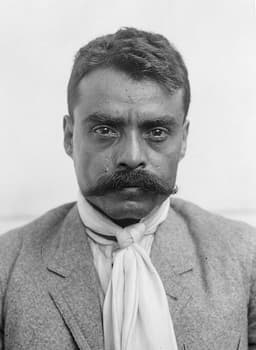
Emiliano Zapata
Revolutionary · Modern
56.3Total
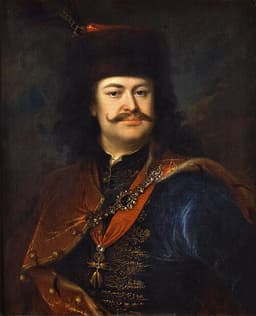
Francis II Rakoczi
Revolutionary · Modern
54.2Total
Basic Information
Born
1879
1676
Died
1919
1735
Era
Modern
Modern
Nationality
Mexico
Hungary
Occupation
Revolutionary
Revolutionary
Civilization
Western
Western
Score Comparison
Military (10%)
40.0
55.0
Political (20%)
68.0
46.6
Influence (20%)
58.0
57.2
Legacy (20%)
54.0
52.0
Leadership (15%)
54.2
57.6
Strategy (15%)
60.0
57.5
TOTAL
56.3
54.2
Emiliano Zapata — Complete Timeline
1911 AD
Plan of AyalaPolitical Action
Zapata issued the Plan of Ayala, denouncing Francisco I. Madero for failing to implement land reform. The plan called for the return of land to peasants and became the ideological foundation of the Zapatista movement.
Land ReformAgrarian MovementRevolution
Impact: nationalprogressive
1914 AD
Occupation of Mexico CityWar◆ Major
Zapata's forces, allied with Villa's Division of the North, occupied Mexico City. They held the capital for several weeks but failed to establish lasting control, highlighting the limits of their coalition.
Military OccupationRevolutionary AllianceCapital
Impact: national
Convention of AguascalientesPolitical Action◆ Major
Zapata attended the Convention of Aguascalientes, where revolutionary factions attempted to unify. He allied with Pancho Villa against Venustiano Carranza, but the convention failed to produce a stable government.
Revolutionary AlliancePolitical DivisionCivil War
Impact: national
1919 AD
Assassination at ChinamecaPolitical Action
Zapata was lured to the Hacienda de Chinameca by Colonel Jesus Guajardo, who pretended to defect. Guajardo's troops ambushed and killed Zapata, ending his leadership of the agrarian rebellion.
AssassinationBetrayalEnd of Leadership
Impact: nationaltragic
Francis II Rakoczi — Complete Timeline
1703 AD
Rákóczi's War of IndependenceWar◆ Major
Francis II Rakoczi led a major uprising against Habsburg rule in Hungary, known as R
War of IndependenceHabsburgRebellion
Impact: regional
1704 AD
Election as Prince of TransylvaniaPolitical Action◆ Major
Francis II Rakoczi was elected Prince of Transylvania by the Hungarian estates, leading the anti-Habsburg rebellion. His election marked the formal leadership of the uprising.
ElectionRebellion
Impact: regional
1708 AD
Battle of TrencinWar◆ Major
Francis II Rakoczi's forces were decisively defeated by the Habsburg army at the Battle of Trencin. The defeat marked a turning point, leading to the decline of the rebellion.
BattleDefeatTurning Point
Impact: regionaltragic
1711 AD
Exile in the Ottoman EmpirePolitical Action◆ Major
After the failure of the rebellion, Francis II Rakoczi went into exile in the Ottoman Empire. He refused to accept Habsburg amnesty and lived in Ottoman territory until his death.
ExileOttoman
Impact: regionaltragic
Expert Analysis
Emiliano Zapata vs Francis II Rakoczi
### The Rebel’s Fate: Why Zapata Died in a Trap and Rákóczi Died in Exile
One man was lured to a hacienda courtyard in 1919, expecting a shipment of guns from a defecting colonel. The other, two centuries earlier, sailed down the Danube into Ottoman territory, refusing to bow to the emperor who had crushed his armies. Emiliano Zapata and Francis II Rákóczi never met, never knew each other’s names. Yet both led peasant revolutions against entrenched power, both demanded land and liberty—and both ended their lives far from the thrones they fought. Why did one fall to a bullet and the other to a broken heart in exile? The answer lies not in their courage, but in the worlds they tried to overturn.
### Origins
Zapata was born in 1879 in Anenecuilco, a small village in the state of Morelos, Mexico. His family were mestizo peasants who had lost their communal lands to the expanding sugar haciendas under Porfirio Díaz’s dictatorship. Zapata learned early that the law favored the rich. He saw his neighbors evicted, their fields fenced off, their water rights sold. This was not an abstract injustice—it was the daily bread of rural Mexico. By contrast, Rákóczi, born in 1676, was a Hungarian magnate, one of the wealthiest landowners in the Kingdom of Hungary. His family had led previous uprisings against the Habsburgs. He grew up in castles, educated by Jesuits, surrounded by the memory of his stepfather’s rebellion. His grievance was not hunger but national humiliation: the Habsburgs had crushed Hungarian autonomy, imposed German officials, and suppressed Protestantism.
Their eras shaped them. Zapata came of age in the late nineteenth century, when positivism and progress meant railroads and foreign investment but also dispossession. Rákóczi lived in the early eighteenth century, when the Ottoman threat was receding and the Habsburgs were consolidating a Central European empire. One fought for land; the other fought for a crown.
### Rise to Power
Zapata’s path was local. In 1909, he was elected president of the village council of Anenecuilco, armed with little more than the community’s colonial land titles. When Francisco I. Madero called for revolution against Díaz in 1910, Zapata raised a peasant army in Morelos. He was not a politician; he was a jefe, a leader whose authority came from trust and shared sacrifice. By 1911, he had captured Cuautla and forced Díaz to resign. But Madero, the new president, proved unwilling to break up the haciendas. Zapata responded with the Plan of Ayala, a radical document that demanded immediate land redistribution and denounced Madero as a traitor. This was not a negotiation—it was a declaration of war against the entire political class.
Rákóczi’s rise was more aristocratic and diplomatic. After years of exile and pleading with French king Louis XIV for support, he finally raised the Kuruc flag in 1703. He did not start from a village; he started from a manor in Poland, issuing proclamations to the Hungarian nobility. His appeal was not to peasants alone, but to the entire Hungarian nation—nobles, serfs, Protestants, Catholics—against the common Habsburg enemy. In 1704, the Hungarian estates elected him Prince of Transylvania, giving him a legal title that Zapata never possessed. Rákóczi could claim to be a sovereign prince; Zapata could only claim to be the voice of the landless.
### Leadership & Governance
Zapata ruled Morelos like a wartime patriarch. He established agrarian commissions that parceled out hacienda lands to villages, abolished debt peonage, and collected taxes to fund his army. His governance was improvised, local, and deeply democratic—decisions were made in village assemblies. But he never controlled more than a few states. He could not build a national bureaucracy or a stable treasury. His military strategy was guerrilla warfare: hit, retreat, survive. He won battles but could not hold cities for long. In 1914, he allied with Pancho Villa and occupied Mexico City, but the occupation lasted only a few weeks. The urban middle class found him alien; his men wore sandals and sombreros, and they spoke of land reform as if it were the only issue that mattered.
Rákóczi, by contrast, built a state. He minted copper coins, printed newspapers, established a postal service, and created a standing army of 70,000 men. He negotiated with Peter the Great of Russia, Louis XIV of France, and even the Ottoman sultan. His rebellion was a European affair. Yet his military leadership was cautious and indecisive. At the Battle of Trencin in 1708, he failed to press an advantage, and the Habsburg counterattack shattered his forces. His political vision—a confederation of Hungarian nobles under a Habsburg prince—was too moderate for the radicals and too radical for the Habsburgs. He tried to be both a revolutionary and a statesman, and ended up satisfying neither.
### Triumph & Tragedy
Zapata’s greatest triumph was the Plan of Ayala itself. It became the moral compass of the Mexican Revolution, influencing the 1917 Constitution’s Article 27, which authorized land reform. His tragedy came in 1919, when he was assassinated at the Hacienda de Chinameca. Colonel Jesús Guajardo pretended to defect, arranged a meeting, and ordered his troops to open fire. Zapata fell in the dust, still trusting that a defector might bring him the guns he needed. He died because he believed in loyalty, and because his enemies knew how to exploit that belief.
Rákóczi’s triumph was his election as Prince of Transylvania in 1704—a moment when Hungary seemed on the verge of liberation. His tragedy unfolded slowly. After Trencin, his army melted away. In 1711, his generals signed the Treaty of Szatmár with the Habsburgs, accepting amnesty and abandoning him. Rákóczi refused to surrender. He fled to Poland, then to France, then to the Ottoman Empire, where he lived out his days in a wooden house in Tekirdağ, on the Sea of Marmara. He died in 1735, still plotting a return that never came. He died because he could not accept defeat, and because his allies had grown tired of war.
### Character & Destiny
Zapata was a man of few words and fierce convictions. He once said, “It is better to die on your feet than to live on your knees.” He was not a strategist; he was a symbol. His charisma came from his simplicity. He trusted his comrades, and that trust killed him. Rákóczi was a man of letters and diplomacy. He wrote memoirs, composed music, and corresponded with Voltaire. He was a prince who wanted to be a liberator, but he was also a man who could not stop negotiating. His caution cost him battles; his pride cost him peace.
Their personalities shaped their fates. Zapata’s directness made him a hero to the poor but a target for betrayal. Rákóczi’s complexity made him a statesman in exile but a ghost in his own country. One died in the mud of a hacienda; the other died in the dust of a foreign shore.
### Legacy
Zapata’s legacy is alive in every landless movement in Latin America. His face appears on murals, his name on Zapatista communiqués. He became the saint of the dispossessed. Rákóczi’s legacy is more ambiguous. In Hungary, he is a national hero, his portrait on banknotes, his statue in Budapest. But his rebellion failed, and Hungary remained under Habsburg rule until 1918. His tragedy was that he fought for a nation that was not yet ready to be free.
### Conclusion
Zapata and Rákóczi were both rebels, but they inhabited different worlds. Zapata’s revolution was a peasant war for land; Rákóczi’s was a noble uprising for sovereignty. One died in a trap set by a man he trusted; the other died in exile, abandoned by men he led. Their fates remind us that the shape of a rebellion—its class, its era, its geography—determines not only whether it succeeds, but how it ends. Zapata fell because he was too close to the earth; Rákóczi faded because he was too far from it. In the end, both were betrayed—one by a friend, the other by history.
Rankings
🥇
Emiliano ZapataLeader
Mil: 40.0Pol: 68.0Inf: 58.0
56.3
🥈
Francis II Rakoczi
Mil: 55.0Pol: 46.6Inf: 57.2
54.2
+2.1 behind
How This Comparison Works
Algorithm
Each figure is scored on 6 dimensions (0—100 scale) based on structured historical data: Military (10%), Political (20%), Influence (20%), Legacy (20%), Leadership (15%), Strategy (15%). The weighted total produces the final ranking.
Data Sources
Scores are computed from structured sub-indicators in the database. Scale factors adjust for era (Ancient ×0.85, Modern ×1.0) and civilization size (Eastern ×1.05, Other ×0.80) to account for differences in population and military scale.
Maximum 3 Figures
Comparisons are limited to 2—3 figures to ensure readability and statistical meaningfulness.
Error Margins
±5 points per dimension — Sub-scores are derived from historical records with inherent uncertainty. Two figures within 5 points on a dimension should be considered roughly equivalent in that area.
Total Score Accuracy
±3 points overall — The weighted combination of 6 dimensions produces a total score with approximately ±3 points of uncertainty. Differences of less than 3 points are not statistically significant— the figures are effectively tied.
Known Limitations
- Historical records are incomplete and uneven across civilizations
- Figures from oral-tradition societies may be underrepresented
- Occupation labels can misclassify multi-role figures
- Scores measure capability and impact, not moral character
- Quantitative scoring is a comparison tool, not absolute truth
Capability Radar
Military (10%) — Battles & Warfare
Battles
45
65
Win Rate
50
55
Expansion
35
45
Political (20%) — Governance & Reform
Reform
70
55
Diplomacy
40
50
Economy
35
40
Influence (20%) — Cultural & Global Reach
Cultural
65
60
Global
55
45
Legacy (20%) — Historical Impact
Historical
70
65
Longevity
65
55
Leadership (15%) — Power & Stability
Tenure
30
50
Stability
25
30
Strategy (15%) — Tactics & Innovation
Strategy
50
65
Tactics
55
60
Reform
60
50
Similar Comparisons
Comments & Discussion
RebelTrap6/16/2026
The real difference isn't tactics—it's trust. Zapata walked into that Chinameca hacienda because he genuinely believed Colonel Guajardo had defected. That tells you everything about how peasant revolutions work: they rely on personal honor and local networks. Rákóczi, an aristocrat, knew better than to trust imperial promises. Zapata should've had a spy network, not a handshake deal.|en
地权猎手6/16/2026
别拿匈牙利贵族跟墨西哥农民比。拉科齐的地产比整个莫雷洛斯州都大,他打的是民族独立战,不是土地革命。萨帕塔面对的是糖业庄园的锁链和外国资本,他失败在1910年代的墨西哥根本没有阶级联盟的可能。两人结局不同,因为一个失去的是王位,另一个失去的是饭碗。|zh
DataSkeptic6/16/2026
The exile vs. assassination framing is romantic nonsense. Both leaders failed militarily—Zapata's Army of the South never took Mexico City, Rákóczi's Kuruc forces collapsed after 1708. The real question is territorial control. Zapata controlled Morelos completely for three years; Rákóczi lost his stronghold of Munkács in 1711. That's why bullets got Zapata and the Dardanelles got Rákóczi. Geography determines fate, not symbolism.|en
古典学粉丝6/16/2026
其实两人都陷入了相同的困境——被制度化暴力吞噬。萨帕塔死于叛徒设局,拉科齐死于奥斯曼帝国的外交冷漠。但更关键的是,萨帕塔的"土地与自由"没有继承者结构,拉科齐至少留了《回忆录》给后代。一个死得干脆,一个死得沉默,但都没有改变权力格局。历史只记住他们的名字,却没学他们的教训。|zh
Revisionist_Edge6/16/2026
Spare me the peasant martyr narrative. Zapata wasn't betrayed by "the system"—he was betrayed by his own naivete in a war where everyone else carried loaded pistols. Rákóczi at least had the sense to negotiate exile after the Treaty of Szatmár. Zapata died because he believed in loyalty in a revolution that ran on treachery. That's not tragedy; that's poor strategy.|en