Loading...
Ellen Johnson Sirleaf vs Julius Caesar
Julius Caesar leads by 21.9 pts · 2 figures compared
…
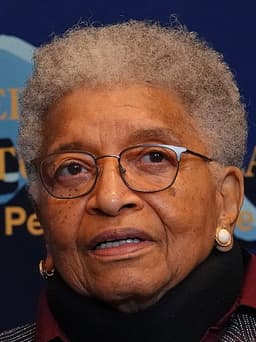
Ellen Johnson Sirleaf
Politician · Modern
60.9Total

Julius Caesar
General · Ancient
82.8Total
Basic Information
Born
1938
-100
Died
—
-44
Era
Modern
Ancient
Nationality
Liberia
Roman Republic
Occupation
Politician
General
Civilization
Other
Western
Score Comparison
Military (10%)
50.0
88.0
Political (20%)
65.0
78.0
Influence (20%)
72.0
85.0
Legacy (20%)
52.0
82.0
Leadership (15%)
72.0
80.0
Strategy (15%)
43.7
85.0
TOTAL
60.9
82.8
Ellen Johnson Sirleaf — Complete Timeline
2005 AD
Election as President of LiberiaPolitical Action
Sirleaf won the 2005 Liberian presidential election, defeating George Weah in a runoff. She became the first elected female head of state in Africa. Her victory was seen as a new beginning for Liberia after years of civil war.
ElectionWomen's LeadershipDemocracy
Impact: globalprogressive
2006 AD
Establishment of the Truth and Reconciliation CommissionPolitical Action◆ Major
Sirleaf's government established the Truth and Reconciliation Commission (TRC) to investigate human rights abuses during Liberia's civil wars. The TRC aimed to promote national healing and accountability, though its recommendations were not fully implemented.
Truth CommissionReconciliationHuman Rights
Impact: nationalconstructive
2011 AD
Receipt of the Nobel Peace PrizeCultural◆ Major
Sirleaf was awarded the Nobel Peace Prize jointly with Leymah Gbowee and Tawakkol Karman for their non-violent struggle for the safety of women and for women's rights to full participation in peace-building work. The prize recognized her efforts to promote peace and reconciliation in Liberia.
Nobel PrizePeaceWomen's Rights
Impact: globalprogressive
2018 AD
Completion of two presidential termsPolitical Action◆ Major
Sirleaf completed her second term as president and peacefully transferred power to George Weah, who won the 2017 election. This marked the first peaceful democratic transition in Liberia in over 70 years, solidifying her legacy as a champion of democracy.
DemocracyTransitionLegacy
Impact: nationalconstructive
Julius Caesar — Complete Timeline
58 BC
Gallic WarsWar◆ Major
Caesar, as proconsul of Gaul, launched a series of campaigns that conquered all of Gaul (modern France, Belgium, and parts of Switzerland). He fought numerous battles, including against the Helvetii, the Belgae, and the Gallic chieftain Vercingetorix. The wars brought immense wealth and a loyal army to Caesar.
Gallic WarsConquestRoman Expansion
Impact: regional
49 BC
Crossing the RubiconPolitical Action◆ Major
Caesar led Legio XIII across the Rubicon River into Italy, defying the Roman Senate's order to disband his army. This act triggered a civil war against Pompey and the Optimates, ultimately leading to Caesar's dictatorship and the end of the Roman Republic.
Roman Civil WarEnd of RepublicPower Struggle
Impact: global
48 BC
Battle of PharsalusWar◆ Major
Caesar's outnumbered army defeated the larger forces of Pompey the Great at Pharsalus in Greece. Caesar's tactical use of a reserve line to counter Pompey's cavalry charge proved decisive. Pompey fled to Egypt, where he was assassinated, leaving Caesar as the undisputed master of the Roman world.
Roman Civil WarBattleDecisive Victory
Impact: regional
44 BC
Appointment as Dictator for LifePolitical Action◆ Major
The Roman Senate appointed Caesar dictator perpetuo (dictator for life), granting him unprecedented personal power. This move concentrated military, legislative, and judicial authority in one person, effectively ending the Roman Republic's traditional system of checks and balances and alarming many senators.
DictatorshipEnd of RepublicPower Consolidation
Impact: regionaldestructive
Assassination on the Ides of MarchPolitical Action◆ Major
A group of Roman senators, led by Marcus Junius Brutus and Gaius Cassius Longinus, stabbed Caesar to death at a meeting of the Senate in the Theatre of Pompey. The assassination was intended to restore the Republic, but instead triggered another civil war that led to the rise of the Roman Empire.
AssassinationRoman PoliticsEnd of Republic
Impact: globaldestructive
Expert Analysis
ellen-johnson-sirleaf-vs-julius-caesar
The Rubicon and the Ballot Box
On March 15, 44 BCE, Julius Caesar fell beneath the daggers of sixty Roman senators, his blood pooling at the foot of Pompey’s statue. Nearly two millennia later, on January 22, 2018, Ellen Johnson Sirleaf stood before the Liberian parliament in Monrovia, handing over power to her successor, George Weah, a former soccer star who had once been her political rival. One death ended a republic; one election fulfilled a promise. Both leaders had shattered glass ceilings—Caesar the military one that separated Rome from its provinces, Sirleaf the political one that separated Africa from female leadership. Yet their endings could not have been more different. Why did Caesar’s ambition destroy the very system that raised him, while Sirleaf’s humility helped rebuild a broken nation?
Origins
Caesar was born into the patrician Julian clan in 100 BCE, a time when the Roman Republic was already fraying at the edges. His uncle, Gaius Marius, had reformed the army and challenged senatorial authority, setting a precedent for strongmen. Caesar grew up in a world of civil wars, proscriptions, and shifting alliances, where the old aristocratic consensus was dying. He learned early that survival meant mastering both the sword and the speech.
Sirleaf was born in 1938 in Monrovia, Liberia, into a different kind of chaos. Her father was the first indigenous Liberian to sit in the national legislature, but the country was dominated by an Americo-Liberian elite that had ruled since independence. She married young, earned a degree in accounting, and then fled Liberia’s civil wars—first to the United States, then to Kenya. While Caesar was raised on tales of conquest and senatorial debate, Sirleaf was raised on exile and survival. Her era gave her not legions, but international institutions: the World Bank, Citibank, and the United Nations.
Rise to Power
Caesar’s path was a masterclass in calculated risk. He borrowed fortunes to fund public games, built a network of clients, and forged the First Triumvirate with Pompey and Crassus. His military command in Gaul from 58 to 50 BCE was not just conquest—it was a personal empire. He crossed the Rubicon in 49 BCE, a deliberate act of treason, because he understood that the Republic had become a stage for individuals, not institutions.
Sirleaf’s rise was slower, more patient, and far less dramatic. She returned to Liberia in 1997 to run for president against Charles Taylor, the warlord who had plunged the country into ruin. She lost—and then was charged with treason and forced into exile again. She did not cross any rivers with an army; she crossed borders with a briefcase. When she finally won the 2005 election, it was not through a coup but through a runoff against George Weah, a vote that international observers deemed free and fair. Her turning point was not a military gamble but a democratic one.
Leadership & Governance
Caesar ruled as dictator, first for ten years, then for life. He reformed the calendar, granted citizenship to Gauls, and launched massive building projects. But he also centralized power, packed the Senate with his supporters, and treated the Republic as a personal possession. His military genius—88 on the scale—was undeniable: the sieges of Alesia and the rapid campaigns in Egypt and Asia Minor were tactical marvels. Yet his political score of 78 reflects a fatal flaw: he could conquer, but he could not compromise. When offered a crown, he refused theatrically—but the suspicion lingered.
Sirleaf governed not as a dictator but as a healer. She established Liberia’s Truth and Reconciliation Commission in 2006 to investigate the atrocities of the civil wars, knowing that some of the accused had been her allies. She forgave Liberia’s foreign debt, attracted investment, and oversaw economic growth. Her military score of 30 reflects a country where the army had been dismantled; her leadership score of 73 reflects something rarer: the ability to govern without an army. She did not reform the calendar; she reformed a society.
Triumph & Tragedy
Caesar’s greatest triumph was the conquest of Gaul, which brought him glory, wealth, and a loyal army. His tragedy was that he could not stop. After defeating his rivals in the civil war, he had no plan for peace except more power. His assassination on the Ides of March was not the end of his ambition but the beginning of a cycle: Octavian, Mark Antony, and a second civil war that finally killed the Republic.
Sirleaf’s greatest triumph was winning the Nobel Peace Prize in 2011, jointly with Leymah Gbowee and Tawakkol Karman. It was a recognition not of conquest but of courage. Her tragedy was subtler: Liberia remained poor, corruption persisted, and her own sons were accused of war profiteering. She completed two terms and transferred power in 2018—a peaceful transition that Liberia had not seen in decades. Her tragedy was not a violent death but the slow, grinding work of building a democracy where none had existed.
Character & Destiny
Caesar was brilliant, ambitious, and impatient. He wrote his own commentaries, shaped his own legend, and believed that history belonged to the bold. His character drove him to cross the Rubicon because he could not imagine losing. That same character made him unable to imagine sharing power. His destiny was to die as he had lived: at the center of a storm.
Sirleaf was pragmatic, resilient, and deeply aware of her limits. She called herself the “Iron Lady of Liberia,” but her iron was not for war—it was for endurance. She survived exile, imprisonment, and the death of her husband. Her character drove her to accept the Nobel Prize not as a personal honor but as a mandate. She left office not because she was forced out, but because she had promised to.
Legacy
Caesar’s legacy is the Roman Empire. His name became a title—Kaiser, Tsar—and his reforms outlasted the Republic. But his legacy is also a warning: the man who saves the republic may also destroy it. He is remembered as a genius and a tyrant, a reformer and a usurper.
Sirleaf’s legacy is more fragile. She is remembered as the first elected female head of state in Africa—a title that carries both pride and burden. Her completion of two terms set a precedent in a region where leaders often cling to power. Her influence score of 71 reflects a quieter triumph: she showed that a woman could lead a post-conflict nation without becoming a warlord. She did not build an empire; she built a precedent.
Conclusion
Caesar and Sirleaf stand at opposite ends of the human experiment in power. One conquered with legions, the other with laws. One died in a Senate chamber, the other left through a ballot box. Their differences are not just personal—they are historical. Caesar lived in a world where the ultimate authority was the sword; Sirleaf lived in a world where the ultimate authority, however flawed, was the vote. The Rubicon and the ballot box are two different rivers. Crossing one starts a war; crossing the other can end one. Both leaders crossed theirs, but only one understood that the greatest conquest is not of territory, but of trust.
Rankings
🥇
Julius CaesarLeader
Mil: 88.0Pol: 78.0Inf: 85.0
82.8
🥈
Ellen Johnson Sirleaf
Mil: 50.0Pol: 65.0Inf: 72.0
60.9
+21.9 behind
How This Comparison Works
Algorithm
Each figure is scored on 6 dimensions (0—100 scale) based on structured historical data: Military (10%), Political (20%), Influence (20%), Legacy (20%), Leadership (15%), Strategy (15%). The weighted total produces the final ranking.
Data Sources
Scores are computed from structured sub-indicators in the database. Scale factors adjust for era (Ancient ×0.85, Modern ×1.0) and civilization size (Eastern ×1.05, Other ×0.80) to account for differences in population and military scale.
Maximum 3 Figures
Comparisons are limited to 2—3 figures to ensure readability and statistical meaningfulness.
Error Margins
±5 points per dimension — Sub-scores are derived from historical records with inherent uncertainty. Two figures within 5 points on a dimension should be considered roughly equivalent in that area.
Total Score Accuracy
±3 points overall — The weighted combination of 6 dimensions produces a total score with approximately ±3 points of uncertainty. Differences of less than 3 points are not statistically significant— the figures are effectively tied.
Known Limitations
- Historical records are incomplete and uneven across civilizations
- Figures from oral-tradition societies may be underrepresented
- Occupation labels can misclassify multi-role figures
- Scores measure capability and impact, not moral character
- Quantitative scoring is a comparison tool, not absolute truth
Capability Radar
Military (10%) — Battles & Warfare
Battles
24
95
Win Rate
25
92
Expansion
30
97
Political (20%) — Governance & Reform
Reform
70
90
Diplomacy
75
85
Economy
60
82
Influence (20%) — Cultural & Global Reach
Cultural
60
88
Global
65
94
Legacy (20%) — Historical Impact
Historical
65
95
Longevity
55
96
Leadership (15%) — Power & Stability
Tenure
65
75
Stability
55
60
Strategy (15%) — Tactics & Innovation
Strategy
30
94
Tactics
35
96
Reform
35
88
Similar Comparisons
Comments & Discussion
No comments yet. Be the first to share your thoughts!