Loading...
Elizabeth of Russia vs Imam Quli Khan
Elizabeth of Russia leads by 9.3 pts · 2 figures compared
…

Elizabeth of Russia
Emperor · Modern
59.3Total
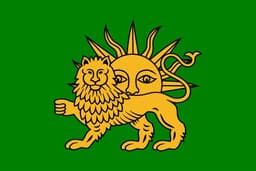
Imam Quli Khan
Emperor · Modern
50.0Total
Basic Information
Born
1709
1582
Died
1762
1644
Era
Modern
Modern
Nationality
Russia
Khanate of Bukhara
Occupation
Emperor
Emperor
Civilization
Western
Eastern
Score Comparison
Military (10%)
70.0
50.0
Political (20%)
60.0
61.3
Influence (20%)
55.0
51.0
Legacy (20%)
54.0
39.2
Leadership (15%)
72.0
68.0
Strategy (15%)
52.5
30.3
TOTAL
59.3
50.0
Elizabeth of Russia — Complete Timeline
1741 AD
Accession as Empress of RussiaPolitical Action◆ Major
Elizabeth seized the throne in a bloodless coup, overthrowing the infant Ivan VI and his regent. She was supported by the Preobrazhensky Regiment and popular sentiment against German dominance. Her accession restored the line of Peter the Great and was celebrated as a national revival.
CoupSuccessionNational Revival
Impact: nationalconstructive
1752 AD
Construction of the Catherine PalaceCultural
Elizabeth commissioned the reconstruction of the Catherine Palace in Tsarskoye Selo, designed by Francesco Bartolomeo Rastrelli. The palace, with its elaborate Baroque style, became a symbol of imperial opulence and a center of court life. It is a UNESCO World Heritage site.
ArchitectureBaroqueTsarskoye Selo
Impact: nationalconstructive
1753 AD
Abolition of Internal Customs TariffsReform◆ Major
Elizabeth abolished internal customs tariffs and tolls within Russia, which had hindered trade and economic development. This reform simplified taxation, promoted internal commerce, and increased state revenue through higher import duties. It was a significant step toward economic modernization.
Economic ReformTradeTaxation
Impact: nationalconstructive
1755 AD
Founding of Moscow UniversityCultural◆ Major
Elizabeth signed the decree establishing Moscow University, the first university in Russia, on the initiative of Mikhail Lomonosov. The university became a center of learning and science, promoting education and reducing reliance on foreign scholars. It remains a leading institution today.
EducationUniversityLomonosov
Impact: nationalconstructive
1756 AD
Participation in the Seven Years' WarWar◆ Major
Elizabeth led Russia into the Seven Years' War against Prussia, allying with Austria and France. Russian forces achieved major victories, including the occupation of Berlin in 1760. The war drained Russian resources but demonstrated its military power. Elizabeth's death in 1762 led to a reversal of policy.
Seven Years' WarPrussiaBerlin
Impact: global
Imam Quli Khan — Complete Timeline
1611 AD
Accession to the throne of BukharaPolitical Action◆ Major
Imam Quli Khan became the Jani-Begid ruler of the Khanate of Bukhara. His reign was marked by stability and relative peace, as he maintained the territorial gains of his predecessors.
Jani-BegidsAccessionBukhara
Impact: regionalconstructive
1620 AD
Conflict with the KazakhsWar
Imam Quli Khan led military campaigns against the Kazakh Khanate to defend Bukhara's northern borders. These conflicts were inconclusive but prevented Kazakh incursions into Transoxiana.
Jani-BegidsWarKazakhs
Impact: regional
1641 AD
Abdication to perform HajjPolitical Action◆ Major
Imam Quli Khan abdicated the throne to perform the Hajj pilgrimage to Mecca. He was succeeded by his brother Nadir Muhammad. This act was unusual for a ruler and demonstrated his religious devotion.
Jani-BegidsAbdicationHajj
Impact: regional
Expert Analysis
Origins
Elizabeth Petrovna (1709–1762) was the daughter of Peter the Great and Catherine I. Born into the Romanov dynasty, she grew up in a court filled with intrigue. Her mother's death and her father's remarriage left her in a precarious position. She was educated in French and Russian, but her early life was marked by political marginalization under Empress Anna and later under the regency of Anna Leopoldovna. Her charm and popularity with the guards became her assets.
Imam Quli Khan (c. 1582–1642) was a Jani-Begid ruler of the Khanate of Bukhara, part of the Ashtarkhanid dynasty. Little is known of his early life, but he ascended the throne in 1611 after the death of his father, Din Muhammad Khan. The Khanate of Bukhara was a fragmented region, contested by the Safavids and the Kazakhs. Imam Quli Khan's background was shaped by the need to consolidate power in a decentralized realm.
Rise to Power
Elizabeth's rise was dramatic. In 1741, she led a bloodless coup with the Preobrazhensky Regiment, overthrowing the infant Ivan VI and his regent. She was proclaimed Empress at age 32. Her legitimacy was contested, but she secured support by promising to restore Peter the Great's legacy. Her reign began with a purge of German advisors, replacing them with Russian nobles.
Imam Quli Khan's accession was more straightforward. He inherited the throne after his father's death in 1611. His early reign focused on stabilizing the khanate after internal strife. He faced threats from the Kazakhs and the Safavids but managed to maintain Bukhara's independence through diplomacy and limited military campaigns.
Leadership & Governance
Elizabeth governed with a mix of autocracy and indulgence. She abolished internal customs tariffs in 1754, stimulating trade. She founded Moscow University in 1755, promoting education. However, she was also known for her lavish spending, commissioning the Catherine Palace. Her leadership style was personal and charismatic, but she relied heavily on favorites like Alexei Razumovsky. She scored 72.0 in leadership, reflecting her ability to inspire loyalty.
Imam Quli Khan ruled as a traditional Islamic monarch. He maintained stability through a balance of tribal alliances and religious legitimacy. He supported the construction of madrasas and mosques, but his governance was less transformative. His political score of 61.3 indicates competent administration, but his legacy was limited by the lack of major reforms. He abdicated in 1642 to perform Hajj, a move that reflected his piety but also his disengagement from governance.
Triumph & Tragedy
Elizabeth's greatest triumph was Russia's success in the Seven Years' War. Her armies defeated Frederick the Great at Kunersdorf in 1759, and Berlin was briefly captured. However, her death in 1762 led to her successor Peter III withdrawing from the war, nullifying Russia's gains. Her founding of Moscow University was a lasting achievement. Her tragedy was her failure to secure a stable succession, as she left no direct heir, leading to a coup after her death.
Imam Quli Khan's triumph was maintaining Bukhara's independence and stability for over three decades. His conflict with the Kazakhs prevented major invasions, though these campaigns were inconclusive. His abdication for Hajj was a personal triumph but a political gamble; his brother Nadir Muhammad succeeded him, and the khanate remained stable. His tragedy was his limited impact beyond his reign; his scores in legacy (39.2) and influence (51.0) reflect a ruler who did not leave a lasting mark.
Character & Destiny
Elizabeth was charismatic, energetic, and pleasure-loving. She had a strong sense of duty but also a tendency to procrastinate. Her decision to enter the Seven Years' War was driven by a desire to avenge her father's defeat at Narva, showing her emotional attachment to legacy. Her death at age 52 cut short her plans, and her successor's policies reversed many of her efforts.
Imam Quli Khan was pious and cautious. His decision to abdicate for Hajj was unusual for a ruler and reflected his personal faith over political ambition. He was a capable administrator but not a visionary. His character led him to prioritize spiritual fulfillment over dynastic expansion, limiting his historical footprint.
Legacy
Elizabeth's legacy is mixed. She is remembered as a patron of arts and education, and her reign strengthened Russia's position in Europe. However, her domestic reforms were limited, and the Seven Years' War gains were lost. Her overall score of 59.3 reflects a competent but not transformative ruler.
Imam Quli Khan's legacy is even more modest. He is remembered in Central Asia as a just ruler, but his achievements did not outlast his reign. His score of 50.0 places him below average among historical figures. His abdication for Hajj is a unique footnote, but it did not lead to significant cultural or political change.
Conclusion
Elizabeth of Russia clearly had greater impact than Imam Quli Khan. Her military score of 70.0 versus his 50.0 reflects her leadership in a major war that reshaped European power balances. Her political reforms, though limited, had lasting effects, while Imam Quli Khan's reign was primarily about stability. Elizabeth's legacy is tied to Russia's emergence as a great power, while Imam Quli Khan's is confined to a brief period of Bukhara's history. The score gap of 9.3 points understates the difference in global influence. Elizabeth's foundation of Moscow University alone created an institution that continues to educate leaders, while Imam Quli Khan's contributions have faded. Thus, Elizabeth of Russia had a greater and more enduring impact.
Rankings
🥇
Elizabeth of RussiaLeader
Mil: 70.0Pol: 60.0Inf: 55.0
59.3
🥈
Imam Quli Khan
Mil: 50.0Pol: 61.3Inf: 51.0
50.0
+9.3 behind
How This Comparison Works
Algorithm
Each figure is scored on 6 dimensions (0—100 scale) based on structured historical data: Military (10%), Political (20%), Influence (20%), Legacy (20%), Leadership (15%), Strategy (15%). The weighted total produces the final ranking.
Data Sources
Scores are computed from structured sub-indicators in the database. Scale factors adjust for era (Ancient ×0.85, Modern ×1.0) and civilization size (Eastern ×1.05, Other ×0.80) to account for differences in population and military scale.
Maximum 3 Figures
Comparisons are limited to 2—3 figures to ensure readability and statistical meaningfulness.
Error Margins
±5 points per dimension — Sub-scores are derived from historical records with inherent uncertainty. Two figures within 5 points on a dimension should be considered roughly equivalent in that area.
Total Score Accuracy
±3 points overall — The weighted combination of 6 dimensions produces a total score with approximately ±3 points of uncertainty. Differences of less than 3 points are not statistically significant— the figures are effectively tied.
Known Limitations
- Historical records are incomplete and uneven across civilizations
- Figures from oral-tradition societies may be underrepresented
- Occupation labels can misclassify multi-role figures
- Scores measure capability and impact, not moral character
- Quantitative scoring is a comparison tool, not absolute truth
Capability Radar
Military (10%) — Battles & Warfare
Battles
60
20
Win Rate
55
25
Expansion
60
20
Political (20%) — Governance & Reform
Reform
55
40
Diplomacy
65
35
Economy
60
40
Influence (20%) — Cultural & Global Reach
Cultural
65
30
Global
55
15
Legacy (20%) — Historical Impact
Historical
60
25
Longevity
55
20
Leadership (15%) — Power & Stability
Tenure
70
60
Stability
50
45
Strategy (15%) — Tactics & Innovation
Strategy
65
20
Tactics
40
20
Reform
50
15
Similar Comparisons
Comments & Discussion
No comments yet. Be the first to share your thoughts!