Loading...
Elizabeth of Russia vs Zayed bin Sultan Al Nahyan
Zayed bin Sultan Al Nahyan leads by 4.5 pts · 2 figures compared
…

Elizabeth of Russia
Emperor · Modern
59.3Total
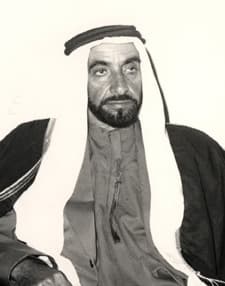
Zayed bin Sultan Al Nahyan
Emperor · Modern
63.8Total
Basic Information
Born
1709
1918
Died
1762
2004
Era
Modern
Modern
Nationality
Russia
UAE
Occupation
Emperor
Emperor
Civilization
Western
Middle Eastern
Score Comparison
Military (10%)
70.0
11.3
Political (20%)
60.0
82.0
Influence (20%)
55.0
68.0
Legacy (20%)
54.0
72.0
Leadership (15%)
72.0
85.0
Strategy (15%)
52.5
25.7
TOTAL
59.3
63.8
Elizabeth of Russia — Complete Timeline
1741 AD
Accession as Empress of RussiaPolitical Action◆ Major
Elizabeth seized the throne in a bloodless coup, overthrowing the infant Ivan VI and his regent. She was supported by the Preobrazhensky Regiment and popular sentiment against German dominance. Her accession restored the line of Peter the Great and was celebrated as a national revival.
CoupSuccessionNational Revival
Impact: nationalconstructive
1752 AD
Construction of the Catherine PalaceCultural
Elizabeth commissioned the reconstruction of the Catherine Palace in Tsarskoye Selo, designed by Francesco Bartolomeo Rastrelli. The palace, with its elaborate Baroque style, became a symbol of imperial opulence and a center of court life. It is a UNESCO World Heritage site.
ArchitectureBaroqueTsarskoye Selo
Impact: nationalconstructive
1753 AD
Abolition of Internal Customs TariffsReform◆ Major
Elizabeth abolished internal customs tariffs and tolls within Russia, which had hindered trade and economic development. This reform simplified taxation, promoted internal commerce, and increased state revenue through higher import duties. It was a significant step toward economic modernization.
Economic ReformTradeTaxation
Impact: nationalconstructive
1755 AD
Founding of Moscow UniversityCultural◆ Major
Elizabeth signed the decree establishing Moscow University, the first university in Russia, on the initiative of Mikhail Lomonosov. The university became a center of learning and science, promoting education and reducing reliance on foreign scholars. It remains a leading institution today.
EducationUniversityLomonosov
Impact: nationalconstructive
1756 AD
Participation in the Seven Years' WarWar◆ Major
Elizabeth led Russia into the Seven Years' War against Prussia, allying with Austria and France. Russian forces achieved major victories, including the occupation of Berlin in 1760. The war drained Russian resources but demonstrated its military power. Elizabeth's death in 1762 led to a reversal of policy.
Seven Years' WarPrussiaBerlin
Impact: global
Zayed bin Sultan Al Nahyan — Complete Timeline
1970 AD
Oil Revenue Investment in InfrastructureReform◆ Major
After the discovery of oil in Abu Dhabi in the 1950s, Zayed directed oil revenues toward building modern infrastructure: roads, hospitals, schools, and housing. This transformed Abu Dhabi from a poor region into a wealthy state.
OilDevelopmentInfrastructure
Impact: nationalconstructive
1971 AD
Formation of the United Arab EmiratesPolitical Action
Zayed bin Sultan Al Nahyan, as ruler of Abu Dhabi, played a key role in uniting seven emirates to form the United Arab Emirates on December 2, 1971. He became the first President, a position he held until his death.
UnificationUAEIndependence
Impact: regionalconstructive
1990 AD
Environmental Conservation InitiativesReform
Zayed established the Zayed International Prize for the Environment and implemented policies to protect wildlife and habitats, including the creation of nature reserves. He was a pioneer in environmentalism in the Gulf region.
EnvironmentConservationAwards
Impact: regionalconstructive
Women's Rights ReformsReform◆ Major
Zayed supported women's education and employment, appointing women to government positions and promoting their participation in the workforce. These reforms were progressive for the region at the time.
Women's RightsEducationReform
Impact: nationalprogressive
2004 AD
Death and LegacyOther◆ Major
Zayed died on November 2, 2004, after a long illness. His funeral drew massive crowds, and he was mourned as the founding father of the UAE. His legacy includes a stable, prosperous federation.
DeathLegacyFounding Father
Impact: nationaltragic
Expert Analysis
Origins
Elizabeth Petrovna was born on December 29, 1709, in Kolomenskoye, Russia, the daughter of Peter the Great and Catherine I. She grew up in a court of reform and expansion, receiving an education in French, dancing, and etiquette. Her father's death in 1725 plunged her into a precarious position, as she was passed over for the throne in favor of her half-brother and later her cousin. Elizabeth's early years were marked by political intrigue and relative obscurity, living on her estates and cultivating support among the guards regiments. Her charm and piety endeared her to the common soldiers, a connection that would prove decisive.
Zayed bin Sultan Al Nahyan was born in 1918 in Abu Dhabi, then a poor sheikhdom reliant on pearl diving and fishing. He was the youngest of four sons of Sheikh Sultan bin Zayed, who ruled until his assassination in 1926. Zayed grew up in the desert among the Bedouin tribes, learning traditional skills like falconry and camel breeding. He was deeply influenced by his father's emphasis on tribal unity and justice. His formal education was limited, but he gained practical knowledge of tribal politics and resource management. The discovery of oil in the 1950s would transform his world, but his formative years were rooted in scarcity and survival.
Rise to Power
Elizabeth rose to power through a bloodless coup on December 6, 1741. Discontent with the rule of the infant Ivan VI and his regent, Anna Leopoldovna, boiled over among the Preobrazhensky Regiment. Elizabeth, leveraging her father's legacy and personal popularity, marched to the Winter Palace with 300 guards. The coup succeeded without bloodshed; Ivan VI was imprisoned and later killed. Elizabeth was crowned Empress of Russia on April 25, 1742. Her accession was celebrated as a restoration of Peter the Great's line, and she quickly consolidated power by purging foreign advisors and promoting Russian nobles.
Zayed's rise was more gradual. He became the ruler of Abu Dhabi in 1966 after a brief power struggle with his brother, Sheikh Shakhbut, who was deemed too conservative to manage the new oil wealth. Zayed's accession was supported by the British and by the Al Nahyan family. He immediately began modernizing the emirate, using oil revenues for infrastructure and welfare. His vision extended beyond Abu Dhabi: he saw the potential for unity among the Trucial States. In 1971, he played the central role in forming the United Arab Emirates, becoming its first president, a position he held until his death.
Leadership & Governance
Elizabeth governed Russia with a blend of autocracy and benevolence. She restored the Senate's authority, abolished internal customs tariffs in 1754 to stimulate trade, and established the first Russian university, Moscow University, in 1755. She also founded the Academy of Arts and supported the construction of the Catherine Palace. Her rule was marked by a revival of Russian culture and a reduction of German influence. However, she maintained serfdom and expanded noble privileges, reinforcing the social hierarchy. Her leadership style was personal and emotional; she relied on favorites and was known for her love of entertainment and luxury.
Zayed's governance was characterized by visionary state-building and philanthropy. He directed oil wealth toward building roads, hospitals, schools, and housing for his people. He promoted women's rights, appointing women to government positions and encouraging education. He also instituted a policy of free health care and education for all Emiratis. Zayed's leadership was consultative, drawing on Bedouin traditions of majlis where citizens could voice concerns. He was a proponent of environmental conservation, establishing wildlife reserves and the Zayed International Prize for the Environment. His political score of 82.0 reflects his effective governance, while Elizabeth's 60.0 indicates a more mixed record.
Triumph & Tragedy
Elizabeth's greatest triumph was Russia's military success in the Seven Years' War. Under her reign, Russian forces defeated Prussia at the Battle of Kunersdorf in 1759 and briefly occupied Berlin in 1760. Her strategic alliance with Austria and France isolated Frederick the Great. However, her greatest failure was the war's inconclusive end; after her death in 1762, her successor Peter III withdrew from the war, abandoning all gains. Domestically, her abolition of internal tariffs was a success, but her failure to reform serfdom perpetuated social inequality. Her total score of 59.3 reflects these mixed results.
Zayed's greatest achievement was the formation of the UAE on December 2, 1971, uniting seven emirates into a stable federation. His investment of oil revenues transformed a poor region into a modern state with high living standards. His support for women's rights and education laid the groundwork for a more inclusive society. A failure was the slow pace of political liberalization; the UAE remains an autocratic state with limited political freedoms. Critics also point to labor abuses in the construction sector, though Zayed himself advocated for workers' rights. His legacy score of 72.0 and total of 63.8 indicate his enduring impact.
Character & Destiny
Elizabeth was known for her gaiety, piety, and vanity. She loved dancing, theater, and fashion, owning thousands of dresses. Her character was decisive in moments of crisis, as in the coup, but she often procrastinated on state affairs, relying on ministers. Her fear of coups led her to ban the death penalty during her reign, but she also used exile and imprisonment harshly. Her destiny was shaped by her father's legacy: she saw herself as Peter's heir, continuing his modernization while rejecting his brutality. She died on January 5, 1762, after a series of seizures, leaving no direct heir.
Zayed was characterized by humility, generosity, and strategic foresight. He was known for his simple lifestyle, often meeting citizens in person. His character earned him the title "Father of the Nation." He was a shrewd negotiator, balancing tribal interests and international pressures. His destiny was to create a nation from disparate sheikhdoms, a task that required patience and diplomacy. He died on November 2, 2004, after a prolonged illness, mourned across the Arab world. His leadership score of 85.0 reflects his exceptional ability to unite and guide.
Legacy
Elizabeth's legacy is mixed. She is remembered as a patron of arts and education, with Moscow University and the Catherine Palace as enduring symbols. Her military successes against Prussia are celebrated, but the ultimate futility of the Seven Years' War diminishes her impact. She helped restore Russian pride after years of foreign domination. Her scores: Military 70.0, Political 60.0, Influence 55.0, Legacy 54.0, Leadership 72.0, Strategy 52.5. She ranks as a capable but not transformative ruler.
Zayed's legacy is monumental. He is universally revered as the founding father of the UAE, with his portrait on currency, streets, and institutions named after him. His vision created a stable, prosperous nation that punches above its weight globally. His environmental and humanitarian initiatives continue. His scores: Military 11.3, Political 82.0, Influence 68.0, Legacy 72.0, Leadership 85.0, Strategy 25.7. He is a model for post-colonial state-building.
Conclusion
When comparing Elizabeth of Russia and Zayed bin Sultan Al Nahyan, the data supports Zayed as having greater impact. His total score of 63.8 exceeds Elizabeth's 59.3, and his legacy and leadership scores are significantly higher. While Elizabeth achieved military glory and cultural advances, her reign did not fundamentally alter Russia's trajectory. Zayed, by contrast, created a nation from scratch, transforming a desert region into a modern state with lasting institutions. His political acumen and visionary leadership had a more profound and enduring effect on human welfare. The analysis favors Zayed bin Sultan Al Nahyan as the more consequential ruler.
Rankings
🥇
Zayed bin Sultan Al NahyanLeader
Mil: 11.3Pol: 82.0Inf: 68.0
63.8
🥈
Elizabeth of Russia
Mil: 70.0Pol: 60.0Inf: 55.0
59.3
+4.5 behind
How This Comparison Works
Algorithm
Each figure is scored on 6 dimensions (0—100 scale) based on structured historical data: Military (10%), Political (20%), Influence (20%), Legacy (20%), Leadership (15%), Strategy (15%). The weighted total produces the final ranking.
Data Sources
Scores are computed from structured sub-indicators in the database. Scale factors adjust for era (Ancient ×0.85, Modern ×1.0) and civilization size (Eastern ×1.05, Other ×0.80) to account for differences in population and military scale.
Maximum 3 Figures
Comparisons are limited to 2—3 figures to ensure readability and statistical meaningfulness.
Error Margins
±5 points per dimension — Sub-scores are derived from historical records with inherent uncertainty. Two figures within 5 points on a dimension should be considered roughly equivalent in that area.
Total Score Accuracy
±3 points overall — The weighted combination of 6 dimensions produces a total score with approximately ±3 points of uncertainty. Differences of less than 3 points are not statistically significant— the figures are effectively tied.
Known Limitations
- Historical records are incomplete and uneven across civilizations
- Figures from oral-tradition societies may be underrepresented
- Occupation labels can misclassify multi-role figures
- Scores measure capability and impact, not moral character
- Quantitative scoring is a comparison tool, not absolute truth
Capability Radar
Military (10%) — Battles & Warfare
Battles
60
4
Win Rate
55
9
Expansion
60
12
Political (20%) — Governance & Reform
Reform
55
90
Diplomacy
65
95
Economy
60
90
Influence (20%) — Cultural & Global Reach
Cultural
65
70
Global
55
70
Legacy (20%) — Historical Impact
Historical
60
75
Longevity
55
65
Leadership (15%) — Power & Stability
Tenure
70
85
Stability
50
85
Strategy (15%) — Tactics & Innovation
Strategy
65
16
Tactics
40
16
Reform
50
18
Similar Comparisons
Comments & Discussion
No comments yet. Be the first to share your thoughts!