Loading...
Desiderius vs Sebuk Tigin
Sebuk Tigin leads by 11.7 pts · 2 figures compared
…
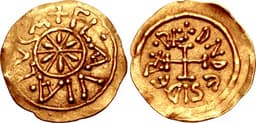
Desiderius
Emperor · Medieval
44.3Total
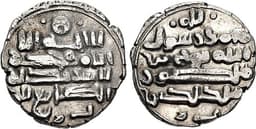
Sebuk Tigin
Emperor · Medieval
56.0Total
Basic Information
Born
710
942
Died
786
997
Era
Medieval
Medieval
Nationality
Lombards
Ghaznavid Empire
Occupation
Emperor
Emperor
Civilization
Western
Middle Eastern
Score Comparison
Military (10%)
45.0
72.5
Political (20%)
35.1
68.0
Influence (20%)
49.4
58.0
Legacy (20%)
40.8
49.2
Leadership (15%)
51.9
40.0
Strategy (15%)
41.7
57.5
TOTAL
44.3
56.0
Desiderius — Complete Timeline
756 AD
Alliance with the PapacyPolitical Action
Desiderius initially allied with Pope Stephen II, supporting the Papacy against the Lombard dukes of Spoleto and Benevento. This alliance helped secure his position as king, but later conflicts with the Papacy led to his downfall.
Papal AllianceLombard KingdomDiplomacy
Impact: regional
772 AD
Conflict with the Papacy over Papal StatesWar◆ Major
Desiderius invaded the Papal States, capturing several cities and threatening Rome. This aggression prompted Pope Adrian I to appeal to Charlemagne for aid, leading to the Frankish invasion of Italy and Desiderius's eventual defeat.
Papal StatesConflictLombard-Frankish War
Impact: regionaldestructive
773 AD
Defeated by Charlemagne at the Siege of PaviaWar
Charlemagne besieged Desiderius in Pavia, the Lombard capital. After a nine-month siege, Desiderius surrendered, ending Lombard independence. He was captured and exiled to a Frankish monastery, marking the end of the Lombard Kingdom.
Lombard KingdomCharlemagneConquest
Impact: regionaltragic
774 AD
Exile to Corbie AbbeyOther
After his surrender, Desiderius was exiled to the Abbey of Corbie in Francia. He spent the remainder of his life there as a monk, dying in obscurity. His exile symbolized the complete subjugation of the Lombards by the Franks.
ExileLombard KingdomEnd of Dynasty
Impact: regionaltragic
Sebuk Tigin — Complete Timeline
977 AD
Consolidation of the Ghaznavid StatePolitical Action◆ Major
Sebuk Tigin succeeded his father-in-law Alp Tigin as ruler of Ghazni and consolidated the Ghaznavid state. He defeated rival Turkic commanders, secured the borders against the Samanids and Karakhanids, and established a stable succession.
ConsolidationGhaznavidSuccession
Impact: regionalconstructive
986 AD
Expansion into IndiaWar◆ Major
Sebuk Tigin launched the first Ghaznavid campaigns into the Indian subcontinent, defeating the Hindu Shahi kingdom of Kabul. He annexed the region of Peshawar and established Ghaznavid control over the Khyber Pass, opening the way for future invasions.
Indian CampaignHindu ShahiExpansion
Impact: regional
994 AD
Defeat of the Samanids at the Battle of BalkhWar
Sebuk Tigin allied with the Samanid ruler Nuh II to defeat the rebel Fa'iq at Balkh. This victory secured Ghaznavid influence over Khorasan and marked the beginning of Ghaznavid expansion into Central Asia.
BattleSamanidKhorasan
Impact: regional
Expert Analysis
Origins
Desiderius, the last Lombard king, was born around 710 in Brescia, Italy. He rose from a noble Lombard family, becoming duke of Tuscany before seizing the throne in 756 after the death of King Aistulf. His early life was marked by Lombard expansionism and conflict with the Papacy. Sebuk Tigin, born around 942 in Central Asia, was a Turkic slave who rose to prominence in the Samanid Empire. Originally a military commander, he married the daughter of Alp Tigin, the governor of Ghazni, and succeeded him in 977. His background was shaped by the slave-soldier (ghulam) system and the turbulent politics of the Samanid realm.
Rise to Power
Desiderius became king in 756 after Aistulf's death, initially allying with Pope Stephen II against the Lombard dukes of Spoleto and Benevento. He secured his position by marrying his daughter to Charlemagne. However, his invasion of the Papal States in 772 triggered a decisive turning point: Pope Adrian I called for Frankish aid, leading Charlemagne to invade Italy. Sebuk Tigin's rise was more gradual. After inheriting Ghazni in 977, he defeated rival Turkic commanders and consolidated control. His major turning point came in 986-987 when he launched campaigns into the Indian subcontinent, defeating the Hindu Shahi kingdom of Kabul and annexing regions. He also allied with the Samanid ruler Nuh II to crush a rebellion at Balkh in 994, securing Ghaznavid influence over Khorasan.
Leadership & Governance
Desiderius ruled a Lombard kingdom that was fragmented and under pressure from both the Papacy and the Franks. His governance relied on traditional Lombard nobility and military force. He attempted to expand by seizing Papal territories but lacked the strategic depth to counter Charlemagne's superior army. His leadership score of 51.9 reflects moderate effectiveness, but his political score of 35.1 indicates poor diplomacy. Sebuk Tigin, with a political score of 68.0, was a skilled administrator who consolidated the Ghaznavid state. He established a stable tax system, promoted trade, and built a professional army of Turkic slave soldiers. His governance allowed the Ghaznavid Empire to become a major power in Central Asia and India.
Triumph & Tragedy
Desiderius's greatest triumph was initially securing the Lombard throne and forging an alliance with the Franks through marriage. However, his greatest failure was his aggression against the Papacy, which provoked Charlemagne's invasion. The Siege of Pavia in 773-774 ended with his surrender and exile to Corbie Abbey, where he died as a monk. His military score of 45.0 reflects his inability to defend his kingdom. Sebuk Tigin's triumphs include the expansion into India, laying the foundation for future Ghaznavid wealth and power. His defeat of the Hindu Shahi kingdom and the Samanid rebels at Balkh were significant victories. However, his legacy was marred by the later decline of the Ghaznavid dynasty, and his influence score of 58.0 is moderate. His leadership score of 40.0 suggests he was less effective in long-term state-building compared to his son Mahmud.
Character & Destiny
Desiderius was ambitious but miscalculated the power of Charlemagne. His decision to invade Papal territories demonstrated overconfidence and a lack of strategic foresight. He was ultimately a victim of the rising Frankish power, and his character—stubborn and aggressive—sealed his fate. Sebuk Tigin was pragmatic and ambitious, carefully navigating the complex politics of Central Asia. He was a capable general but also a shrewd diplomat, as seen in his alliance with the Samanids. His destiny was to create a dynasty that would dominate the region for centuries, though his personal rule was cut short by his death in 997.
Legacy
Desiderius is remembered as the last Lombard king, a footnote in the rise of Charlemagne's empire. His defeat ended Lombard independence and integrated Italy into the Frankish realm. His legacy score of 40.8 reflects his minor historical impact. Sebuk Tigin's legacy is more substantial: he founded the Ghaznavid Empire, which became a major force in Islamic history. His campaigns into India opened the subcontinent to Turkic invasions and set the stage for his son Mahmud's more famous raids. His legacy score of 49.2 is higher but still modest, as his achievements were overshadowed by Mahmud's.
Conclusion
Sebuk Tigin had a greater impact than Desiderius. With a total score of 56.0 compared to Desiderius's 44.3, Sebuk Tigin outperformed in military (72.5 vs 45.0), political (68.0 vs 35.1), and influence (58.0 vs 49.4). While Desiderius's defeat was a turning point in European history, Sebuk Tigin's foundation of the Ghaznavid Empire had lasting consequences for Central Asia and India. The 11.7-point gap in total scores reflects this disparity. Sebuk Tigin's legacy endures through the Ghaznavid dynasty, whereas Desiderius is merely a historical curiosity.
Rankings
🥇
Sebuk TiginLeader
Mil: 72.5Pol: 68.0Inf: 58.0
56.0
🥈
Desiderius
Mil: 45.0Pol: 35.1Inf: 49.4
44.3
+11.7 behind
How This Comparison Works
Algorithm
Each figure is scored on 6 dimensions (0—100 scale) based on structured historical data: Military (10%), Political (20%), Influence (20%), Legacy (20%), Leadership (15%), Strategy (15%). The weighted total produces the final ranking.
Data Sources
Scores are computed from structured sub-indicators in the database. Scale factors adjust for era (Ancient ×0.85, Modern ×1.0) and civilization size (Eastern ×1.05, Other ×0.80) to account for differences in population and military scale.
Maximum 3 Figures
Comparisons are limited to 2—3 figures to ensure readability and statistical meaningfulness.
Error Margins
±5 points per dimension — Sub-scores are derived from historical records with inherent uncertainty. Two figures within 5 points on a dimension should be considered roughly equivalent in that area.
Total Score Accuracy
±3 points overall — The weighted combination of 6 dimensions produces a total score with approximately ±3 points of uncertainty. Differences of less than 3 points are not statistically significant— the figures are effectively tied.
Known Limitations
- Historical records are incomplete and uneven across civilizations
- Figures from oral-tradition societies may be underrepresented
- Occupation labels can misclassify multi-role figures
- Scores measure capability and impact, not moral character
- Quantitative scoring is a comparison tool, not absolute truth
Capability Radar
Military (10%) — Battles & Warfare
Battles
30
55
Win Rate
25
60
Expansion
30
65
Political (20%) — Governance & Reform
Reform
30
45
Diplomacy
30
50
Economy
30
55
Influence (20%) — Cultural & Global Reach
Cultural
20
40
Global
15
40
Legacy (20%) — Historical Impact
Historical
25
50
Longevity
20
45
Leadership (15%) — Power & Stability
Tenure
40
60
Stability
25
55
Strategy (15%) — Tactics & Innovation
Strategy
25
55
Tactics
30
50
Reform
20
40
Similar Comparisons
Comments & Discussion
No comments yet. Be the first to share your thoughts!