Loading...
Edward IV of England vs Hulegu Khan
Hulegu Khan leads by 8.6 pts · 2 figures compared
…
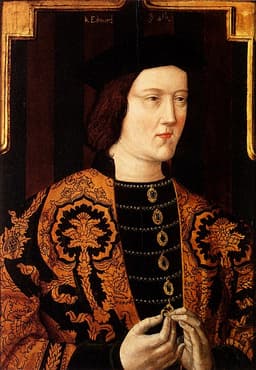
Edward IV of England
Emperor · Medieval
55.7Total
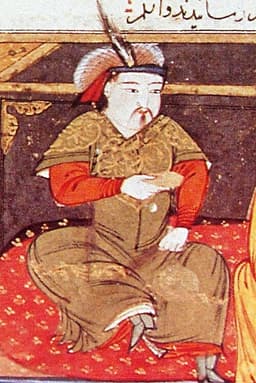
Hulegu Khan
Emperor · Medieval
64.3Total
Basic Information
Born
1442
1217
Died
1483
1265
Era
Medieval
Medieval
Nationality
England
Ilkhanate
Occupation
Emperor
Emperor
Civilization
Western
Middle Eastern
Score Comparison
Military (10%)
61.7
85.0
Political (20%)
45.0
45.0
Influence (20%)
60.0
68.0
Legacy (20%)
56.0
55.0
Leadership (15%)
53.2
72.0
Strategy (15%)
58.0
75.0
TOTAL
55.7
64.3
Edward IV of England — Complete Timeline
1461 AD
Battle of TowtonWar
Edward IV led the Yorkist army to a decisive victory over the Lancastrian forces at Towton in Yorkshire. This battle, the largest and bloodiest of the Wars of the Roses, secured Edward's claim to the throne and led to his coronation as king.
Wars of the RosesBattleVictory
Impact: national
Coronation of Edward IVPolitical Action◆ Major
Edward IV was crowned king of England at Westminster Abbey, formally establishing the Yorkist dynasty. His coronation followed the deposition of Henry VI and marked the beginning of a period of Yorkist rule.
CoronationDynastyYorkist
Impact: nationalconstructive
1464 AD
Marriage to Elizabeth WoodvillePolitical Action◆ Major
Edward IV secretly married Elizabeth Woodville, a Lancastrian widow, without consulting his council. This marriage elevated the Woodville family and alienated key allies like the Earl of Warwick, contributing to later political instability.
MarriagePoliticsWoodville
Impact: national
1471 AD
Battle of BarnetWar◆ Major
Edward IV defeated the Earl of Warwick at Barnet, killing Warwick and reclaiming the throne after a brief exile. This victory restored Yorkist control and ended the Lancastrian resurgence led by Warwick and Queen Margaret.
Wars of the RosesBattleRestoration
Impact: national
1475 AD
Treaty of PicquignyPolitical Action
Edward IV signed the Treaty of Picquigny with Louis XI of France, ending a brief invasion of France. The treaty secured a pension for Edward and a truce, but was seen as a diplomatic retreat from military ambitions.
DiplomacyFranceTruce
Impact: regional
Hulegu Khan — Complete Timeline
1256 AD
Destruction of the Ismaili FortressesWar◆ Major
Hulagu's army captured and destroyed the mountain fortresses of the Nizari Ismailis (Assassins), including Alamut. The Ismaili state was effectively eliminated, and their library and treasures were burned. This removed a major political and military force in Persia.
Mongol ConquestIsmailisAlamut
Impact: regionaldestructive
Founding of the IlkhanatePolitical Action◆ Major
Hulagu established the Ilkhanate as a Mongol khanate in Persia, with his capital at Maragheh. The state encompassed modern Iran, Iraq, Azerbaijan, and parts of Turkey and Syria, and it became a major power in the Middle East.
Mongol EmpireIlkhanatePersia
Impact: regional
1258 AD
Destruction of BaghdadWar
Hulagu's Mongol army besieged and sacked Baghdad, the capital of the Abbasid Caliphate. The city was systematically destroyed, with estimates of 100,000 to 1 million civilians killed. The last Abbasid caliph, Al-Musta'sim, was executed, ending the Islamic Golden Age.
Mongol ConquestBaghdadAbbasid Caliphate
Impact: globaldestructive
1260 AD
Battle of Ain JalutWar
Hulagu's forces, led by general Kitbuqa, were defeated by the Mamluk Sultanate at Ain Jalut in Palestine. This was the first major Mongol defeat in the Middle East, halting Mongol expansion into Syria and Egypt. Hulagu was unable to reinforce due to the Berke
Mongol DefeatMamluk SultanateSyria
Impact: regionaltragic
1262 AD
War with BerkeWar◆ Major
Hulagu fought a war against his cousin Berke, Khan of the Golden Horde, after Berke converted to Islam and opposed the destruction of Baghdad. The war involved battles in the Caucasus and weakened both khanates, preventing further Mongol expansion westward.
Mongol Civil WarCaucasusGolden Horde
Impact: regionaldestructive
Expert Analysis
Origins
Edward IV was born in 1442 into the House of York, a noble family with a strong claim to the English throne. His father, Richard of York, was a leading figure in the early Wars of the Roses, but was killed in 1460 at the Battle of Wakefield. Edward inherited his father's claim and leadership of the Yorkist faction. He received a chivalric education typical for nobility, with training in martial skills and governance, but his youth was marked by the chaos of civil war.
Hulegu Khan was born around 1217, a grandson of Genghis Khan and brother to the Great Khan Mongke. Raised in the Mongol imperial tradition, he was trained in warfare and administration from an early age. His lineage placed him at the center of the Mongol Empire's expansionist machine. Unlike Edward, Hulegu's early life was not defined by internal struggle but by the expectation of conquest.
Rise to Power
Edward IV's rise began in earnest at the Battle of Towton in 1461. Leading a Yorkist army against the Lancastrian forces of Henry VI, Edward secured a decisive victory on a snowy Palm Sunday. Towton was the largest and bloodiest battle on English soil, with an estimated 28,000 casualties. Edward was crowned king shortly after, establishing the Yorkist dynasty. However, his reign was interrupted by the machinations of his former ally, the Earl of Warwick, who forced Edward into exile in 1470. Edward returned the next year, defeating and killing Warwick at the Battle of Barnet, and reclaiming the throne.
Hulegu's rise was orchestrated by his brother Mongke, who appointed him to lead a massive campaign against the Islamic world. In 1253, Hulegu set out from Mongolia with an army estimated at 150,000 men. His first major target was the Nizari Ismailis, known as the Assassins. By 1256, Hulegu had captured their stronghold of Alamut, effectively destroying the Ismaili state. This victory cleared the path for his assault on the Abbasid Caliphate.
Leadership & Governance
Edward IV was a hands-on military leader who personally commanded his forces in battle. His governance was pragmatic but marred by favoritism. His secret marriage to Elizabeth Woodville in 1464 elevated her large family, creating a powerful faction that alienated many nobles, including Warwick. Edward's financial reforms stabilized the crown's finances, and he promoted trade, but his reign was plagued by factionalism. He scored 53.2 in leadership, reflecting his ability to inspire loyalty but also his failure to maintain unity.
Hulegu Khan was a ruthless strategist and administrator. As founder of the Ilkhanate, he established a state that blended Mongol military rule with Persian administrative traditions. His governance was harsh: after capturing Baghdad, he ordered a massacre that killed between 100,000 and 1,000,000 people. He also tolerated multiple religions, including Christianity and Buddhism, to maintain control over a diverse population. His leadership score of 72.0 indicates his effectiveness in commanding large armies and managing a vast territory, but his brutality created lasting enmity.
Triumph & Tragedy
Edward IV's greatest triumph was the Battle of Towton, which secured his throne. He also successfully reclaimed his crown after exile, demonstrating resilience. His tragedy was the instability of his dynasty: his premature death in 1483 led to the rise of Richard III and the eventual fall of the Yorkists. His marriage to Elizabeth Woodville, while politically motivated, alienated key allies and sowed discord.
Hulegu's greatest triumph was the destruction of Baghdad in 1258, which ended the Abbasid Caliphate and shifted the center of Islamic power. His founding of the Ilkhanate created a Mongol state that lasted for decades. His greatest tragedy was the defeat at Ain Jalut in 1260, where his general Kitbuqa was killed by the Mamluks. This defeat halted Mongol expansion into Africa and marked the first major reversal of Mongol conquest. Additionally, his war with Berke Khan of the Golden Horde drained resources and led to internal conflict.
Character & Destiny
Edward IV was charismatic and capable, but overly reliant on personal relationships. His decision to marry for love rather than political advantage reflected a romantic streak that cost him politically. He was also a patron of the arts and built a court that rivaled those of Europe. His early death at 40, possibly from pneumonia, left his young sons vulnerable, leading to the usurpation by Richard III.
Hulegu was a product of the Mongol war machine: disciplined, strategic, and brutal. He was a devout Buddhist but pragmatic in religious matters. His destruction of Baghdad was driven by both political and religious motives. His character was defined by loyalty to the Mongol imperial vision, but his war with Berke showed a willingness to fight fellow Mongols over religious differences. He died in 1265, leaving the Ilkhanate to his son Abaqa.
Legacy
Edward IV's legacy is mixed. He stabilized England after the Wars of the Roses but failed to establish a lasting dynasty. His reign is often overshadowed by the subsequent Tudor era. He is remembered as a capable military leader and a king who promoted commerce, but his political score of 45.0 reflects his inability to secure his family's future. His influence score of 60.0 is moderate, as his impact was largely confined to England.
Hulegu Khan's legacy is profound. He destroyed the Abbasid Caliphate, a center of Islamic civilization, and founded the Ilkhanate, which became a major power in the Middle East. The Ilkhanate facilitated cultural exchange between Mongol and Persian traditions and eventually adopted Islam. However, his brutality left a lasting scar on the region. His military score of 85.0 and strategy score of 75.0 underscore his effectiveness as a conqueror. His influence score of 68.0 reflects his role in reshaping the medieval world.
Conclusion
Hulegu Khan had a greater impact on world history than Edward IV. While Edward's military score of 61.7 and strategy score of 58.0 are respectable, Hulegu's 85.0 and 75.0 demonstrate superior military achievement. Hulegu's destruction of Baghdad was a world-historical event that ended an era, whereas Edward's victories only changed the ruling house of a single kingdom. Hulegu's founding of the Ilkhanate created a state that influenced the Middle East for generations, while Edward's dynasty collapsed within a decade of his death. The total score gap of 8.6 points reflects this disparity. Hulegu Khan emerges as the more consequential figure, for better or worse.
Rankings
🥇
Hulegu KhanLeader
Mil: 85.0Pol: 45.0Inf: 68.0
64.3
🥈
Edward IV of England
Mil: 61.7Pol: 45.0Inf: 60.0
55.7
+8.6 behind
How This Comparison Works
Algorithm
Each figure is scored on 6 dimensions (0—100 scale) based on structured historical data: Military (10%), Political (20%), Influence (20%), Legacy (20%), Leadership (15%), Strategy (15%). The weighted total produces the final ranking.
Data Sources
Scores are computed from structured sub-indicators in the database. Scale factors adjust for era (Ancient ×0.85, Modern ×1.0) and civilization size (Eastern ×1.05, Other ×0.80) to account for differences in population and military scale.
Maximum 3 Figures
Comparisons are limited to 2—3 figures to ensure readability and statistical meaningfulness.
Error Margins
±5 points per dimension — Sub-scores are derived from historical records with inherent uncertainty. Two figures within 5 points on a dimension should be considered roughly equivalent in that area.
Total Score Accuracy
±3 points overall — The weighted combination of 6 dimensions produces a total score with approximately ±3 points of uncertainty. Differences of less than 3 points are not statistically significant— the figures are effectively tied.
Known Limitations
- Historical records are incomplete and uneven across civilizations
- Figures from oral-tradition societies may be underrepresented
- Occupation labels can misclassify multi-role figures
- Scores measure capability and impact, not moral character
- Quantitative scoring is a comparison tool, not absolute truth
Capability Radar
Military (10%) — Battles & Warfare
Battles
70
85
Win Rate
75
80
Expansion
60
90
Political (20%) — Governance & Reform
Reform
60
70
Diplomacy
70
65
Economy
65
60
Influence (20%) — Cultural & Global Reach
Cultural
55
60
Global
45
75
Legacy (20%) — Historical Impact
Historical
65
80
Longevity
55
65
Leadership (15%) — Power & Stability
Tenure
65
75
Stability
55
55
Strategy (15%) — Tactics & Innovation
Strategy
70
85
Tactics
75
88
Reform
50
70
Similar Comparisons
Comments & Discussion
No comments yet. Be the first to share your thoughts!