Loading...
Edward III of England vs Emperor Ichijo
Edward III of England leads by 7.5 pts · 2 figures compared
…
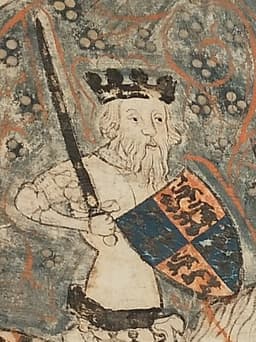
Edward III of England
Emperor · Medieval
60.9Total
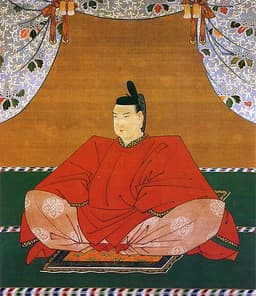
Emperor Ichijo
Emperor · Medieval
53.4Total
Basic Information
Born
1312
980
Died
1377
1011
Era
Medieval
Medieval
Nationality
England
Japan
Occupation
Emperor
Emperor
Civilization
Western
Eastern
Score Comparison
Military (10%)
72.0
54.9
Political (20%)
55.0
30.8
Influence (20%)
65.0
60.0
Legacy (20%)
40.0
52.0
Leadership (15%)
79.8
56.0
Strategy (15%)
72.0
69.3
TOTAL
60.9
53.4
Edward III of England — Complete Timeline
1337 AD
Start of the Hundred Years' WarWar
Edward III declared himself King of France, challenging Philip VI's claim. This began the Hundred Years' War, a prolonged conflict over the French throne and English territories in France.
WarFranceSuccession
Impact: global
1346 AD
Battle of CrécyWar◆ Major
Edward III's English army defeated a larger French force at the Battle of Cr
BattleLongbowFrance
Impact: regional
Siege of CalaisWar◆ Major
Edward III besieged the French port of Calais for nearly a year. The city surrendered, and Edward took control, making it an English stronghold for over two centuries.
SiegeCalaisFrance
Impact: regional
1356 AD
Battle of PoitiersWar◆ Major
Edward III's son, the Black Prince, defeated and captured King John II of France at the Battle of Poitiers. This victory led to the Treaty of Br
BattleCapture of KingTreaty
Impact: regional
1360 AD
Treaty of BrétignyPolitical Action◆ Major
Edward III signed the Treaty of Br
TreatyPeaceTerritorial Gains
Impact: regionalconstructive
Emperor Ichijo — Complete Timeline
986 AD
Reign during the height of Fujiwara regencyPolitical Action◆ Major
Ichijo ascended the throne at age six under the regency of Fujiwara no Michinaga. His reign marked the peak of Fujiwara power, with Michinaga effectively ruling Japan through the emperor as a figurehead, limiting Ichijo's direct political influence.
Fujiwara RegencyHeian PeriodPolitical Structure
Impact: national
1000 AD
Patronage of Lady Murasaki ShikibuCultural◆ Major
Emperor Ichijo served as patron to Lady Murasaki Shikibu, a lady-in-waiting at his court. Under his reign, she wrote The Tale of Genji, widely considered the world's first novel, which profoundly influenced Japanese literature and court culture.
LiteratureHeian PeriodCourt Culture
Impact: globalconstructive
Promotion of Heian court cultureCultural
Ichijo's court became a center for literary and artistic flourishing, including poetry contests, calligraphy, and the composition of The Pillow Book by Sei Shonagon. This cultural efflorescence defined the Heian period's aesthetic legacy.
Heian CultureLiteratureArts
Impact: nationalconstructive
Expert Analysis
Origins
Edward III was born on 13 November 1312 at Windsor Castle, the son of Edward II and Isabella of France. His early years were marked by his father's weak rule and eventual deposition in 1327, when Edward was just 14. He was heavily influenced by his mother and her lover Roger Mortimer, who effectively ruled until Edward seized power in 1330. Edward's claim to the French throne came through his mother, a point that would ignite the Hundred Years' War.
Emperor Ichijo was born on 15 July 980 in Heian-kyo (modern Kyoto), the son of Emperor En'yu and Fujiwara no Senshi. He ascended the throne at age 6 in 986, under the regency of his grandfather Fujiwara no Kaneie and later Fujiwara no Michinaga. His upbringing was controlled by the Fujiwara clan, who dominated the imperial court. Ichijo's education emphasized poetry, calligraphy, and Chinese classics, typical of Heian nobility.
Rise to Power
Edward III's rise began with a coup in 1330 at age 17, when he arrested Mortimer and exiled his mother, taking full control of the kingdom. He quickly asserted his authority, launching campaigns against Scotland. In 1337, he formally claimed the French throne, initiating the Hundred Years' War. His early victories, including the naval Battle of Sluys in 1340, established his reputation as a military leader.
Ichijo became emperor at age 6, but real power lay with the Fujiwara regents. His reign (986-1011) saw the peak of Fujiwara no Michinaga's influence, who ruled as de facto leader. Ichijo's role was largely ceremonial, focusing on cultural patronage. He is noted for his support of Lady Murasaki Shikibu and Sei Shonagon, whose works defined Heian literature.
Leadership & Governance
Edward III was a hands-on monarch who led armies personally. He centralized royal authority, reformed the justice system, and fostered the Order of the Garter in 1348 to bind nobles to the crown. His military strategy relied on the longbow, which scored 72.0 in military, and his political score of 55.0 reflects his ability to manage parliament, though he faced challenges from the Black Death (1348-1350) that reduced England's population by a third.
Ichijo's governance was minimal due to the Fujiwara regency. His political score of 30.8 indicates his limited power. He focused on cultural pursuits, holding poetry contests and supporting the arts. The Heian court under him became a center for aesthetic refinement, but his rule did not involve military campaigns or administrative reforms. His leadership score of 56.0 reflects his passive role.
Triumph & Tragedy
Edward III's greatest triumphs include the Battle of Crécy (1346), where his 12,000 men defeated a larger French force, and the Siege of Calais (1346-1347), which secured a key port. The Treaty of Brétigny (1360) gave England vast territories in France. However, his later years saw military reversals as French resistance grew, and his son John of Gaunt's ambitions strained the kingdom. The Black Death also undermined his economic policies.
Ichijo's triumph was the cultural flourishing of his court, epitomized by The Tale of Genji (c. 1000) and The Pillow Book (c. 1002). These works have had lasting influence, scoring 52.0 in legacy. However, his reign was tragic in that he had no real power; he was a puppet of the Fujiwara. His early death at age 30 in 1011 cut short any potential for independent action.
Character & Destiny
Edward III was energetic, ambitious, and charismatic. His decision to claim France was bold but led to a century of war. He was pragmatic in using parliament to fund campaigns, but his later years showed a decline in judgment as he delegated to sons. His character shaped a destiny of military glory but also economic strain.
Ichijo was cultured, gentle, and passive. He accepted his role as a figurehead, focusing on aesthetics rather than politics. His destiny was to be a patron, not a ruler. His personality suited the Heian court's values, but it prevented any significant political impact.
Legacy
Edward III's legacy includes the Hundred Years' War, which transformed English national identity and military tactics. The longbow's dominance changed warfare, and his total score of 60.9 reflects his overall impact. However, the war also drained resources and led to later conflicts. He is remembered as a warrior king, scoring 65.0 in influence.
Ichijo's legacy is cultural. The Tale of Genji is considered the world's first novel, influencing literature globally. The Heian court's aesthetic ideals, such as mono no aware, persist in Japanese culture. His legacy score of 52.0 is high for a passive ruler, but his total score of 53.4 trails Edward's.
Conclusion
Edward III had greater impact than Emperor Ichijo, with a total score of 60.9 versus 53.4, a gap of 7.5 points. Edward's military innovations and political centralization shaped Europe for centuries, while Ichijo's cultural patronage, though significant, was limited to the elite Heian court. Edward's actions had direct consequences on state formation, warfare, and national identity, whereas Ichijo's influence is more diffuse and aesthetic. Therefore, Edward III is the more historically significant figure.
Rankings
🥇
Edward III of EnglandLeader
Mil: 72.0Pol: 55.0Inf: 65.0
60.9
🥈
Emperor Ichijo
Mil: 54.9Pol: 30.8Inf: 60.0
53.4
+7.5 behind
How This Comparison Works
Algorithm
Each figure is scored on 6 dimensions (0—100 scale) based on structured historical data: Military (10%), Political (20%), Influence (20%), Legacy (20%), Leadership (15%), Strategy (15%). The weighted total produces the final ranking.
Data Sources
Scores are computed from structured sub-indicators in the database. Scale factors adjust for era (Ancient ×0.85, Modern ×1.0) and civilization size (Eastern ×1.05, Other ×0.80) to account for differences in population and military scale.
Maximum 3 Figures
Comparisons are limited to 2—3 figures to ensure readability and statistical meaningfulness.
Error Margins
±5 points per dimension — Sub-scores are derived from historical records with inherent uncertainty. Two figures within 5 points on a dimension should be considered roughly equivalent in that area.
Total Score Accuracy
±3 points overall — The weighted combination of 6 dimensions produces a total score with approximately ±3 points of uncertainty. Differences of less than 3 points are not statistically significant— the figures are effectively tied.
Known Limitations
- Historical records are incomplete and uneven across civilizations
- Figures from oral-tradition societies may be underrepresented
- Occupation labels can misclassify multi-role figures
- Scores measure capability and impact, not moral character
- Quantitative scoring is a comparison tool, not absolute truth
Capability Radar
Military (10%) — Battles & Warfare
Battles
85
48
Win Rate
80
45
Expansion
85
52
Political (20%) — Governance & Reform
Reform
70
20
Diplomacy
75
30
Economy
70
25
Influence (20%) — Cultural & Global Reach
Cultural
70
60
Global
70
40
Legacy (20%) — Historical Impact
Historical
80
55
Longevity
75
55
Leadership (15%) — Power & Stability
Tenure
85
31
Stability
65
40
Strategy (15%) — Tactics & Innovation
Strategy
90
56
Tactics
85
59
Reform
75
58
Similar Comparisons
Comments & Discussion
No comments yet. Be the first to share your thoughts!