Loading...
Edward I vs Ramkhamhaeng
Ramkhamhaeng leads by 0.2 pts · 2 figures compared
…
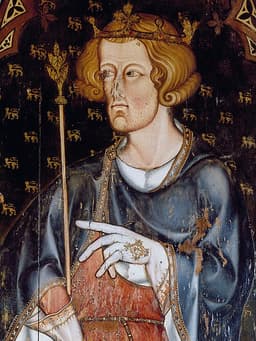
Edward I
Emperor · Medieval
62.2Total

Ramkhamhaeng
Emperor · Medieval
62.4Total
Basic Information
Born
1239
1237
Died
1307
1298
Era
Medieval
Medieval
Nationality
England
Thailand
Occupation
Emperor
Emperor
Civilization
Western
Eastern
Score Comparison
Military (10%)
74.7
50.0
Political (20%)
60.0
62.7
Influence (20%)
56.7
55.0
Legacy (20%)
55.0
72.0
Leadership (15%)
72.0
68.0
Strategy (15%)
70.0
60.0
TOTAL
62.2
62.4
Edward I — Complete Timeline
1282 AD
Conquest of WalesWar◆ Major
Edward I led a military campaign that resulted in the conquest of Wales. After the death of Llywelyn ap Gruffudd, Edward built a ring of castles (including Caernarfon and Conwy) to control the region. The Statute of Rhuddlan in 1284 annexed Wales to England.
ConquestWalesCastles
Impact: regional
1290 AD
Expulsion of the Jews from EnglandPolitical Action◆ Major
Edward I issued the Edict of Expulsion, ordering all Jews to leave England. The expulsion was motivated by financial and religious pressures. Jews were given until November 1 to depart, and their property was confiscated by the crown. The ban lasted until 1656.
ExpulsionJewsReligious Persecution
Impact: nationaldestructive
1295 AD
Model ParliamentPolitical Action◆ Major
Edward I summoned the Model Parliament, which included representatives of the commons (knights and burgesses) alongside nobles and clergy. This assembly set a precedent for the composition of the English Parliament. It was called to approve taxes for wars in Scotland and France.
ParliamentRepresentationTaxation
Impact: nationalconstructive
1296 AD
First War of Scottish IndependenceWar◆ Major
Edward I invaded Scotland after the Scots refused to support his war in France. He captured Berwick and defeated the Scots at the Battle of Dunbar. Edward forced the submission of Scottish nobles and removed the Stone of Scone to Westminster Abbey.
ScotlandInvasionStone of Scone
Impact: regional
Ramkhamhaeng — Complete Timeline
1270 AD
Expanded Sukhothai KingdomWar◆ Major
Ramkhamhaeng led military campaigns that expanded the Sukhothai Kingdom's territory to cover much of modern-day Thailand, including parts of Laos and Myanmar. His conquests made Sukhothai a dominant power in mainland Southeast Asia.
ExpansionConquestSukhothai
Impact: regional
1283 AD
Created the Thai AlphabetCultural
Ramkhamhaeng is traditionally credited with creating the Thai alphabet, as recorded on the Ramkhamhaeng Stele. The script was adapted from Khmer and Mon scripts, enabling the recording of Thai language and literature.
AlphabetWritingCulture
Impact: regionalconstructive
1294 AD
Established Diplomatic Relations with Yuan ChinaPolitical Action
Ramkhamhaeng sent tributary missions to the Yuan Dynasty court of Kublai Khan, establishing diplomatic and trade relations. This brought Chinese influence and goods to Sukhothai.
DiplomacyChinaYuan
Impact: regionalconstructive
Expert Analysis
Origins
Edward I was born on June 17, 1239, at the Palace of Westminster, the first son of King Henry III of England and Eleanor of Provence. He was raised in a royal court marked by political instability and baronial rebellion. His father's weak rule and the Provisions of Oxford (1258) that curtailed royal power shaped Edward's early experiences. He received military training and was involved in the Second Barons' War (1264-1267), where he learned the art of command.
Ramkhamhaeng, also known as Phra Ram Khamhaeng, was born around 1237-1247 in the Sukhothai Kingdom (modern-day Thailand). He was the third son of King Si Inthrathit, the founder of the Phra Ruang dynasty. The kingdom was emerging from Khmer dominance, and Ramkhamhaeng grew up in a period of consolidation and cultural formation. He likely received education in Buddhist and traditional Thai knowledge, though specific details are sparse.
Rise to Power
Edward I's rise was accelerated by his role in the Second Barons' War. He led royalist forces at the Battle of Lewes (1264), was captured, and later escaped. His decisive victory at the Battle of Evesham (1265) against Simon de Montfort solidified his reputation. He joined the Ninth Crusade (1271-1272), gaining prestige. Upon his father's death in 1272, he became king, though he was in Sicily and returned in 1274.
Ramkhamhaeng rose to power after the death of his father and elder brothers. According to the Ramkhamhaeng Stele, he became king around 1279. He initially ruled over a small territory but quickly expanded through military campaigns. His name means "Rama the Bold," reflecting his martial prowess. He established diplomatic ties with Yuan China, sending tribute to Kublai Khan, which secured his northern borders.
Leadership & Governance
Edward I was a strong, centralized monarch. He reformed English law and administration, issuing statutes like the Statute of Mortmain (1279) and the Statute of Winchester (1285). He convened the Model Parliament in 1295, which included commoners, setting a precedent for representative government. However, his governance was often harsh: he expelled Jews in 1290, confiscating their assets, and imposed heavy taxes for his wars. His military leadership was direct; he led campaigns in Wales (1277, 1282-1283) and Scotland (1296-1307), building fortifications like Caernarfon Castle.
Ramkhamhaeng's governance was more decentralized and paternalistic. The Ramkhamhaeng Stele describes a kingdom where the king was accessible to commoners; a bell at the palace gate allowed any subject to ring for justice. He promoted Buddhism and trade, and his greatest achievement was creating the Thai alphabet (1283), based on Khmer and Mon scripts, which unified the kingdom culturally. He expanded Sukhothai's territory through diplomacy and military campaigns, but his rule lacked the institutional reforms of Edward. His scores reflect this: Edward scored 72.0 in leadership to Ramkhamhaeng's 68.0, but Ramkhamhaeng scored 62.7 in political to Edward's 60.0.
Triumph & Tragedy
Edward I's greatest triumph was the conquest of Wales (1282-1283), which integrated the principality into England through the Statute of Rhuddlan (1284). His castle-building program remains a UNESCO World Heritage site. However, his failure to conquer Scotland was his greatest tragedy. The First War of Scottish Independence (1296-1328) saw initial victories (Battle of Dunbar, 1296), but his harsh policies and the rise of William Wallace and Robert the Bruce led to prolonged conflict. His death in 1307 while marching north left Scotland unconquered.
Ramkhamhaeng's triumph was the expansion of Sukhothai to its greatest extent, covering much of modern Thailand and parts of Laos. His creation of the Thai alphabet was a cultural milestone that endures. However, after his death (circa 1298-1317), the kingdom declined, losing territories to Ayutthaya. The Ramkhamhaeng Stele itself is controversial; some scholars question its authenticity. His legacy is more symbolic than structural.
Character & Destiny
Edward I was determined, ruthless, and pragmatic. His nickname "Longshanks" reflected his tall stature, but he was also called "Hammer of the Scots." He was a capable administrator but intolerant of dissent, as seen in the execution of William Wallace (1305) and the Expulsion of the Jews. His character drove him to centralize power, but his obsession with Scotland drained England's resources.
Ramkhamhaeng was depicted as a just and benevolent ruler. The stele portrays him as a fatherly figure who listened to his people. His creativity in developing the alphabet shows a cultural mindset. He was a diplomat as much as a warrior, but the lack of detailed records makes his personality less known.
Legacy
Edward I's legacy is mixed. He transformed England's legal and parliamentary system, but his expulsion of Jews and brutal Welsh and Scottish campaigns stain his record. His castles are architectural marvels. His total score is 62.2.
Ramkhamhaeng's legacy is more cultural. The Thai alphabet is used by over 60 million people. He is revered as a national hero in Thailand, and his reign is seen as a golden age. His total score is 62.4, slightly higher.
Conclusion
Ramkhamhaeng scores 62.4 to Edward I's 62.2, a margin of 0.2 points. While Edward had greater military and leadership scores (74.7 vs 50.0, 72.0 vs 68.0), Ramkhamhaeng's legacy score of 72.0 far exceeds Edward's 55.0. The creation of a writing system that survives today has a more profound and lasting impact on civilization than even the most impressive conquests. Edward's political and legal reforms were significant, but they were built upon existing structures. Thus, Ramkhamhaeng had a greater net impact, as his contribution to Thai culture and identity remains a living legacy.
Rankings
🥇
RamkhamhaengLeader
Mil: 50.0Pol: 62.7Inf: 55.0
62.4
🥈
Edward I
Mil: 74.7Pol: 60.0Inf: 56.7
62.2
+0.2 behind
How This Comparison Works
Algorithm
Each figure is scored on 6 dimensions (0—100 scale) based on structured historical data: Military (10%), Political (20%), Influence (20%), Legacy (20%), Leadership (15%), Strategy (15%). The weighted total produces the final ranking.
Data Sources
Scores are computed from structured sub-indicators in the database. Scale factors adjust for era (Ancient ×0.85, Modern ×1.0) and civilization size (Eastern ×1.05, Other ×0.80) to account for differences in population and military scale.
Maximum 3 Figures
Comparisons are limited to 2—3 figures to ensure readability and statistical meaningfulness.
Error Margins
±5 points per dimension — Sub-scores are derived from historical records with inherent uncertainty. Two figures within 5 points on a dimension should be considered roughly equivalent in that area.
Total Score Accuracy
±3 points overall — The weighted combination of 6 dimensions produces a total score with approximately ±3 points of uncertainty. Differences of less than 3 points are not statistically significant— the figures are effectively tied.
Known Limitations
- Historical records are incomplete and uneven across civilizations
- Figures from oral-tradition societies may be underrepresented
- Occupation labels can misclassify multi-role figures
- Scores measure capability and impact, not moral character
- Quantitative scoring is a comparison tool, not absolute truth
Capability Radar
Military (10%) — Battles & Warfare
Battles
75
45
Win Rate
70
55
Expansion
75
60
Political (20%) — Governance & Reform
Reform
75
70
Diplomacy
65
60
Economy
70
55
Influence (20%) — Cultural & Global Reach
Cultural
65
75
Global
60
55
Legacy (20%) — Historical Impact
Historical
75
70
Longevity
70
80
Leadership (15%) — Power & Stability
Tenure
80
65
Stability
60
60
Strategy (15%) — Tactics & Innovation
Strategy
85
50
Tactics
80
40
Reform
70
35
Similar Comparisons
Comments & Discussion
No comments yet. Be the first to share your thoughts!