Loading...
Edward I vs Julius Caesar
Julius Caesar leads by 20.6 pts · 2 figures compared
…
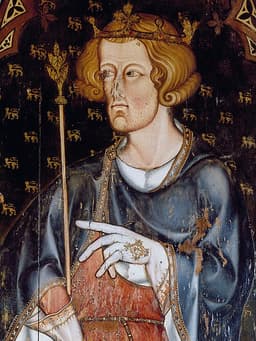
Edward I
Emperor · Medieval
62.2Total

Julius Caesar
General · Ancient
82.8Total
Basic Information
Born
1239
-100
Died
1307
-44
Era
Medieval
Ancient
Nationality
England
Roman Republic
Occupation
Emperor
General
Civilization
Western
Western
Score Comparison
Military (10%)
74.7
88.0
Political (20%)
60.0
78.0
Influence (20%)
56.7
85.0
Legacy (20%)
55.0
82.0
Leadership (15%)
72.0
80.0
Strategy (15%)
70.0
85.0
TOTAL
62.2
82.8
Edward I — Complete Timeline
1282 AD
Conquest of WalesWar◆ Major
Edward I led a military campaign that resulted in the conquest of Wales. After the death of Llywelyn ap Gruffudd, Edward built a ring of castles (including Caernarfon and Conwy) to control the region. The Statute of Rhuddlan in 1284 annexed Wales to England.
ConquestWalesCastles
Impact: regional
1290 AD
Expulsion of the Jews from EnglandPolitical Action◆ Major
Edward I issued the Edict of Expulsion, ordering all Jews to leave England. The expulsion was motivated by financial and religious pressures. Jews were given until November 1 to depart, and their property was confiscated by the crown. The ban lasted until 1656.
ExpulsionJewsReligious Persecution
Impact: nationaldestructive
1295 AD
Model ParliamentPolitical Action◆ Major
Edward I summoned the Model Parliament, which included representatives of the commons (knights and burgesses) alongside nobles and clergy. This assembly set a precedent for the composition of the English Parliament. It was called to approve taxes for wars in Scotland and France.
ParliamentRepresentationTaxation
Impact: nationalconstructive
1296 AD
First War of Scottish IndependenceWar◆ Major
Edward I invaded Scotland after the Scots refused to support his war in France. He captured Berwick and defeated the Scots at the Battle of Dunbar. Edward forced the submission of Scottish nobles and removed the Stone of Scone to Westminster Abbey.
ScotlandInvasionStone of Scone
Impact: regional
Julius Caesar — Complete Timeline
58 BC
Gallic WarsWar◆ Major
Caesar, as proconsul of Gaul, launched a series of campaigns that conquered all of Gaul (modern France, Belgium, and parts of Switzerland). He fought numerous battles, including against the Helvetii, the Belgae, and the Gallic chieftain Vercingetorix. The wars brought immense wealth and a loyal army to Caesar.
Gallic WarsConquestRoman Expansion
Impact: regional
49 BC
Crossing the RubiconPolitical Action◆ Major
Caesar led Legio XIII across the Rubicon River into Italy, defying the Roman Senate's order to disband his army. This act triggered a civil war against Pompey and the Optimates, ultimately leading to Caesar's dictatorship and the end of the Roman Republic.
Roman Civil WarEnd of RepublicPower Struggle
Impact: global
48 BC
Battle of PharsalusWar◆ Major
Caesar's outnumbered army defeated the larger forces of Pompey the Great at Pharsalus in Greece. Caesar's tactical use of a reserve line to counter Pompey's cavalry charge proved decisive. Pompey fled to Egypt, where he was assassinated, leaving Caesar as the undisputed master of the Roman world.
Roman Civil WarBattleDecisive Victory
Impact: regional
44 BC
Appointment as Dictator for LifePolitical Action◆ Major
The Roman Senate appointed Caesar dictator perpetuo (dictator for life), granting him unprecedented personal power. This move concentrated military, legislative, and judicial authority in one person, effectively ending the Roman Republic's traditional system of checks and balances and alarming many senators.
DictatorshipEnd of RepublicPower Consolidation
Impact: regionaldestructive
Assassination on the Ides of MarchPolitical Action◆ Major
A group of Roman senators, led by Marcus Junius Brutus and Gaius Cassius Longinus, stabbed Caesar to death at a meeting of the Senate in the Theatre of Pompey. The assassination was intended to restore the Republic, but instead triggered another civil war that led to the rise of the Roman Empire.
AssassinationRoman PoliticsEnd of Republic
Impact: globaldestructive
Expert Analysis
edward-i-vs-julius-caesar
# The Dictator and the Lawgiver: Caesar and Edward I in the Mirror of Power
On a January morning in 49 BCE, Julius Caesar stood at the banks of the Rubicon, a small river that marked the boundary between his province and Rome itself. To cross with his army was treason. To hesitate was to lose everything. He crossed, and the Roman Republic bled to death. More than thirteen centuries later, in the cold autumn of 1282, Edward I of England watched the head of Llywelyn ap Gruffudd, the last native Prince of Wales, paraded through London on a pike. Both men were conquerors. Both were builders. But one sought to remake the world in his own image, while the other sought to bind a kingdom in iron and law. Their differences reveal not just two rulers, but two ages of power.
Origins
Julius Caesar was born into the chaos of a dying republic. His family, the Julii, were patrician but not wealthy, and Rome in the first century BCE was a place of civil wars, slave revolts, and senatorial corruption. Caesar’s uncle by marriage was Gaius Marius, a populist general, and his father-in-law was Cinna, a radical politician. From his youth, Caesar learned that in Rome, glory and survival were won on the battlefield and in the forum—not inherited. He was a gambler by nature, a man who borrowed fortunes to buy influence and never looked back.
Edward I was born into a very different world. England in 1239 was a medieval monarchy still recovering from the baronial wars that had produced Magna Carta. His father, Henry III, was a pious but weak king, constantly outmaneuvered by his nobles. Edward grew up watching his father’s humiliations. He learned that power must be centralized, that law must be enforced, and that a king who could not command respect would be crushed. Where Caesar learned to charm and manipulate, Edward learned to dominate and punish.
Rise to Power
Caesar’s path to power was a long, patient climb through the Roman political ladder. He served as a military tribune, then quaestor, then aedile—spending lavishly on games and monuments to win the people’s love. He formed the First Triumvirate with Pompey and Crassus, an alliance that let him secure the governorship of Gaul. From 58 to 50 BCE, he conquered the entire region, defeating hundreds of tribes and crossing the Rhine and the English Channel. His *Commentaries on the Gallic War* were not just history—they were propaganda, written to make Rome adore him. By the time the Senate ordered him to disband his army, he had a loyal, battle-hardened force that loved him more than Rome itself.
Edward’s rise was more conventional, but no less dramatic. He fought in the Ninth Crusade in 1270, where he survived an assassination attempt and earned a reputation for ferocity. When he returned to England in 1274 to be crowned, he was already in his mid-thirties, a proven warrior and administrator. Unlike Caesar, he did not need to create a new power base—he inherited a throne. But he understood that a crown meant nothing without control. His first great act was to survey the entire kingdom with the Hundred Rolls, a massive inquiry into landholding and royal rights. He was not conquering a republic; he was taming a realm.
Leadership & Governance
Caesar governed as a revolutionary. As dictator, he reformed the calendar (creating the Julian calendar still used in modified form), granted citizenship to provincials, launched massive public works, and redistributed land to veterans. He centralized power in his own hands but did so with the flair of a showman—pardoning enemies, throwing festivals, and placing his image on coins. His military genius was intuitive and aggressive. At Alesia in 52 BCE, he besieged the Gallic chieftain Vercingetorix while simultaneously building fortifications to repel a massive relief army. It was a double siege of staggering complexity, and he won. But his political genius was fragile. He ruled by personal authority, not institutions. When he was gone, so was the peace.
Edward ruled as a builder of institutions. His military campaigns in Wales (1282–1283) were methodical, using castles as tools of occupation—Caernarfon, Conwy, Harlech—massive stone fortresses that still stand today. He called his Model Parliament in 1295, bringing together knights, burgesses, and clergy to approve taxes and laws. It was not democracy, but it was a framework for governance that would outlast him. In 1290, he expelled the Jews from England, a brutal act driven by debt and prejudice, but also by a cold calculation of royal finance. Edward’s wars in Scotland, however, revealed his limits. He captured Berwick in 1296 and defeated the Scots at Dunbar, but he could never hold the country. William Wallace and later Robert the Bruce turned Scotland into a quagmire. Edward died in 1307 on his way to fight Bruce again, still cursing the Scots.
Triumph & Tragedy
Caesar’s greatest triumph was his own life. He had risen from a debt-ridden politician to the master of the Mediterranean world. He had conquered Gaul, defeated his rival Pompey in a civil war, and been named dictator for life. His tragedy was that he gave Rome peace but not a system. On the Ides of March, 44 BCE, a group of senators stabbed him to death in the Theatre of Pompey. He fell at the foot of a statue of his old enemy. The conspirators thought they were saving the Republic. Instead, they unleashed another civil war, and the Republic died anyway.
Edward’s greatest triumph was the conquest of Wales, a feat that integrated the principality into the English crown and left a legacy of castles that symbolized royal power. His tragedy was Scotland. He spent the last decade of his life in a war he could not win, draining the treasury and alienating his barons. He died at Burgh by Sands, on the Solway Firth, with the Scottish campaign unfinished. His son, Edward II, was a weak king who lost everything his father had gained.
Character & Destiny
Caesar was charismatic, reckless, and endlessly ambitious. He forgave enemies because he believed in his own invincibility. He took risks—crossing the Rubicon, pardoning Brutus—that a more cautious man would have avoided. His personality drove him to push the Republic to its breaking point, and his death proved that no man, however brilliant, can replace a system of government by sheer force of will.
Edward was cold, methodical, and relentless. He was called “Longshanks” for his height and “the Hammer of the Scots” for his brutality. But he was also a legalist, a king who believed in the power of statutes and parliaments. His personality drove him to crush resistance with iron efficiency, but it also blinded him to the limits of conquest. Scotland could not be hammered into submission. His character built a stronger England, but it also created a legacy of resentment that would burn for centuries.
Legacy
Caesar’s legacy is the Roman Empire. His name became a title—Kaiser, Tsar—and his reforms shaped the Western world. But he also destroyed the Republic, and his assassination proved that even the greatest man cannot be greater than the state. He is remembered as a genius and a tyrant, a hero and a warning.
Edward’s legacy is the English state. His parliaments, his legal reforms, his conquest of Wales—these shaped the United Kingdom. But his expulsion of the Jews and his brutal wars in Scotland stain his memory. He is remembered as a great king, but also as a harsh one, a man who built with stone and blood.
Conclusion
Caesar and Edward I both sought to shape the world with their own hands. Caesar did it as a dictator, a man who believed that his will alone could save Rome. Edward did it as a king, a man who believed that law and castles could secure England. One died by the dagger, the other in his bed. One built an empire that lasted a thousand years, the other built a kingdom that still stands. But both learned the same lesson: power, once seized, must be held. And holding it is harder than taking it.
Rankings
🥇
Julius CaesarLeader
Mil: 88.0Pol: 78.0Inf: 85.0
82.8
🥈
Edward I
Mil: 74.7Pol: 60.0Inf: 56.7
62.2
+20.6 behind
How This Comparison Works
Algorithm
Each figure is scored on 6 dimensions (0—100 scale) based on structured historical data: Military (10%), Political (20%), Influence (20%), Legacy (20%), Leadership (15%), Strategy (15%). The weighted total produces the final ranking.
Data Sources
Scores are computed from structured sub-indicators in the database. Scale factors adjust for era (Ancient ×0.85, Modern ×1.0) and civilization size (Eastern ×1.05, Other ×0.80) to account for differences in population and military scale.
Maximum 3 Figures
Comparisons are limited to 2—3 figures to ensure readability and statistical meaningfulness.
Error Margins
±5 points per dimension — Sub-scores are derived from historical records with inherent uncertainty. Two figures within 5 points on a dimension should be considered roughly equivalent in that area.
Total Score Accuracy
±3 points overall — The weighted combination of 6 dimensions produces a total score with approximately ±3 points of uncertainty. Differences of less than 3 points are not statistically significant— the figures are effectively tied.
Known Limitations
- Historical records are incomplete and uneven across civilizations
- Figures from oral-tradition societies may be underrepresented
- Occupation labels can misclassify multi-role figures
- Scores measure capability and impact, not moral character
- Quantitative scoring is a comparison tool, not absolute truth
Capability Radar
Military (10%) — Battles & Warfare
Battles
75
95
Win Rate
70
92
Expansion
75
97
Political (20%) — Governance & Reform
Reform
75
90
Diplomacy
65
85
Economy
70
82
Influence (20%) — Cultural & Global Reach
Cultural
65
88
Global
60
94
Legacy (20%) — Historical Impact
Historical
75
95
Longevity
70
96
Leadership (15%) — Power & Stability
Tenure
80
75
Stability
60
60
Strategy (15%) — Tactics & Innovation
Strategy
85
94
Tactics
80
96
Reform
70
88
Similar Comparisons
Comments & Discussion
No comments yet. Be the first to share your thoughts!