Loading...
Alfonso I of Asturias vs Edward I
Edward I leads by 17.6 pts · 2 figures compared
…

Alfonso I of Asturias
Emperor · Medieval
44.6Total
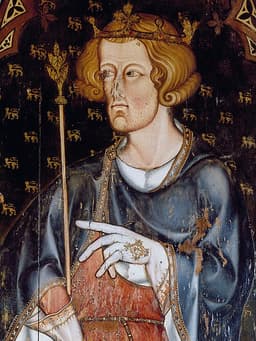
Edward I
Emperor · Medieval
62.2Total
Basic Information
Born
693
1239
Died
757
1307
Era
Medieval
Medieval
Nationality
Asturias
England
Occupation
Emperor
Emperor
Civilization
Western
Western
Score Comparison
Military (10%)
55.0
74.7
Political (20%)
27.9
60.0
Influence (20%)
49.4
56.7
Legacy (20%)
42.5
55.0
Leadership (15%)
51.9
72.0
Strategy (15%)
41.7
70.0
TOTAL
44.6
62.2
Alfonso I of Asturias — Complete Timeline
730 AD
Married Ermesinda, daughter of PelagiusPolitical Action
Alfonso married Ermesinda, the daughter of Pelagius, the first king of Asturias. This marriage allied him with the founding dynasty and legitimized his claim to the throne, which he later inherited after Pelagius's death.
MarriageDynastyAsturias
Impact: nationalconstructive
740 AD
Expanded the Kingdom of Asturias into Galicia and LeónWar◆ Major
Alfonso I launched military campaigns that extended Asturian control over Galicia, Le
Territorial ExpansionAsturiasReconquista
Impact: regionalconstructive
750 AD
Established the policy of depopulating the Duero ValleyPolitical Action◆ Major
Alfonso I implemented a strategy of depopulating the Duero River valley by relocating Christian populations northward. This created a buffer zone between Asturias and Muslim-controlled lands, hindering Umayyad incursions and shaping the region's demographic landscape.
Demographic PolicyAsturiasReconquista
Impact: regionaldestructive
Edward I — Complete Timeline
1282 AD
Conquest of WalesWar◆ Major
Edward I led a military campaign that resulted in the conquest of Wales. After the death of Llywelyn ap Gruffudd, Edward built a ring of castles (including Caernarfon and Conwy) to control the region. The Statute of Rhuddlan in 1284 annexed Wales to England.
ConquestWalesCastles
Impact: regional
1290 AD
Expulsion of the Jews from EnglandPolitical Action◆ Major
Edward I issued the Edict of Expulsion, ordering all Jews to leave England. The expulsion was motivated by financial and religious pressures. Jews were given until November 1 to depart, and their property was confiscated by the crown. The ban lasted until 1656.
ExpulsionJewsReligious Persecution
Impact: nationaldestructive
1295 AD
Model ParliamentPolitical Action◆ Major
Edward I summoned the Model Parliament, which included representatives of the commons (knights and burgesses) alongside nobles and clergy. This assembly set a precedent for the composition of the English Parliament. It was called to approve taxes for wars in Scotland and France.
ParliamentRepresentationTaxation
Impact: nationalconstructive
1296 AD
First War of Scottish IndependenceWar◆ Major
Edward I invaded Scotland after the Scots refused to support his war in France. He captured Berwick and defeated the Scots at the Battle of Dunbar. Edward forced the submission of Scottish nobles and removed the Stone of Scone to Westminster Abbey.
ScotlandInvasionStone of Scone
Impact: regional
Expert Analysis
Origins
Alfonso I of Asturias was born around 693, likely in the Cantabrian region. He was the son of Duke Peter of Cantabria, a Visigothic noble. His marriage to Ermesinda, daughter of Pelagius (the founder of the Asturian kingdom), linked him to the ruling dynasty. Little is known of his early life, but his Visigothic heritage shaped his claim to lead Christian resistance against the Umayyad Caliphate.
Edward I of England was born on June 17, 1239, at Westminster Palace, the eldest son of King Henry III and Eleanor of Provence. He was educated in chivalry and statecraft, and his early experiences included the Second Barons' War, where he fought alongside his father. His upbringing in the tumultuous Plantagenet court instilled a pragmatic and authoritarian approach to kingship.
Rise to Power
Alfonso I came to power in 739 after the death of his father-in-law, Pelagius's son Favila. His marriage to Ermesinda provided legitimacy, and he quickly asserted control over the Asturian kingdom. He capitalized on internal divisions among the Moors, who were preoccupied with Berber revolts and Arab infighting. By 740, he began a series of campaigns that expanded Asturian territory into Galicia and León.
Edward I's rise was more contested. He was involved in the Second Barons' War (1264–1267), initially supporting his father against Simon de Montfort. After the royalist victory at Evesham in 1265, Edward gained military experience. He went on crusade to the Holy Land (1270–1274), which enhanced his reputation. He became king in 1272 upon his father's death, but was formally crowned in 1274 upon his return. His early reign focused on consolidating royal authority after the baronial conflicts.
Leadership & Governance
Alfonso I ruled as a warrior king, leading campaigns personally. His governance was decentralized, relying on local counts and the church. He implemented the depopulation of the Duero Valley, moving Christians north to create a buffer zone against Moorish raids. This strategy, while defensive, left vast areas empty for centuries. He also established monasteries and churches to strengthen Christian identity.
Edward I was a reformer and centralizer. He summoned the Model Parliament in 1295, including knights and burgesses, to gain consent for taxation. He issued statutes like the Statute of Westminster (1275) and the Statute of Winchester (1285), which reformed legal procedures and local law enforcement. His governance was more bureaucratic than Alfonso's, with a focus on unifying English law and extending royal control over Wales and Scotland.
Triumph & Tragedy
Alfonso I's greatest triumph was expanding Asturias from a small enclave to a kingdom covering Galicia, León, and parts of Portugal. He secured the Christian foothold in the north. His tragedy was the depopulation policy, which may have hindered economic growth and left the Duero Valley as a wasteland for generations. His military score of 55.0 reflects modest success compared to later Reconquista figures.
Edward I's triumphs include the conquest of Wales (1282–1283), where he built formidable castles like Caernarfon and Conwy. He also summoned the Model Parliament, a milestone in representative government. His tragedies include the costly Scottish wars, which remained unresolved, and the expulsion of Jews from England in 1290, a morally repugnant act that weakened the economy. His military score of 74.7 and political score of 60.0 reflect his effectiveness.
Character & Destiny
Alfonso I was a pragmatic ruler, using marriage and military opportunism. His character was shaped by the need to survive and expand against overwhelming odds. His destiny was to be a founding figure of the Reconquista, though his depopulation policy shows a ruthless streak.
Edward I was a tall, imposing figure (nicknamed 'Longshanks'), known for his temper and determination. He was a skilled administrator and warrior, but also vindictive, as seen in his treatment of the Scots and Jews. His character drove him to centralize power, but his overreach in Scotland led to failure. Historical assessments often note his role in shaping English law and parliament, alongside his harshness.
Legacy
Alfonso I's legacy is as a builder of the Asturian kingdom, which became the nucleus of Christian Spain. His depopulation policy, while controversial, created a buffer that slowed Moorish advances. He is remembered as a key figure in the early Reconquista, but his overall influence score of 49.4 reflects limited long-term impact beyond Iberia.
Edward I's legacy is profound. He conquered Wales, leaving a legacy of castles and English legal systems. The Model Parliament influenced the development of the English Parliament. His expulsion of Jews was a dark precedent, but his legal reforms endured. His legacy score of 55.0 and influence score of 56.7 indicate a broader impact on English and British history.
Conclusion
Edward I had greater impact than Alfonso I. With a total score of 62.2 against Alfonso's 44.6, Edward's military, political, and strategic achievements were more significant. Alfonso's expansion was important for Christian Spain, but Edward's reforms shaped English governance for centuries. Edward's conquest of Wales and parliamentary innovations had lasting effects, while Alfonso's depopulation policy was a mixed legacy. Thus, Edward I stands as the more consequential ruler.
Rankings
🥇
Edward ILeader
Mil: 74.7Pol: 60.0Inf: 56.7
62.2
🥈
Alfonso I of Asturias
Mil: 55.0Pol: 27.9Inf: 49.4
44.6
+17.6 behind
How This Comparison Works
Algorithm
Each figure is scored on 6 dimensions (0—100 scale) based on structured historical data: Military (10%), Political (20%), Influence (20%), Legacy (20%), Leadership (15%), Strategy (15%). The weighted total produces the final ranking.
Data Sources
Scores are computed from structured sub-indicators in the database. Scale factors adjust for era (Ancient ×0.85, Modern ×1.0) and civilization size (Eastern ×1.05, Other ×0.80) to account for differences in population and military scale.
Maximum 3 Figures
Comparisons are limited to 2—3 figures to ensure readability and statistical meaningfulness.
Error Margins
±5 points per dimension — Sub-scores are derived from historical records with inherent uncertainty. Two figures within 5 points on a dimension should be considered roughly equivalent in that area.
Total Score Accuracy
±3 points overall — The weighted combination of 6 dimensions produces a total score with approximately ±3 points of uncertainty. Differences of less than 3 points are not statistically significant— the figures are effectively tied.
Known Limitations
- Historical records are incomplete and uneven across civilizations
- Figures from oral-tradition societies may be underrepresented
- Occupation labels can misclassify multi-role figures
- Scores measure capability and impact, not moral character
- Quantitative scoring is a comparison tool, not absolute truth
Capability Radar
Military (10%) — Battles & Warfare
Battles
30
75
Win Rate
35
70
Expansion
40
75
Political (20%) — Governance & Reform
Reform
20
75
Diplomacy
25
65
Economy
20
70
Influence (20%) — Cultural & Global Reach
Cultural
20
65
Global
15
60
Legacy (20%) — Historical Impact
Historical
30
75
Longevity
25
70
Leadership (15%) — Power & Stability
Tenure
35
80
Stability
30
60
Strategy (15%) — Tactics & Innovation
Strategy
30
85
Tactics
25
80
Reform
20
70
Similar Comparisons
Comments & Discussion
No comments yet. Be the first to share your thoughts!