Loading...
Dungar Singh of Bikaner vs Vasily IV
Dungar Singh of Bikaner leads by 11.2 pts · 2 figures compared
…
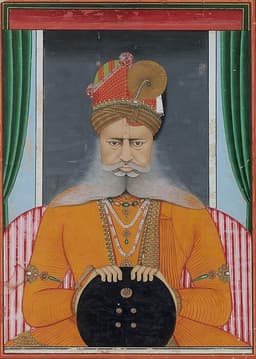
Dungar Singh of Bikaner
Emperor · Modern
48.6Total
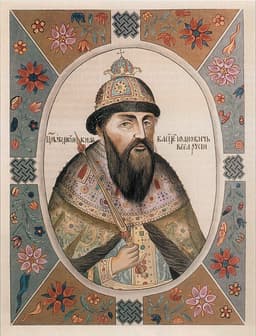
Vasily IV
Emperor · Modern
37.4Total
Basic Information
Born
1854
1552
Died
1887
1612
Era
Modern
Modern
Nationality
India
Russia
Occupation
Emperor
Emperor
Civilization
Indian
Western
Score Comparison
Military (10%)
21.2
14.9
Political (20%)
68.0
26.4
Influence (20%)
50.2
46.3
Legacy (20%)
40.0
36.7
Leadership (15%)
68.0
38.1
Strategy (15%)
35.7
54.8
TOTAL
48.6
37.4
Dungar Singh of Bikaner — Complete Timeline
1880 AD
Construction of the Junagarh Fort additionsCultural◆ Major
Dungar Singh oversaw the construction of new additions to the Junagarh Fort in Bikaner, including the Anup Mahal and the Karan Mahal. These structures featured intricate mirror work, frescoes, and carved marble, enhancing the fort's architectural grandeur.
ArchitectureFortPatronage
Impact: regionalconstructive
1885 AD
Modernization of Bikaner's infrastructureReform◆ Major
Dungar Singh initiated modernization projects in Bikaner, including the construction of roads, a telegraph system, and a water supply network. These improvements connected Bikaner to broader colonial infrastructure and improved urban living conditions.
InfrastructureModernizationUrban Development
Impact: regionalconstructive
1887 AD
Establishment of the Bikaner State MuseumCultural
Dungar Singh founded the Bikaner State Museum within the Junagarh Fort, housing a collection of artifacts, manuscripts, and weapons. The museum preserved the cultural heritage of Bikaner and made it accessible to the public.
MuseumCultural PreservationEducation
Impact: regionalconstructive
Vasily IV — Complete Timeline
1606 AD
Bolotnikov RebellionWar◆ Major
Ivan Bolotnikov led a massive peasant and Cossack uprising against Vasily IV, claiming to be a commander of the resurrected False Dmitry. The rebels besieged Moscow but were defeated by Vasily's army in 1607.
RebellionBolotnikovPeasant War
Impact: national
Coronation as Tsar Vasily IVPolitical Action◆ Major
Vasily Shuisky was proclaimed Tsar by a boyar assembly after the overthrow of False Dmitry I. His coronation was irregular, lacking the traditional Zemsky Sobor approval, which weakened his legitimacy.
CoronationBoyarsLegitimacy
Impact: national
1608 AD
Siege of Moscow by False Dmitry IIWar◆ Major
False Dmitry II, another impostor, established a rival court at Tushino near Moscow. Vasily IV's forces were unable to dislodge him, leading to a dual power situation in Russia for over a year.
TushinoImpostorSiege
Impact: national
1609 AD
Treaty of Vyborg with SwedenPolitical Action◆ Major
Vasily IV signed a treaty with Sweden, ceding the fortress of Korela in exchange for Swedish military aid against False Dmitry II and the Polish intervention. This brought Sweden into the Russian conflict.
SwedenTreatyMilitary Aid
Impact: regional
1610 AD
Overthrow and Forced MonasticismPolitical Action◆ Major
After the Polish army defeated Russian-Swedish forces at the Battle of Klushino, boyars overthrew Vasily IV. He was forcibly tonsured as a monk and later handed over to the Poles, dying in captivity in 1612.
OverthrowPolandCaptivity
Impact: nationaltragic
Expert Analysis
Origins
**Dungar Singh of Bikaner** was born in 1854 into the Rathore dynasty of Bikaner. He was the second son of Maharaja Sardar Singh and ascended the throne in 1872 after his father's death. His education included English and administrative training under British supervision, which shaped his modernizing outlook.
**Vasily IV** (born Vasily Shuisky in 1552) hailed from the Shuisky family, a prominent boyar clan. He entered court politics under Ivan the Terrible and gained experience in military campaigns. His early life was marked by the volatile court intrigues of the late Rurikid period.
Rise to Power
Dungar Singh became Maharaja at age 18 in 1872, inheriting a stable but traditional kingdom. His rise was smooth due to hereditary succession and British support. He focused on internal reforms rather than expansion.
Vasily IV rose through boyar conspiracies. In 1606, after the murder of False Dmitry I, a boyar faction proclaimed him tsar. His coronation was irregular, lacking the traditional Zemsky Sobor approval, which weakened his legitimacy from the start. He immediately faced the Bolotnikov Rebellion (1606-1607), a massive uprising of peasants and Cossacks led by Ivan Bolotnikov, who claimed to be a commander of the resurrected Dmitry. Vasily managed to defeat Bolotnikov at the Siege of Moscow and the Battle of Kotly, but his position remained precarious.
Leadership & Governance
Dungar Singh's leadership focused on modernization. He oversaw construction of new additions to the Junagarh Fort, including the Anup Mahal and Karan Mahal, blending Rajput and European architectural styles. He initiated infrastructure projects: roads, a telegraph system, and a water supply network. He also founded the Bikaner State Museum in 1884, preserving artifacts, manuscripts, and weapons. His political score of 68.0 reflects his ability to modernize while maintaining stability.
Vasily IV's governance was reactive and weak. He attempted to stabilize Russia by suppressing rebels and signing the Treaty of Vyborg with Sweden in 1609, ceding the fortress of Korela for Swedish military aid. However, the alliance failed to prevent the rise of False Dmitry II, who established a rival court at Tushino. Vasily's political score of 26.4 indicates his inability to unite the boyars or the populace. His leadership score of 38.1 reflects his indecisiveness and lack of strategic vision.
Triumph & Tragedy
Dungar Singh's greatest success was transforming Bikaner into a modern princely state with lasting infrastructure. His museum preserved cultural heritage. His failure was limited impact beyond his state; his modernization did not spread to other regions, and his legacy score of 40.0 reflects this localized effect.
Vasily IV's triumph was surviving the Bolotnikov Rebellion initially. His tragedy was the complete collapse of his rule: after the Polish victory at the Battle of Klushino in 1610, boyars overthrew him. He was forcibly tonsured as a monk and later died in Polish captivity in 1612. His military score of 14.9 and strategy score of 54.8 (the latter reflecting his use of Swedish alliance) show a contrast between tactical moves and overall failure.
Character & Destiny
Dungar Singh was a forward-thinking ruler, open to Western ideas while respecting tradition. His character suited the peaceful modernization of a small state, leading to a stable reign and natural death in 1887.
Vasily IV was a product of the boyar system, skilled in court intrigue but lacking the decisiveness needed for a crisis. His destiny was sealed by the Time of Troubles: his irregular accession, inability to control impostors, and reliance on foreign aid led to his deposition. Historians often view him as a tragic figure, overwhelmed by forces he could not manage.
Legacy
Dungar Singh's legacy is visible in Bikaner's architecture, museums, and infrastructure. The Junagarh Fort additions remain tourist attractions, and the museum continues to educate. His influence score of 50.2 reflects moderate impact within India.
Vasily IV's legacy is tied to the Time of Troubles. His reign highlighted the dangers of weak central authority and foreign intervention. The Treaty of Vyborg set a precedent for Swedish involvement in Russian affairs. His overthrow led to the election of Michael Romanov in 1613, ending the Troubles. His legacy score of 36.7 is low, but his role in the transition to the Romanov dynasty is historically significant.
Conclusion
Dungar Singh of Bikaner had a greater impact than Vasily IV. With a total score of 48.6 against Vasily's 37.4, Dungar Singh's modernization projects created lasting cultural and infrastructural improvements. Vasily IV, though central to a pivotal period, failed to stabilize Russia and left a largely negative legacy. Dungar Singh's constructive reforms outweigh Vasily's tumultuous but ultimately unsuccessful rule.
Rankings
🥇
Dungar Singh of BikanerLeader
Mil: 21.2Pol: 68.0Inf: 50.2
48.6
🥈
Vasily IV
Mil: 14.9Pol: 26.4Inf: 46.3
37.4
+11.2 behind
How This Comparison Works
Algorithm
Each figure is scored on 6 dimensions (0—100 scale) based on structured historical data: Military (10%), Political (20%), Influence (20%), Legacy (20%), Leadership (15%), Strategy (15%). The weighted total produces the final ranking.
Data Sources
Scores are computed from structured sub-indicators in the database. Scale factors adjust for era (Ancient ×0.85, Modern ×1.0) and civilization size (Eastern ×1.05, Other ×0.80) to account for differences in population and military scale.
Maximum 3 Figures
Comparisons are limited to 2—3 figures to ensure readability and statistical meaningfulness.
Error Margins
±5 points per dimension — Sub-scores are derived from historical records with inherent uncertainty. Two figures within 5 points on a dimension should be considered roughly equivalent in that area.
Total Score Accuracy
±3 points overall — The weighted combination of 6 dimensions produces a total score with approximately ±3 points of uncertainty. Differences of less than 3 points are not statistically significant— the figures are effectively tied.
Known Limitations
- Historical records are incomplete and uneven across civilizations
- Figures from oral-tradition societies may be underrepresented
- Occupation labels can misclassify multi-role figures
- Scores measure capability and impact, not moral character
- Quantitative scoring is a comparison tool, not absolute truth
Capability Radar
Military (10%) — Battles & Warfare
Battles
10
15
Win Rate
10
10
Expansion
10
5
Political (20%) — Governance & Reform
Reform
60
10
Diplomacy
40
15
Economy
50
10
Influence (20%) — Cultural & Global Reach
Cultural
30
10
Global
10
5
Legacy (20%) — Historical Impact
Historical
30
20
Longevity
20
10
Leadership (15%) — Power & Stability
Tenure
50
20
Stability
55
5
Strategy (15%) — Tactics & Innovation
Strategy
15
10
Tactics
15
10
Reform
30
5
Similar Comparisons
Comments & Discussion
No comments yet. Be the first to share your thoughts!