Loading...
Ratan Singh of Bikaner vs Vasily IV
Ratan Singh of Bikaner leads by 6.4 pts · 2 figures compared
…

Ratan Singh of Bikaner
Emperor · Modern
43.8Total
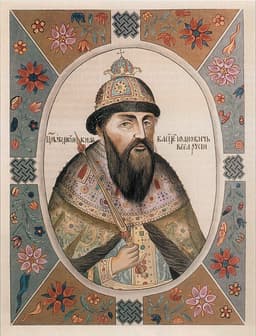
Vasily IV
Emperor · Modern
37.4Total
Basic Information
Born
1820
1552
Died
1852
1612
Era
Modern
Modern
Nationality
India
Russia
Occupation
Emperor
Emperor
Civilization
Indian
Western
Score Comparison
Military (10%)
10.2
14.9
Political (20%)
36.5
26.4
Influence (20%)
49.4
46.3
Legacy (20%)
37.5
36.7
Leadership (15%)
67.0
38.1
Strategy (15%)
54.8
54.8
TOTAL
43.8
37.4
Ratan Singh of Bikaner — Complete Timeline
1845 AD
Administrative reforms in BikanerReform
Ratan Singh implemented administrative reforms in Bikaner, including improvements in tax collection and land revenue systems. These reforms aimed to increase state revenue and reduce corruption among local officials.
AdministrationTax ReformGovernance
Impact: regionalconstructive
1850 AD
Construction of the Lalgarh PalaceCultural
Ratan Singh commissioned the construction of the Lalgarh Palace in Bikaner, a red sandstone palace that blended Rajput and Mughal architectural styles. The palace served as a royal residence and later became a heritage hotel.
ArchitectureRoyal ResidenceHeritage
Impact: regionalconstructive
Vasily IV — Complete Timeline
1606 AD
Bolotnikov RebellionWar◆ Major
Ivan Bolotnikov led a massive peasant and Cossack uprising against Vasily IV, claiming to be a commander of the resurrected False Dmitry. The rebels besieged Moscow but were defeated by Vasily's army in 1607.
RebellionBolotnikovPeasant War
Impact: national
Coronation as Tsar Vasily IVPolitical Action◆ Major
Vasily Shuisky was proclaimed Tsar by a boyar assembly after the overthrow of False Dmitry I. His coronation was irregular, lacking the traditional Zemsky Sobor approval, which weakened his legitimacy.
CoronationBoyarsLegitimacy
Impact: national
1608 AD
Siege of Moscow by False Dmitry IIWar◆ Major
False Dmitry II, another impostor, established a rival court at Tushino near Moscow. Vasily IV's forces were unable to dislodge him, leading to a dual power situation in Russia for over a year.
TushinoImpostorSiege
Impact: national
1609 AD
Treaty of Vyborg with SwedenPolitical Action◆ Major
Vasily IV signed a treaty with Sweden, ceding the fortress of Korela in exchange for Swedish military aid against False Dmitry II and the Polish intervention. This brought Sweden into the Russian conflict.
SwedenTreatyMilitary Aid
Impact: regional
1610 AD
Overthrow and Forced MonasticismPolitical Action◆ Major
After the Polish army defeated Russian-Swedish forces at the Battle of Klushino, boyars overthrew Vasily IV. He was forcibly tonsured as a monk and later handed over to the Poles, dying in captivity in 1612.
OverthrowPolandCaptivity
Impact: nationaltragic
Expert Analysis
Origins
Ratan Singh (born 1828) was the Maharaja of Bikaner, a princely state in Rajasthan, India. He inherited a stable kingdom with a tradition of loyalty to the British East India Company. His education included administrative training under British oversight, preparing him for a role as a subordinate ally. Vasily IV (born 1552) was a Russian boyar from the Shuisky family, one of the oldest noble houses. He rose through court intrigue during the chaos following Ivan the Terrible's death, lacking a stable power base or foreign backing.
Rise to Power
Ratan Singh ascended the throne in 1851 after his father's death. His early reign focused on consolidating control and maintaining good relations with the British. The Indian Rebellion of 1857 was his defining moment: he actively supported the British by sending troops and resources, earning their gratitude and securing his position. Vasily IV's rise was more tumultuous. He participated in the overthrow of False Dmitry I in 1606, then was elected Tsar by a boyar assembly. His coronation was irregular, lacking the traditional patriarchal blessing, and he faced immediate challenges from rebels and pretenders.
Leadership & Governance
Ratan Singh's leadership was characterized by administrative efficiency and architectural patronage. He reformed tax collection and land revenue systems, improving state finances. He commissioned the Lalgarh Palace, blending Rajput and Mughal styles, symbolizing stability. His governance relied on British support, scoring 67.0 in leadership. Vasily IV's leadership was weak and indecisive. He failed to unite the boyars or suppress rebellions. His political score of 26.4 reflects his inability to navigate the Time of Troubles. He signed the Treaty of Vyborg with Sweden, ceding Korela for military aid, but this alienated many Russians.
Triumph & Tragedy
Ratan Singh's greatest triumph was surviving the 1857 rebellion intact and strengthening his dynasty's ties with the British. His reforms brought modest prosperity. His tragedy was limited autonomy; he was essentially a British puppet. Vasily IV's triumph was briefly holding Moscow against multiple enemies. His tragedy was complete failure: he was overthrown in 1610 after the Battle of Klushino, forcibly tonsured as a monk, and died in captivity. His total score of 37.4 reflects his disastrous reign.
Character & Destiny
Ratan Singh was cautious and pragmatic, prioritizing survival over glory. His character suited a subordinate ruler under British paramountcy. Vasily IV was ambitious but lacked strategic vision. He was indecisive and overly reliant on boyar factions. His character sealed his fate in a period requiring ruthless decisiveness.
Legacy
Ratan Singh's legacy is tied to Bikaner's development and its loyalty to the British. His palace remains a tourist attraction. However, his impact on broader history is minimal. Vasily IV's legacy is negative: he is remembered as a failed tsar who worsened the Time of Troubles. His rule contributed to the Polish occupation of Moscow, leading to the rise of the Romanov dynasty.
Conclusion
Ratan Singh had a more successful reign, scoring 43.8 total versus Vasily IV's 37.4. While neither figure was transformative, Ratan Singh's administrative continuity and survival outweigh Vasily IV's catastrophic failure. The Indian maharaja maintained stability; the Russian tsar accelerated chaos. Ratan Singh's impact, though limited, was positive for his state, whereas Vasily IV's was negative for Russia.
Rankings
🥇
Ratan Singh of BikanerLeader
Mil: 10.2Pol: 36.5Inf: 49.4
43.8
🥈
Vasily IV
Mil: 14.9Pol: 26.4Inf: 46.3
37.4
+6.4 behind
How This Comparison Works
Algorithm
Each figure is scored on 6 dimensions (0—100 scale) based on structured historical data: Military (10%), Political (20%), Influence (20%), Legacy (20%), Leadership (15%), Strategy (15%). The weighted total produces the final ranking.
Data Sources
Scores are computed from structured sub-indicators in the database. Scale factors adjust for era (Ancient ×0.85, Modern ×1.0) and civilization size (Eastern ×1.05, Other ×0.80) to account for differences in population and military scale.
Maximum 3 Figures
Comparisons are limited to 2—3 figures to ensure readability and statistical meaningfulness.
Error Margins
±5 points per dimension — Sub-scores are derived from historical records with inherent uncertainty. Two figures within 5 points on a dimension should be considered roughly equivalent in that area.
Total Score Accuracy
±3 points overall — The weighted combination of 6 dimensions produces a total score with approximately ±3 points of uncertainty. Differences of less than 3 points are not statistically significant— the figures are effectively tied.
Known Limitations
- Historical records are incomplete and uneven across civilizations
- Figures from oral-tradition societies may be underrepresented
- Occupation labels can misclassify multi-role figures
- Scores measure capability and impact, not moral character
- Quantitative scoring is a comparison tool, not absolute truth
Capability Radar
Military (10%) — Battles & Warfare
Battles
10
15
Win Rate
10
10
Expansion
5
5
Political (20%) — Governance & Reform
Reform
20
10
Diplomacy
40
15
Economy
20
10
Influence (20%) — Cultural & Global Reach
Cultural
15
10
Global
10
5
Legacy (20%) — Historical Impact
Historical
15
20
Longevity
10
10
Leadership (15%) — Power & Stability
Tenure
40
20
Stability
30
5
Strategy (15%) — Tactics & Innovation
Strategy
10
10
Tactics
10
10
Reform
5
5
Similar Comparisons
Comments & Discussion
No comments yet. Be the first to share your thoughts!