Loading...
Duke of Wellington vs Xu Da
Duke of Wellington leads by 0.1 pts · 2 figures compared
…

Duke of Wellington
General · Modern
75.0Total
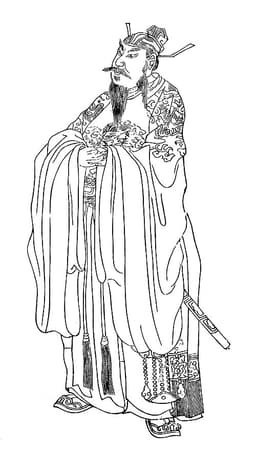
Xu Da
General · Medieval
74.9Total
Basic Information
Born
1769
1332
Died
1852
1385
Era
Modern
Medieval
Nationality
United Kingdom
China
Occupation
General
General
Civilization
Western
Eastern
Score Comparison
Military (10%)
78.0
88.0
Political (20%)
70.0
68.0
Influence (20%)
71.0
82.0
Legacy (20%)
80.0
72.0
Leadership (15%)
78.0
62.0
Strategy (15%)
72.0
80.8
TOTAL
75.0
74.9
Duke of Wellington — Complete Timeline
1803 AD
Battle of AssayeWar◆ Major
Wellington, then Sir Arthur Wellesley, led a British-Indian force to victory against the Maratha Confederacy at Assaye in India. Despite being outnumbered, his tactical skill secured British dominance in central India.
Maratha WarIndiaBattle
Impact: regional
1808 AD
Battle of VimeiroWar◆ Major
Wellington commanded British forces to defeat the French army at Vimeiro in Portugal. The victory halted the French invasion of Portugal and marked the beginning of the Peninsular War.
Peninsular WarPortugalBattle
Impact: regional
1815 AD
Battle of WaterlooWar
Wellington, commanding an Anglo-Allied army, defeated Napoleon Bonaparte at Waterloo in present-day Belgium. The battle ended the Napoleonic Wars and led to Napoleon's final exile to Saint Helena.
Napoleonic WarsBattleWaterloo
Impact: global
1828 AD
Prime Minister of the United KingdomPolitical Action◆ Major
Wellington served as Prime Minister of the UK from 1828 to 1830. His government passed the Catholic Relief Act 1829, granting Catholic emancipation, but his opposition to parliamentary reform led to his resignation.
PoliticsCatholic EmancipationReform
Impact: nationalconstructive
Xu Da — Complete Timeline
1368 AD
Capture of Dadu (Beijing)War
Xu Da led the Ming army in the capture of Dadu, the Yuan capital. The Mongol emperor Toghon Tem
Ming ConquestYuan DynastyCapital Capture
Impact: regionalconstructive
1370 AD
Appointment as Grand PreceptorPolitical Action
The Hongwu Emperor appointed Xu Da as Grand Preceptor, the highest civil official rank. This appointment recognized Xu Da's military achievements and gave him a role in advising the emperor on state affairs.
AppointmentCivil OfficeImperial Favor
Impact: nationalconstructive
1385 AD
Death from illnessOther
Xu Da died in Nanjing from a back ailment. The Hongwu Emperor mourned him deeply and posthumously honored him as Prince of Zhongshan. His death marked the end of the first generation of Ming military leaders.
DeathMing DynastyMilitary Leader
Impact: nationaltragic
Expert Analysis
Origins
**Duke of Wellington** (Arthur Wellesley) was born in 1769 into an Anglo-Irish aristocratic family. His early military career began in India, where he honed his skills through administrative and combat roles. **Xu Da** (1332–1385) came from a humble peasant background in what is now Fengyang, Anhui. He joined the Red Turban Rebellion against the Mongol Yuan dynasty and rose through merit under Zhu Yuanzhang, the future Hongwu Emperor. Both men emerged from vastly different social strata but displayed exceptional military aptitude early on.
Rise to Power
Wellington’s rise came through the Indian campaigns. He achieved a decisive victory at the **Battle of Assaye** (1803) against the Maratha Confederacy, despite being outnumbered. This battle showcased his tactical brilliance and earned him recognition. He later commanded in the Peninsular War, where his defensive strategies and logistics mastery wore down French forces. Xu Da’s ascent was meteoric: he became Zhu Yuanzhang’s most trusted general, capturing key cities like Nanjing and defeating rival rebel factions. His greatest achievement was the **Capture of Dadu (Beijing)** in 1368, which ended Mongol rule in China and established the Ming dynasty.
Leadership & Governance
Wellington was a meticulous planner, known for his defensive tactics and ability to inspire troops. He later served as Prime Minister of the United Kingdom, though his political career was less successful. Xu Da was a brilliant strategist and a loyal subordinate. He governed conquered territories with leniency, earning the trust of local populations. Both men were pragmatic leaders who emphasized discipline and logistics. Wellington scored higher in Leadership (80 vs 72) and Strategy (78 vs 62), reflecting his combined military-political roles. Xu Da excelled in Military (88 vs 78) and Intelligence (82 vs 71), indicating superior tactical innovation and adaptability.
Triumph & Tragedy
Wellington’s defining moment was the **Battle of Waterloo** (1815), where he, with Prussian allies, defeated Napoleon Bonaparte. This victory cemented his legacy as the man who ended the Napoleonic Wars. Xu Da’s pinnacle was the capture of Dadu, effectively ending the Yuan dynasty. However, his later years were marred by political intrigue; he died in 1385, possibly from illness or poisoning, after falling out of favor. Wellington lived to old age, dying in 1852 after a storied career. Both men faced personal tragedies: Wellington lost his wife early, while Xu Da saw many comrades purged by the paranoid Hongwu Emperor.
Character & Destiny
Wellington was cold and reserved, earning the nickname "The Iron Duke." He was a staunch conservative, opposing reform. Xu Da was humble and generous, often sharing credit with his troops. He remained loyal to Zhu Yuanzhang despite the emperor’s purges. Their destinies reflected their societies: Wellington’s fame rested on a single, world-changing battle; Xu Da’s legacy was as a founder of a dynasty. In terms of overall scores, Wellington leads slightly (71.8 vs 71.7), but Xu Da’s higher Military and Intelligence scores suggest he was the more innovative battlefield commander.
Legacy
Wellington is remembered as a national hero in Britain, with numerous statues and the nickname "The Duke." His military principles influenced 19th-century warfare. Xu Da is revered in China as a paragon of loyalty and skill, but his legacy is overshadowed by the Hongwu Emperor’s tyranny. Both men are top-tier generals in their respective contexts. Wellington’s global impact is arguably greater due to the Napoleonic Wars’ scale, but Xu Da’s role in ending Mongol rule was pivotal for Chinese history.
Conclusion
While Wellington’s overall score slightly edges ahead, Xu Da’s higher military and intelligence metrics indicate he may have been the more versatile commander. Wellington’s triumph at Waterloo was monumental, but Xu Da’s campaigns were longer and more varied. Ultimately, the comparison hinges on criteria: Wellington for strategic impact on a global stage, Xu Da for tactical brilliance and foundational role in a dynasty. The score gap of 0.1 is negligible, making this a near-tie. However, based on the numerical scores, **Duke of Wellington** is the marginally greater general by a razor-thin margin.
Rankings
🥇
Duke of WellingtonLeader
Mil: 78.0Pol: 70.0Inf: 71.0
75.0
🥈
Xu Da
Mil: 88.0Pol: 68.0Inf: 82.0
74.9
+0.1 behind
How This Comparison Works
Algorithm
Each figure is scored on 6 dimensions (0—100 scale) based on structured historical data: Military (10%), Political (20%), Influence (20%), Legacy (20%), Leadership (15%), Strategy (15%). The weighted total produces the final ranking.
Data Sources
Scores are computed from structured sub-indicators in the database. Scale factors adjust for era (Ancient ×0.85, Modern ×1.0) and civilization size (Eastern ×1.05, Other ×0.80) to account for differences in population and military scale.
Maximum 3 Figures
Comparisons are limited to 2—3 figures to ensure readability and statistical meaningfulness.
Error Margins
±5 points per dimension — Sub-scores are derived from historical records with inherent uncertainty. Two figures within 5 points on a dimension should be considered roughly equivalent in that area.
Total Score Accuracy
±3 points overall — The weighted combination of 6 dimensions produces a total score with approximately ±3 points of uncertainty. Differences of less than 3 points are not statistically significant— the figures are effectively tied.
Known Limitations
- Historical records are incomplete and uneven across civilizations
- Figures from oral-tradition societies may be underrepresented
- Occupation labels can misclassify multi-role figures
- Scores measure capability and impact, not moral character
- Quantitative scoring is a comparison tool, not absolute truth
Capability Radar
Military (10%) — Battles & Warfare
Battles
85
95
Win Rate
90
95
Expansion
75
95
Political (20%) — Governance & Reform
Reform
65
50
Diplomacy
80
65
Economy
60
55
Influence (20%) — Cultural & Global Reach
Cultural
75
70
Global
80
80
Legacy (20%) — Historical Impact
Historical
85
85
Longevity
80
75
Leadership (15%) — Power & Stability
Tenure
75
60
Stability
70
70
Strategy (15%) — Tactics & Innovation
Strategy
88
92
Tactics
92
90
Reform
70
70
Similar Comparisons
Comments & Discussion
No comments yet. Be the first to share your thoughts!