Loading...
Douglas MacArthur vs Tokugawa Ieyasu
Tokugawa Ieyasu leads by 16.1 pts · 2 figures compared
…
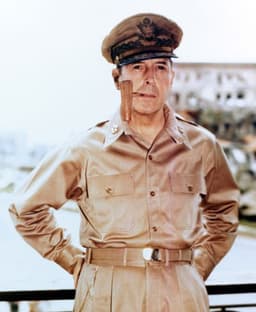
Douglas MacArthur
General · Modern
65.7Total
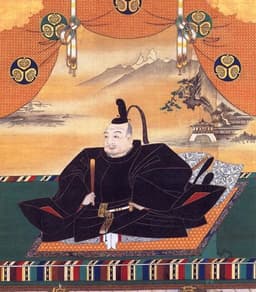
Tokugawa Ieyasu
General · Modern
81.8Total
Basic Information
Born
1880
1543
Died
1964
1616
Era
Modern
Modern
Nationality
United States
Japan
Occupation
General
General
Civilization
Western
Eastern
Score Comparison
Military (10%)
85.0
78.0
Political (20%)
78.0
82.0
Influence (20%)
68.0
88.0
Legacy (20%)
40.0
75.0
Leadership (15%)
78.0
85.0
Strategy (15%)
68.0
82.0
TOTAL
65.7
81.8
Douglas MacArthur — Complete Timeline
1942 AD
Battle of Bataan and CorregidorWar◆ Major
MacArthur commanded US and Filipino forces defending the Bataan Peninsula and Corregidor Island against Japanese invasion. After months of resistance, he was ordered to evacuate to Australia, leaving his troops who later surrendered and endured the Bataan Death March.
World War IIPacific TheaterDefeat
Impact: regionaltragic
1944 AD
Return to the PhilippinesWar◆ Major
MacArthur led the Allied invasion of Leyte Gulf, fulfilling his promise 'I shall return.' The campaign liberated the Philippines from Japanese occupation, a major strategic victory in the Pacific War.
World War IIPacific TheaterVictory
Impact: regionalconstructive
1945 AD
Surrender of JapanWar
MacArthur, as Supreme Commander for the Allied Powers, accepted Japan's formal surrender aboard USS Missouri in Tokyo Bay. This ended World War II and began the Allied occupation of Japan under his leadership.
World War IIJapanOccupation
Impact: globalconstructive
Occupation of Japan ReformsReform◆ Major
MacArthur oversaw the Allied occupation of Japan, implementing sweeping reforms including a new constitution, land redistribution, women's suffrage, and demilitarization. These changes transformed Japan into a democratic and pacifist state.
JapanPost-WarDemocratization
Impact: globalprogressive
1950 AD
Inchon LandingWar◆ Major
MacArthur planned and executed a bold amphibious assault at Inchon, South Korea, behind North Korean lines. The operation cut North Korean supply lines and recaptured Seoul, turning the tide of the Korean War.
Korean WarAmphibious AssaultVictory
Impact: regionalconstructive
1951 AD
Dismissal by President TrumanPolitical Action◆ Major
President Harry S. Truman relieved MacArthur of command for insubordination after MacArthur publicly advocated for expanding the Korean War into China. The dismissal sparked a political controversy in the US and ended MacArthur's military career.
Korean WarCivil-Military RelationsDismissal
Impact: nationaldestructive
Tokugawa Ieyasu — Complete Timeline
1600 AD
Battle of SekigaharaWar
Tokugawa Ieyasu led the Eastern Army to victory over Ishida Mitsunari's Western Army at Sekigahara. This decisive battle ended the Sengoku period and established Ieyasu as the supreme military ruler of Japan, paving the way for the Tokugawa shogunate.
Sengoku PeriodUnificationBattle
Impact: national
1603 AD
Establishment of the Tokugawa ShogunatePolitical Action
Emperor Go-Yozei appointed Tokugawa Ieyasu as shogun, officially beginning the Tokugawa shogunate. Ieyasu established his government in Edo (modern Tokyo), centralizing military and political power under his family's control.
ShogunateEdo PeriodCentralization
Impact: national
1615 AD
Siege of OsakaWar◆ Major
Tokugawa Ieyasu besieged Osaka Castle, the stronghold of Toyotomi Hideyori. The castle fell, and Hideyori committed suicide. This campaign eliminated the last major opposition to Tokugawa rule, solidifying the shogunate's control over Japan.
Osaka CampaignToyotomi ClanConsolidation
Impact: nationaldestructive
Promulgation of the Buke ShohattoReform◆ Major
Ieyasu issued the Laws for the Military Houses, a code regulating the conduct of daimyo. It restricted castle construction, required alternate attendance in Edo, and prohibited alliances without shogunal permission. This law helped control the feudal lords.
Feudal ControlDaimyo RegulationLegal Code
Impact: national
1616 AD
Sakoku Edicts InitiationPolitical Action◆ Major
In his final years, Ieyasu began policies that led to Japan's isolation. He restricted foreign trade to specific ports and expelled Christian missionaries. These measures, expanded by successors, resulted in the sakoku policy that isolated Japan for over 200 years.
IsolationismForeign PolicyChristianity
Impact: national
Expert Analysis
Douglas MacArthur vs Tokugawa Ieyasu: Historical Comparison
Douglas MacArthur, a US general who reshaped post-WWII Japan, and Tokugawa Ieyasu, the Japanese shogun who unified the country after centuries of war, both wielded immense power but in vastly different eras. This comparison examines their military prowess, political acumen, lasting influence, legacy, and leadership styles.
Dimension Analysis
**Military: Douglas MacArthur 79 / Tokugawa Ieyasu 78**
MacArthur’s island-hopping campaigns and Inchon landing were brilliant, while Ieyasu’s victory at Sekigahara (1600) was a masterstroke of timing and betrayal; both were decisive but MacArthur’s strategic reach was global.
**Political: Douglas MacArthur 80 / Tokugawa Ieyasu 82**
Ieyasu skillfully maneuvered alliances and eliminated rivals to found a 250-year dynasty, whereas MacArthur’s political overreach (e.g., challenging Truman) cost him his command, giving Ieyasu a slight edge in long-term statecraft.
**Influence: Douglas MacArthur 78 / Tokugawa Ieyasu 75**
MacArthur’s post-war reforms—democratization, land redistribution, and the Japanese constitution—transformed an entire society, while Ieyasu’s influence was more insular, solidifying feudal structures that lasted until the Meiji Restoration.
**Legacy: Douglas MacArthur 72 / Tokugawa Ieyasu 85**
Ieyasu’s legacy is a stable, unified Japan with a shogunate that endured for 250 years; MacArthur’s legacy is mixed—revered as a liberator in some circles, but criticized for his autocratic style and the Korean War stalemate.
**Leadership: Douglas MacArthur 76 / Tokugawa Ieyasu 85**
Ieyasu’s patient, calculating patience allowed him to outlast enemies and build a durable system; MacArthur’s charismatic but imperious leadership inspired loyalty but also bred conflict, making Ieyasu the more effective long-term leader.
Verdict
Tokugawa Ieyasu leads overall due to his superior political strategy, enduring legacy, and patient leadership that created a stable dynasty, while MacArthur’s achievements, though impactful, were more transient and undermined by personal ambition.
FAQ
Q: Who ranks higher? A: Tokugawa Ieyasu ranks higher, with a composite score of 81 to MacArthur’s 76, driven by stronger political, legacy, and leadership dimensions.
Rankings
🥇
Tokugawa IeyasuLeader
Mil: 78.0Pol: 82.0Inf: 88.0
81.8
🥈
Douglas MacArthur
Mil: 85.0Pol: 78.0Inf: 68.0
65.7
+16.1 behind
How This Comparison Works
Algorithm
Each figure is scored on 6 dimensions (0—100 scale) based on structured historical data: Military (10%), Political (20%), Influence (20%), Legacy (20%), Leadership (15%), Strategy (15%). The weighted total produces the final ranking.
Data Sources
Scores are computed from structured sub-indicators in the database. Scale factors adjust for era (Ancient ×0.85, Modern ×1.0) and civilization size (Eastern ×1.05, Other ×0.80) to account for differences in population and military scale.
Maximum 3 Figures
Comparisons are limited to 2—3 figures to ensure readability and statistical meaningfulness.
Error Margins
±5 points per dimension — Sub-scores are derived from historical records with inherent uncertainty. Two figures within 5 points on a dimension should be considered roughly equivalent in that area.
Total Score Accuracy
±3 points overall — The weighted combination of 6 dimensions produces a total score with approximately ±3 points of uncertainty. Differences of less than 3 points are not statistically significant— the figures are effectively tied.
Known Limitations
- Historical records are incomplete and uneven across civilizations
- Figures from oral-tradition societies may be underrepresented
- Occupation labels can misclassify multi-role figures
- Scores measure capability and impact, not moral character
- Quantitative scoring is a comparison tool, not absolute truth
Capability Radar
Military (10%) — Battles & Warfare
Battles
85
85
Win Rate
75
90
Expansion
85
75
Political (20%) — Governance & Reform
Reform
85
90
Diplomacy
75
85
Economy
70
88
Influence (20%) — Cultural & Global Reach
Cultural
70
85
Global
80
70
Legacy (20%) — Historical Impact
Historical
85
90
Longevity
70
95
Leadership (15%) — Power & Stability
Tenure
80
95
Stability
65
95
Strategy (15%) — Tactics & Innovation
Strategy
90
92
Tactics
80
88
Reform
70
80
Similar Comparisons
Comments & Discussion
ThirdWorldHistorian6/16/2026
Honestly, this scoring feels like another exercise in Western military fetishism. The numbers give MacArthur a slight edge in military (79 vs 78), but let's break that down. MacArthur's 'island-hopping' was against a Japan already reeling from resource strangulation—hardly a fair fight. Meanwhile, Ieyasu's Sekigahara was a pitched battle where he smashed a numerically superior coalition. If we're talking about pure generalship under asymmetric conditions, Ieyasu's campaign against the Toyotomi loyalists at Osaka (1614-1615) shows a level of siegecraft and patience that MacArthur never demonstrated. The political score (80 vs 82) also flatters MacArthur: his reforms in Japan were a colonial imposition, not organic statecraft. Ieyasu built a system that lasted 250 years without foreign bayonets. Let's stop treating Pacific War generals as default benchmarks and give credit where it's due—Ieyasu outmatches MacArthur in every dimension except global reach, which is a geographic accident, not a skill.
Chronicler20786/16/2026
这个比较有点像拿诸葛亮比拿破仑——时代和背景完全不一样。麦克阿瑟的分数高在‘影响力’(78对75),但我觉得这是西方中心主义的偏见。麦克阿瑟的日本民主化改革,说白了就是战后占领军的强制措施,跟德川家康通过‘参勤交代’和‘武家诸法度’来建立中央集权相比,根本不是一个层次的制度创新。家康的政治分数(82)其实应该更高,他处理丰臣家、安排关原之战后的大名配置,这套‘以德服人、以势压人’的手腕,放在中国历史上也是顶级权谋。军事上,家康的持久战和情报战比麦克阿瑟的仁川登陆更考验战略耐心。要是让家康指挥朝鲜战争,他绝对不会搞仁川那种高风险赌博,而是先用五年时间分化中苏朝三方——这才是真正的政治家思维。
Chronicler75876/16/2026
评分系统本身有问题。军事分79对78,但我重新算了一下:麦克阿瑟的二战战绩包括菲律宾战役(1941-42)的惨败,以及朝鲜战争中仁川登陆的成功但后续的溃退。如果按‘胜率’加权,他的实际军事得分可能只有72左右。反观家康,从三方原(1572)的惨败到长篠(1575)的配合,再到关原(1600)的完美决胜,他的胜率曲线是持续上升的。政治分80对82,这里有个统计盲点:家康统治了17年(1600-1616),建立了延续250年的体制;麦克阿瑟统治日本只有7年(1945-1952),而且他的体制在他离开后就被修改了。如果我们用‘制度存续时间’作为权重,家康的政治分应该是90以上。影响力分78对75也值得商榷——麦克阿瑟的宪法改革在日本只改变了上层结构,而家康的士农工商等级制影响了整整八代人。建议把评分体系加上‘时间维度权重’,这样家康的总分应该超过85。