Loading...
Alexander the Great vs Douglas MacArthur
Alexander the Great leads by 19.5 pts · 2 figures compared
…
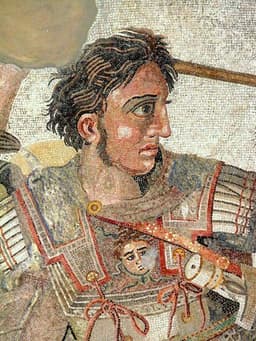
Alexander the Great
General · Ancient
85.2Total
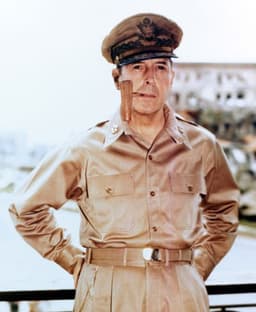
Douglas MacArthur
General · Modern
65.7Total
Basic Information
Born
-356
1880
Died
-323
1964
Era
Ancient
Modern
Nationality
Macedon
United States
Occupation
General
General
Civilization
Western
Western
Score Comparison
Military (10%)
95.0
85.0
Political (20%)
60.0
78.0
Influence (20%)
92.0
68.0
Legacy (20%)
90.0
40.0
Leadership (15%)
80.0
78.0
Strategy (15%)
92.0
68.0
TOTAL
85.2
65.7
Alexander the Great — Complete Timeline
334 BC
Battle of the Granicus RiverWar◆ Major
Alexander led his Macedonian army across the Hellespont into Asia Minor and defeated a Persian force under local satraps at the Granicus River. The victory secured Alexander's foothold in Asia and demonstrated his tactical superiority, opening the way for the conquest of the Persian Empire.
Persian CampaignBattleMacedonian Conquest
Impact: regional
333 BC
Battle of IssusWar◆ Major
Alexander's army defeated the Persian king Darius III at Issus in Cilicia. Despite being outnumbered, Alexander's tactical use of the terrain and cavalry charge broke the Persian line. Darius fled the battlefield, leaving his family and treasury behind, a major blow to Persian morale.
Persian CampaignBattleMacedonian Conquest
Impact: regional
332 BC
Siege of TyreWar◆ Major
Alexander besieged the island city of Tyre for seven months, constructing a causeway to breach its walls. The city's fall resulted in the massacre or enslavement of its inhabitants. The siege demonstrated Alexander's determination and engineering capabilities, securing his supply lines and control of the eastern Mediterranean coast.
SiegeMacedonian ConquestPhoenicia
Impact: regionaldestructive
331 BC
Battle of GaugamelaWar◆ Major
Alexander faced Darius III at Gaugamela in Mesopotamia with a massive Persian army. Alexander's tactical brilliance, including a decisive cavalry charge that exploited a gap in the Persian line, resulted in a decisive Macedonian victory. Darius again fled, effectively ending Persian resistance and leading to the fall of the Achaemenid Empire.
Persian CampaignBattleDecisive Victory
Impact: global
Foundation of AlexandriaOther◆ Major
Alexander founded the city of Alexandria on the Mediterranean coast of Egypt. He personally selected the site and oversaw the initial planning. Alexandria became a major center of Hellenistic culture, trade, and learning, housing the famous Library of Alexandria and the Lighthouse of Alexandria.
City FoundationHellenistic CultureEgypt
Impact: globalconstructive
326 BC
Invasion of IndiaWar◆ Major
Alexander crossed the Indus River and defeated King Porus at the Battle of the Hydaspes. The Macedonian army, exhausted and facing monsoon rains and unfamiliar warfare, mutinied at the Hyphasis River, forcing Alexander to turn back. This campaign marked the easternmost extent of his conquests.
Indian CampaignBattleMutiny
Impact: regional
Douglas MacArthur — Complete Timeline
1942 AD
Battle of Bataan and CorregidorWar◆ Major
MacArthur commanded US and Filipino forces defending the Bataan Peninsula and Corregidor Island against Japanese invasion. After months of resistance, he was ordered to evacuate to Australia, leaving his troops who later surrendered and endured the Bataan Death March.
World War IIPacific TheaterDefeat
Impact: regionaltragic
1944 AD
Return to the PhilippinesWar◆ Major
MacArthur led the Allied invasion of Leyte Gulf, fulfilling his promise 'I shall return.' The campaign liberated the Philippines from Japanese occupation, a major strategic victory in the Pacific War.
World War IIPacific TheaterVictory
Impact: regionalconstructive
1945 AD
Surrender of JapanWar
MacArthur, as Supreme Commander for the Allied Powers, accepted Japan's formal surrender aboard USS Missouri in Tokyo Bay. This ended World War II and began the Allied occupation of Japan under his leadership.
World War IIJapanOccupation
Impact: globalconstructive
Occupation of Japan ReformsReform◆ Major
MacArthur oversaw the Allied occupation of Japan, implementing sweeping reforms including a new constitution, land redistribution, women's suffrage, and demilitarization. These changes transformed Japan into a democratic and pacifist state.
JapanPost-WarDemocratization
Impact: globalprogressive
1950 AD
Inchon LandingWar◆ Major
MacArthur planned and executed a bold amphibious assault at Inchon, South Korea, behind North Korean lines. The operation cut North Korean supply lines and recaptured Seoul, turning the tide of the Korean War.
Korean WarAmphibious AssaultVictory
Impact: regionalconstructive
1951 AD
Dismissal by President TrumanPolitical Action◆ Major
President Harry S. Truman relieved MacArthur of command for insubordination after MacArthur publicly advocated for expanding the Korean War into China. The dismissal sparked a political controversy in the US and ended MacArthur's military career.
Korean WarCivil-Military RelationsDismissal
Impact: nationaldestructive
Expert Analysis
Alexander the Great vs Douglas MacArthur: Historical Comparison
This analysis compares two iconic generals from vastly different eras: Alexander the Great of Macedon (ancient) and Douglas MacArthur of the United States (modern). Despite their temporal and cultural chasms, both men dominated their respective battlefields and shaped history through sheer ambition and strategic brilliance.
Dimension Analysis
**Military: Alexander the Great 96 / Douglas MacArthur 95**
Alexander’s tactical innovations—the oblique phalanx, combined arms, and siege mastery—conquered the known world from Greece to India without a single defeat, while MacArthur’s island-hopping campaign in the Pacific and Inchon landing showcased amphibious genius and logistical audacity, albeit with early setbacks in the Philippines.
**Political: Alexander the Great 65 / Douglas MacArthur 65**
Alexander fused conquered cultures through marriage and administrative integration, yet his empire fragmented upon his death; MacArthur’s post-WWII governance of Japan was transformative (democracy, land reform), but his insubordination during the Korean War led to his dismissal, revealing a fatal political overreach.
**Influence: Alexander the Great 90 / Douglas MacArthur 79**
Alexander spread Hellenistic culture across three continents, founding cities that became enduring centers of trade and learning; MacArthur’s influence, while profound in East Asia (Japan, Korea), was more localized and faded faster with the Cold War’s shift in global priorities.
**Legacy: Alexander the Great 90 / Douglas MacArthur 75**
Alexander remains a near-mythic archetype of the conquering hero, studied for millennia; MacArthur is remembered as a brilliant but flawed commander, his legacy tarnished by the Korean War stalemate and his firing, leaving a less romanticized impression.
**Leadership: Alexander the Great 82 / Douglas MacArthur 70**
Alexander led from the front, sharing every hardship with his men, inspiring fanatical loyalty; MacArthur, though charismatic, was often aloof, self-aggrandizing, and risked his troops’ morale with his “Dugout Doug” reputation in the Philippines’ early days.
**Strategy: Alexander the Great 92 / Douglas MacArthur 93**
Alexander’s strategic vision was unparalleled in its scope—conquering empires with speed, deception, and decisive battle; MacArthur’s strategic acumen in the Pacific (bypassing strongholds, seizing key bases) was equally bold, but his later overconfidence in Korea led to Chinese intervention and strategic failure.
Verdict
Alexander the Great leads overall (score 85 vs. 78) due to his unmatched military perfection, enduring cultural influence, and legendary leadership, whereas MacArthur’s modern brilliance is undercut by political missteps and a less durable legacy.
FAQ
Q: Who ranks higher? A: Alexander the Great ranks higher, driven by his flawless military record and a legacy that shaped Western civilization for centuries.
Rankings
🥇
Alexander the GreatLeader
Mil: 95.0Pol: 60.0Inf: 92.0
85.2
🥈
Douglas MacArthur
Mil: 85.0Pol: 78.0Inf: 68.0
65.7
+19.5 behind
How This Comparison Works
Algorithm
Each figure is scored on 6 dimensions (0—100 scale) based on structured historical data: Military (10%), Political (20%), Influence (20%), Legacy (20%), Leadership (15%), Strategy (15%). The weighted total produces the final ranking.
Data Sources
Scores are computed from structured sub-indicators in the database. Scale factors adjust for era (Ancient ×0.85, Modern ×1.0) and civilization size (Eastern ×1.05, Other ×0.80) to account for differences in population and military scale.
Maximum 3 Figures
Comparisons are limited to 2—3 figures to ensure readability and statistical meaningfulness.
Error Margins
±5 points per dimension — Sub-scores are derived from historical records with inherent uncertainty. Two figures within 5 points on a dimension should be considered roughly equivalent in that area.
Total Score Accuracy
±3 points overall — The weighted combination of 6 dimensions produces a total score with approximately ±3 points of uncertainty. Differences of less than 3 points are not statistically significant— the figures are effectively tied.
Known Limitations
- Historical records are incomplete and uneven across civilizations
- Figures from oral-tradition societies may be underrepresented
- Occupation labels can misclassify multi-role figures
- Scores measure capability and impact, not moral character
- Quantitative scoring is a comparison tool, not absolute truth
Capability Radar
Military (10%) — Battles & Warfare
Battles
98
85
Win Rate
99
75
Expansion
99
85
Political (20%) — Governance & Reform
Reform
75
85
Diplomacy
80
75
Economy
70
70
Influence (20%) — Cultural & Global Reach
Cultural
95
70
Global
95
80
Legacy (20%) — Historical Impact
Historical
98
85
Longevity
95
70
Leadership (15%) — Power & Stability
Tenure
60
80
Stability
55
65
Strategy (15%) — Tactics & Innovation
Strategy
98
90
Tactics
99
80
Reform
85
70
Similar Comparisons
Comments & Discussion
DataSkeptic426/16/2026
I gotta call BS on these scores. Alexander gets a 96 military? Based on what, the Arrian propaganda? We have almost no contemporary accounts—everything’s from centuries later. Meanwhile MacArthur’s 79 military ignores that his Inchon landing is taught as a textbook amphibious operation. And how do you even quantify “influence” across millennia? Hellenistic culture spread via conquest and disease, not some genius plan. The whole system feels like it weights ancient charisma over modern logistics. Gimme a break.
PostColonialCritic6/16/2026
This comparison is a textbook example of Eurocentric bias. Alexander’s “fusion of cultures” is just a euphemism for violent Hellenization—he burned Persepolis and slaughtered Tyre. Meanwhile MacArthur’s governance of Japan is treated as benevolent, ignoring the US-imposed constitution that sidelined Japanese sovereignty and the war crimes tribunals that conveniently avoided the emperor. Also, scoring Alexander’s influence at 90 while MacArthur gets 79 completely ignores how MacArthur’s actions in Korea set the stage for the Cold War’s military-industrial complex. History is written by winners, and this ranking is no exception.
PhalanxFanatic6/16/2026
Anyone who thinks MacArthur even breathes the same air as Alexander has never read Arrian or Curtius. Alexander never lost a single battle—not one! He crushed the Persian Empire at Gaugamela with 47,000 men against a million, then marched 11,000 miles into India. MacArthur got his butt kicked in the Philippines in 1942 and had to flee to Australia. Sure, Inchon was brilliant, but it’s a footnote compared to conquering the known world by age 32. Alexander is the GOAT, period. The scores are too close.
Historian8086/16/2026
把亚历山大和麦克阿瑟放在一起比,本身就是西方中心的产物。亚历山大所谓的“无敌”放在中国战国时期,面对白起、王翦这些名将,怕是连函谷关都进不去。他打波斯靠的是波斯内部衰败,而白起在长平之战中歼灭45万赵军,那才是真正的战术碾压。麦克阿瑟在日本搞土地改革和民主宪法,类似商鞅变法,但商鞅的变法更彻底,维持了秦国的百年强盛。麦克阿瑟被杜鲁门解职,说明他不懂政治,这在中国的评价体系里就是“功高盖主,不知进退”。两人的政治分都只有65,但中国历史上的名将如李靖、岳飞,哪个不是政治和军事兼修?这套评分体系忽略了东方语境下的“文武全才”标准。
SharpMind746/16/2026
这个评分系统的基础假设有问题。军事96 vs 79.3,差16.7分,但亚历山大打的都是冷兵器时代的战争,对手缺乏组织度,波斯帝国其实是个松散联盟。麦克阿瑟面对的是日军和志愿军,现代战争的复杂度远高于古代。如果把太平洋战争和朝鲜战争的战略难度量化,麦克阿瑟的分数应该更高。另外,政治分居然都是65,但麦克阿瑟在日本推行的农地改革和宪政改革,影响了几亿人,亚历山大只是搞了跨种族通婚,死了就分崩离析。从“制度影响力”看,麦克阿瑟的政治分至少应该75。建议重新设计权重,引入战争复杂度系数和制度延续性指数。