Loading...
Douglas MacArthur vs Skanderbeg
Douglas MacArthur leads by 3.0 pts · 2 figures compared
…
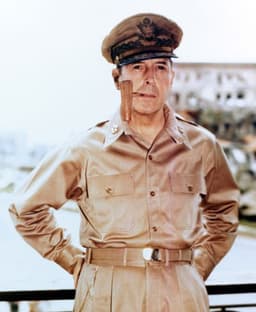
Douglas MacArthur
General · Modern
65.7Total
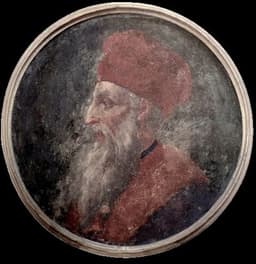
Skanderbeg
General · Medieval
62.7Total
Basic Information
Born
1880
1405
Died
1964
1468
Era
Modern
Medieval
Nationality
United States
Albania
Occupation
General
General
Civilization
Western
Western
Score Comparison
Military (10%)
85.0
80.0
Political (20%)
78.0
61.3
Influence (20%)
68.0
56.7
Legacy (20%)
40.0
52.0
Leadership (15%)
78.0
72.0
Strategy (15%)
68.0
75.0
TOTAL
65.7
62.7
Douglas MacArthur — Complete Timeline
1942 AD
Battle of Bataan and CorregidorWar◆ Major
MacArthur commanded US and Filipino forces defending the Bataan Peninsula and Corregidor Island against Japanese invasion. After months of resistance, he was ordered to evacuate to Australia, leaving his troops who later surrendered and endured the Bataan Death March.
World War IIPacific TheaterDefeat
Impact: regionaltragic
1944 AD
Return to the PhilippinesWar◆ Major
MacArthur led the Allied invasion of Leyte Gulf, fulfilling his promise 'I shall return.' The campaign liberated the Philippines from Japanese occupation, a major strategic victory in the Pacific War.
World War IIPacific TheaterVictory
Impact: regionalconstructive
1945 AD
Surrender of JapanWar
MacArthur, as Supreme Commander for the Allied Powers, accepted Japan's formal surrender aboard USS Missouri in Tokyo Bay. This ended World War II and began the Allied occupation of Japan under his leadership.
World War IIJapanOccupation
Impact: globalconstructive
Occupation of Japan ReformsReform◆ Major
MacArthur oversaw the Allied occupation of Japan, implementing sweeping reforms including a new constitution, land redistribution, women's suffrage, and demilitarization. These changes transformed Japan into a democratic and pacifist state.
JapanPost-WarDemocratization
Impact: globalprogressive
1950 AD
Inchon LandingWar◆ Major
MacArthur planned and executed a bold amphibious assault at Inchon, South Korea, behind North Korean lines. The operation cut North Korean supply lines and recaptured Seoul, turning the tide of the Korean War.
Korean WarAmphibious AssaultVictory
Impact: regionalconstructive
1951 AD
Dismissal by President TrumanPolitical Action◆ Major
President Harry S. Truman relieved MacArthur of command for insubordination after MacArthur publicly advocated for expanding the Korean War into China. The dismissal sparked a political controversy in the US and ended MacArthur's military career.
Korean WarCivil-Military RelationsDismissal
Impact: nationaldestructive
Skanderbeg — Complete Timeline
1444 AD
Battle of TorviollWar
Skanderbeg led a small Albanian force against a larger Ottoman army under Ali Pasha at Torvioll. The Albanian victory marked the beginning of Skanderbeg's rebellion against Ottoman rule and established his reputation as a military commander.
RebellionOttoman EmpireAlbania
Impact: regional
League of LezhëPolitical Action◆ Major
Skanderbeg convened a council of Albanian noblemen at Lezh
AllianceAlbanian UnityVenice
Impact: regionalconstructive
1450 AD
Siege of Krujë (First)War◆ Major
Sultan Murad II personally led a large Ottoman army to besiege the fortress of Kruj
SiegeKrujëMurad II
Impact: regional
1457 AD
Battle of AlbulenaWar◆ Major
Skanderbeg defeated a large Ottoman army commanded by Isak Bey and Hamza Kastrioti at Albulena. The victory crushed an Ottoman attempt to invade Albania and resulted in the capture of Hamza, Skanderbeg's nephew who had defected to the Ottomans.
BattleHamza KastriotiOttoman Defeat
Impact: regional
1466 AD
Siege of Krujë (Second)War
Sultan Mehmed II led a massive Ottoman army to besiege Kruj
SiegeMehmed IIPapal States
Impact: regional
1468 AD
Death at LezhëOther◆ Major
Skanderbeg died of natural causes in Lezh
DeathOttoman ConquestNational Hero
Impact: regionaltragic
Expert Analysis
Douglas MacArthur vs Skanderbeg
# The General Who Would Not Fade
On a September morning in 1950, Douglas MacArthur stood on the deck of a command ship off the coast of Korea, watching through binoculars as American Marines stormed the seawall at Inchon. The tide was treacherous, the channel narrow, and every naval expert had warned him it was impossible. But MacArthur, at seventy years old, had built a career on the impossible. Half a world away and five centuries earlier, another commander faced a different kind of impossible. In the mountains of Albania, George Kastrioti—known to history as Skanderbeg—watched from the walls of Krujë as an Ottoman army of 100,000 men wound through the passes below. He had perhaps 8,000 defenders. Both men understood something that separated them from ordinary generals: the difference between a war you can win and a cause you cannot abandon.
Origins
MacArthur was born into the American military aristocracy. His father, Arthur MacArthur, had won the Medal of Honor at Missionary Ridge during the Civil War, and young Douglas grew up on frontier army posts, absorbing the rituals and certainties of a warrior caste. He entered West Point at seventeen, graduated first in his class, and carried himself with a theatrical dignity that seemed almost anachronistic even then. The world he inherited was one of expanding American power, confident in its moral purpose.
Skanderbeg’s world was one of endings. Born in 1405 into a Christian Albanian noble family, he was taken hostage by the Ottoman Empire as a child—part of the *devshirme* system that collected Christian boys for service to the Sultan. He was raised as a Muslim, trained as a Janissary, and became one of the Ottoman Empire’s most effective commanders. But in 1443, during a battle against the Hungarians, he deserted, returned to Albania, converted back to Christianity, and raised a rebellion. He was a man who had seen both sides of an empire’s machinery, and he chose to break it.
Rise to Power
MacArthur’s ascent was methodical and brilliant. He served as superintendent of West Point, as Army Chief of Staff, and as military advisor to the Philippines. By the time World War II erupted, he was already a legend—but a controversial one, resented by rivals for his flair and his certainty. The Japanese attack on the Philippines in 1941 thrust him into a role he had prepared for his entire life, but also into a disaster. Ordered to evacuate to Australia in 1942, he left behind tens of thousands of American and Filipino troops who would die or suffer in captivity. “I shall return,” he promised—a phrase that would define his war.
Skanderbeg’s rise was more desperate. After deserting the Ottomans, he seized the fortress of Krujë and declared himself the leader of Albanian resistance. In 1444, he convened the League of Lezhë, uniting Albania’s fractious noble families—a political achievement as remarkable as any military victory. The league was fragile, held together only by his personal authority and the existential threat of Ottoman conquest. At the Battle of Torvioll that same year, he defeated a larger Ottoman army through a combination of terrain, timing, and tactical deception. It was not a battle for territory; it was a battle for survival.
Leadership & Governance
MacArthur governed Japan from 1945 to 1951 with the authority of a proconsul. He imposed a new constitution, broke up the *zaibatsu* industrial monopolies, redistributed land, and granted women the vote. He was an autocrat who built a democracy, a conqueror who sought to transform his enemy. His style was imperial, his confidence absolute. When Emperor Hirohito came to him for the first audience ever granted to a foreigner, MacArthur deliberately kept him waiting, then received him in an open-necked shirt—a calculated display of power.
Skanderbeg governed a country that barely existed. Albania was not a unified state but a collection of clans and principalities, each with its own loyalties and vendettas. He ruled by persuasion, by marriage alliances, and by the constant demonstration of military competence. His political genius was in keeping the League of Lezhë intact for twenty-five years—long enough to resist fifteen Ottoman invasions. But he could not build institutions; he could only build resistance.
Triumph & Tragedy
MacArthur’s greatest triumph was the Inchon Landing in September 1950. It was a gamble of stunning audacity: a landing at a port with a 30-foot tidal range, against the advice of every expert. It succeeded beyond expectation, cutting North Korean supply lines and recapturing Seoul within days. “The only strategy that ever fails,” MacArthur once said, “is the one that is never attempted.” But triumph turned to tragedy when he pushed toward the Yalu River, provoking Chinese intervention. The war became a bloody stalemate, and MacArthur’s public demands for escalation—including the use of nuclear weapons—led to his dismissal by President Truman in April 1951. He returned home to ticker-tape parades and a speech before Congress, ending with the line, “Old soldiers never die; they just fade away.” He did not fade.
Skanderbeg’s greatest triumph was the First Siege of Krujë in 1450, when Sultan Murad II himself led the Ottoman army. The fortress held for months, and the Ottomans withdrew in defeat. The victory made Skanderbeg a legend across Europe. But his tragedy was gradual. He died of natural causes in 1468, likely from malaria, at the age of sixty-two. Within a decade, without his leadership, Albania fell to the Ottomans. The resistance he had sustained for a quarter-century collapsed in a few years.
Character & Destiny
MacArthur was a man of immense ego and genuine brilliance, but his character contained a fatal flaw: he could not accept limits. He saw himself as a figure of destiny, above the political constraints that bound lesser men. This made him magnificent in crisis and insufferable in peace. His dismissal was not a betrayal but a consequence—the collision of one man’s certainty with a system designed to check it.
Skanderbeg was more pragmatic, not because he lacked ego but because his situation left no room for it. He knew that Albania was too small to defeat the Ottoman Empire; the best he could do was delay its conquest. His character was defined not by ambition but by endurance. He fought not for glory but for time.
Legacy
MacArthur’s legacy is contested. He is remembered as a great commander and a flawed man, as the architect of modern Japan and the general who nearly started a third world war. His name adorns schools and buildings, but historians debate whether his strategic judgment matched his self-regard. The Inchon Landing remains a case study in audacity; the Yalu River advance remains a warning against hubris.
Skanderbeg’s legacy is simpler and more profound. He is the national hero of Albania, a symbol of resistance against overwhelming odds. His helmet and sword are national treasures; his image appears on currency and monuments. But his real legacy is in the story itself—the proof that a small people, led by a single determined man, could hold an empire at bay for a generation. He did not win, but he made winning expensive.
Conclusion
What separates these two generals is not talent—both possessed it in abundance—but scale and time. MacArthur operated on a global stage, with the resources of a superpower behind him; his failures were failures of judgment, not of resources. Skanderbeg operated on a local stage, with nothing but mountains and will; his failure was inevitable, written into the demographics of his age. Yet in the end, both men illustrate the same truth: that history belongs not to the cautious but to those who dare, and that the line between heroism and folly is drawn not by intention but by outcome. MacArthur dared too much and fell. Skanderbeg dared what he had to and held. One was a tragedy of excess; the other, a tragedy of limits. Both were unforgettable.
Rankings
🥇
Douglas MacArthurLeader
Mil: 85.0Pol: 78.0Inf: 68.0
65.7
🥈
Skanderbeg
Mil: 80.0Pol: 61.3Inf: 56.7
62.7
+3.0 behind
How This Comparison Works
Algorithm
Each figure is scored on 6 dimensions (0—100 scale) based on structured historical data: Military (10%), Political (20%), Influence (20%), Legacy (20%), Leadership (15%), Strategy (15%). The weighted total produces the final ranking.
Data Sources
Scores are computed from structured sub-indicators in the database. Scale factors adjust for era (Ancient ×0.85, Modern ×1.0) and civilization size (Eastern ×1.05, Other ×0.80) to account for differences in population and military scale.
Maximum 3 Figures
Comparisons are limited to 2—3 figures to ensure readability and statistical meaningfulness.
Error Margins
±5 points per dimension — Sub-scores are derived from historical records with inherent uncertainty. Two figures within 5 points on a dimension should be considered roughly equivalent in that area.
Total Score Accuracy
±3 points overall — The weighted combination of 6 dimensions produces a total score with approximately ±3 points of uncertainty. Differences of less than 3 points are not statistically significant— the figures are effectively tied.
Known Limitations
- Historical records are incomplete and uneven across civilizations
- Figures from oral-tradition societies may be underrepresented
- Occupation labels can misclassify multi-role figures
- Scores measure capability and impact, not moral character
- Quantitative scoring is a comparison tool, not absolute truth
Capability Radar
Military (10%) — Battles & Warfare
Battles
85
75
Win Rate
75
85
Expansion
85
40
Political (20%) — Governance & Reform
Reform
85
50
Diplomacy
75
70
Economy
70
40
Influence (20%) — Cultural & Global Reach
Cultural
70
70
Global
80
55
Legacy (20%) — Historical Impact
Historical
85
75
Longevity
70
70
Leadership (15%) — Power & Stability
Tenure
80
65
Stability
65
55
Strategy (15%) — Tactics & Innovation
Strategy
90
75
Tactics
80
80
Reform
70
60
Similar Comparisons
Comments & Discussion
GENGHIS_STATS6/16/2026
Numbers don't lie, and Skanderbeg's 8,000 vs 100,000 ratio beats MacArthur's Inchon "against the odds" narrative. Skanderbeg fought 25 campaigns and won 25—no disastrous retreats, no humiliating sack of Seoul. MacArthur had the entire US Navy and Marines behind him; Skanderbeg had goat paths and grit. Let's stop mythologizing the general who got fired and start respecting the one who actually held the line.|en|Numbers don't lie, and Skanderbeg's 8,000 vs 100,000 ratio beats MacArthur's Inchon "a
沙漠狐狸6/16/2026
比较是暴力的——麦克阿瑟是帝国意志的代理人,而斯坎德培是民族精神的象征。前者在仁川赌潮汐,输了被解职;后者在克鲁亚赌生死,赢了被奉为叛军领袖。但别忘了:麦克阿瑟至少赢了太平洋,斯坎德培的胜利只为他死后阿尔巴尼亚被奥斯曼占领推迟了三十年。英雄是给幸存者听的,历史是给死者写的。|zh|Comparisons are violent—MacArthur was an agent of imperial will, Skanderbeg a symbol of national spirit. The former gambled on tides at Inchon, lost and was fired; the latter gambled life at Krujë, won and was made a rebel hero. But remember: MacArthur at least won the Pacific; Skanderbeg's victories only delayed Albania's Ottoman occupation by thirty years
老毛奇的门徒6/16/2026
数据不会说谎:斯坎德培以8000人对10万人,打了25场胜仗,没有一次溃退或首都被占。麦克阿瑟呢?仁川是漂亮,但之后挺进鸭绿江时忘了他自己说过中国不会出兵?结果被志愿军从平壤一路推到三八线以南。一个将军的失败在于他相信自己的神话,而不是敌人可能的行动。|zh|Data doesn't lie: Skanderbeg with 8,000 vs 100,000, fought 25 campaigns and won 25, no disastrous retreats or capital sacked. MacArthur? Inchon was flashy, but then advancing to Yalu he forgot his own claim that China wouldn't intervene? Ended up being pushed from Pyongyang back below 38th parallel by volunteers. A general's failure is believing his own myth over enem