Loading...
Dou Gu vs Jiang Wei
Jiang Wei leads by 6.2 pts · 2 figures compared
…
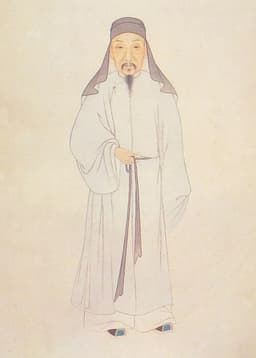
Dou Gu
General · Ancient
47.3Total

Jiang Wei
General · Ancient
53.5Total
Basic Information
Born
19
202
Died
89
264
Era
Ancient
Ancient
Nationality
China
China
Occupation
General
General
Civilization
Eastern
Eastern
Score Comparison
Military (10%)
61.7
70.0
Political (20%)
35.0
35.1
Influence (20%)
46.3
55.7
Legacy (20%)
40.0
50.0
Leadership (15%)
57.1
54.2
Strategy (15%)
57.5
66.3
TOTAL
47.3
53.5
Dou Gu — Complete Timeline
73 AD
Battle of YiwuluWar◆ Major
Dou Gu led a Han expeditionary force against the Xiongnu at Yiwulu (modern Hami). He defeated the Xiongnu and established a military garrison, securing the strategic gateway to the Western Regions and reopening the Silk Road.
Han DynastyXiongnuSilk Road
Impact: regional
74 AD
Appointed as Protector General of the Western RegionsPolitical Action◆ Major
Dou Gu was appointed Protector General (Duhu) of the Western Regions, overseeing Han interests in Central Asia. He established diplomatic relations with local kingdoms and maintained Han military presence in the region.
Han DynastyWestern RegionsDiplomacy
Impact: regionalconstructive
89 AD
Campaign Against the Northern XiongnuWar
Dou Gu, as a general under Emperor He, launched a major campaign against the Northern Xiongnu. His forces advanced deep into the steppe, defeating the Xiongnu and forcing their remnants to flee westward, ending the Xiongnu threat to Han China.
Han DynastyXiongnuMilitary Campaign
Impact: regional
Death in BattleWar
Dou Gu died in battle during the campaign against the Northern Xiongnu. His death marked the end of a distinguished military career that had secured Han dominance over the northern frontier.
Han DynastyDeathMilitary
Impact: regionaltragic
Jiang Wei — Complete Timeline
234 AD
Became successor to Zhuge LiangPolitical Action◆ Major
After Zhuge Liang's death, Jiang Wei was appointed as the commander of Shu Han's military forces, tasked with continuing the Northern Expeditions against Wei. He was given command of the remaining troops.
Shu HanZhuge LiangSuccession
Impact: nationalconstructive
238 AD
Led the first Northern ExpeditionWar
Jiang Wei launched his first major campaign against Wei, attacking the Wei-held territories of Longxi and Nan'an. The campaign achieved limited gains but failed to capture key cities.
Northern ExpeditionsShu HanMilitary Campaign
Impact: regional
Conducted eleven Northern ExpeditionsWar◆ Major
Over the course of his career, Jiang Wei launched eleven separate campaigns against Wei, each with varying degrees of success. These campaigns drained Shu Han's resources and manpower without achieving a decisive breakthrough.
Northern ExpeditionsShu HanMilitary Strategy
Impact: nationaldestructive
255 AD
Defeated by Deng Ai at the Battle of TaoxiWar◆ Major
Jiang Wei's forces were decisively defeated by Deng Ai at Taoxi. The defeat forced Jiang Wei to retreat and weakened Shu Han's military position.
Northern ExpeditionsDeng AiBattle
Impact: regionaldestructive
263 AD
Surrendered to Deng Ai after the fall of ShuPolitical Action
After Deng Ai's surprise attack on Chengdu, Jiang Wei surrendered to the Wei general. He later attempted to restore Shu by conspiring with Zhong Hui, but the plot failed and he was killed.
Shu HanFall of ShuSurrender
Impact: nationaltragic
Expert Analysis
Origins
Dou Gu (born c. 30 AD) was a member of the Dou clan, a powerful family during the Eastern Han dynasty. His cousin was Empress Dou, wife of Emperor Zhang, which gave him political connections. Little is known about his early life, but he likely received military training typical of aristocratic families. His career began under Emperor He, who appointed him as a general for campaigns against the Xiongnu.
Jiang Wei (born 202 AD) was from Tianshui in Wei territory. He served as a minor official under Wei before joining Shu Han. His father died in battle, which influenced his martial path. He was known for his intelligence and familiarity with military strategy, catching the attention of Zhuge Liang during the latter's first Northern Expedition. Zhuge Liang recognized Jiang Wei's talent and secured his defection.
Rise to Power
Dou Gu's rise came through his military successes under Emperor He. In 73 AD, he led a campaign against the Northern Xiongnu, achieving a victory at the Battle of Yiwulu (modern Hami). This success led to his appointment as Protector General of the Western Regions, overseeing Han interests in Central Asia. He established diplomatic relations with local kingdoms, securing the Silk Road. His death in battle against the Xiongnu cut short his career.
Jiang Wei rose to prominence as Zhuge Liang's protégé. After Zhuge Liang's death in 234 AD, Jiang Wei succeeded him as commander of Shu Han's military forces. He spent the next three decades leading eleven Northern Expeditions against Wei, attempting to fulfill Zhuge Liang's ambition of restoring Han. His first expedition in 247 AD achieved limited gains, but he maintained the offensive despite Shu's declining resources.
Leadership & Governance
Dou Gu's leadership was characterized by decisive action and effective use of Han military resources. He secured the Western Regions through a combination of military force and diplomacy, establishing garrisons that protected trade routes. His governance focused on stability and expansion, but he did not engage in political reforms. His death on the battlefield exemplifies his hands-on approach.
Jiang Wei's leadership was more controversial. He continued Zhuge Liang's aggressive strategy, but lacked the political support and resources. His eleven campaigns drained Shu's treasury and manpower, leading to internal dissent. He was criticized for overextending Shu's forces. His governance was overshadowed by his military focus, and he failed to build political alliances. His leadership score of 54.2 reflects his tactical strengths but strategic shortcomings.
Triumph & Tragedy
Dou Gu's greatest triumph was the victory at Yiwulu, which broke Xiongnu power in the region and secured Han control over the Western Regions. He established a garrison that lasted for decades. His tragedy was his death in battle, which prevented him from consolidating his gains. His military score of 61.7 reflects his effectiveness in campaigns.
Jiang Wei's greatest triumph was his survival and persistence against Wei. He managed to lead numerous campaigns despite limited resources, achieving tactical victories such as the capture of some Wei territory. His tragedy was the fall of Shu Han. After Deng Ai's surprise attack on Chengdu, Jiang Wei surrendered but attempted to restore Shu by conspiring with Zhong Hui. The plot failed, and he was killed. His military score of 70.0 reflects his tactical skills, but his political score of 35.1 indicates his failure to secure Shu's future.
Character & Destiny
Dou Gu was a loyal and capable general who embodied Han military tradition. His character was shaped by his clan's influence and his duty to the emperor. He died fighting, which cemented his reputation as a martial hero. His destiny was tied to the Han's expansionist policy.
Jiang Wei was intelligent and ambitious, but his character was marked by stubbornness. He persisted in his Northern Expeditions despite diminishing returns, ignoring advice to conserve resources. His destiny was intertwined with Shu's decline; his efforts delayed but could not prevent its fall. Historical assessments note his loyalty to Shu but criticize his strategic inflexibility.
Legacy
Dou Gu's legacy is as a Han general who extended Chinese influence into Central Asia. His victories contributed to the stability of the Silk Road, facilitating trade and cultural exchange. He is remembered in Chinese history as a capable frontier commander. His influence score of 46.3 reflects his regional impact.
Jiang Wei's legacy is more complex. He is remembered as Zhuge Liang's successor who continued the Northern Expeditions, but also as a general who exhausted Shu's resources. His story is celebrated in the novel "Romance of the Three Kingdoms," which romanticizes his loyalty and tragedy. His influence score of 55.7 reflects his cultural impact. His total score of 53.5 is higher than Dou Gu's 47.3.
Conclusion
Jiang Wei had a greater impact overall, as reflected by his higher total score (53.5 vs 47.3). He operated in a more complex geopolitical environment and faced greater challenges. While Dou Gu's victories were more decisive, Jiang Wei's persistence and tactical skill kept Shu Han alive for decades. However, Jiang Wei's strategic failures contributed to Shu's fall, while Dou Gu's campaigns were unequivocally successful. In terms of lasting influence, Jiang Wei's legacy in Chinese culture and literature surpasses Dou Gu's. Therefore, Jiang Wei is the more significant figure.
Rankings
🥇
Jiang WeiLeader
Mil: 70.0Pol: 35.1Inf: 55.7
53.5
🥈
Dou Gu
Mil: 61.7Pol: 35.0Inf: 46.3
47.3
+6.2 behind
How This Comparison Works
Algorithm
Each figure is scored on 6 dimensions (0—100 scale) based on structured historical data: Military (10%), Political (20%), Influence (20%), Legacy (20%), Leadership (15%), Strategy (15%). The weighted total produces the final ranking.
Data Sources
Scores are computed from structured sub-indicators in the database. Scale factors adjust for era (Ancient ×0.85, Modern ×1.0) and civilization size (Eastern ×1.05, Other ×0.80) to account for differences in population and military scale.
Maximum 3 Figures
Comparisons are limited to 2—3 figures to ensure readability and statistical meaningfulness.
Error Margins
±5 points per dimension — Sub-scores are derived from historical records with inherent uncertainty. Two figures within 5 points on a dimension should be considered roughly equivalent in that area.
Total Score Accuracy
±3 points overall — The weighted combination of 6 dimensions produces a total score with approximately ±3 points of uncertainty. Differences of less than 3 points are not statistically significant— the figures are effectively tied.
Known Limitations
- Historical records are incomplete and uneven across civilizations
- Figures from oral-tradition societies may be underrepresented
- Occupation labels can misclassify multi-role figures
- Scores measure capability and impact, not moral character
- Quantitative scoring is a comparison tool, not absolute truth
Capability Radar
Military (10%) — Battles & Warfare
Battles
55
65
Win Rate
60
40
Expansion
50
30
Political (20%) — Governance & Reform
Reform
10
50
Diplomacy
40
45
Economy
10
40
Influence (20%) — Cultural & Global Reach
Cultural
20
55
Global
15
30
Legacy (20%) — Historical Impact
Historical
30
60
Longevity
20
55
Leadership (15%) — Power & Stability
Tenure
20
60
Stability
15
35
Strategy (15%) — Tactics & Innovation
Strategy
55
60
Tactics
50
70
Reform
10
55
Similar Comparisons
Comments & Discussion
No comments yet. Be the first to share your thoughts!