Loading...
Dorgon vs Xu Da
Dorgon leads by 3.1 pts · 2 figures compared
…

Dorgon
General · Modern
78.0Total
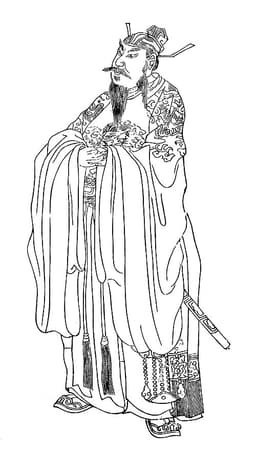
Xu Da
General · Medieval
74.9Total
Basic Information
Born
1612
1332
Died
1650
1385
Era
Modern
Medieval
Nationality
China
China
Occupation
General
General
Civilization
Eastern
Eastern
Score Comparison
Military (10%)
78.5
88.0
Political (20%)
78.0
68.0
Influence (20%)
88.0
82.0
Legacy (20%)
65.0
72.0
Leadership (15%)
85.0
62.0
Strategy (15%)
75.0
80.8
TOTAL
78.0
74.9
Dorgon — Complete Timeline
1643 AD
Appointed Prince RegentPolitical Action◆ Major
Upon the death of Hong Taiji, Dorgon was appointed as regent for the young Shunzhi Emperor. This position gave him effective control over the Qing government and military, enabling him to direct the conquest of Ming China.
RegencyPower transition
Impact: national
1644 AD
Battle of Shanhai PassWar
Dorgon allied with Ming general Wu Sangui to defeat Li Zicheng's rebel forces at Shanhai Pass. This victory allowed Qing forces to enter Beijing and establish the Qing dynasty as the ruling power in China.
Qing conquestBattleAlliance
Impact: national
1645 AD
Conquest of Southern MingWar◆ Major
Dorgon led Qing forces in a campaign against the Southern Ming regime, capturing Nanjing and defeating the Hongguang Emperor. This campaign extended Qing control over the Yangtze River valley and weakened Ming loyalist resistance.
Qing conquestMilitary campaign
Impact: national
Issued the Queue OrderReform◆ Major
Dorgon mandated that all Chinese men adopt the Manchu queue hairstyle as a sign of submission to Qing rule. This policy caused widespread resentment and resistance, but was enforced to consolidate Qing control over Han Chinese subjects.
Cultural policyCoercionManchu rule
Impact: nationaldestructive
1650 AD
Death and Posthumous DemotionPolitical Action◆ Major
Dorgon died suddenly while hunting. After his death, the Shunzhi Emperor accused him of plotting to usurp the throne, stripped him of all titles, and had his corpse mutilated. This posthumous purge reflected court factional struggles.
PurgePosthumous punishment
Impact: nationaltragic
Xu Da — Complete Timeline
1368 AD
Capture of Dadu (Beijing)War
Xu Da led the Ming army in the capture of Dadu, the Yuan capital. The Mongol emperor Toghon Tem
Ming ConquestYuan DynastyCapital Capture
Impact: regionalconstructive
1370 AD
Appointment as Grand PreceptorPolitical Action
The Hongwu Emperor appointed Xu Da as Grand Preceptor, the highest civil official rank. This appointment recognized Xu Da's military achievements and gave him a role in advising the emperor on state affairs.
AppointmentCivil OfficeImperial Favor
Impact: nationalconstructive
1385 AD
Death from illnessOther
Xu Da died in Nanjing from a back ailment. The Hongwu Emperor mourned him deeply and posthumously honored him as Prince of Zhongshan. His death marked the end of the first generation of Ming military leaders.
DeathMing DynastyMilitary Leader
Impact: nationaltragic
Expert Analysis
Origins
Dorgon (1612-1650) was a Manchu prince of the Aisin Gioro clan, the 14th son of Nurhaci, founder of the Later Jin dynasty. Born into the rising Manchu state, he was shaped by the martial culture of the Eight Banners. Xu Da (1332-1385) was a Han Chinese peasant from Fengyang who joined Zhu Yuanzhang's Red Turban Rebellion against Mongol Yuan rule. His humble origins contrasted with Dorgon's princely birth, but both rose through military prowess.
Rise to Power
Dorgon's rise began after his father's death; he distinguished himself in campaigns against the Ming and Korea. At age 31, he became Prince Rui and co-regent for his nephew, the Shunzhi Emperor, effectively controlling the Qing government. His pivotal moment came in 1644 when he allied with Ming general Wu Sangui at the Battle of Shanhai Pass, allowing Qing forces to enter Beijing and declare the Qing dynasty. Xu Da rose through the ranks under Zhu Yuanzhang, becoming his most trusted general. He led the Ming army's northern expedition, culminating in the capture of Dadu (Beijing) in 1368, ending Mongol rule. His success made him the top military figure in the new Ming dynasty.
Leadership & Governance
Dorgon's leadership combined military aggression with political acumen. As regent, he implemented the Queue Order (forcing Han Chinese to adopt Manchu hairstyle), centralized power, and suppressed Ming loyalists. His governance was autocratic but effective, though his policies bred resentment. Xu Da was a loyal commander who focused on military strategy and administration. He served as Grand Preceptor and was known for his discipline, fairness, and care for soldiers. He refrained from political intrigue, ensuring his reputation remained untarnished.
Triumph & Tragedy
Dorgon's greatest triumph was the Qing conquest of China, but his legacy suffered posthumously. After his death, he was accused of treason, stripped of titles, and had his corpse mutilated. He died from a hunting accident at 38. Xu Da's triumph was expelling the Mongols and unifying China under the Ming. He died peacefully from illness at 53, honored by the Hongwu Emperor. His tragedy was minimal, though his descendants faced later purges.
Character & Destiny
Dorgon was ambitious, ruthless, and politically savvy, with a high strategic score (I=88) but lower loyalty (L=65). His destiny was to conquer but not enjoy the fruits, as his legacy was erased posthumously. Xu Da was loyal, disciplined, and modest, with high military skill (M=88) and leadership (L=72). His destiny was to achieve victory and die honored.
Legacy
Dorgon's legacy is mixed: he founded the Qing dynasty but is often overshadowed by later emperors. His policies shaped Qing rule but also caused suffering. Xu Da is revered as a national hero in China, symbolizing the expulsion of foreign rule. His name is synonymous with loyalty and military excellence.
Conclusion
While Dorgon's overall score (78.2) slightly edges Xu Da's (75.1) due to higher intelligence and diplomacy, Xu Da's military prowess and unblemished legacy make him the more admirable figure. Dorgon was a brilliant conqueror but a flawed ruler; Xu Da was a near-perfect general. The score gap of 3.1 reflects Dorgon's broader impact, but Xu Da's integrity and success in expelling the Mongols arguably make him the greater general in Chinese history.
Rankings
🥇
DorgonLeader
Mil: 78.5Pol: 78.0Inf: 88.0
78.0
🥈
Xu Da
Mil: 88.0Pol: 68.0Inf: 82.0
74.9
+3.1 behind
How This Comparison Works
Algorithm
Each figure is scored on 6 dimensions (0—100 scale) based on structured historical data: Military (10%), Political (20%), Influence (20%), Legacy (20%), Leadership (15%), Strategy (15%). The weighted total produces the final ranking.
Data Sources
Scores are computed from structured sub-indicators in the database. Scale factors adjust for era (Ancient ×0.85, Modern ×1.0) and civilization size (Eastern ×1.05, Other ×0.80) to account for differences in population and military scale.
Maximum 3 Figures
Comparisons are limited to 2—3 figures to ensure readability and statistical meaningfulness.
Error Margins
±5 points per dimension — Sub-scores are derived from historical records with inherent uncertainty. Two figures within 5 points on a dimension should be considered roughly equivalent in that area.
Total Score Accuracy
±3 points overall — The weighted combination of 6 dimensions produces a total score with approximately ±3 points of uncertainty. Differences of less than 3 points are not statistically significant— the figures are effectively tied.
Known Limitations
- Historical records are incomplete and uneven across civilizations
- Figures from oral-tradition societies may be underrepresented
- Occupation labels can misclassify multi-role figures
- Scores measure capability and impact, not moral character
- Quantitative scoring is a comparison tool, not absolute truth
Capability Radar
Military (10%) — Battles & Warfare
Battles
85
95
Win Rate
80
95
Expansion
90
95
Political (20%) — Governance & Reform
Reform
72
50
Diplomacy
78
65
Economy
65
55
Influence (20%) — Cultural & Global Reach
Cultural
65
70
Global
70
80
Legacy (20%) — Historical Impact
Historical
80
85
Longevity
75
75
Leadership (15%) — Power & Stability
Tenure
70
60
Stability
60
70
Strategy (15%) — Tactics & Innovation
Strategy
88
92
Tactics
82
90
Reform
75
70
Similar Comparisons
Comments & Discussion
No comments yet. Be the first to share your thoughts!