Loading...
Dorgon vs Qin Shi Huang
Qin Shi Huang leads by 7.2 pts · 2 figures compared
…

Dorgon
General · Modern
78.0Total
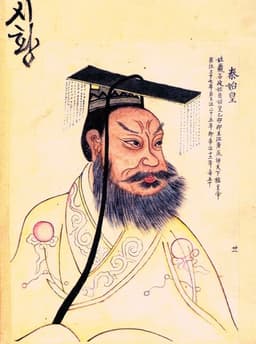
Qin Shi Huang
Emperor · Ancient
85.2Total
Basic Information
Born
1612
-259
Died
1650
-210
Era
Modern
Ancient
Nationality
China
China
Occupation
General
Emperor
Civilization
Eastern
Eastern
Score Comparison
Military (10%)
78.5
80.0
Political (20%)
78.0
90.0
Influence (20%)
88.0
85.0
Legacy (20%)
65.0
90.0
Leadership (15%)
85.0
78.0
Strategy (15%)
75.0
82.0
TOTAL
78.0
85.2
Dorgon — Complete Timeline
1643 AD
Appointed Prince RegentPolitical Action◆ Major
Upon the death of Hong Taiji, Dorgon was appointed as regent for the young Shunzhi Emperor. This position gave him effective control over the Qing government and military, enabling him to direct the conquest of Ming China.
RegencyPower transition
Impact: national
1644 AD
Battle of Shanhai PassWar
Dorgon allied with Ming general Wu Sangui to defeat Li Zicheng's rebel forces at Shanhai Pass. This victory allowed Qing forces to enter Beijing and establish the Qing dynasty as the ruling power in China.
Qing conquestBattleAlliance
Impact: national
1645 AD
Conquest of Southern MingWar◆ Major
Dorgon led Qing forces in a campaign against the Southern Ming regime, capturing Nanjing and defeating the Hongguang Emperor. This campaign extended Qing control over the Yangtze River valley and weakened Ming loyalist resistance.
Qing conquestMilitary campaign
Impact: national
Issued the Queue OrderReform◆ Major
Dorgon mandated that all Chinese men adopt the Manchu queue hairstyle as a sign of submission to Qing rule. This policy caused widespread resentment and resistance, but was enforced to consolidate Qing control over Han Chinese subjects.
Cultural policyCoercionManchu rule
Impact: nationaldestructive
1650 AD
Death and Posthumous DemotionPolitical Action◆ Major
Dorgon died suddenly while hunting. After his death, the Shunzhi Emperor accused him of plotting to usurp the throne, stripped him of all titles, and had his corpse mutilated. This posthumous purge reflected court factional struggles.
PurgePosthumous punishment
Impact: nationaltragic
Qin Shi Huang — Complete Timeline
246 BC
Construction of the Mausoleum and Terracotta ArmyOther◆ Major
Qin Shi Huang commissioned a vast mausoleum complex near Xi'an, guarded by thousands of life-sized terracotta soldiers, horses, and chariots. The project employed hundreds of thousands of workers and reflected his obsession with immortality and imperial power.
Impact: global
230 BC
Conquest of the Six Warring StatesWar
From 230 to 221 BCE, Ying Zheng led the Qin state in a series of campaigns that conquered the Han, Zhao, Wei, Chu, Yan, and Qi states. This unified China under a single ruler for the first time, ending the Warring States period.
Impact: global
221 BC
Standardization of Writing, Currency, and MeasurementsReform◆ Major
Qin Shi Huang ordered the standardization of Chinese script, currency, and weights and measures across the unified empire. This facilitated administration, trade, and cultural integration, laying a foundation for future dynasties.
Impact: globalconstructive
Proclamation of the Qin DynastyPolitical Action
After conquering the last independent state, Ying Zheng declared himself Shi Huangdi (First Emperor), founding the Qin Dynasty. He adopted a new title to signify his supreme authority and initiated centralized imperial rule.
Impact: global
214 BC
Initiation of the Great Wall ConstructionOther◆ Major
Qin Shi Huang ordered the connection and extension of existing northern fortifications to create a unified defensive wall against nomadic Xiongnu raids. This project involved massive conscripted labor and became the precursor to the later Great Wall.
Impact: regional
213 BC
Burning of Books and Burying of ScholarsPolitical Action◆ Major
On the advice of Li Si, Qin Shi Huang ordered the burning of historical records and philosophical texts not aligned with Legalist doctrine. He also had 460 Confucian scholars buried alive to suppress dissent and consolidate ideological control.
Impact: nationaldestructive
Expert Analysis
Origins
**Qin Shi Huang** was born Ying Zheng in 259 BCE, son of King Zhuangxiang of Qin. His early life was marked by political intrigue; his father was a hostage in Zhao, and Ying Zheng spent his early years there. He ascended the Qin throne at age 13, with Lü Buwei as regent. The state of Qin, already the most powerful of the Warring States, was positioned for conquest through legalist reforms and military strength.
**Dorgon** (1612–1650) was the 14th son of Nurhaci, the founder of the Later Jin dynasty (precursor to Qing). As a Manchu prince, he grew up in a militaristic society. After his father's death, his mother was forced to commit suicide, and Dorgon rose through military prowess. He played a key role in the conquest of the Ming dynasty, eventually becoming Prince Regent for his nephew, the Shunzhi Emperor.
Rise to Power
**Qin Shi Huang** consolidated power by eliminating rivals: he exiled Lü Buwei and executed the eunuch Lao Ai. From 230 to 221 BCE, he conquered the six other warring states—Han, Zhao, Wei, Chu, Yan, and Qi—using superior strategy and legalist governance. His unification of China was unprecedented, ending centuries of warfare. He then proclaimed himself Qin Shi Huang (First Emperor) and implemented centralizing reforms.
**Dorgon** rose to power after his brother Hong Taiji died in 1643. Dorgon outmaneuvered other contenders to become co-regent, then sole regent for the six-year-old Shunzhi Emperor. He was the de facto ruler of the Qing dynasty. His strategic genius was demonstrated at the Battle of Shanhai Pass (1644), where he allied with Ming general Wu Sangui to defeat Li Zicheng's rebel army, allowing the Qing to capture Beijing and claim the Mandate of Heaven.
Leadership & Governance
**Qin Shi Huang** scored P=90, L=90. He imposed strict legalist rule, standardizing writing scripts, currency, weights, and measures across China. He divided the empire into commanderies and counties, built roads and canals, and began the Great Wall. However, his harsh policies included the burning of books and burying of scholars (213–210 BCE) to suppress dissent. His centralized bureaucracy became the model for later dynasties.
**Dorgon** scored P=78, L=65. As regent, he continued the Qing conquest of Ming loyalists, issuing the Queue Order (1645) requiring all Han Chinese to adopt the Manchu queue hairstyle as a sign of submission. He implemented policies to win over Ming officials, such as retaining the Ming administrative structure. His leadership was effective but authoritarian; he faced resistance from Southern Ming forces and internal Manchu rivals.
Triumph & Tragedy
**Qin Shi Huang**'s triumph was the unification of China and the foundation of imperial rule. His tragic turn came from his obsession with immortality: he consumed mercury pills, which likely killed him. His death in 210 BCE led to a succession crisis and the rapid collapse of the Qin dynasty within four years. The burning of books also destroyed much pre-Qin literature.
**Dorgon**'s triumph was leading the Qing to conquer Beijing and much of China, establishing the dynasty that would rule for 268 years. His tragedy was posthumous: after his death in 1650, the Shunzhi Emperor, resentful of Dorgon's power, stripped him of all titles, exhumed his corpse, and had it mutilated. Dorgon was only rehabilitated later by the Qianlong Emperor.
Character & Destiny
**Qin Shi Huang** (M=80, I=85, D=78, S=82, T=85) was ambitious, ruthless, and visionary. He believed in his own divinity and sought to control all aspects of life. His destiny was to create a unified China, but his harshness ensured his dynasty's brevity. He is remembered as both a unifier and a tyrant.
**Dorgon** (M=78, I=88, D=85, S=75, T=78) was a brilliant military strategist and pragmatic ruler. His intelligence and adaptability allowed him to navigate Manchu politics and conquer China. However, his overreach in power alienated the young emperor, leading to his posthumous disgrace. His destiny was to be a kingmaker, not a king.
Legacy
**Qin Shi Huang**'s legacy is monumental: he gave China its name, standardized its script, and established the imperial system that lasted until 1912. The Terracotta Army and Great Wall are enduring symbols. However, his book burnings and harsh rule cast a shadow. His score: 85.
**Dorgon**'s legacy is as the architect of Qing rule, which brought stability but also ethnic tension. The Queue Order and conquest of Southern Ming had lasting impacts. His rehabilitation by Qianlong restored his status as a founding figure. His score: 78.
Conclusion
Qin Shi Huang was a world-historical figure who fundamentally shaped Chinese civilization. Dorgon was a crucial figure in the Qing conquest but operated within a broader historical context. The score gap of 7.2 reflects Qin Shi Huang's greater transformative impact. While Dorgon's military and political acumen were impressive, Qin Shi Huang's innovations in governance, standardization, and empire-building were more foundational. Therefore, Qin Shi Huang is the more significant historical figure.
Rankings
🥇
Qin Shi HuangLeader
Mil: 80.0Pol: 90.0Inf: 85.0
85.2
🥈
Dorgon
Mil: 78.5Pol: 78.0Inf: 88.0
78.0
+7.2 behind
How This Comparison Works
Algorithm
Each figure is scored on 6 dimensions (0—100 scale) based on structured historical data: Military (10%), Political (20%), Influence (20%), Legacy (20%), Leadership (15%), Strategy (15%). The weighted total produces the final ranking.
Data Sources
Scores are computed from structured sub-indicators in the database. Scale factors adjust for era (Ancient ×0.85, Modern ×1.0) and civilization size (Eastern ×1.05, Other ×0.80) to account for differences in population and military scale.
Maximum 3 Figures
Comparisons are limited to 2—3 figures to ensure readability and statistical meaningfulness.
Error Margins
±5 points per dimension — Sub-scores are derived from historical records with inherent uncertainty. Two figures within 5 points on a dimension should be considered roughly equivalent in that area.
Total Score Accuracy
±3 points overall — The weighted combination of 6 dimensions produces a total score with approximately ±3 points of uncertainty. Differences of less than 3 points are not statistically significant— the figures are effectively tied.
Known Limitations
- Historical records are incomplete and uneven across civilizations
- Figures from oral-tradition societies may be underrepresented
- Occupation labels can misclassify multi-role figures
- Scores measure capability and impact, not moral character
- Quantitative scoring is a comparison tool, not absolute truth
Capability Radar
Military (10%) — Battles & Warfare
Battles
85
85
Win Rate
80
90
Expansion
90
90
Political (20%) — Governance & Reform
Reform
72
95
Diplomacy
78
75
Economy
65
90
Influence (20%) — Cultural & Global Reach
Cultural
65
95
Global
70
85
Legacy (20%) — Historical Impact
Historical
80
95
Longevity
75
95
Leadership (15%) — Power & Stability
Tenure
70
70
Stability
60
65
Strategy (15%) — Tactics & Innovation
Strategy
88
85
Tactics
82
80
Reform
75
95
Similar Comparisons
Comments & Discussion
No comments yet. Be the first to share your thoughts!