Loading...
Dong Zhuo vs Lu Meng
Lu Meng leads by 1.8 pts · 2 figures compared
…
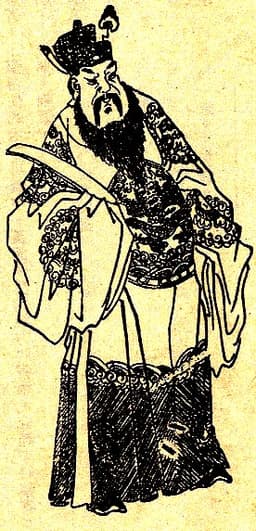
Dong Zhuo
General · Ancient
50.0Total

Lu Meng
General · Ancient
51.8Total
Basic Information
Born
138
178
Died
192
219
Era
Ancient
Ancient
Nationality
China
China
Occupation
General
General
Civilization
Eastern
Eastern
Score Comparison
Military (10%)
67.5
74.0
Political (20%)
35.0
30.8
Influence (20%)
49.4
54.1
Legacy (20%)
44.2
50.0
Leadership (15%)
57.1
50.7
Strategy (15%)
60.0
61.3
TOTAL
50.0
51.8
Dong Zhuo — Complete Timeline
189 AD
Dong Zhuo's Entry into LuoyangPolitical Action
After the death of Emperor Ling, Dong Zhuo marched his army into the capital Luoyang, ostensibly to support the He family. He deposed the young Emperor Liu Bian and installed his brother Liu Xie (Emperor Xian), seizing control of the imperial government.
CoupPower SeizureImperial Control
Impact: nationaldestructive
190 AD
Burning of LuoyangOther◆ Major
Facing a coalition of eastern warlords, Dong Zhuo ordered the evacuation and systematic destruction of Luoyang. The city was burned, its palaces and libraries destroyed, and the population forcibly relocated to Chang'an. This act devastated the Han capital.
DestructionCapital BurnedWar Crime
Impact: nationaldestructive
192 AD
Dong Zhuo's AssassinationPolitical Action◆ Major
Dong Zhuo was assassinated in a plot orchestrated by his trusted subordinate L
AssassinationPower ShiftConspiracy
Impact: national
Lu Meng — Complete Timeline
213 AD
Battle of RuxuWar◆ Major
Lu Meng defended Ruxu against Cao Cao's invasion. He used defensive tactics to repel the Wei forces, securing Wu's northern border.
Three KingdomsBattleDefense
Impact: regional
215 AD
Reform of Military TrainingReform
Lu蒙 implemented a program to improve the training and discipline of Wu's navy. He emphasized the use of fire ships and coordinated tactics, enhancing Wu's naval capabilities.
WuMilitary ReformNavy
Impact: nationalconstructive
219 AD
Capture of Jing ProvinceWar
Lu Meng led a surprise attack on Jing Province while Guan Yu was campaigning against Wei. He captured the province, executed Guan Yu, and ended Shu's control of the region.
Three KingdomsConquestJing Province
Impact: global
Expert Analysis
Origins
Dong Zhuo was born around 138 AD in Longxi, a frontier region near the Tibetan border. His family was local gentry with military connections, and he grew up among the Qiang tribes, learning their martial ways. He gained fame as a young man for his physical strength and archery skills, often riding with Qiang chieftains. His early career involved suppressing rebellions in Liang Province, where he built a loyal army of frontier warriors.
Lu Meng was born in 178 AD in Runan, a commandery in central China. His family was poor, and he had little formal education. He joined the army of Sun Ce, the founder of the Wu kingdom, as a teenager, fighting in campaigns against local bandits. His early life was marked by a lack of literacy—he was known as "General Wu Xia" (General Without Learning) until Sun Quan urged him to study.
Rise to Power
Dong Zhuo's rise began in 189 AD when Emperor Ling died and the eunuch faction controlled the court. He marched his army of 3,000 men from Hedong to Luoyang, claiming to support the He clan. Once there, he deposed the 14-year-old Emperor Shao and installed his puppet, Emperor Xian. He declared himself Chancellor of State, controlling the capital with brutal force. His power peaked in 190 AD when he faced the Coalition of Eastern Warlords, but he chose to burn Luoyang and retreat to Chang'an.
Lu Meng's rise was gradual through military merit. He served under Sun Ce and later Sun Quan, distinguishing himself in the Battle of Ruxu in 213 AD against Cao Cao. His turning point came in 219 AD when he devised a plan to capture Jing Province from Guan Yu. He used a ruse: he claimed to be ill and replaced himself with the inexperienced Lu Xun, lulling Guan Yu into complacency. Then he launched a surprise attack, leading his troops disguised as merchants to seize the province.
Leadership & Governance
Dong Zhuo's leadership was based on terror and personal loyalty. He ruled through a clique of relatives and frontier officers, including his son-in-law Niu Fu and the defector Lü Bu. He confiscated wealth from the aristocracy, melted down bronze statues to mint coinage (causing hyperinflation), and executed dissenters publicly. His governance score of 35.0 reflects his inability to build institutions; he relied on brute force and intimidation.
Lu Meng governed with a focus on discipline and morale. In Jing Province, he ordered his troops not to loot or harm civilians. He personally visited the families of soldiers and ensured fair treatment. He also promoted education among his officers, famously studying military texts himself after Sun Quan's reproach. His leadership score of 50.7 is modest but reflects a contrast to Dong Zhuo's tyranny. He implemented reforms in the Wu navy, emphasizing fire ships and coordinated tactics.
Triumph & Tragedy
Dong Zhuo's greatest success was his swift seizure of power in 189 AD, making him the de facto ruler of the Han empire for three years. He eliminated the eunuch faction and controlled the emperor. His greatest failure was his assassination in 192 AD by Lü Bu, whom he had treated as a son but who turned against him due to a personal feud over a maid. His tyranny alienated all potential allies, leading to his isolated death. His political score of 35.0 reflects this self-destruction.
Lu Meng's triumph was the capture of Jing Province in 219 AD, which eliminated the Shu-Han threat and secured Wu's western border. He executed Guan Yu, ending the career of one of China's most revered generals. His tragedy came soon after: he died of illness in 220 AD at age 42, shortly after his victory. He never enjoyed the fruits of his conquest. His military score of 74.0 reflects this brilliant campaign, but his influence was cut short.
Character & Destiny
Dong Zhuo was arrogant, cruel, and impulsive. He trusted only his inner circle and failed to cultivate loyalty beyond fear. His decision to burn Luoyang destroyed the capital's infrastructure and turned the entire empire against him. His character led to his downfall; he ignored warnings about Lü Bu's disloyalty. Historical assessments from the Records of the Three Kingdoms portray him as a tyrant who hastened the Han dynasty's end.
Lu Meng was diligent, humble, and shrewd. He transformed himself from an illiterate soldier into a learned strategist. His caution and deception in the Jing Province campaign show patience and discipline. However, his early death prevented him from reaching higher positions. His score of 51.8 overall is slightly above Dong Zhuo's 50.0, but his legacy is more positive.
Legacy
Dong Zhuo's legacy is one of destruction. He triggered the collapse of the Han dynasty by paralyzing the central government and empowering local warlords. The chaos he created led to the Three Kingdoms period. However, his name is synonymous with tyranny; no positive institutions survived him. His influence score of 49.4 reflects his role as a catalyst for change, but not a builder.
Lu Meng's legacy is that of a model general. His capture of Jing Province reshaped the balance of power, ensuring Wu's survival. His emphasis on education and self-improvement became a cultural ideal in China. The phrase "Lu Meng studies" is still used to describe someone who overcomes ignorance through effort. His legacy score of 50.0 is average, but his reputation as a strategist endures.
Conclusion
Lu Meng had greater impact than Dong Zhuo. While Dong Zhuo's actions triggered the Three Kingdoms era, his role was primarily destructive. Lu Meng's military victory directly altered the geopolitical landscape, ending Shu-Han's hope of reunification and securing Wu for decades. His total score of 51.8 vs Dong Zhuo's 50.0 is narrow, but his strategic acumen (61.3 vs 60.0) and military capability (74.0 vs 67.5) were superior. Lu Meng's positive legacy of self-improvement and disciplined leadership stands in stark contrast to Dong Zhuo's tyranny and failure. In the long arc of history, Lu Meng's contributions to statecraft and strategy outweigh Dong Zhuo's transient power.
Rankings
🥇
Lu MengLeader
Mil: 74.0Pol: 30.8Inf: 54.1
51.8
🥈
Dong Zhuo
Mil: 67.5Pol: 35.0Inf: 49.4
50.0
+1.8 behind
How This Comparison Works
Algorithm
Each figure is scored on 6 dimensions (0—100 scale) based on structured historical data: Military (10%), Political (20%), Influence (20%), Legacy (20%), Leadership (15%), Strategy (15%). The weighted total produces the final ranking.
Data Sources
Scores are computed from structured sub-indicators in the database. Scale factors adjust for era (Ancient ×0.85, Modern ×1.0) and civilization size (Eastern ×1.05, Other ×0.80) to account for differences in population and military scale.
Maximum 3 Figures
Comparisons are limited to 2—3 figures to ensure readability and statistical meaningfulness.
Error Margins
±5 points per dimension — Sub-scores are derived from historical records with inherent uncertainty. Two figures within 5 points on a dimension should be considered roughly equivalent in that area.
Total Score Accuracy
±3 points overall — The weighted combination of 6 dimensions produces a total score with approximately ±3 points of uncertainty. Differences of less than 3 points are not statistically significant— the figures are effectively tied.
Known Limitations
- Historical records are incomplete and uneven across civilizations
- Figures from oral-tradition societies may be underrepresented
- Occupation labels can misclassify multi-role figures
- Scores measure capability and impact, not moral character
- Quantitative scoring is a comparison tool, not absolute truth
Capability Radar
Military (10%) — Battles & Warfare
Battles
55
65
Win Rate
50
70
Expansion
35
60
Political (20%) — Governance & Reform
Reform
5
30
Diplomacy
20
55
Economy
15
35
Influence (20%) — Cultural & Global Reach
Cultural
20
45
Global
25
30
Legacy (20%) — Historical Impact
Historical
45
60
Longevity
30
55
Leadership (15%) — Power & Stability
Tenure
30
50
Stability
5
40
Strategy (15%) — Tactics & Innovation
Strategy
40
70
Tactics
45
75
Reform
10
30
Similar Comparisons
Comments & Discussion
No comments yet. Be the first to share your thoughts!